Shipping cartons filling a flat are a lived-in problem: deliveries have arrived, the retailer did not take the packaging, and the rooms you use are closing in. This is not the unpacking left by a house move. Count the piles by room, keep any carton that still holds something you are keeping, and book the empty ones with the rest of the junk once they block the flat.
A photo of one box does not describe a hall, a bedroom and a balcony full of cartons.
Separate this pile from a move
The packing-material guide owns the packaging left when someone has moved: mover-owned cartons, what to flatten, what a building recycling route can take, and the Municipality’s sort test for dry board versus board that is food-soiled or coated with plastic. Read that guide if you have just arrived or just left and the boxes are the remains of that move.
Stay on this page if you still live in the flat and the cartons came from deliveries. A sofa that arrived last month, a washing machine the week before, and a run of online orders in between are one accumulating pile. They are not “leftover moving boxes”, and they should not be booked as if a mover were coming back for them.
If both are true — you moved in, and later deliveries added more cartons — split the note. Say which stacks are from the move and which are from deliveries since. The sort method still sits in the packing guide. The decision to clear a flat you are living in sits here.
Office cardboard, shop packaging and cartons mixed with tiles or gypsum are other jobs. Use the office-waste guide, the shop-clearance guide, the retail fit-out guide or the renovation-waste guide. Do not describe a site skip’s worth of building waste as household delivery cartons.
Walk each room and name the pile
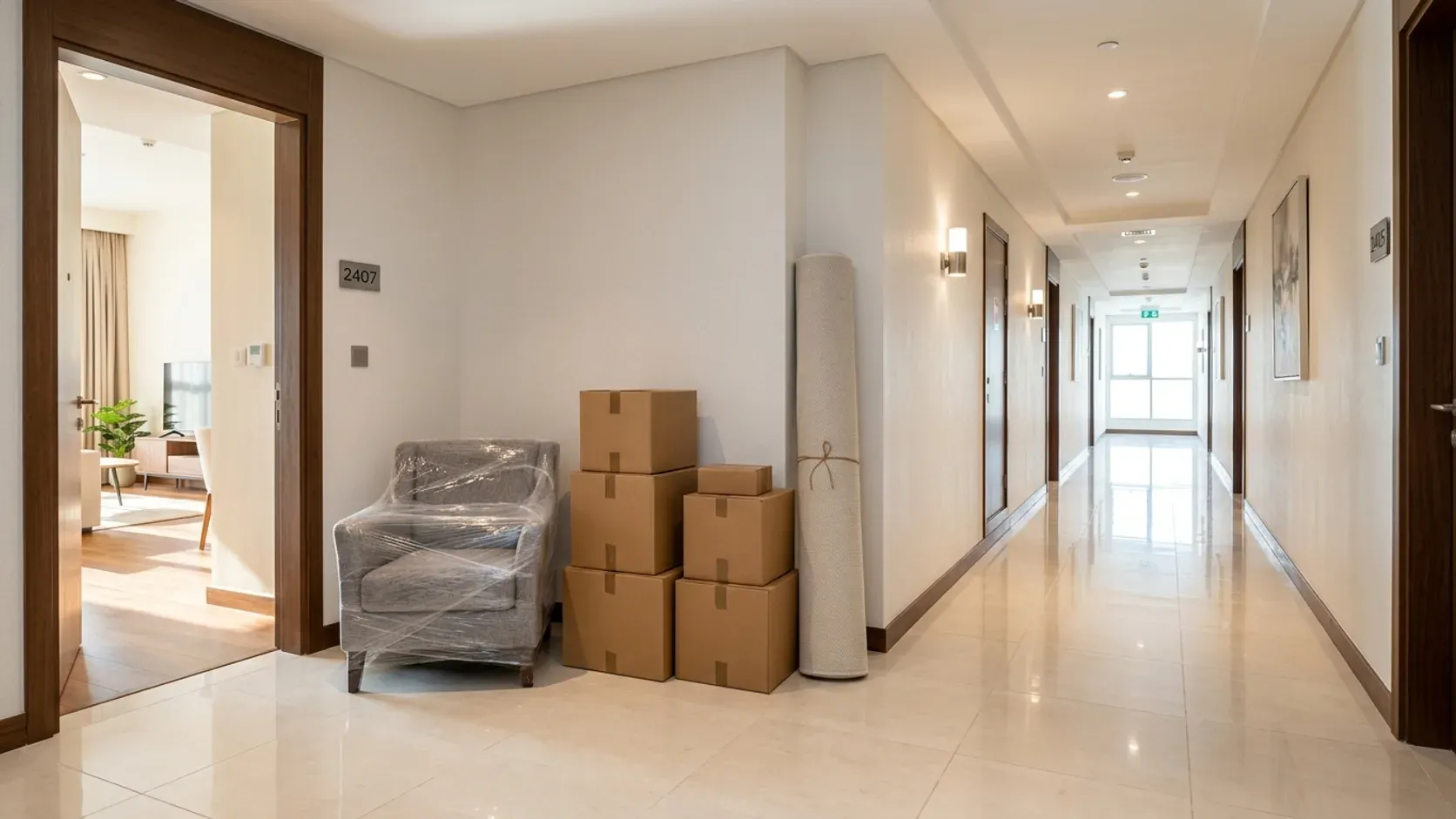
Start at the entrance and write a line for each place cartons are standing. Hall, living room, bedroom, kitchen, balcony, maid’s room, store. A stack behind a door counts. A stack inside a wardrobe counts if those cartons are leaving.
For each pile, record three facts. How many cartons you can see without pulling the stack apart. Whether they are still intact or already flattened. Whether they are empty. If you cannot see the back of the pile, say the photo is the front only. A hidden second row is how a quote describes half the load.
Photograph each room from the doorway so the floor and the remaining walking space are visible. Add a closer photo only for a carton that is wet, stained, crushed, or still sealed. A single close-up of a logo does not show volume.
Note the largest carton, not the average one. A television box, a mattress box or a flat-pack wardrobe carton decides the doorway. Small postal boxes decide the bag count. They should not be written as one item called “boxes”.
If a room is so full that you cannot open the door fully, photograph it from the side you can reach and say the door is blocked. Do not climb a stack to count the back row. Describe the limit of what you can see.
Keep what is still inside a carton
A sealed or half-unpacked carton is not waste until you have opened it and decided. Delivery packaging can still hold brackets, a remote, a cable, feet for a sofa, or the item itself. Open it before it goes on the outgoing pile. The packing guide makes the same warning for a move: small parts hide in the folds. It applies here for a different reason. You are not unpacking a whole household in a week. You are clearing boxes that have been standing in the way.
Put anything you are keeping in a place that is not the outgoing stack. A “maybe” box left against the empty cartons will be loaded if it looks like the rest. Label the keep pile in the photo, or move it to another room and say that room is out of scope.
If a delivery is still within the retailer’s collection window, ask them in writing whether their team takes the packaging away. Do that before you flatten or cut the carton. The packing guide says the same for a furniture or appliance delivery during a move. Here, the question matters earlier, because one refused collection is how the flat starts to fill. If the written answer is that they do not take it, the carton joins your pile. If the answer is that they will collect on a named day, leave that carton intact and out of the junk list until they have been and gone. Do not book it twice.
A carton you were going to return the product in is not junk while the return is still open. Finish the return, or decide it is not happening, before the stack is collected. A crew cannot judge a returns label.
Empty cartons, foam and a crate are different lines
Once a carton is empty and yours to discard, it can sit with the other empty board. Flatten it if you can do that without burying something you meant to check. The packing guide explains how to flatten, bundle and describe dry board, and when wet or food-soiled board should stay out of a recycling container. Follow that method. Do not invent a second set of bin rules on this page.
Foam corners, plastic film, polystyrene and a timber crate do not become cardboard because they arrived in the same delivery. Pull them out and give them a line of their own. A crate with nails or a broken edge should be photographed. Do not hide it under flattened sheets.
A carton that got wet on the balcony or under an air-conditioning drip should be kept off the dry stack. Say that it is wet. If a leak soaked the pile, the wet-cardboard note is the separation and the booking. The packing guide’s note on wet board stays the recycling test. Wet board is also heavier and it collapses when it is carried. Show it in the photo so it is not priced as a neat dry bundle.
Batteries, a leftover aerosol, a small tin of touch-up paint or a charger that fell into a carton need their own answer. Take them out. The acceptance guide is where those materials are separated from ordinary household junk. Do not tape a carton shut to hide a doubtful item.
When the pile is a collection
A few dry, flattened cartons may fit the building’s own recycling route. Ask management before you put a large stack in a shared bin room. The packing guide covers that choice for a move’s worth of board, including the point at which a room of cartons is a collection rather than a bin trip. Use the same test here, with one difference: you are still living in the rooms.
Book a collection when any of these is true:
- You cannot use the hall, a bedroom or the kitchen because of the cartons.
- The building has told you not to leave the stack in the bin room or beside it.
- More deliveries are coming and there is nowhere left to stand them.
- The cartons are mixed with furniture or appliances you also want gone.
- A date is fixed — a landlord visit, a new delivery that needs the floor — and the pile will still be there.
A single small postal delivery does not need this page. The page starts when the cartons, together, have become the obstacle.
Do not promise the building that the bin room will be clear, or that you will flatten everything tonight, until you have looked at the whole flat. A balcony stack you forgot is still part of the load.
Book the cartons with the other junk
Empty delivery cartons are allowed to travel in the same load as the broken chair, the old rug and the appliance you are also discarding. The junk-removal page says flattened cardboard can ride in that junk load, and that the page is not a cardboard recycling route. There is no separate carton contract to book.
Ask to book the cartons with the rest of the junk. In the same message, list the other items. A photo that shows only boxes, when a sofa is also leaving, produces the wrong vehicle plan. A photo that shows only the sofa, when a bedroom of cartons is also leaving, does the same.
Say whether the board is still boxed or already flattened. Intact cartons are mostly air. Flattened sheets take less space and are easier to carry, and they can still fill a room if there are enough of them. The load guide explains why those two shapes are not the same volume. You do not need a tonnage figure. You need the wide photo and the words “intact” or “flattened”.
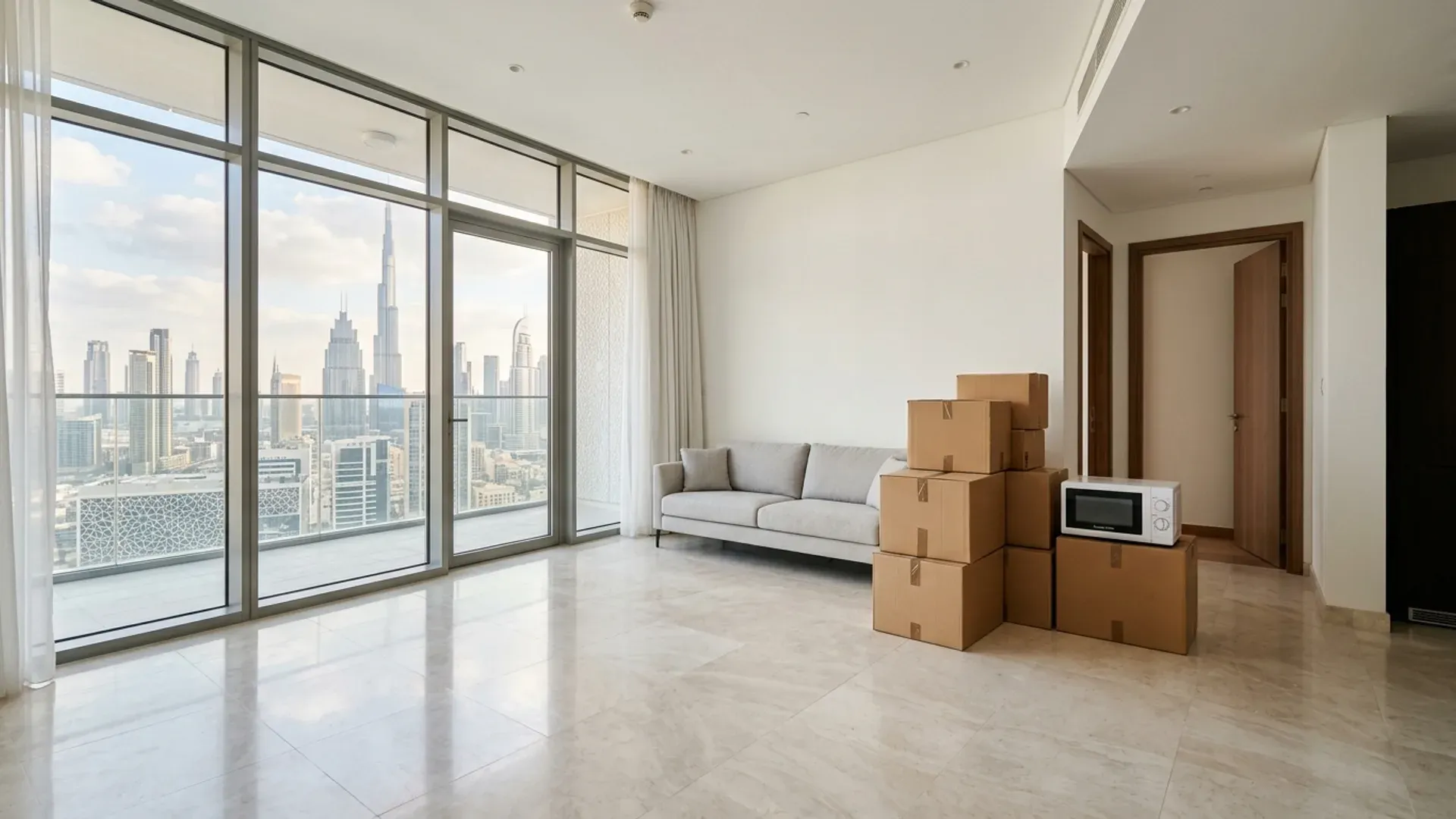
If the sofa, the appliance and the cartons are going in the same visit, keep them as one request. Splitting “boxes today, sofa next week” can be right when the sofa is waiting on a doorway decision, and wrong when the boxes are what stop the sofa reaching the door. Say which problem you have.
The pre-arrival guide is the general check: what leaves, what stays, and a path the crew can walk. Use it. Then add the carton facts from this page, because a path that looks clear in the morning can be blocked again if a new delivery is placed in the hall before the crew arrives. If you are expecting another delivery the same day, say so. Ask them to leave the packaging where it will not close the route, or wait until that box is empty and included.
Keep a path through the flat you still use
You are not handing over an empty unit. You still need a way to the kitchen, the bathroom and the street. Choose one path and keep the outgoing cartons on one side of it. Do not build the stack against the only exit.
If a bedroom is the room you can spare, put the empty cartons there and say that room is the staging room. Move what you sleep on if you have to, and say the bed stays. A stack on the bed is easy to describe wrongly as “bed and boxes”.
The entrance door needs enough space for a person carrying a bundle to turn. The packing guide says that for a move. It is stricter here, because you will use that door while the stack is waiting. Leave the lock side clear.
On a balcony, weight and weather both matter. Do not hang cartons over a rail or stack them where wind can take a sheet into the neighbour’s space. If rain or a drip has already wet the bottom layer, separate that layer before the day. A balcony full of furniture as well as boxes belongs to the balcony clearance guide for the furniture and the door track. The cartons still need their own line: dry or wet, intact or flat.
A store that has been filling with old delivery cartons for months is closer to the storage-room guide if the store itself is being emptied. Use that guide for a packed cupboard or cage. Use this page when the cartons have spread into the rooms you live in. If both are true, say so, and send both photos.
What not to mix into the carton pile
Paint, solvents, gas cylinders, loose batteries and a pesticide bottle are not packaging. Take them out and ask about them separately. Do not rely on a junk booking to absorb a material the acceptance guide tells you to declare.
A wooden pallet left by a delivery is not a carton. Photograph it, including broken boards and nails. The packing guide treats crates and pallets as their own description. Follow that. Do not slide a pallet under a photo of flattened board and hope it is included.
Personal papers that arrived in the same stack as the boxes — tenancy pages, a passport copy, a warranty — should be lifted out before the flatten. A warranty card you wanted can leave inside a carton that looked empty.
If a roommate owns some of the deliveries, mark their cartons. A shared flat does not make every box yours to discard. The same rule the property guides use for furniture applies to a sealed appliance box: if you are not sure it is yours, leave it out of the collection and say why.
Children’s packaging, a play box and a carton used as storage for toys are easy to flatten by mistake. If the carton is now a drawer, it is not waste. Move it to the keep side before you photograph the outgoing pile.
A date you did not choose
A landlord visit, a handover, or a new furniture delivery can force the date. The visit does not change the method. It changes the order: open the doubtful cartons first, photograph the piles, and ask for a booking that finishes before the other party needs the floor. Do not tell them the cartons will be gone until the collection is confirmed.
If you are leaving the country or the tenancy, the leaving checklist and the end-of-tenancy guide own the countdown. Packaging is one line in that countdown. This page is the line, not the whole move-out. If you are staying, ignore the handover sequence and book around the day you need the rooms back.
A new sofa arriving into a room of old cartons needs an order. The old packaging and any furniture that is leaving should be clear of the floor the delivery needs. Book the collection first if both teams cannot stand in the same hall. The old-sofa delivery note is the sequence when the old sofa is the object. Mention the cartons in that request so they are not left as a surprise around the new piece.
If the municipal bulky service is the route you hoped to use for the furniture, read the bulky-waste guide for eligibility and timing. Delivery cartons are not a reason to stretch that guide. If the furniture is eligible and the date works, the cartons may still need their own plan when the building will not take a room of board in the bins. Say which items you are sending which way, so one pile is not assumed to cover the other.
What the request should contain
Send:
- A wide photo of each room that holds cartons.
- Intact or flattened, for each pile.
- Dry or wet, if any board has been soaked or stained.
- Foam, film and timber listed apart from the board.
- Any sofa, appliance or other junk in the same visit.
- The floor, and whether the route is a service lift, a passenger lift or stairs.
- The date the space has to be usable again.
- A line for cartons that a retailer is still due to collect, so they are not loaded.
The floor and the lift matter because a light bundle still has to pass the same door as a sofa. If there is no service lift, say so, and use the walk-up stairs guide for the flights. Do not leave the route as “apartment”. A stack of flat cartons can be carried, and it can still block a landing if it is staged there too early. Keep it inside until the crew is ready, as that guide says for any other piece.
Ask the provider to confirm what they will take from the photos. A request is not a booking. If the pile grows because another delivery arrives after you send the photos, send a new wide shot before the day. Do not wait until the vehicle is loaded to mention a second bedroom.
On the day, walk the keep pile and the exit path before anything is lifted. Open one carton at random from the outgoing stack if you are no longer sure it was empty. Check the balcony, the top of the wardrobe and the space behind the sofa. The last carton is the one that is still behind the door.
After the load has gone, the flat should match what you kept. If a retailer is still due to collect one intact carton, that carton should still be there. If a keep box was moved into the staging room for five minutes and left there, go and get it before you call the job finished.
Questions
Is this the same job as packing material after a move?
No. The packing-material guide is the move: sorting, flattening, mover-owned cartons and the building’s recycling route. This page is a flat you live in, filling with delivery cartons.
Should I flatten the boxes before I ask for a price?
Flatten empty cartons you are allowed to flatten, and say whether the pile is still boxed or already flat. Leave a carton a retailer is still due to collect, and leave a carton you have not opened. The packing guide is the flattening method.
Can these cartons go in the building’s recycling room?
A small dry pile might, if the building agrees. Ask before you use a shared room. A stack that has taken over a bedroom is a collection. The packing guide holds the Municipality’s distinction for dry board and for board that is food-soiled or plastic-coated.
Will a junk booking take the boxes and the old sofa together?
Yes, if you show both and the provider confirms the scope. The junk-removal page treats flattened cardboard as part of a junk load, not as a recycling contract. List the sofa, the appliance and the cartons as one request when they are one visit.
What if a box is still sealed?
It is not waste yet. Open it, or keep it out of the outgoing pile until you know what is inside. A returns carton stays out until the return is finished or cancelled.
Where do shop or office cartons belong?
Not on this page. Use the office, shop, retail fit-out or renovation guide that matches the premises. A flat’s delivery pile and a warehouse of stock cartons are different loads.