
Office waste collection should begin by defining whether the job is a one-off clearance or an ongoing operational waste service. Freeze the one-off inventory, keep routine bin waste and controlled materials separate, obtain asset and data approval, and schedule the collection around the building’s confirmed loading route.
A removal crew can assess loose furniture, packaging and approved office contents when the quantity is visible. That does not automatically mean the same booking covers recurring bins, confidential destruction, hazardous material, live electrical work or construction debris.
Define the collection before counting it
Name the event that created the load: a furniture refresh, storeroom clean-out, department move, archive reduction, refit phase or lease handback. Then set a physical boundary by floor, room or marked zone. “Office waste” is too broad to quote because it can describe anything from empty cartons to a fitted reception counter.
Choose one authorised project contact. That person should approve the outgoing list, resolve disputed assets and control changes. Facilities, IT, finance, department managers and the landlord may each own different decisions; a collection provider should not be asked to settle them at the loading bay.
Keep one-off clearance separate from recurring waste
Daily food waste, washroom waste and desk-bin material belong to the office’s routine waste arrangement. A one-off junk collection is better suited to a defined, photographed load such as unwanted desks, chairs, shelving, packaging and cleared non-hazardous contents.
If the business needs regular collections, confirm that service separately with a provider whose frequency, containers, accepted materials and documentation match the requirement. Do not describe a single booked clearance as a recurring contract or assume recurring capability from a general commercial-removal page.
Construction rubble, fit-out debris and released building materials also need their own scope. The retail fit-out waste guide explains the handoff from project trades to a sorted collection load; ordinary office contents should not be mixed into that process without a clear plan.
Build a room-by-room outgoing inventory
Walk the office after departments have made their decisions. Record each item or consistent group, its location, approximate quantity, condition and owner. Use asset tags where they exist and attach photographs to the same identifiers.
Useful groups include:
- Desks, tables, chairs and freestanding storage.
- Empty cartons, clean packaging and display material.
- Cleared stationery and non-confidential loose contents.
- IT hardware, cables, screens and peripherals.
- Confidential paper and records awaiting authorised handling.
- Pantry equipment after food, liquids and personal items are removed.
- Fixed, powered or technician-dependent items held outside collection.
- Unknown, leaking, pressurised or chemical material isolated for review.
Do not use “miscellaneous” for a large part of the load. Open cabinets, cupboards and drawers. Photograph what is inside or empty it into clearly described groups. Hidden contents can change weight, acceptance and data risk.
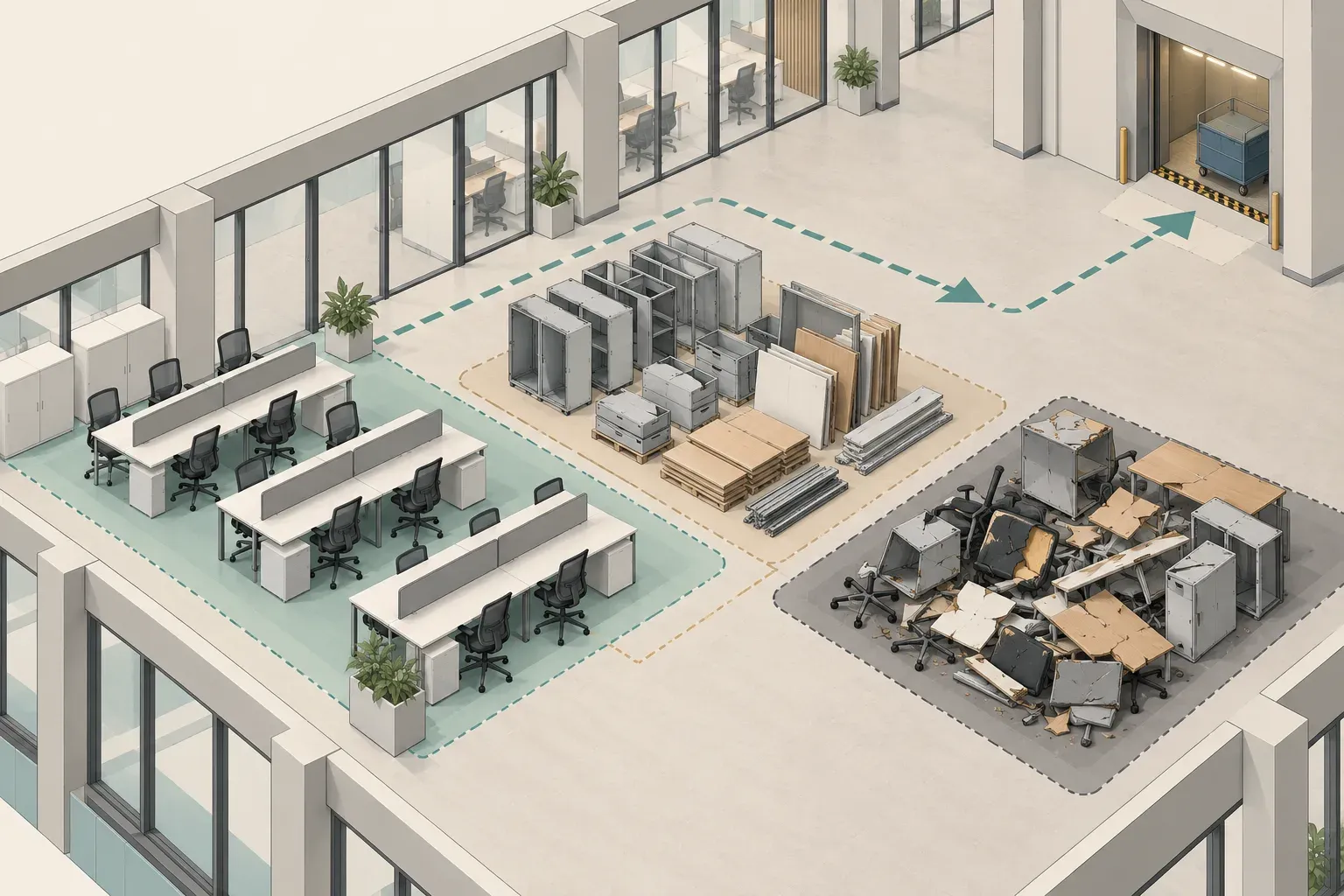
Freeze assets before applying removal labels
Check the asset register, lease schedule and departmental ownership. A monitor may be company property, a printer may be leased, and a reception counter may belong to the landlord. Mark keep, transfer, remove and hold with visibly different labels.
Set a cutoff for staff claims or reuse transfers. Pieces awaiting collection by employees or another branch should have a named recipient and deadline and should sit outside the removal zone. Informal last-minute claims create disputes and make the photographed quote inaccurate.
The office furniture removal guide covers ownership, workstation systems and reuse decisions in more detail. The one-off waste plan should reference that furniture list instead of reducing every asset to undifferentiated waste.
Isolate records and data-bearing equipment
Confidential paper should remain under the organisation’s approved records process. Put it in a controlled, labelled area and state whether an authorised destruction provider will handle it. General collection does not prove secure destruction or provide a destruction certificate.
IT should identify computers, drives, servers, phones, copiers and any other equipment that may store data. Record serial or asset numbers where required. Complete the organisation’s approved data handling before release. Deleting files, removing a login or resetting a device is not automatically certified erasure.
Keep chargers, docks and components with the correct equipment if assets will be transferred. Isolate damaged batteries, swollen devices or leaking components and request an appropriate acceptance decision before they enter a general load.
The IT-equipment disposal guide explains the boundary between physical collection and the business’s data responsibility. Do not let a deadline collapse those two approvals into one verbal instruction.
Separate by material and handling need
Once ownership is fixed, divide the visible load into practical groups. Keep clean cardboard dry and flat where suitable. Separate furniture from loose packaging so sharp frames do not crush or scatter it. Keep glass, mirrors and damaged panels visible and protected.
Do not hide food, liquids, cleaning products, aerosols, toner, batteries or unknown containers inside cartons. Pantry cupboards and print rooms deserve a separate check because small technical or liquid items are easily missed among ordinary supplies.
Heavy cabinets, safes, stone tables and compact storage systems require individual assessment. State whether they are empty, fixed or specialist equipment. A count of “ten office items” is meaningless if one of them needs a technical release or a different handling method.
Release fixed and powered items through the right trade
Identify wall-mounted cabinets, joined workstations, floor boxes, hard-wired equipment, plumbing connections and built-in joinery. The office or landlord should decide what may be removed and who makes services safe.
Collection begins after the authorised trade releases the item unless the booking expressly covers a confirmed alternative. A removal crew should not discover live power, connected water or structural fixings after the loading window has started.
Record the released condition with photographs. Keep loose cables controlled, cap or protect sharp fixings as appropriate, and state who handles wall or floor reinstatement. Removal is not the same task as making good the premises.
Quantify the finished one-off load
Count furniture by piece and packaging or loose contents by consistent container. For cartons, state whether they are flat, empty, filled or contaminated. For bags, show their approximate size and avoid overfilling them with dense material.
Use wide photographs that show each zone and close views for unusual items. If a department is still clearing cupboards, label the count provisional and schedule a final update. The quote should match the load that will exist on collection day, not the office before staff finish sorting.
For phased work, create a count for each phase. Record what was collected and what remains. This prevents the second visit from inheriting unexplained items left by another contractor or department.
Keep project changes controlled
Set a simple change rule: additions go through the project contact, are photographed and are accepted into a revised scope before the collection window. Employees should not place extra bags beside the staged load without approval.
If quantity changes significantly, revisit vehicle, crew, timing and access assumptions. A small group of chairs added to a large visible load is different from an entire archive room appearing after the plan was agreed.
Confirm the commercial-building route
Walk from every collection zone to the service lift, loading bay and vehicle position. Measure the largest rigid item and the close openings. Record corridor turns, access doors, floor changes and long carries.
Ask building management about contractor registration, permits, insurance requirements, lift protection, loading-bay booking, vehicle height and permitted hours. Confirm current rules for the chosen date. Do not assume that after-hours access or a loading space is available merely because the office is closed.
Keep fire routes, neighbouring tenancies and public corridors clear. Staging should stay inside the approved zone until the vehicle and route are ready. If the building allows a loading-bay holding area, define its supervision and time limit.
The office desk removal guide provides workstation-level preparation, while the out-of-hours guide helps frame a conditional schedule without promising availability.
Send a collection brief that can be checked
Combine the essential information in one version-controlled brief:
- The event, zones and one-off collection boundary.
- The authorised contact and asset-approval status.
- Item counts, material groups and photographs.
- IT, records and specialist material held outside general collection.
- Fixed items already released and work still due from trades.
- Floor, lift, loading bay and vehicle requirements.
- Collection phase, deadline and permitted building window.
- Required completion record or sign-off process.
Ask the provider to confirm accepted groups and exclusions against the actual photographs. Do not infer a disposal route, recycling rate or certificate that has not been specifically agreed.
A commercial junk-removal service is the relevant next step for a defined one-off office load. If the need is routine bin collection, establish that as a separate service decision rather than disguising it inside the clearance request.
Control collection day and sign-off
Freeze staff access to active zones, or separate the crew route from normal work. Appoint one contact for scope decisions and one building contact for lift or bay problems. Have permits, keys and loading instructions ready.
Walk the first zone with the crew. Point out hold labels, fragile items, data-controlled areas and released fixed equipment. Reconcile each zone before moving to the next, especially when the office remains operational.
At completion, compare the removed count with the approved list. Check cupboards, print rooms, pantry storage and temporary staging areas. Confirm that retained and transferred assets remain. Walk the common route and loading bay for loose packaging or panels.
Photograph cleared zones where the business or landlord requires a record. Note exceptions and unresolved items rather than silently leaving them outside the agreed inventory. A clear exception list is more useful than an inaccurate claim that the entire office is empty.
Use phases when the office must remain operational
An occupied workplace may need smaller controlled collections rather than one building-wide clearance. Divide the plan by department, floor or material group. Give each phase its own approved inventory, working boundary, access time and completion check. Do not let later phases borrow items from an already frozen zone without updating the record.
Protect staff movement by establishing a crew route and a separate pedestrian route. If they cross, schedule a temporary pause or appoint a person to control the junction. Do not line both sides of a corridor with outgoing furniture; it removes passing space and obscures doors.
Tell staff exactly when drawers, lockers and personal storage must be empty. After the cutoff, the project contact should handle exceptions. A removal crew should not wait while individual employees decide whether a chair, plant or box is personal property.
Sequence noisy dismantling, lift trips and loading around confirmed operational constraints, but avoid promising silent or invisible work. Facilities and department leads should decide what disruption is acceptable. Building permission still controls the actual collection window.
At the end of each phase, record four things: what left, what remains, what moved to the hold list and what changed for the next visit. Photograph the cleared zone from the same general viewpoints used before work. This gives the next crew a reliable starting point and prevents a completed department from becoming an informal dumping area.
Where an office relocation is happening at the same time, keep move stock and removal stock physically and visually separate. The office-relocation junk-removal guide provides a dedicated method for leased assets, IT handoffs and movers. A collection plan supports that project; it does not replace the relocation plan.
Common questions
Is office waste collection the same as office clearance?
Not always. A one-off collection may remove a defined group from selected rooms; a clearance may cover most or all authorised contents. Define the zones and inventory instead of relying on either label.
Can routine bin waste go with furniture?
Do not assume so. Keep daily operational waste separate and ask each provider what its confirmed service accepts. Food, liquids and washroom waste should not be hidden among furniture or packaging.
Can the collector certify data destruction?
Only if that exact, evidenced service has been arranged. Physical removal is not proof of certified erasure or destruction. The organisation remains responsible for its approved data process.
Who disconnects powered or fixed equipment?
The office should arrange the appropriate authorised trade unless the confirmed scope says otherwise. Collection should begin after equipment is safe, released and approved to leave.
What is the best first step for a quote?
Define the one-off boundary, freeze assets, isolate records and IT, finish the item count and photograph the route. That turns “office waste” into a load that can be assessed and signed off.