
After a move, sort the packaging before arranging a pickup. Flatten clean, dry cartons and keep them apart from foam, plastic film, wet or food-soiled cardboard and any wooden crates. A few flattened boxes can usually follow your building's normal recycling route; a room full of cartons is a collection job in its own right. Decide which applies by looking at the size of the whole pile, not at any single box, and list unwanted household items separately from the packaging so the quote reflects the full load.
Find out what the movers will collect
Before dismantling every box, check the mover's agreement. Some boxes, crates, blankets or protective materials may belong to the moving company or be due for collection on a later visit. Keep those separate from material you own, and do not flatten or cut a carton the mover expects back in usable condition. If the agreement is silent, ask the mover directly rather than assuming the packaging is yours to discard.
If you are still unpacking, choose a disposal date after the essential rooms are finished so the final quantity is visible. Booking too early leaves a second pile to deal with later, and two small collections are harder to arrange than one complete one.
Keep one small stock of sound cartons only if you have a real use and a place to store them. Do not preserve every box on the chance that it might be useful. Flatten the rest as you unpack. Remove loose tape where practical, bundle sheets of cardboard so they can be carried, and keep the stack dry. Wet cardboard collapses and is harder to handle through a corridor or lift.
Divide the pile by material
Packaging from a move is rarely one material. A single delivery can bring cartons, paper wrapping, bubble wrap, stretch film, foam corners, molded inserts and sometimes a timber crate. Sorting these into separate piles before anyone quotes makes it clear which part can go through the building's normal route and which part needs a collection.
Cardboard and paper
Cardboard cartons and paper wrapping can be grouped together if they are clean and dry. Dubai Municipality's Waste Segregation Guide sets out a green container for recyclable dry mixed materials, asks that cardboard be flattened and that food contamination be removed from boxes, and excludes cardboard that is contaminated with food or coated with plastic. Where a building uses bags for recyclables, the guide calls for clear bags so the contents can be seen.
That gives a practical test for each carton. A dry, empty, flattened box is the easy case. A box that held groceries and is now stained, one that sat in a puddle on the balcony, or a heavily laminated gift box belongs with general waste or the collection pile, not in the recyclables container. The guide to what the bins won't take covers the full list of items that look recyclable but are excluded from that stream.
Plastic film, bubble wrap and foam
Plastic stretch wrap, bubble wrap, foam sheets and molded inserts should form separate piles. Ask your building or collection provider which of these materials its route accepts; a recycling label on a product does not prove that every local collection stream takes it. Foam is light but bulky, and loose pieces break apart and scatter in corridors, so bag it before it moves anywhere.
Bubble wrap in good condition has an obvious reuse value for anyone still packing. If a neighbour, colleague or friend is moving soon and has agreed to take it, hand it over directly. Do not leave it in a shared area in the hope that someone will want it.
Wooden crates and pallets
Wooden crates and pallets need their own description. They can have protruding nails, broken boards or heavy bases. Do not hide them beneath flattened cartons. Photograph their size and condition before requesting collection. If a crate held an appliance or fragile item, check that no parts, manuals or accessories are still inside it.
Do not break a crate apart to make it smaller unless you can do it safely and have somewhere to put the loose boards and fixings. A whole crate is often easier to carry than an armful of splintered timber with exposed nails.
Items that do not belong in the packaging pile
Put sharp or broken packing pieces in a safe container and tell the collector what it contains. Keep batteries, aerosols, paint, cleaning products and electronic devices out of the packaging pile. Those materials need an answer of their own, as the acceptance guide explains. A drawer of loose cables, a spare power adapter or a half-used tin of touch-up paint can easily end up in a box marked for disposal, so check each carton before you flatten it.
Check every box before it is flattened
An easily avoided loss after a move is a small item thrown out with its packaging. Remote controls, wall brackets, screws for reassembling furniture, warranty cards, keys and chargers are often packed in the same box as larger items and then forgotten. Open each carton fully and look in the corners and folds before you flatten it.
Paper wrapping deserves the same attention. Glasses, jewellery, small ornaments and documents are often wrapped individually, and a ball of packing paper looks the same whether it is empty or not. Unfold it or squeeze it before it goes on the pile.
Keep a single box for anything you find that does not yet have a place. Label it clearly and keep it away from the disposal piles. At the end of unpacking, go through that box once. It is far easier than trying to recover something after the cardboard has gone.
Use the route that fits the actual volume
The right disposal route depends mostly on quantity and space. Each box is light, but the total can fill a room, block a door and take more vehicle space than the furniture it protected. Look at the whole pile before you choose.
For a few dry cartons, use the recycling or waste facilities your building provides, following its posted rules. Do not fill a shared bin room with a house move's worth of boxes without checking capacity and permission. Overfilled containers and stacks left beside them block the area for other residents, and loose cardboard left outside the container can be blown around or soaked.
Large piles may need a booked removal even though each individual box is light. They take up floor space, obstruct access and can fill a vehicle before the heavy items are loaded. The way the cardboard is presented changes how much space it needs. Intact boxes are mostly air, flattened and bundled sheets stack tightly, and a mix of both falls somewhere in between.
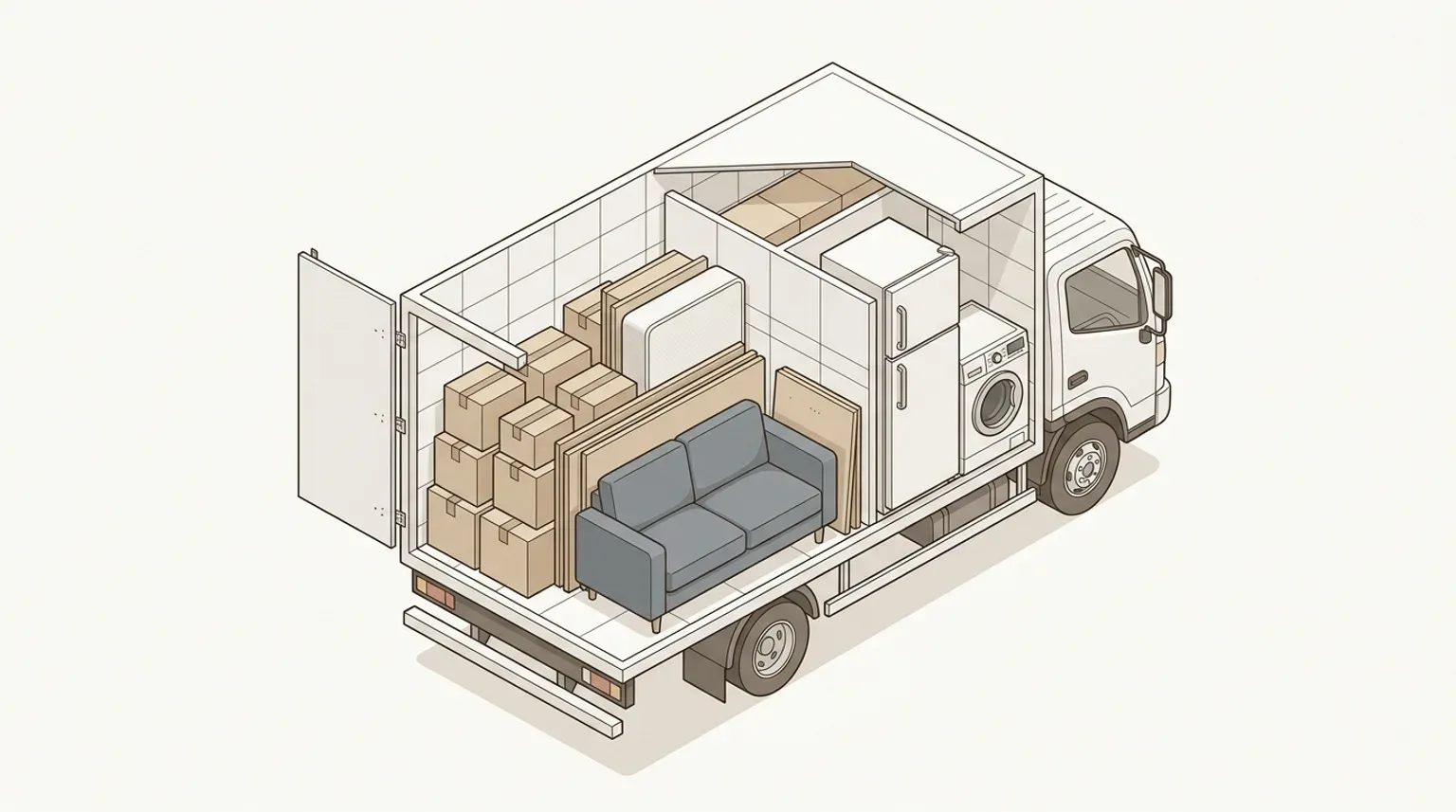
If the packaging is mixed with an old bed, broken shelving or furniture that did not fit the new home, show the complete load in the quote request. One wide photo of every pile is more useful than a close view of a single carton. Include the floor, lift booking, parking and distance to the loading point. The guide to estimating a load explains why flattened cartons and intact boxes occupy very different amounts of space.
When a cardboard removal service makes sense
Book a collection when the cartons exceed the space your building allows, when they must be cleared before a handover, or when carrying them to the permitted collection point is impractical. A few flattened boxes may fit the building's normal route; a room full of delivery cartons is a different job. Ask management before placing a large stack in a shared recycling area.
For a quote, send a wide photo showing the whole cardboard pile and say whether the boxes are flattened, filled or wet. Include any foam, plastic film, wooden packaging or unwanted furniture as separate items. Give the floor, lift and loading-bay details, plus the date the space must be clear. Ask the junk removal service to confirm what it can collect and whether your preferred slot is available. A request is not a booking until the scope and time are agreed.
If the pile must go today, send those details immediately and state your latest acceptable completion time. The urgent collection guide explains how availability and building access affect a same-day request. Do not promise a landlord, delivery team or building manager that the cardboard will be gone until the collection is confirmed.
Prepare the pile so it can be carried
A well-prepared pile is quicker to quote, safer to handle and less likely to leave debris behind. The aim is a small number of stable, separate groups that can be carried out without sorting on the day.
- Flatten cartons and stack them in bundles that one person can lift and carry comfortably.
- Tie or tape each bundle so loose sheets do not slide off on the way to the lift.
- Bag foam pieces, polystyrene beads and shredded paper so they cannot spill.
- Roll stretch film and bubble wrap into bags rather than leaving loose sheets on the floor.
- Lean crates and pallets against a wall with nails facing inward, away from the walking route.
- Keep anything wet or soiled in its own bag and mention it in the quote request.
Stack the groups close to the door of the home but out of the walking path. Leave the entrance hall clear enough for someone carrying a bundle to turn around. If the cardboard has to stay for several days, keep it off a floor that is mopped and away from air-conditioning drip points, so the bottom layer does not soften.
Keep the common route clear
Store the sorted piles inside your home or another space you are permitted to use. A corridor, fire exit or lift lobby is not a waiting area for packaging. Cardboard in a shared area can block an escape route and creates a nuisance for neighbours, and building management may remove it or raise it with you.
If the pickup must use a service lift or loading bay, ask management for the applicable process and book the slot before confirming the collection time. Where the building needs a security notice or the collector's details, provide them in advance so the crew is not held at reception. See the service-lift guide for the access details to gather.
Packaging that has been stored outside does not change this. If boxes were kept on a balcony during the move, bring them in and add them to the indoor piles once they are dry. The balcony clearance guide covers the separate job of clearing furniture, pots and other items from that space.
Fit packaging disposal into the move-out or move-in plan
Packaging appears at both ends of a move. Before you leave a property, it builds up as you pack; after you arrive, it builds up as you unpack. Each has its own deadline.
When leaving, the cardboard you use for packing goes with the movers, but offcuts, damaged boxes and packaging from items you have sold or given away stay behind. Add them to the final clearance rather than leaving them for the landlord. The leaving-Dubai clearance checklist shows where packaging disposal sits in the countdown to handover.
When arriving, the deadline is usually practical rather than contractual: a spare room you cannot use, a hall you cannot walk through, or a delivery of new furniture that needs floor space. In that case, unpack the rooms you need first, flatten as you go, and arrange one collection for the accumulated pile once most of the unpacking is finished.
Deliveries of new furniture and appliances add their own packaging. Ask the retailer whether its delivery team takes the packaging away, and check what it says in writing. If it does not, add that packaging to the same pile rather than booking a separate collection for each delivery.
On collection day
On collection day, keep the moving company's reusable materials apart from the disposal pile. Mark them clearly or keep them in another room so they are not loaded by mistake.
Show the crew the groups before loading starts and point out anything with nails, sharp edges, wet material or contents still inside. If a pile has grown since the quote, say so at the start rather than when the vehicle is nearly full. Confirm that everything in the agreed scope is on the list and that anything you are keeping is out of the way.
Walk the rooms once more before the crew leaves: behind doors, under the bed and in the kitchen are easy places to miss a carton. Check the balcony, storage room and the area behind large furniture. The final check prevents an extra trip for the last stack.
Questions about packing waste
Can I put all my moving boxes in the building's recycling container?
A few clean, dry and flattened cartons can go in the recyclables container if your building provides one. A whole move's worth of boxes may exceed its capacity, so ask building management before using it for a large quantity.
What should I do with polystyrene and foam inserts?
Bag them separately so they cannot scatter, then ask your building or the collector which route accepts them. Do not assume a recycling symbol means the local container takes them.
Will a junk removal booking take only cardboard?
You can ask for a collection that is mainly packaging. Describe it as cardboard and packing material, send a photo of the full pile, and let the provider confirm what it can take and when.
Is wet cardboard still recyclable?
The Municipality guide excludes cardboard contaminated with food from the recyclables stream; for cardboard that is simply wet, ask what your building's route accepts. Soaked cardboard is also hard to handle, so keep it separate and mention it in any quote request.