
The work before a junk-removal appointment is mostly decision-making. The crew needs to know what leaves, what stays, how to reach it and which building rules control the route. You do not need to carry heavy items to the door. A clear inventory and unobstructed path usually help more than moving bulky furniture into a corridor.
Confirm the collection scope
Walk through every room and identify the agreed load. Separate definite removals from undecided items. Use coloured notes only if everyone understands them, and never attach adhesive that can damage a finish. For a mixed pile, take one wide photo and close-ups of unusual items.
Tell the provider about additions before dispatch. A sofa, appliance or extra room changes volume and timing. Small bags also add up. An accurate list allows the right vehicle and crew to be assigned and keeps the quote meaningful.
Remove personal belongings from drawers, cupboards, bags and furniture. Check documents, keys, electronics and medication. The collection team should not decide whether an object is valuable or sentimental. If ownership is disputed, leave the item out of the load until authorised.
Keep items where they are safe
Do not move large items into shared corridors, lift lobbies or outside the building unless management has approved a staging area and time. These spaces must remain usable. A crew can usually carry from the room; forcing a sofa or mattress into the hall early may block the route and create a complaint.
Group small, loose items in a stable area without hiding access to bulky pieces. Keep glass, sharp material and liquids separate. Do not overload weak bags or open boxes. If something leaks, is contaminated or needs special handling, disclose it before the appointment.
Leave dismantling to the agreed scope. Removing a few designed components may help, but a half-collapsed wardrobe or bed frame is difficult to control. Ask whether basic dismantling is included and send photos of the fittings.
Clear a continuous route
Walk from the farthest item to the vehicle entrance. Remove rugs, stools, plants, cables and fragile decorations. Open doors fully and check corridor turns. Keep lift controls, fire doors and exits accessible. The route should work for a person carrying an object that blocks part of their view.
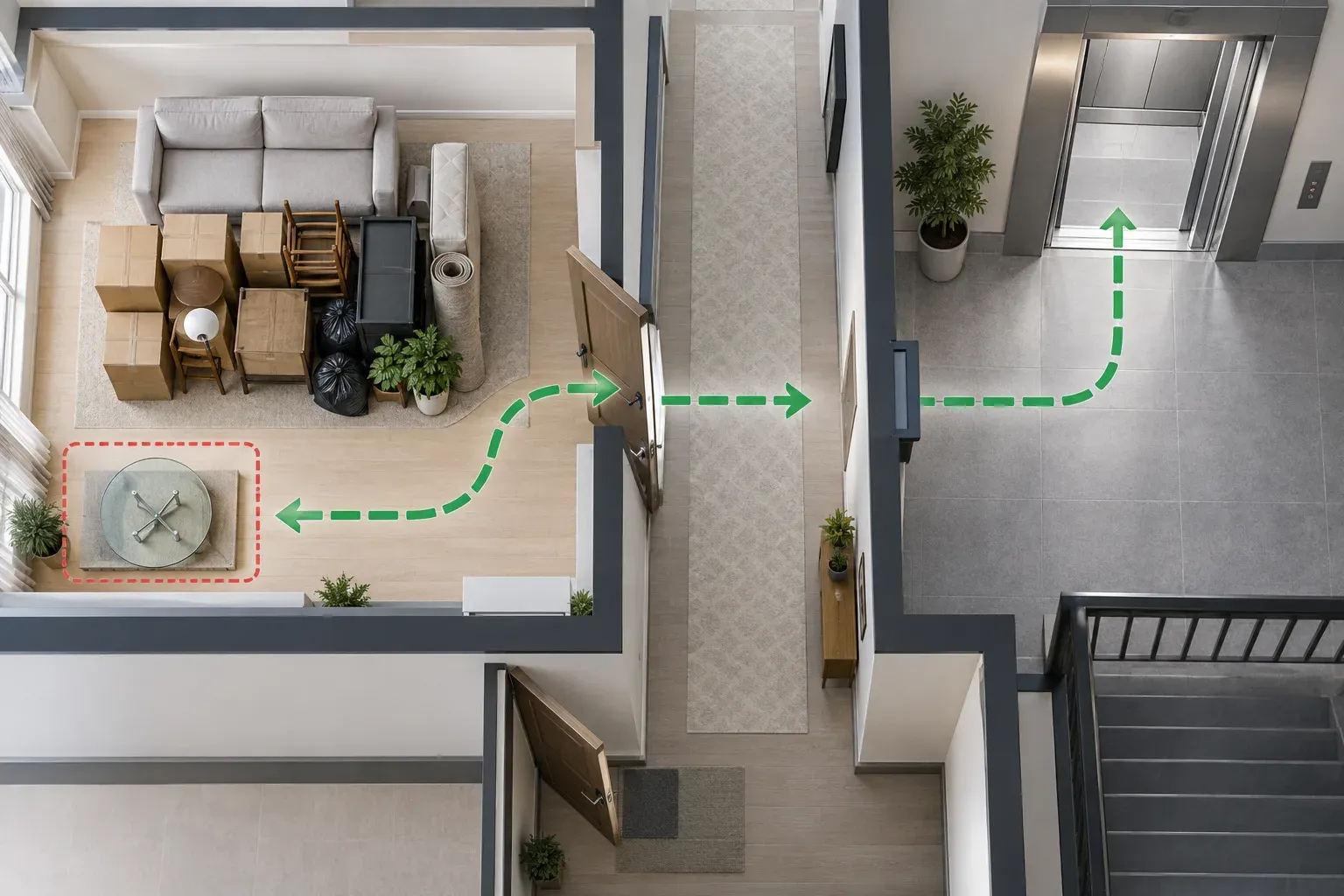
Check vertical clearance around lights, sprinklers and door closers. Protect vulnerable corners where appropriate without making the passage narrower. Keep floors dry. Freshly mopped tiles are unsafe under a heavy load.
If stairs are involved, clear every landing and confirm lighting. Tell the provider the floor and stair count in advance. A stair carry changes time and staffing and should not appear as a surprise when the lift is unavailable.
Arrange building access
Ask management whether removal requires a service-lift slot, permit, contractor information or deposit. Confirm the correct loading entrance and vehicle rules. Building requirements differ, so use the process for the actual property.
Share the approved time with the provider and leave room for check-in. A one-hour slot includes security registration, lift collection and travel to the apartment. Keep access cards, keys and approval messages with the person meeting the team.
If the building needs vehicle details, request them early enough to register. Send a map pin for a basement or rear loading entrance. Inform reception of the expected company and time where required.
Prepare the items that need special attention
Empty fridges and appliances, but arrange professional disconnection where required. Remove bedding from mattresses. Take loose cushions off sofas if they are part of the load. Empty wardrobes and remove glass shelves. Secure moving parts that can open during a turn.
Identify sharp edges, broken glass, wet material and unstable furniture. Do not bury these beneath normal bags. Contain small sharp items safely and tell the provider what is present. Unknown hazardous or restricted material should be discussed before booking rather than mixed into general junk.
Keep reusable or donation items distinct from disposal items only where a confirmed recipient or process exists. A handwritten “donate” note does not guarantee acceptance. The crew needs one clear instruction for each item.
Take useful photos
A useful photo shows scale and access. Stand back far enough to capture the whole pile or room. Add a second image of the largest item and a third of the tightest doorway, stair or lift. Avoid close-ups that make quantity impossible to judge.
Photograph labels only where they explain size or handling. Do not send personal documents or unrelated details. Mention dimensions for unusually large items. If the load changes after the photos, send an update.
For the clearest booking process, follow how junk removal works and keep the quote, item list and access information in one conversation. That reduces conflicting instructions between different people in the household.
Protect what stays
Move valuable, fragile and sentimental items away from the collection zone. Close doors to rooms that are out of scope. If two similar chairs exist and only one leaves, make the distinction unmistakable and tell the crew directly.
Protect walls or floors according to the property and building rules. Do not tape coverings to delicate surfaces without approval. Keep children and pets in a secure room away from open doors and moving routes.
Someone authorised should remain available during the collection. The crew may find an unlisted item, a route problem or a question about dismantling. A reachable decision-maker prevents guessing.
Plan parking and loading
Confirm where the vehicle can stop legally and safely. Reserve or request access where the building allows it. Do not rely on blocking a fire lane, entrance or neighbouring space. Explain long carries, ramps, basement height limits and gate procedures before arrival.
Keep the loading area clear. Do not stage loose items around the vehicle route. If the property is a villa, move cars from the driveway and unlock gates. Trim or tie back nothing without permission; simply identify narrow landscaping and steps.
Weather can affect an outdoor carry. Keep items protected inside until the vehicle and crew are ready. Wet cardboard and soft furniture become harder to handle and may affect the rest of the load.
Decide who will meet the crew
Choose one primary contact who knows the scope, quote and building arrangements. That person should answer the phone, meet security if needed and approve any agreed change. Multiple people giving different instructions slows the job and increases the chance of removing the wrong item.
If the owner cannot attend, provide written authority and a complete inventory to the representative. Confirm access to every relevant room. Do not leave a key without making sure the building permits contractor entry and the provider accepts unattended access.
Share any time deadline, such as a lift closing, checkout or cleaner arriving. A deadline can be planned only when it is known before work begins.
What not to do before arrival
- Do not carry bulky furniture into a common corridor.
- Do not add a room of items without updating the quote.
- Do not dismantle furniture into an unstable heap.
- Do not mix sharp, wet or unknown material into normal bags.
- Do not block the lift or loading bay in advance.
- Do not pack access cards, keys or approval documents.
- Do not leave pets loose around open doors.
- Do not clean the route with water immediately before lifting.
Preparation should reduce uncertainty, not transfer the lifting to the customer. The junk removal service is built around carrying items from the property; your role is to make ownership, access and scope clear.
If a large cabinet is included, review the wardrobe removal plan before taking out fixings or doors. If you are still deciding between a container and a collection crew, use the skip-hire comparison before reserving parking or a loading bay.
A room-by-room method
Start at the farthest room. Mark the outgoing items, remove personal contents and photograph the load. Then inspect the path to the main route. Repeat for each room without moving everything into one central pile.
Keep small items boxed by room where practical. Group frame parts and hardware together. Leave enough working space around large furniture for dismantling or lifting. In kitchens and utility rooms, confirm appliances are ready under the provider’s requirements.
Finish with balconies, storage rooms, maid’s rooms, parking storage and garden areas if they are in scope. These are easy to overlook. Add them to the item list before the appointment.
On arrival
Meet the crew at the agreed entrance and complete building check-in. Walk the property before lifting starts. Point out what leaves, what stays, fragile pieces and any route restrictions. Confirm additions or exclusions before the load begins.
Let the crew organise the carry sequence. The largest item may not leave first if a smaller item blocks access. Keep the route free and avoid standing in doorways. Ask questions from a safe position.
If the scope changes materially, pause and agree the effect on time or price. A calm adjustment before loading is better than a dispute after the vehicle is full.
After the load leaves
Check every collection area for forgotten pieces and personal items. Inspect corridors, lift and loading space for packaging or hardware. Sweep where needed after the route is free. Return lift keys and complete any building inspection.
Confirm whether anything remains for another booking. Do not assume an unlisted item was intentionally left. Resolve it while the crew and contact are still available.
Keep the collection record with handover or move-out documents if the date matters. A well-prepared appointment ends with the agreed items gone, the property route clear and no uncertainty about what happened.
Preparation for larger clearances
For a full apartment or villa, create an inventory by room and note the largest objects. Identify items requiring owner decisions, specialist disconnection or a separate recipient. Set those decisions before the crew date.
Confirm crew time and building access reflect the volume. A whole-property job cannot fit into a lift slot planned for one sofa. Arrange cleaners and deliveries after the expected removal finish, with buffer.
Use one update channel for changes. Repeated partial messages from several people create gaps. Send a final consolidated item list and access note the day before. Preparation succeeds when the crew can arrive, understand the job and begin safely without waiting for decisions that could have been made earlier.
A 24-hour preparation timeline
The day before the appointment, send the final item list and access note. Confirm the arrival window, building contact, service-lift booking and vehicle entrance. Photograph any newly added item and ask whether it changes the quote. Charge your phone and keep the crew’s contact details available.
In the evening, remove personal belongings from furniture and boxes. Check drawers, pockets, cupboards and appliance compartments. Put documents, jewellery, medicines, keys and small electronics in a separate room or bag that will not enter the removal area. Mark the items that stay in the property.
On the morning of collection, unlock approved access points and clear the indoor route. Keep children and pets away from working areas. Do not put furniture in corridors or hold a lift open. Confirm that the loading place is available under the building’s rules.
About 15 minutes before arrival, make sure the primary contact can answer the phone and meet security. Have approvals, access cards and the final list ready. Walk the rooms once more so overlooked balconies, storage spaces or loose parts can be identified before the crew starts.
Quick answers before a collection
Do I need to move everything near the door?
No. Leave bulky items in a safe position with space around them. Moving them into a corridor creates an obstruction and can remove the room the crew needs for controlled lifting. Group small, secure boxes only where they do not narrow the route.
Should I dismantle furniture first?
Ask the provider. Basic dismantling may be included, and the crew may need the item intact to understand its structure. If you dismantle an item, label its parts, contain the hardware and keep panels stable. Never leave a leaning stack in a walkway.
Can I add items on the day?
Ask before loading begins. The provider must confirm vehicle space, time, accepted material and any price change. A small object may be simple to add; a second sofa, appliance or room of bags can change the job substantially.
What should remain with me?
Keep valuables, identity documents, tenancy papers, building access items, medicines and anything you are uncertain about. If an item has sentimental value, move it outside the collection rooms or label it clearly as staying.
What if the building access changes?
Contact the provider immediately. A cancelled lift, different loading entrance or reduced time window can affect crew and vehicle planning. Early notice may allow the booking to be adjusted without a failed arrival.