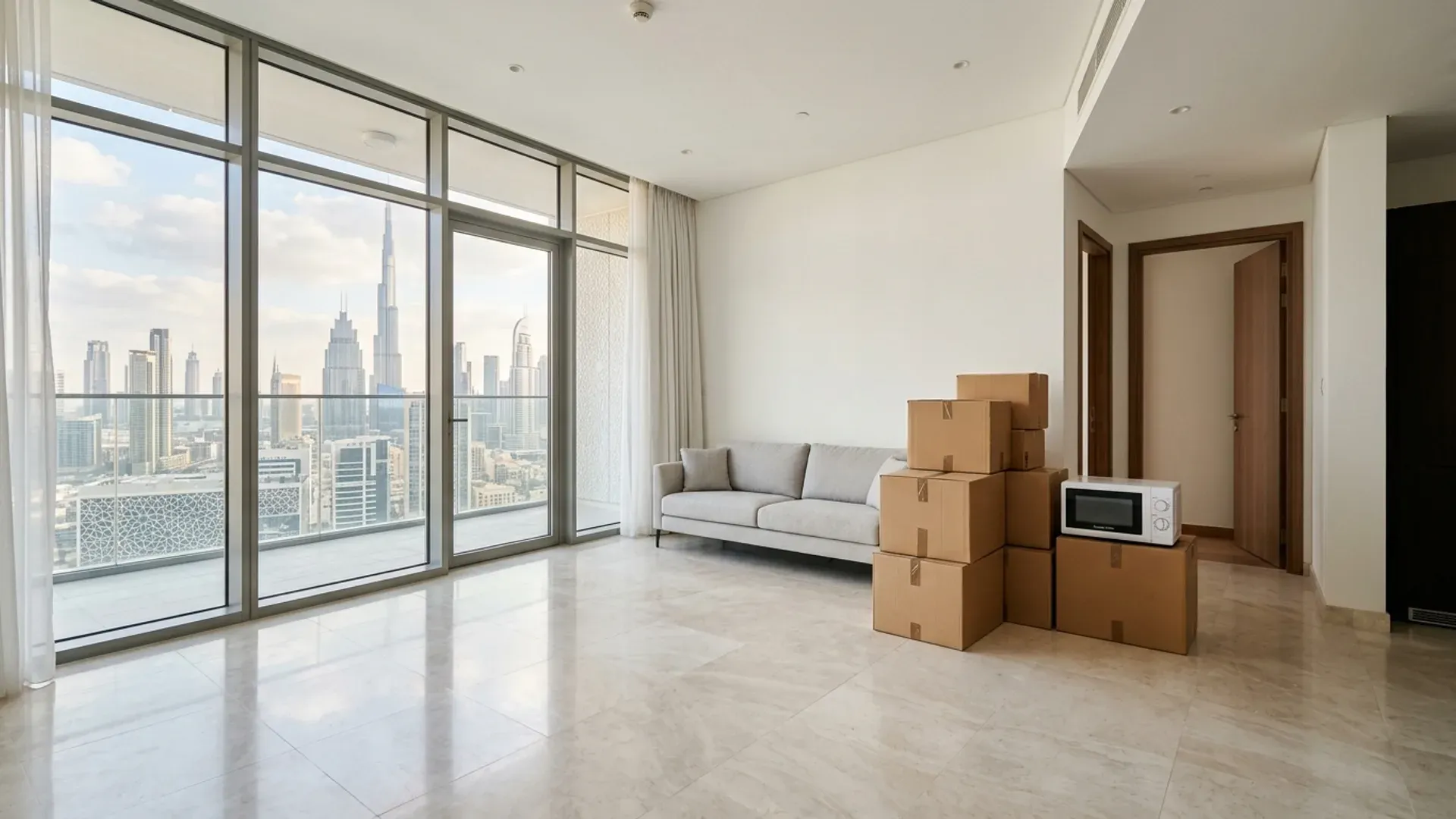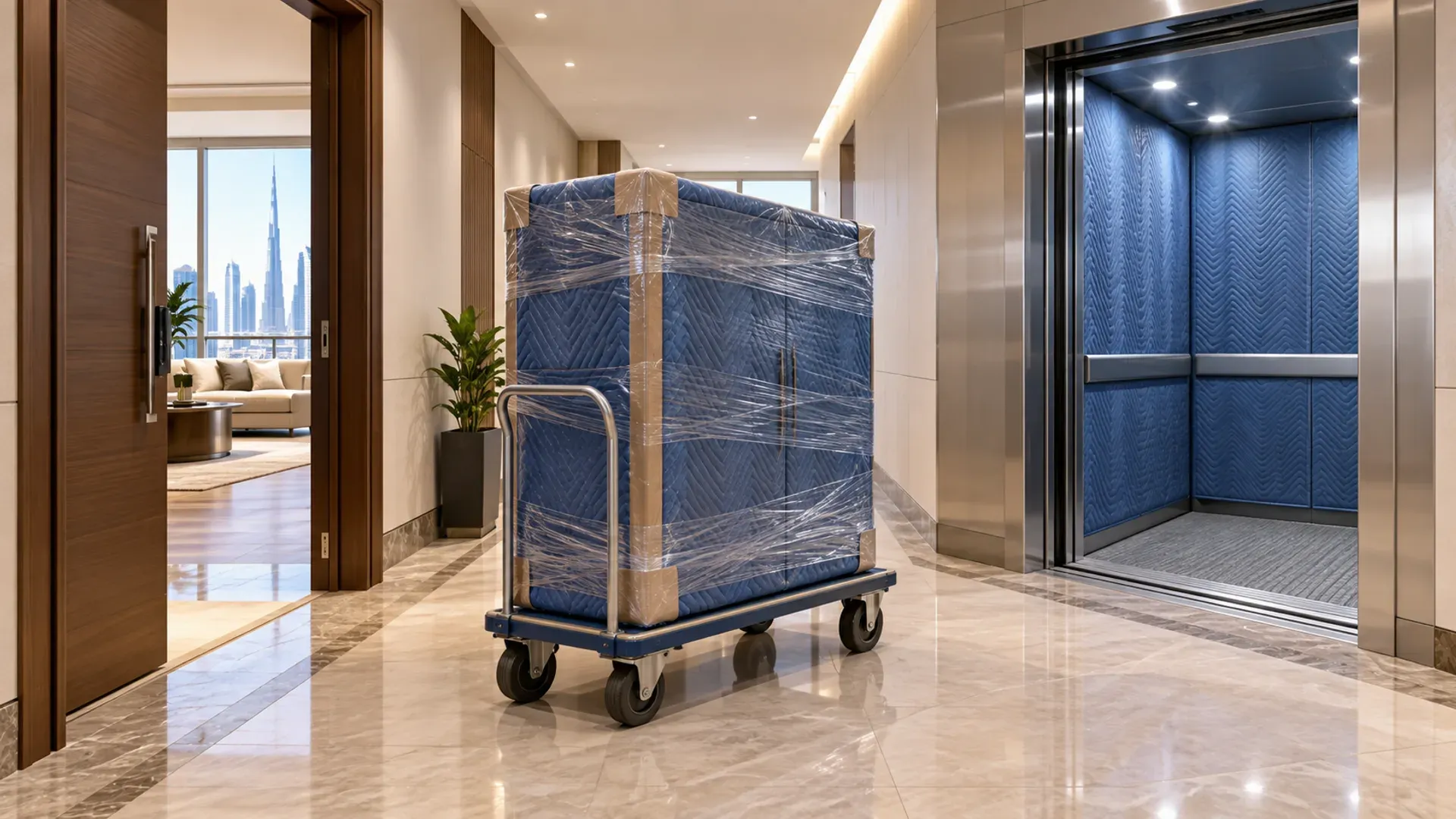
Clear a balcony by deciding what will leave, what must stay with the property, and what needs a separate route before anyone lifts a chair. Photograph the full space first. A small balcony can hold a surprisingly mixed load: outdoor furniture, planters full of soil, old packaging, a broken drying rack and items that should never be bundled with ordinary household junk, such as a gas cylinder or leaking paint tin. Everything that leaves has to travel back through the apartment and down through the building, so the indoor route and the building's loading arrangements matter as much as the balcony itself.
Begin with the balcony's finish line
Decide whether you need an empty balcony for a handover, room for a new outdoor set, or simply a usable floor. Those are different jobs. A handover usually means every loose item goes and the floor is clean enough to photograph. Making room for a new set may mean only the old furniture leaves while the pots stay. Reclaiming a cluttered space may mean removing the obvious junk and leaving decisions about plants for later. Write the goal in one sentence before you start, because it settles most of the small arguments you will have with yourself halfway through.
If a landlord supplied the furniture, pots, shade sail or storage box, check the inventory before putting them in a removal pile. Keep any item you cannot identify until the owner or agent confirms it can go. A fixed planter, a wall-mounted light or a screen attached to the railing is part of the property unless someone with authority says otherwise. The landlord inspection guide covers the wider handover check, including the outdoor spaces that are easy to overlook.
Take a wide photo from the balcony door. Then photograph the floor, each corner and anything hidden under a cover or tarpaulin. This gives you a record of what is there, protects you if there is a later question about the condition of the space, and makes it easier to quote the actual load. Note whether the balcony has a narrow sliding door, a raised threshold or a tight turn into the apartment. An outdoor sofa may sit comfortably on the balcony but fail at the doorway, particularly if it was assembled in place.
Do not start by dragging everything into the living room. Mark a keep zone and a collection zone on the balcony while leaving a safe walking path between them. Keep loose pieces from falling or blowing over the edge. Never lower, drop or throw anything from a balcony to save a trip through the building, however light it seems; a falling cushion or carton can injure someone below and damage property. If a large item has to be taken apart, photograph it assembled first and ask the collector whether dismantling is necessary.
Separate furniture from the other materials
A balcony clear-out goes faster when each type of material has its own group. Mixed piles hide heavy items, sharp edges and things that need a different route, and they make the quote photos harder to read.
Outdoor furniture
Chairs, tables, loungers, benches and storage chests form one group. Their condition helps determine whether reuse is realistic, but do not promise a donation route for sun-damaged or broken pieces. Plastic that has gone brittle, rattan that is unravelling or metal frames with rust at the joints are rarely wanted by another household. Photograph cracked legs, loose glass and exposed fasteners. Bag or tie small detached parts so they do not scatter on the way through the building.
Cushions and covers belong with the furniture they came from, but check them separately. Outdoor fabric can hold dust, damp or mould after a season outside. Bag them so they do not shed across the floors inside the apartment. The garden furniture guide covers the keep-or-remove decision for a full outdoor set in more detail, including how to judge whether a piece is worth passing on.
Plants, pots and soil
Plant material is a different group. Put dry leaves and loose trimmings in suitable bags, and show the collector any branches or long stems that will not fit. A planted pot is not the same as an empty plastic pot: soil adds weight, and a large ceramic planter may be fragile as well as heavy. Wet soil is heavier still and can stain floors along the indoor route.
If you are replacing plants, decide whether each pot stays before emptying it. Emptying a planter on a balcony can block a drain or leave sediment that has to be cleaned before handover. The soil, sand and pots guide explains why heavy growing materials should be declared separately from light furniture, and the guide to garden waste bins helps if you only have a small amount of green material.
Packaging and general clutter
A balcony can become overflow storage after a move or a large delivery. Flattened boxes, foam inserts, plastic wrap and old appliance cartons pile up against the wall. Group them away from the furniture and keep them dry; wet cardboard collapses and is harder to carry. The packing material guide covers sorting cartons, foam and wooden crates, and how to tell whether the volume needs a booked collection.
Drying racks, broken umbrellas, old fans, mops, buckets and toys belong in a general clutter group. Each piece is light, but together they take space in a vehicle and time to carry. Count them or show them clearly in a photo rather than describing them as "a few small things".
Keep hazardous and special items out of the ordinary pile
Batteries, electrical items, paint, cleaning liquids, insect sprays, fuel and gas cylinders should never be mixed into the general pile. These materials need an answer of their own before collection day, and hiding them under furniture or a tarpaulin only moves the problem to the person loading the vehicle.
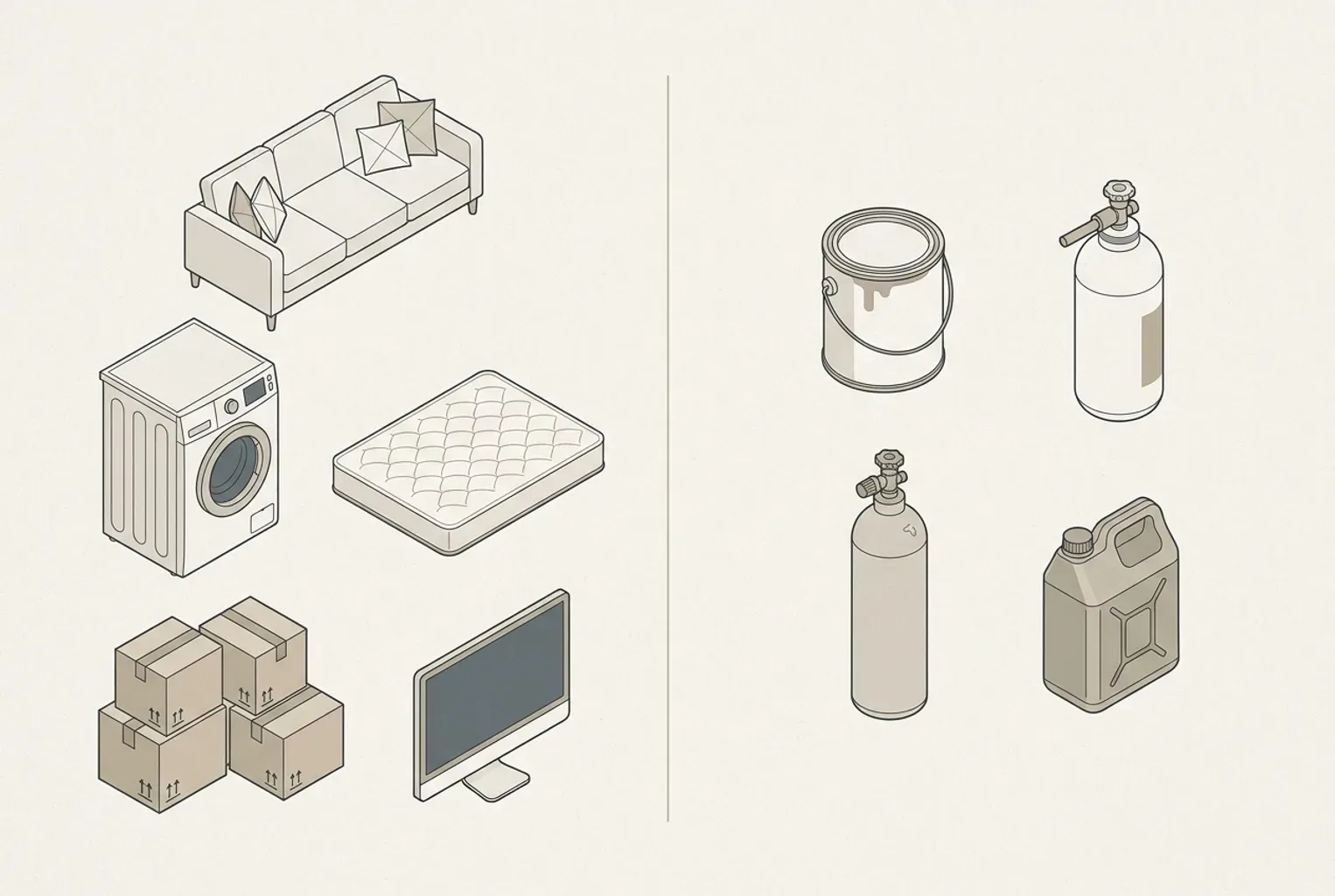
A barbecue may include a gas cylinder that needs its own arrangement. Disconnect it only if you know how to do so safely, keep it upright in a shaded, ventilated spot, and do not assume a general clearance booking includes it. Tell the collector it is there and ask what route applies. The same goes for half-used paint tins, varnish, pool or cleaning chemicals and aerosol cans. Keep their lids on and keep them apart from fabrics and cardboard.
Electrical items such as outdoor lights, extension leads, fans and small heaters are a separate decision from furniture. Batteries from solar lights or toys should be removed where you can do so safely and kept together. The acceptance guide explains which items normally form part of a household collection and which need a different answer, so check it before sending your list.
If the balcony has a fixed air-conditioning component, satellite dish or water heater, do not disconnect it as part of a general clear-out. Establish who owns it and whether a specialist must handle it. A building may have its own rules about equipment on the façade, and removing something that belongs to the property can create a problem at handover.
Check the balcony's condition as you go
Clearing the furniture often reveals things that were hidden for months: blocked drains, stained tiles, damaged waterproofing, bird nests or droppings, or rust marks where a metal table stood. Note these as you find them. They are not part of a junk collection, but they may matter for a handover or for building maintenance.
Do not try to deal with a bird problem or a damaged surface by scraping or pressure-washing straight away if you are a tenant. Photograph it and tell the landlord, agent or building management. Some issues are their responsibility, and a hasty repair can make an inspection harder rather than easier. Wear gloves when handling anything soiled, and keep droppings and nesting material out of the general bags if management has a preferred way of dealing with them.
Check the drain before and after the clear-out. Soil, leaves and packaging fragments wash into balcony drains easily, and a blocked outlet can cause water to pool or leak to the floor below during cleaning. Clearing it with a gloved hand is usually enough; anything beyond that is a maintenance question.
Plan the route through the home
In an apartment, a balcony collection has an indoor carrying route. Measure the largest item against the balcony door and any sharp turn between the balcony and the main entrance. A sliding door may only open halfway, and a fixed glass panel cannot be removed for convenience. Clear rugs, small tables and fragile objects from that route. Cover or protect surfaces as agreed with the collector, especially where wet pots or dusty furniture must pass across a finished floor or a light-coloured carpet.
Think about the order things leave. Light bags and boxes can go first to create space, but if a large lounger blocks the door, it may need to leave early so the rest can be reached. Keep heavy pots near the door if they are leaving, and move the items that stay to the far side of the balcony so they are not in the way.
For a tower apartment, the route continues into the corridor and down to the loading area. The tower bulky-item guide helps you check whether the largest piece can leave intact and what to measure before the crew arrives. Corner sofas, long benches and tall storage units are the pieces most likely to need a decision about dismantling.
Arrange building access before booking
Ask building management whether a service lift, loading bay or security notice is required for your particular collection. Rules differ by building, and some buildings set specific hours or require a booking in advance. Where your building requires a service-lift reservation, confirm the slot before fixing the collection time. The service-lift booking guide gives a short list of questions to settle before collection day.
Give the collector the floor, lift access, parking or loading instructions and permitted hours when requesting a quote. If there is a security desk, ask whether names or vehicle details are needed in advance. A crew that arrives without access arranged may not be able to start, which wastes everyone's time and may push the job past your deadline.
Do not leave the unwanted set in a corridor, lobby or bin room while you wait. Keep it in the space you control until the collection is arranged. Shared areas are not a staging space unless management has approved it, and items left there can be removed or reported before your collection arrives. If a handover deadline is close, allow time to clean the balcony floor after the items leave and to take final photographs.
Villas, townhouses and ground-floor terraces
Not every balcony is in a tower. A first-floor balcony in a villa or townhouse usually means carrying items down an internal staircase, which adds its own constraints: a tight turn on the landing, a banister that cannot be removed, or a stair runner that needs protecting. Measure the stairwell as you would a lift.
A ground-floor terrace may have direct access to a garden gate or driveway, which simplifies the route considerably. Check whether the collection vehicle can park close by within the community's rules and whether the gate is wide enough for the largest item. If the clear-out is part of a wider outdoor job with trimmings and heavy pots, the garden waste removal service may be the better fit for that part of the load.
Send a quote request that shows the whole job
A clear request lets the collector confirm the accepted items, the carrying route and the right vehicle before anyone is dispatched. Include:
- A wide photo of the balcony from the doorway, plus close views of heavy or unusual items
- A short list of what stays, so nothing belonging to the property is removed
- Separate mentions of soil-filled pots, broken glass, batteries, paint and any gas cylinder
- Whether any item is fixed to the wall, floor or railing
- The floor, lift arrangement, parking or loading point and any permitted hours
- Your deadline, and whether the space must be clean for a handover
For a straightforward balcony load in an apartment, residential junk removal is the service to ask about; it covers carrying items out of the home and through the building route, with the access details agreed in advance. If the balcony is only one part of a wider clear-out, describe the whole load in the same request so the quote reflects everything rather than one corner of it.
On collection day
Have the keep items moved aside and clearly separated before the crew arrives. Unlock the balcony door fully, remove door stoppers or curtains that catch, and clear the indoor route. Keep pets and children away from the doorways while items are being carried. If you have a list of declared special items, keep it handy so you can point them out at the start.
Walk the balcony with the crew before loading starts and confirm what is leaving. It is much easier to correct a misunderstanding at that point than after a lounger is already in the lift. Keep any documents or small valuables found during the sort with you, not on a table that is about to be carried away.
After collection, check behind the door, under any remaining furniture, along the railing and in the drain. Sweep the floor and take your final photographs from the same position as the first wide shot. The balcony is finished when the agreed items are gone, the special items have a confirmed route and the things that belong to the property are still in place.
Questions about balcony clearance
Can I clear just the balcony, or does it need to be part of a full move-out?
A balcony can be cleared on its own. Describe it as a standalone job with photos and access details, and the quote can be based on that load alone.
Will a collector take a barbecue with a gas cylinder?
Declare the cylinder separately and ask before booking. It may need its own route, so do not assume it is covered by a general furniture or junk collection.
Should I empty the soil out of large pots first?
Not necessarily. Decide whether the pot is staying, then ask the collector how they prefer soil-filled pots to be handled, since emptying them on the balcony can block the drain and add cleaning work.
What if my building does not allow furniture in the passenger lift?
Ask management about the service lift or another permitted route and book it before confirming the collection time. Share the arrangement with the collector so they arrive within the allowed window.