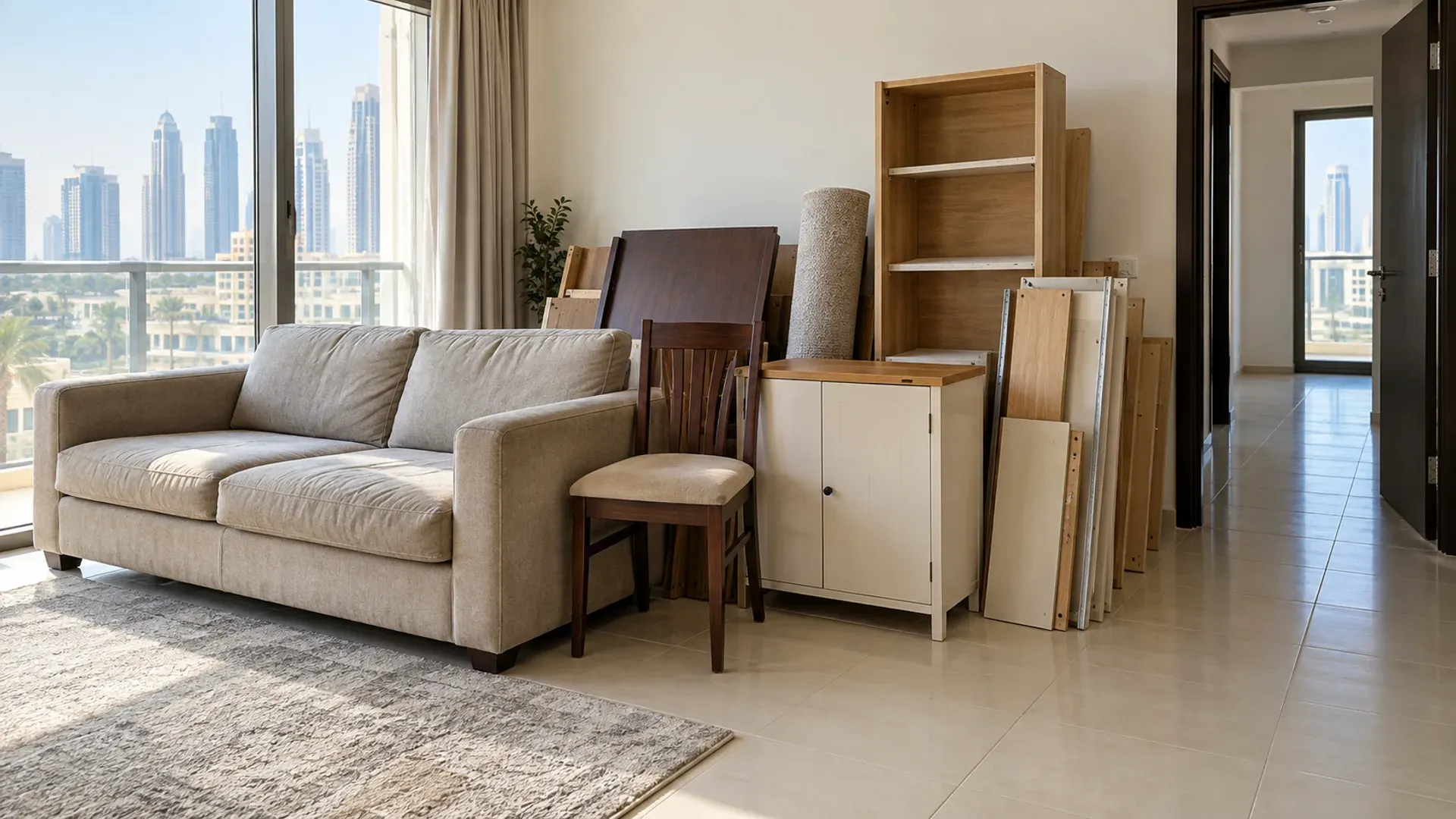
Bedroom furniture removal should be planned as one coordinated room inventory, not as a series of unrelated item pickups. Decide what belongs to whom, empty every storage space, separate the mattress from the bed, record mirrors and fragile parts, and measure the largest component against the complete route out of the property.
The room name does not describe the load. One bedroom may contain only a bed and two side tables; another may include a tall wardrobe, dressing table, chest of drawers, television, desk, ottoman and boxes hidden under a storage base. List the actual pieces before asking for a quote.
Freeze the keep-and-remove decision first
Walk the room with the person authorised to decide. Mark every item as keep, move elsewhere, remove or hold. “Clear the bedroom” is not a sufficient instruction when the room contains personal belongings, landlord furniture or pieces intended for a new home.
Use visible labels and one written inventory. Include loose furniture, items fixed to walls, contents inside furniture and anything stored under the bed. If several bedrooms are involved, give each room a name or number and keep their lists separate.
Check ownership before dismantling begins. In a furnished rental, a bed, wardrobe, bedside table, curtains or mirror may belong to the landlord. In a shared home, one resident may not have authority over another person's belongings. When the answer is uncertain, move the item to the hold list and get written approval.
Empty the furniture, not just the room
Open every drawer, cupboard, ottoman lid and storage compartment. Check behind drawers, on top of wardrobes and between a mattress and base. Remove documents, jewellery, medication, keys, chargers, remote controls and personal photographs before the crew arrives.
Do not use a wardrobe or chest as a box for smaller unwanted things. Contents shift during carrying, add hidden weight and can fall through damaged panels. Bag or box loose items separately, then list those containers as their own part of the load.
For a child's bedroom, keepsakes and personal items require a slower decision process. The children's-room clearance guide provides a separate method for toys, schoolwork, electronics and furniture that may still have reuse value.
Build an item-by-item bedroom inventory
Record each piece in a consistent format: item, approximate dimensions, construction, condition, whether it is empty, whether it separates and where it sits. Photographs should show the whole item, not only a damaged corner or brand label.
A complete bedroom list may include:
- Bed frame, divan or storage base.
- Headboard and any wall fixings.
- Mattress and mattress topper.
- Freestanding wardrobe or modular wardrobe sections.
- Chest of drawers and bedside cabinets.
- Dressing table, stool and detachable mirror.
- Desk, chair, bookcase or television stand.
- Bench, ottoman, armchair or small sofa.
- Loose shelves, lamps and boxed contents.
Note materials that change handling. Glass shelves, mirrored doors, stone tops, solid timber and metal mechanisms deserve a clear mention. So do water damage, loose joints, cracked panels, protruding screws and drawers that no longer close.
Photograph sets as separate pieces
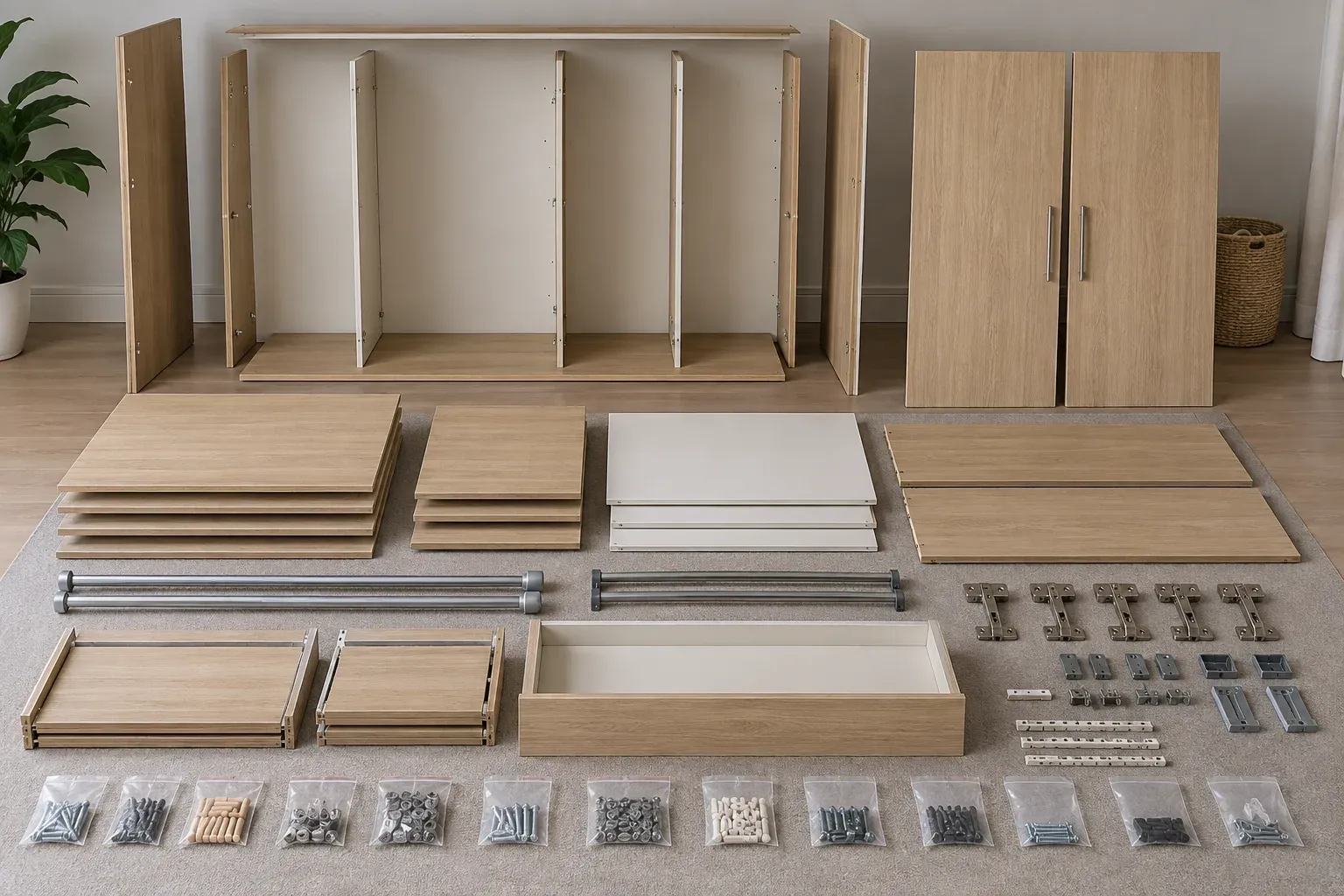
A matching bedroom set may have been bought as one product, but it leaves as several items. Photograph the bed, wardrobe, dressing table and cabinets individually, then add one wide room view. State which pieces are definitely leaving and which remain.
Avoid shorthand such as “one full bedroom set.” It does not reveal mattress size, wardrobe width, mirror construction or the number of drawers. An itemised list helps the removal provider assess labour and route constraints, while helping the owner confirm that the correct set has been selected.
Prepare the bed and mattress separately
Strip bedding and remove personal items from beneath the bed. State whether the mattress is leaving with the frame or staying. Photograph both, because a flexible mattress and a rigid frame behave differently on stairs, at doors and inside a lift.
Identify the bed type. A simple slatted frame, divan, upholstered frame, hydraulic storage bed and bunk bed do not dismantle in the same way. Mention drawers, lifting mechanisms, electrical features and an attached headboard. Do not release or force a mechanism that you do not understand.
The bed-frame disposal guide explains how to record the frame, base, headboard and storage parts. The mattress removal guide deals with protecting the mattress and planning its flexible route. Keeping those two scopes separate prevents a quote for “a bed” from hiding half the job.
Check fitted and wall-mounted parts
A headboard panel, bedside unit, shelf or television may be fixed to the wall. Confirm whether it is a removable furnishing, a landlord fixture or part of a fitted installation. A removal booking does not automatically include electrical isolation, wall repair, carpentry or removal of built-in cabinetry.
Show fixings in photographs and ask who will release the item. If a technician or other trade is required, complete that handoff before the collection slot. The crew should receive a safe, loose item unless the agreed removal scope says otherwise.
Decide whether the wardrobe travels whole or in parts
Measure the wardrobe and the route before deciding. A wardrobe that fits inside the room may not turn through the bedroom door, corridor or lift. Check height, width and depth, then identify the largest panel or module if it comes apart.
Empty shelves and rails, secure doors and remove loose glass where appropriate. Do not assume a large flat-pack wardrobe will survive being moved intact or dismantled for reuse. Condition, construction and the next destination all matter.
The wardrobe removal guide explains the whole-versus-dismantled decision. If dismantling is needed only to remove the item, record where the work can happen and how panels and hardware will be controlled. If the intention is reuse, that is a different standard from dismantling an unwanted item for clearance.
Protect mirrors and glass
Identify mirrored wardrobe doors, dressing-table mirrors, glass shelves and glass-topped cabinets. Show cracks, chips and loose fixings before anyone moves them. Keep people away from an unstable mirror and do not lean loose glass in the carrying route.
State whether a mirror detaches and who will do it. If a panel is already broken, do not conceal it behind cardboard or inside a drawer without warning. Clear information lets the provider decide whether the item can be accepted and what preparation is needed.
Measure the route from the furthest item
Start at the largest bedroom item and walk all the way to the expected vehicle position. Measure the bedroom doorway, corridor turns, stair width, lift entrance and any gate or loading-area constraint. Photograph the narrowest points with enough context to understand the turn.
Do not stop at the apartment entrance. In a tower, the route continues through shared corridors, the service lift and the loading area. In a villa or townhouse, it may include stairs, a tight landing, a side gate or parked vehicles. A piece that clears the first door can still fail later.
The bulky-items tower guide helps map the building portion of the route. If a service lift or building permission is needed, the property contact should confirm the current procedure with management before the collection date.
Compare the largest resulting component
When an item can be dismantled, measure the largest part after dismantling, not just the assembled furniture. A long wardrobe side, bed rail, headboard or dressing-table top may remain too long for a lift or stair turn even after the smaller fittings are removed.
Use the furniture-dismantling guide to make that decision from construction, condition, destination and route. Do not dismantle everything by default. Unnecessary work creates loose hardware and damage without solving an access problem.
Keep the bedroom and route safe before collection
Clear clothes, rugs, lamps, cables and boxes from the walking line. Keep retained items away from the work zone and close access to other rooms if that helps prevent confusion. Do not stack panels against the only exit or place boxes in a shared corridor.
Secure drawers and doors so they cannot swing open. Remove loose shelves and identify hardware if the item is being taken apart. If the furniture is damaged, point out unstable legs, sharp edges, swollen board or disconnected backs rather than expecting the crew to discover them while lifting.
Keep children, pets and people who are not involved away from the room and route. Bedroom clearance can involve long pieces passing through narrow areas, and last-minute searching inside furniture interrupts the planned movement.
Do not promise reuse through a removal booking
Condition should be described honestly. Clean, complete furniture may be suitable for a reuse route, but the article cannot guarantee acceptance, donation or a final destination. Stained mattresses, broken flat-pack panels, missing hardware and swollen board may not be realistic reuse candidates.
If donation is the goal, confirm that route before the removal booking and check the recipient's current criteria. The furniture donation guide explains the difference between hoping an item can be donated and having a confirmed recipient.
Coordinate several bedrooms without mixing them up
For a multi-room clearance, keep a room-by-room inventory and label dismantled parts with their source. A white wardrobe panel from Bedroom 1 can look identical to one being retained in Bedroom 2. Photos taken before dismantling provide a useful reference.
Choose a sequence. The room furthest from the exit may go first, or the largest pieces may be cleared before boxes narrow the route. The correct order depends on the property, but it should be decided rather than improvised.
Use one hold zone for uncertain items and one keep zone for anything moving elsewhere in the property. Do not use the collection staging area for both. The property-clearance guide adds authority, records and sign-off when an owner, agent or representative is arranging the work for a home they do not occupy.
Plan around other work in the room
Movers, cleaners, painters, installers and a new furniture delivery may need the same route. Set an order and avoid overlapping teams in a small bedroom or corridor. If a new bed or wardrobe is arriving, allow for the old item to be fully out and the route reopened first.
Removal is not a moving, cleaning, decorating or installation service. Keep those responsibilities distinct in the schedule, and make sure the person coordinating the property knows who is responsible for each handoff.
Send a quote pack that matches the room
Begin with a wide photograph from the bedroom door. Add full views of every large item, close views of fragile or damaged parts, and route photographs. Include the written inventory and identify anything that still needs an ownership decision or technical release.
Useful details include:
- The number of bedrooms and the name used for each.
- Every furniture item, mattress and separate box leaving.
- Bed type, mattress size and storage mechanisms.
- Wardrobe construction and the largest panel or module.
- Mirrors, glass, stone, electrical parts and existing damage.
- Fixed items and who will release them.
- The keep, remove and hold decisions.
- Door, stair, lift and loading-route constraints.
- Building access already confirmed.
- Other teams or delivery deadlines affecting the schedule.
This gives a furniture removal service a visible scope to assess. It is more reliable than a room count and helps prevent retained furniture, hidden contents or an unmentioned access problem from appearing after the booking is made.
Sign off against the original inventory
After removal, revisit each bedroom with the list. Check inside cleared storage spaces, behind doors and along the route. Confirm that every retained and held item remains and that dismantled hardware or loose shelves have not been left behind unintentionally.
If the property is being handed over, photograph the empty room and any landlord furniture that remains. Collection does not include cleaning, repairs or wall making-good unless those jobs are separately arranged. Record what was removed and what still needs another trade.
Common questions
Do I need to dismantle bedroom furniture before collection?
Not automatically. First compare the assembled item and its largest possible component with the full route, then agree who will dismantle it if that is genuinely required.
Can belongings stay inside drawers?
No. Empty and check every drawer, cupboard and storage base. Hidden contents add weight, can be lost and may include personal items that were never approved for removal.
Is a mattress included when I say “remove the bed”?
Do not assume it is. List and photograph the frame, base, headboard and mattress separately so the approved scope is unambiguous.
What if some furniture belongs to the landlord?
Keep it on the hold or retain list until written authority is clear. Do not dismantle or remove an item simply because it is inside the room being cleared.
What should I send for a quote?
Send the itemised room inventory, full-item photographs, damage and material details, measurements of the largest pieces, and images of the complete route to the vehicle.