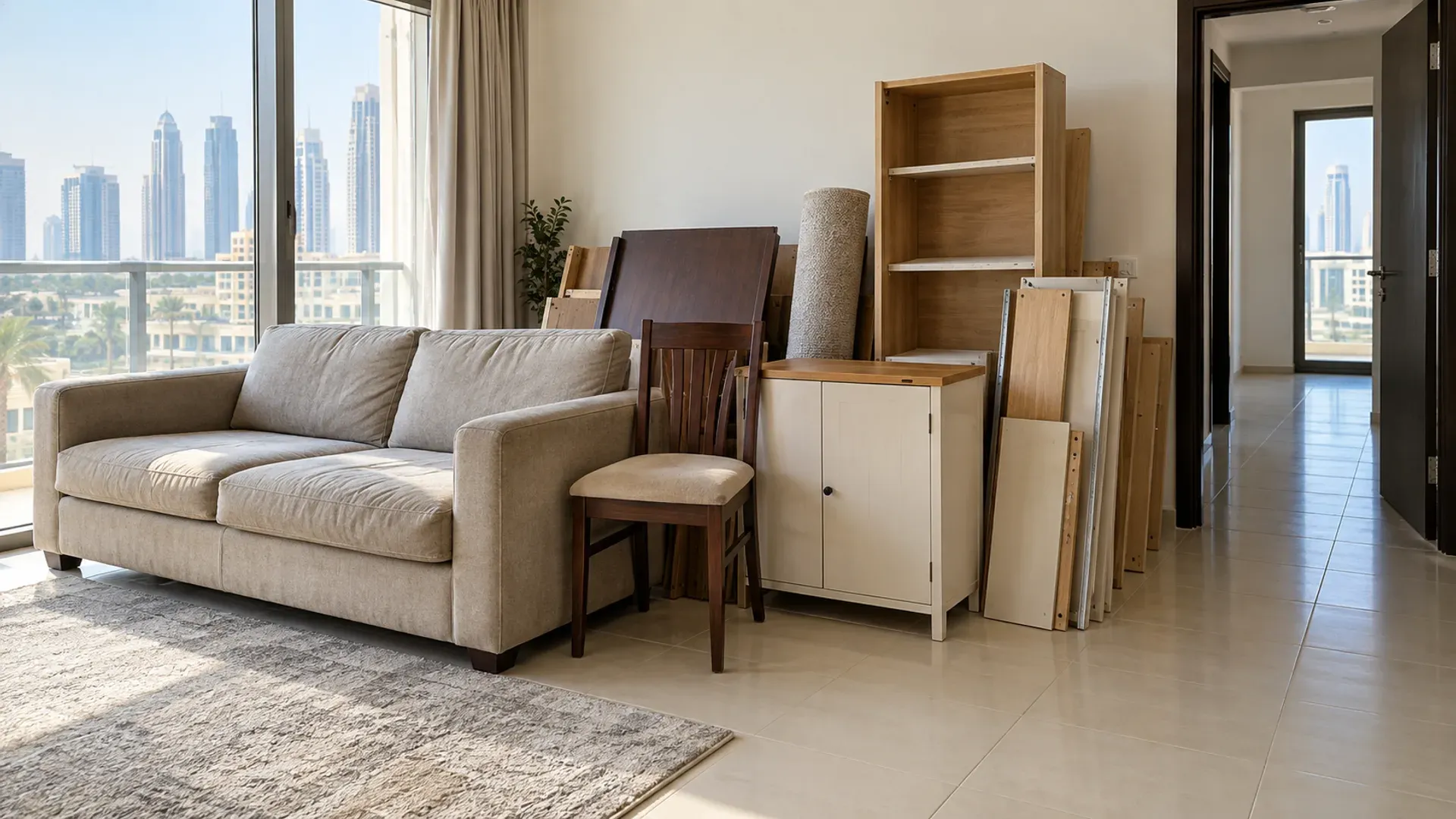
Donating furniture in Dubai works when an item is clean, structurally sound and collected on an agreed schedule before your tenancy ends. When a dining set, sofa or wardrobe is in good shape, passing it on to a charitable organisation, a family in need, a colleague or building staff keeps usable goods in circulation and saves them from the waste stream.
The challenge is that donation is an act of reuse, not a waste clearance service. Charities and community recipients only take furniture they can put to immediate, safe use. If a piece has broken joints, torn upholstery, water damage or missing hardware, it will be rejected at the door. If a private recipient promises to collect an item but fails to show up before your tenancy inspection, an abandoned piece can result in landlord deductions from your security deposit.
This guide outlines where to donate furniture in Dubai, how charity collections and community transfers operate, what criteria decide whether an item is genuinely donatable, and what practical steps to take when donation is not an option.
What usable furniture actually means
Before looking for a charity or community recipient, assess the piece from the point of view of the person receiving it. A recipient should be able to place the item in their home and use it immediately without spending money on tools, joinery or deep cleaning.
Structural stability and safety
A table, chair or cabinet must stand squarely and bear weight safely. If a dining chair wobbles when someone sits on it, or a bookshelf leans because the corner brackets have pulled out of the composite board, it is not ready for donation. Joints must be firm, legs secure and shelving pins intact.
In Dubai, humidity in storage rooms and balconies can weaken timber fixings over time. Test the piece by applying gentle downward and lateral pressure. If the frame creaks excessively, flexes at the seams or sheds wood dust, the internal structure is compromised.
Surface condition and upholstery
Surfaces should be clean and free of deep gouges, burns or peeling veneer. Normal, gentle surface wear on a solid wood coffee table is acceptable to most recipients, but deep scratches, chipped glass corners or child-lock adhesive residue that cannot be cleaned off diminish the usefulness of the piece.
For upholstered furniture such as armchairs and sofas, fabric and cushions must be clean, free of unpleasant odours and unsoiled. Stains from liquids, food or pets, as well as fabric tears and broken internal springs, make upholstered items unhygienic and unusable. Cleaning or re-upholstering a second-hand sofa often costs more than purchasing a replacement, which is why recipients decline stained soft furnishings.
Completeness and hardware
Furniture must have all of its essential parts. A chest of drawers missing two handles or a bottom runner is incomplete. A wardrobe missing its hanging rail, shelf brackets or magnetic catches creates a problem for whoever receives it.
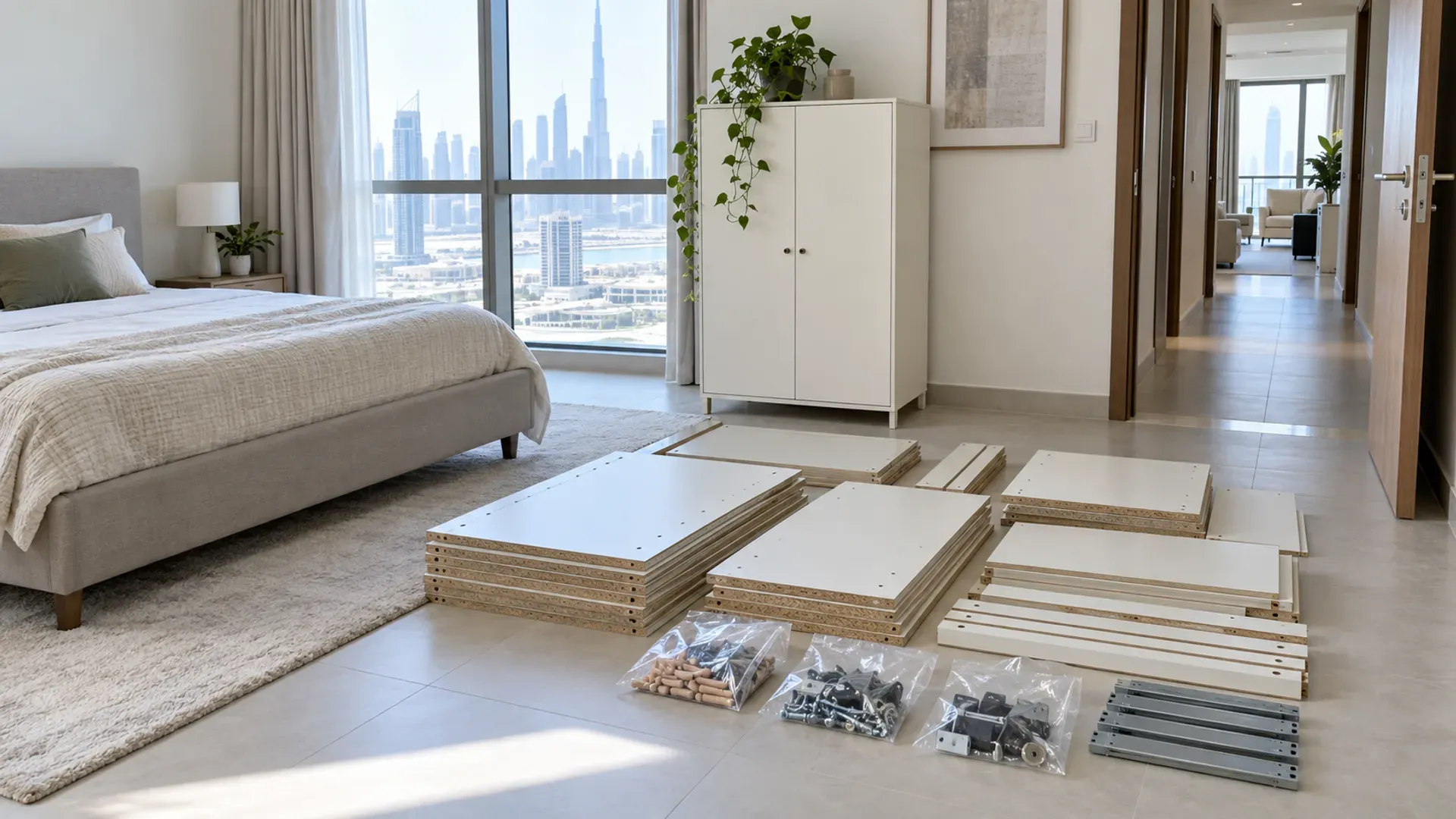
When an item has been dismantled for transport, every bolt, wooden dowel, screw and bracket must be gathered into a sealed bag and taped securely to one of the main panels. A dismantled flat-pack wardrobe without its specific assembly fixings cannot be reassembled.
How charities in Dubai handle furniture
Registered charitable foundations and humanitarian organisations in the UAE perform vital social work supporting families, workers and lower-income households. Some of these organisations accept home furnishings, but their operational capabilities and collection policies are often misunderstood.
Charities are not clearance crews
A common misconception is that a charity will send a lorry and four labourers to clear any unwanted household goods from an apartment. Registered charities operate on limited budgets and volunteer time. They do not have unlimited warehouse space to store surplus or damaged items, nor do they run full-time furniture repair workshops.
When charities accept furniture donations, they generally look for essential, practical items in ready-to-use condition: clean beds with sound frames, sturdy wardrobes, modest dining tables with chairs, and clean, compact sofas. Heavy ornamental furniture, oversized display cabinets, glass-heavy desks and luxury items are frequently declined because they do not suit the living spaces of the families being supported.
Verifying charity acceptance and collection channels
Charity collection policies, designated donation drop-off locations and logistics arrangements change periodically based on storage capacity, campaign focus and municipal guidelines. For that reason, this guide does not publish temporary collection telephone numbers or static addresses that could become obsolete.
Before arranging to donate, check the official portal or verified customer service channel of the organisation you wish to support. When contacting them, be ready to supply:
- Clear, well-lit photographs showing the complete item from multiple angles
- Close-up photographs of any minor cosmetic wear
- Exact measurements in centimetres (height, width and depth)
- Your property location and floor level
- Whether your building has a service lift and vehicle loading bay
- Your deadline by which the piece must be collected
Ask specifically whether the organisation provides collection from inside your home, requires kerbside handover outside the building, or operates a central intake warehouse where you must deliver the item yourself.
The kerbside collection constraint
Many charitable organisations that do offer vehicle collection only collect from the ground floor or loading bay. Their drivers are often on tight schedules with limited helpers and are not authorised to enter residential apartments, dismantle complex joinery or navigate tight service corridors.
If an organisation requires items to be brought down to the driveway, you must arrange the labour and equipment to move the furniture out of your apartment yourself. Leaving furniture unattended on the pavement or outside a building while waiting for a collection lorry is prohibited under Dubai waste and cleanliness regulations.
Community donation and direct reuse routes
When formal charity collection is unavailable, delayed or unsuitable for the specific items you have, direct community donation is often the fastest and most reliable way to pass furniture on to someone who needs it.
Domestic helpers, building security and maintenance staff
In many Dubai residential communities, building maintenance technicians, security guards, cleaning staff and domestic workers are in contact with workers and families setting up living quarters or staff accommodations.
Before listing an item publicly, speak to your building concierge, security team or property manager. Explain that you have a sound, clean piece of furniture available for free to anyone on the building staff who can use it. In many cases, a maintenance technician or security officer will gladly accept a bed frame, chest of drawers or dining set.
Because building staff work on-site, coordinating the transfer is straightforward. They can inspect the item in person, confirm they want it, and arrange to carry it down using the service lift during an agreed break, avoiding transport delays and external vehicle permits.
Residential community portals and resident groups
Many master-planned communities across Dubai have active resident groups, online noticeboards and community channels. Residents in areas such as Dubai Marina, Jumeirah Village Circle, Downtown Dubai, Arabian Ranches, The Springs and Dubai Silicon Oasis frequently share items with neighbours.
Offering a piece within your immediate building or neighbourhood has distinct advantages:
- The recipient lives nearby, making transport simpler and quicker
- The recipient can view the item in person before committing
- Moving within the same building avoids external lorry permits and road transport
- The item can often be moved the same evening rather than waiting days for a scheduled collection
When posting in community forums, describe the furniture honestly. State whether the recipient must dismantle it, whether tools are required, and that collection must be completed by a firm date.
Free online listings with collection terms
Posting an item for free collection on digital classifieds or community sharing apps reaches a broad audience across the emirate. However, offering items for free online also attracts enquiries from individuals who may not follow through.
To prevent wasted time when advertising free furniture online:
- Include clear dimensions so prospective recipients know whether the piece will fit in their vehicle and through their doorways
- State clearly that the recipient must provide their own transport, tools and lifting labour
- Require the recipient to confirm their vehicle type before scheduling a pickup
- Avoid holding an item for more than 24 hours without a confirmed collection time
- Have a backup plan in place in case the collector fails to show up
Never dismantle a piece for an online recipient until they have arrived and inspected it, unless taking it apart is necessary to carry it out of the room.
The non-donatable subset: when furniture cannot be passed on
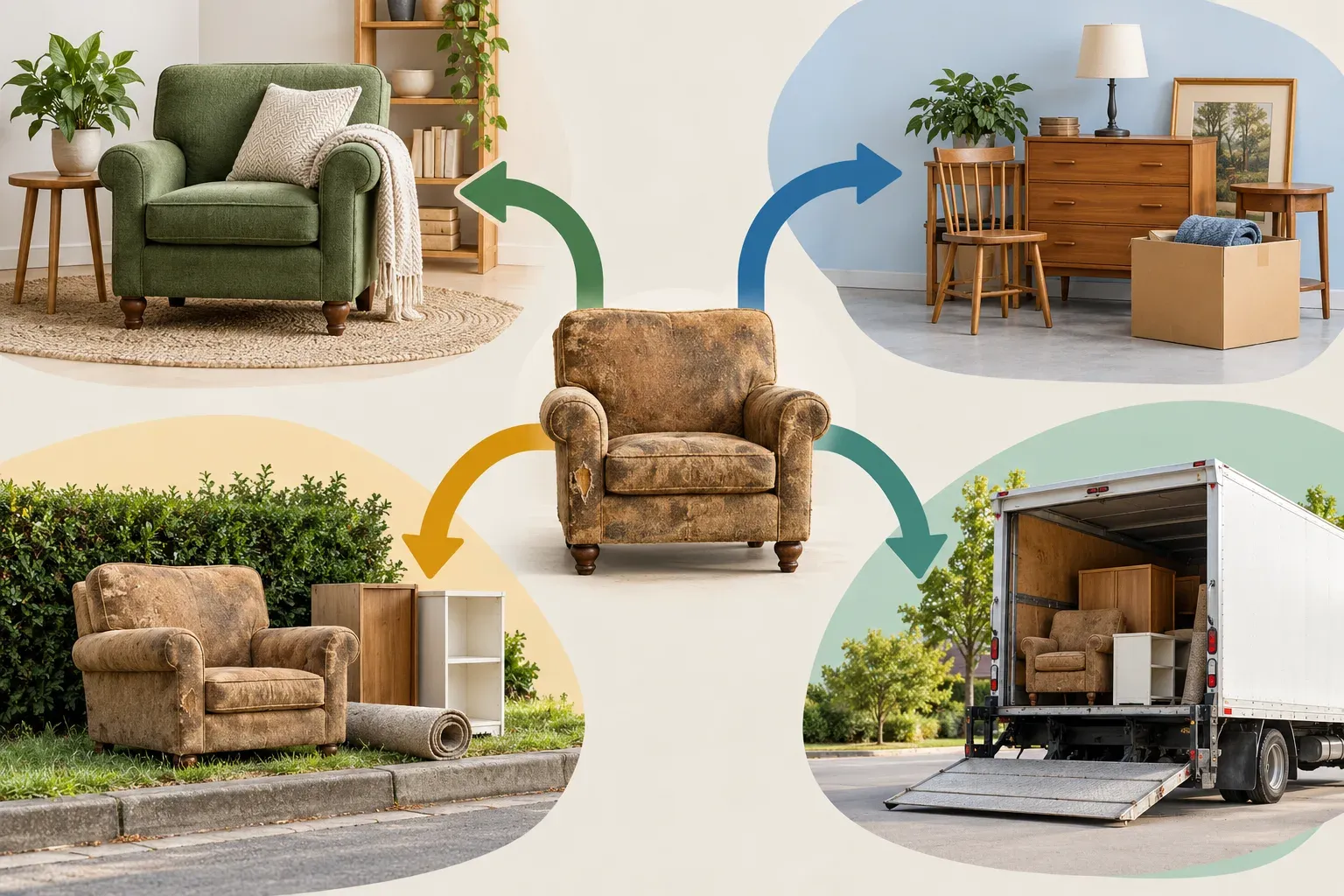
A substantial proportion of used furniture in Dubai cannot be accepted for donation, regardless of the owner's good intentions. Understanding why certain pieces are declined helps you avoid futile collection requests and choose an appropriate disposal route early.
Damaged flat-pack and composite furniture
Mass-produced flat-pack furniture constructed from particleboard, chipboard and thin paper foil is engineered for a single assembly. As explained in the flat-pack furniture disposal guide, composite panels expand and lose their structural integrity when exposed to moisture from floor washing, spills or humidity.
When a flat-pack wardrobe or chest of drawers is moved across a room or dismantled, screw threads pull out of the compressed wood fibres and cam-lock housings crumble. Charities and second-hand recipients cannot repair stripped particleboard. If a flat-pack piece is loose at the corners, bowed along the shelves or swollen at the plinth, it cannot be donated and requires responsible removal.
Soiled, sagging or unhygienic mattresses
Mattress hygiene is strictly regulated, and charitable recipients cannot accept mattresses with visible perspiration stains, liquid marks, tears, broken springs or sagging centres. As detailed in the mattress disposal guide, an old mattress harbouring dust mites or humidity dampness cannot be sterilised easily at home.
Unless a mattress is nearly new, completely unstained, firm and protected by a clean mattress protector, it will be declined by donation programmes and must be handled through municipal or specialist bulky waste collection.
Large, damaged or difficult sofas
Sofas with cracked faux leather, sagging spring suspension, pet scratches or stained fabric are not accepted for donation. In addition, oversized modular sectionals and large three-seater sofas present serious transport hurdles. If a sofa cannot fit through a standard apartment door without specialist dismantling, as covered in the sofa doorway guide, a charitable recipient will rarely have the tools or know-how to take it apart safely.
Incomplete modular units and wall-mounted joinery
Fitted wardrobes, custom floating entertainment units and modular storage systems tailored to a specific room layout rarely work in another home. When detached from the wall, they leave behind raw edges, screw holes and missing side panels. Items that cannot stand independently as freestanding units are unsuitable for donation.
Building and access rules for furniture donation
Donating furniture from a Dubai apartment tower or gated community is subject to the same property management regulations as moving house or hiring a clearance crew. The fact that an item is being given away for free does not exempt it from building security requirements.
Move-out permits and NOCs
In jointly owned property buildings and developer-managed communities across Dubai (such as those managed by Emaar, Nakheel, Dubai Properties or Union Properties), building security will not allow large furniture to leave the premises without an approved Move-Out Permit or No Objection Certificate (NOC).
The procedures detailed in the NOC to move furniture guide apply here. If an outside recipient or charity driver arrives at the security gate in a pickup truck without building approval, security will turn them away. Ensure that any required tenant move-out clearance is submitted to your building management or owners association portal well ahead of the collection appointment.
Service lift reservations and protection
Passenger lifts in Dubai towers may not be used for carrying wardrobes, bed frames, sofas or large dining tables. All bulky items must travel via the designated service lift, and building management typically requires this lift to be booked in an advance time slot, as explained in the service lift booking guide.
Service lifts are often fitted with protective wall curtains and floor blankets during reserved slots. If your recipient arrives outside the approved lift booking window, building security may refuse access to the lift, leaving you with heavy furniture stuck in your hallway.
Vehicle height restrictions and loading bays
Charity vans and private pickup trucks vary in size. Many tower basements in areas such as Dubai Marina, Jumeirah Lakes Towers and Business Bay have strict height barriers (often between 2.0 and 2.4 metres) that prevent high-top vans or open-bed lorries from entering underground parking areas.
Confirm with your building concierge where collection vehicles are permitted to load. If the vehicle must park in an external loading bay or service road, measure the walk distance and verify that the recipient has enough helpers and flatbed dollies to transport the furniture safely from the lift to the vehicle.
The deadline problem: why donation attempts fail before handover
The most common reason furniture donation becomes stressful is poor timing. Many tenants attempt to arrange donation during the final two or three days of their tenancy, alongside packing and utility disconnections.
Why donation takes longer than you expect
Organising a successful donation transfer involves multiple steps: taking photos, contacting charities or listing items, answering questions, waiting for responses, agreeing on a date, obtaining building permits, and waiting for the collector to arrive.
If an organisation is fully booked for the week, or an online collector postpones their arrival at the last minute, you run out of time before your tenancy handover inspection.
The cost of leaving furniture behind
Leaving unwanted furniture behind in a rental property when you return the keys is a costly mistake. Under Dubai rental regulations, a tenant must return the premises in the condition received, empty of all personal belongings and rubbish, ordinary wear and tear excepted.
As examined in the deposit deductions guide, if you abandon a wardrobe, sofa or mattress in an apartment because a donation fell through, the landlord or property agency will hire an emergency clearance contractor and deduct the full commercial cost, plus administrative fees, from your security deposit. A failed free donation can easily cost you hundreds of dirhams in deposit deductions.
Working with a firm cut-off date
When planning an end-of-lease move:
- Set a donation deadline at least 7 to 10 days before your final tenancy handover date
- If a charity or private recipient has not confirmed collection by that deadline, switch immediately to a confirmed disposal route
- Do not keep hoping an uncommunicative collector will show up on the morning of your key handover
- Schedule your professional clearance visit with enough buffer time to allow for move-out cleaning and the final joint inspection, as outlined in the end-of-tenancy clearance guide
What to do when furniture cannot be donated
When an item is too worn for donation, or when your handover deadline leaves no time to wait for a charity collection, you need a legal, structured disposal route that ensures the property is cleared on schedule.
Dubai Municipality bulky-waste collection
Dubai Municipality operates an official bulky-waste collection service for residential properties outside private investment and free zones. Eligible residents can request collection of old household furniture and electrical appliances through official municipal channels.
As detailed in the Dubai Municipality bulky waste guide, this service has a standard processing time of several working days and is designed for ground-level collection. It is an excellent option when you plan weeks in advance and live in an eligible villa or residential area, but it cannot provide rapid carry-down from high-rise apartment floors.
Professional furniture removal and clearance
When you need furniture carried out of an apartment or villa, dismantled, loaded and removed on a specific day and time, a dedicated furniture removal service is the practical solution.
A professional removal crew handles the complete physical scope:
- Carrying heavy items out of bedrooms, living rooms and upper floors
- Dismantling large wardrobes, bed frames and modular desks safely without damaging walls or doorways
- Navigating internal corridors, fire doors and service lifts
- Providing the correct vehicle and moving equipment for immediate loading
- Ensuring full compliance with building loading bay rules and municipal transport regulations
State what needs to leave, provide photos of the items and access route, and receive a transparent, fixed quote that guarantees the furniture is gone before your inspection.
Where non-donated furniture goes
Choosing a professional clearance service does not mean items are dumped carelessly in the desert. Unauthorised dumping is strictly prohibited in Dubai, carrying severe penalties under Law No. (18) of 2024, as discussed in the dumping fines guide.
Responsible clearance operations transport collected loads to licensed sorting and waste transfer stations. Reusable components and sound materials are separated, scrap metals from bed frames and fixings are recovered for industrial recycling, clean cardboard packaging is baled, and residual materials are transported to Dubai Municipality approved waste management facilities. The complete recycling and transfer process is detailed in the guide on what happens to your junk after removal.
Step-by-step checklist for preparing furniture to donate
If your furniture is in good condition and you are ready to arrange donation, follow these practical steps to ensure a smooth handover:
- Empty all drawers, shelves, cupboards and under-bed compartments. Check thoroughly for passports, jewellery, documents and personal keepsakes.
- Clean all hard surfaces with a damp cloth and mild cleaner. Wipe down dust, fingerprints and surface marks.
- Vacuum upholstered cushions and seams to remove dust and crumbs.
- Inspect the item carefully and note any small chips, scratches or loose screws so you can describe them accurately.
- Take clear, wide-angle photographs in daylight showing the entire piece, as well as close-ups of fabric texture and manufacturer labels.
- Measure the height, width and depth accurately and record the dimensions alongside the photos.
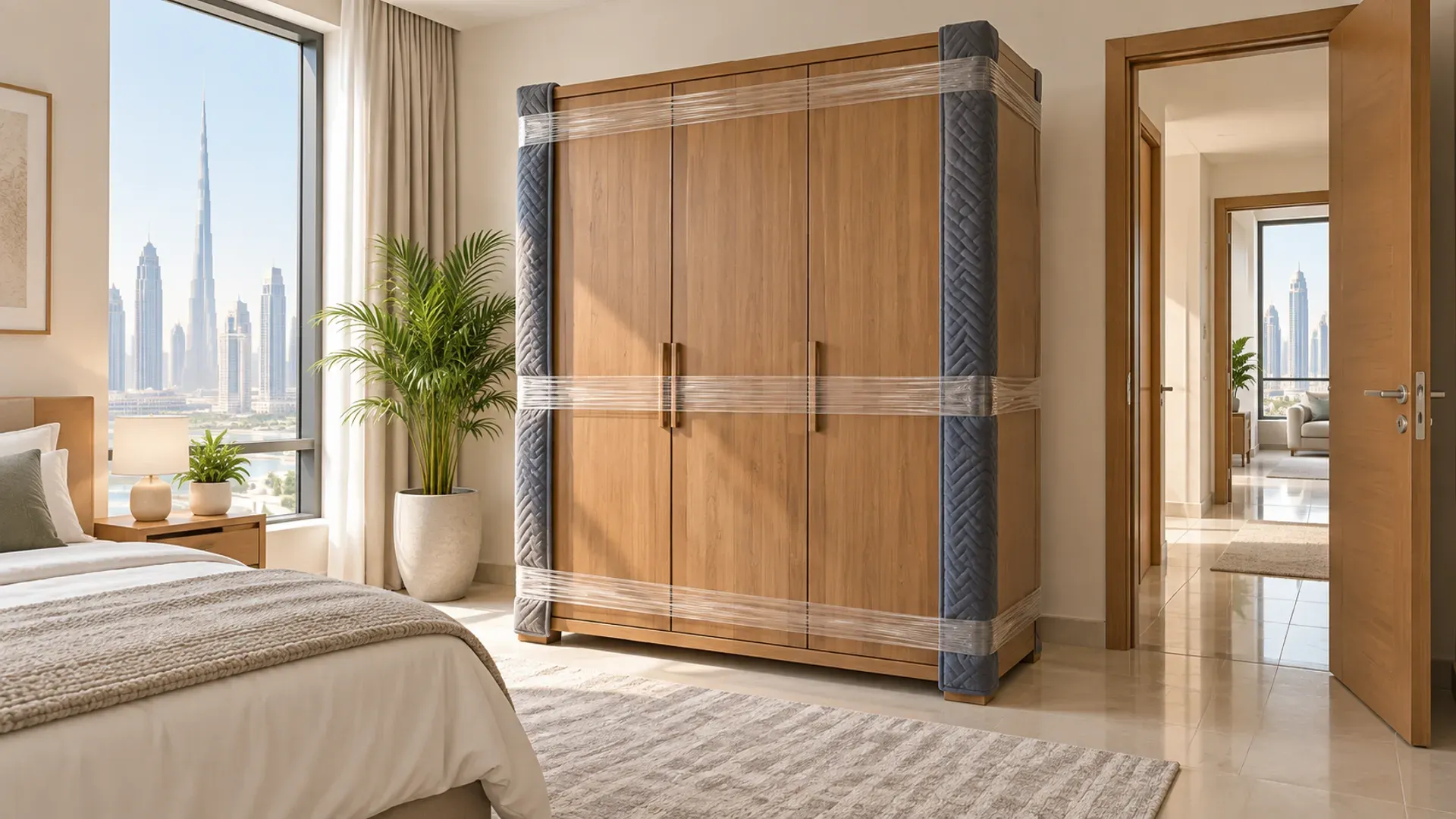
- Secure loose doors and drawers with removable painter's tape or stretch wrap so they do not swing open during handling.
- Place all assembly hardware, screws and brackets into a zip-lock bag and tape it securely to the underside or inside panel of the unit.
- Check your building requirements for move-out NOCs, service lift bookings and vehicle loading times.
- Confirm the recipient's collection time and ensure they have adequate transport and helpers before releasing the item.
- If the collection is cancelled or delayed, contact a licensed clearance provider promptly to keep your handover schedule on track.