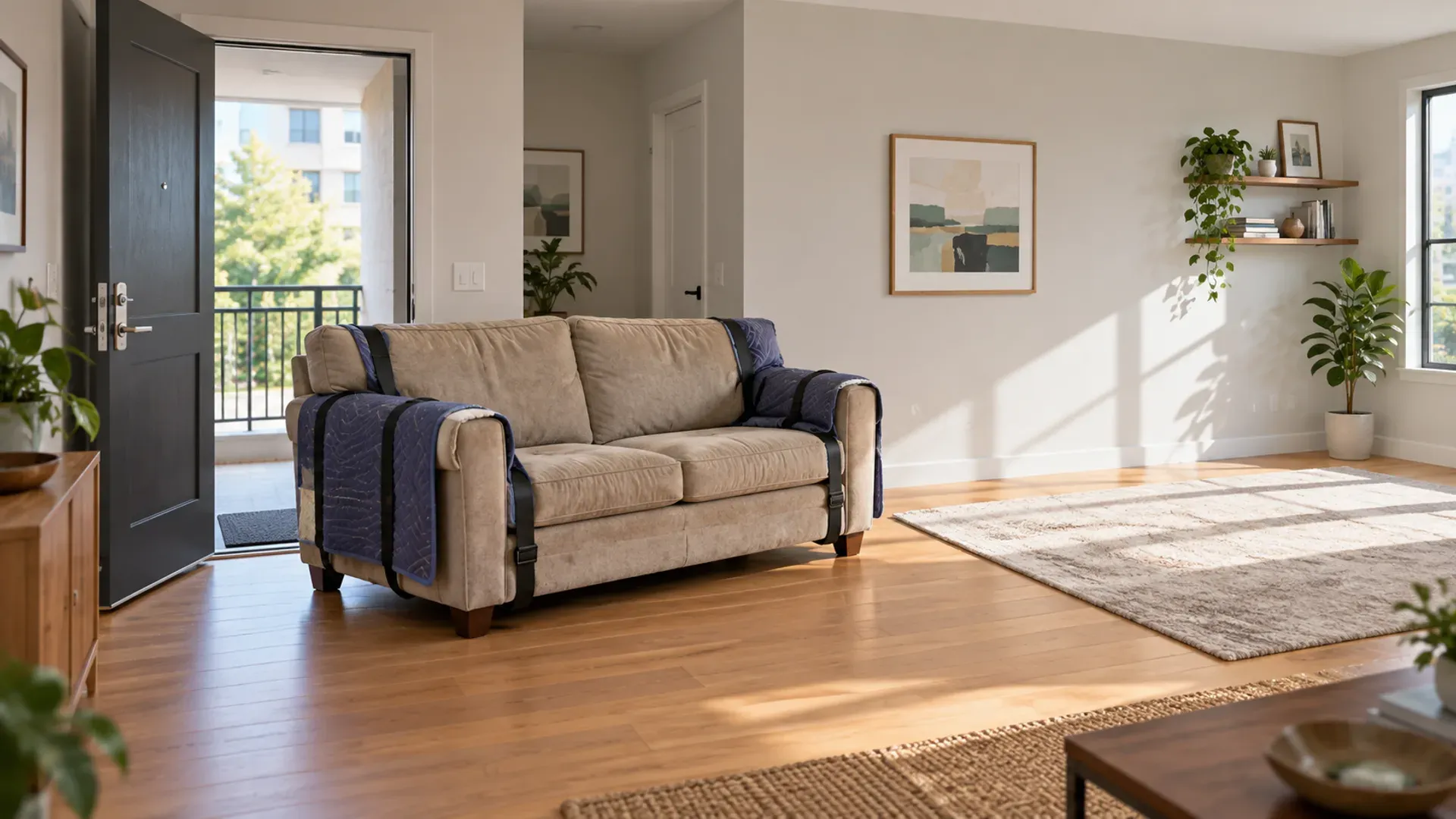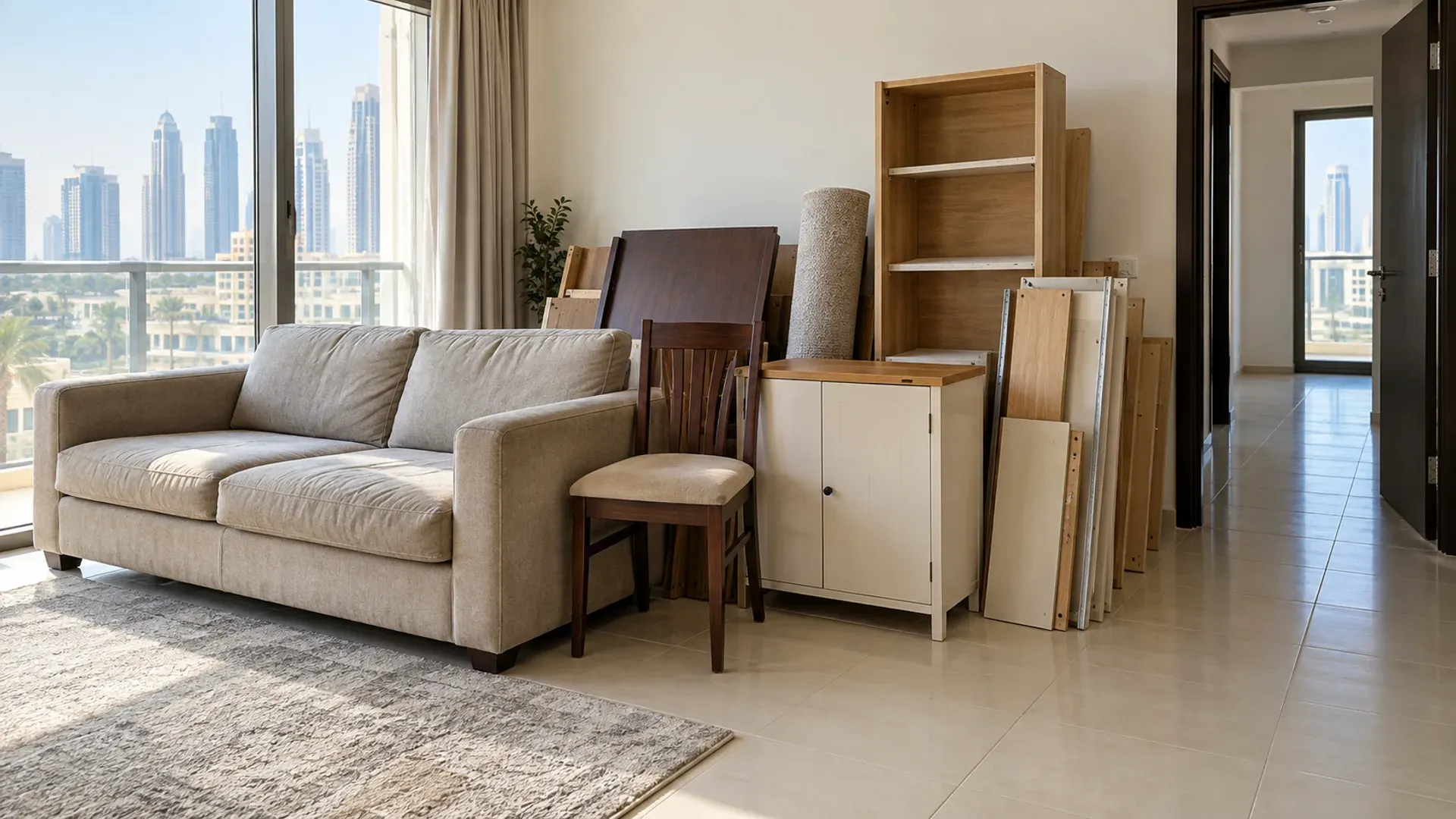
A media wall unit is ready to leave only when you know what it is, who owns it, and which part is actually loose. A low console, a freestanding TV stand and a wall-fixed unit are different jobs. The television, cables and glass shelves are different jobs again. Photograph the whole piece, name the construction, and measure the largest rigid section before you ask for collection.
Do not use “wall unit” as a label for a cabinet that merely sits in the living room. A name that is too broad hides a bracket, a glued joint or a landlord fixture, and it also hides a simple console that can travel in one piece.
Identify the unit, not the room
Stand in front of the piece and write down what you can see. Record the width, height and depth as they stand in the room. Note whether it sits on the floor, hangs from a wall, or does both. A TV console that only touches the wall because it was pushed there is not a fitted unit. A cabinet screwed into a niche is not a loose stand.
Use one of these descriptions, and only if it matches the object:
- Floor-standing TV console or sideboard, with or without legs.
- Open TV stand with a separate top and frame.
- Sectional media unit made of modules that were designed to separate.
- Tall display section combined with a low console.
- Unit fixed to the wall, a niche, or the building structure.
Photograph the front, each side and the back if you can reach it. Add a close view of feet, brackets, wall plugs and a maker's label if one is visible. A single photo of the television screen does not describe the furniture underneath it.
State the material where you can tell it apart: particle board, solid timber, metal frame, stone or glass top, mirrored door, or a mix. Mention swelling, cracks, loose backs and previous repairs. Those details change how the piece can be handled. They do not need a story about how the damage happened.
If several cabinets were bought as one range, list each cabinet. “One media wall” can mean two base units, a bridge and a set of shelves. The collector needs the count, not the shop name.
Keep the screen on its own line
The television is not part of the cabinet for planning purposes, even when it has lived there for years. Record the screen size only so the furniture quote is not confused with an electronics quote. Whether the set still works, how it should be packed, and which electronics route applies are covered in the TV disposal guide.
Remove the set from the furniture plan once it is identified. A wall bracket, a tabletop stand and a spare remote belong in the notes, because they change weight and sharp edges. They do not turn the cabinet into an appliance.
Settle ownership before a fixing is released
Ask who owns the unit before anyone unscrews it. In an unfurnished home the answer may be simple. In a furnished tenancy, a developer handover or a property managed for someone else, the cabinet may be part of the inventory. Removing a fixture without authority can become a reinstatement problem for the person who booked the collection.
Read the inventory, snagging list or sale pack if you have one. Look for words such as fitted, built-in, landlord or developer supply. If the document is silent, photograph the fixings and ask the owner or manager in writing. A removal booking is not permission to alter the property.
Loose furniture and fixed joinery are different scopes
A freestanding console, a sectional unit designed to come apart, and modular cabinetry that can be released from the wall can be described for a furniture collection. The published acceptance notes for this service include television consoles and media wall units, and they state that crews carry tools to take down modular cabinetry, dismantling only what is required to clear the route. That statement does not cover fixed carpentry, plaster niches, wall panelling or joinery that forms part of the building.
If the unit is fixed joinery, stop and ask a carpenter or the party responsible for the property. Do not book it as an ordinary console and hope the distinction appears on the day. Show the screws, battens or silicone line in the photos so the answer is based on the installation, not on the furniture’s style.
Where ownership is unclear, put the unit on hold. Move loose items around it if they are definitely leaving, and leave the fixed piece until the written answer arrives.
Empty the cabinet and separate the glass
Open the doors, drawers and flaps. Remove discs, games, documents, remote controls, chargers and small electronics. A drawer used for spare items will be carried at an angle. Loose contents can fall out or add weight the photo did not show.
Unplug the devices that were sitting in or on the unit. Coil each cable and bag it with a note of what it served, if that still matters. Do not cut a cable to make the back look tidy. If a cable disappears into the wall, treat it as part of the building until someone who understands the installation says otherwise.
Take glass shelves, glass doors and a glass top off the “it is only wood” description. Photograph cracks and chips before the shelf is moved. Wrap or box loose glass only if you can do that without hiding the damage. Tell the collector that glass is present. A shelf left in place can slide when the cabinet tilts.
Stone tops and mirrored doors need the same honesty. Name them. A thin mirror on a door is easy to miss in a wide photo and awkward if it breaks in a corridor.
Do not dismantle as a guess
General dismantling decisions — whether a piece was designed to separate, whether it must survive for reuse, and how parts should be labelled — belong in the furniture dismantling guide. Use that method. Do not invent a second one for this cabinet.
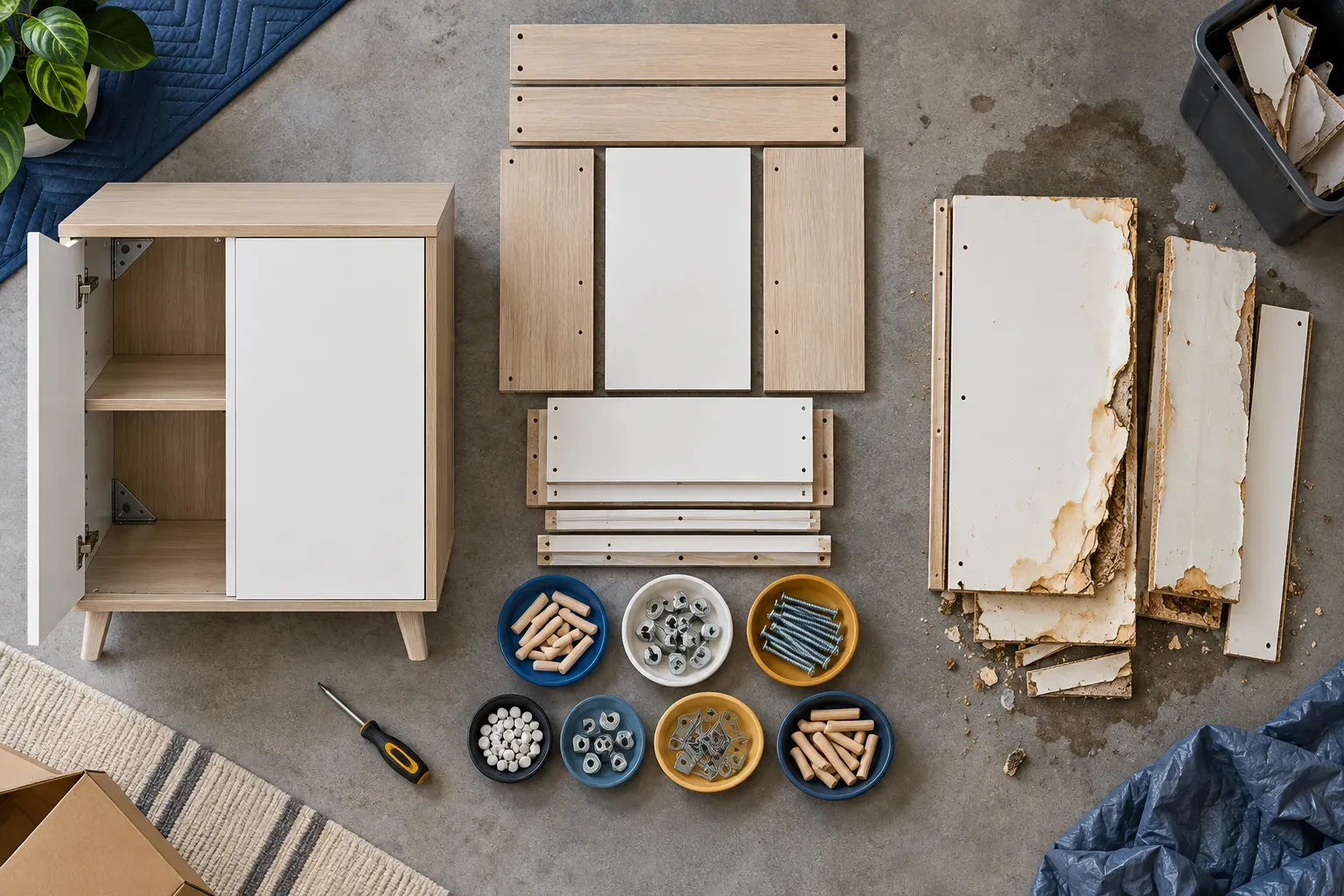
For a media unit, the extra question is which module is the largest rigid piece after a proper separation. A bridge section, a long top and a side tower can each be longer than the base. Measure those candidates before you remove a single cam lock. If the intact console already fits the route, leaving it whole may be the simpler plan. If a designed module has to come off to pass a door, record that module’s size and where the work can happen.
Keep screws, shelf pins and brackets in a labelled bag when a separation is agreed. A pile of mixed hardware on the floor is not a record. If the unit is being discarded, the bag still matters because loose metal in a corridor is a handling hazard. If someone else will reassemble it, the bag is part of the item.
Measure the largest section against the whole route
Start at the unit and walk to the place the vehicle is expected to stop. Measure the clear opening of the room door, the corridor turn, the apartment entrance, the lift door and the usable space inside the lift. Include feet, cornices and handles. A depth that looks modest in the room can fail when the cabinet has to rotate.
Photograph each restriction with enough of the surroundings to show the turn, not only the narrow gap. The bulky-item pickup guide explains how to show one awkward object and the full path. Use it for this cabinet if the route has more than one tight point.
In a tower, the path continues through the service corridor and loading area. Where the building asks for a lift booking or a move permission, arrange that before the collection window. The service-lift guide and the NOC guide are the place for those building questions. Do not assume a passenger lift is the approved route because the cabinet fits inside it.
In a villa or townhouse, include stairs, landings and the gate. A long top that leaves the living room can still stall on a half-landing. Parked cars and a closed side gate belong in the photos.
Say what will be left in the room
If only the media unit is leaving, clear a path and leave the rest of the room as it is. If the sofa, rug and other living-room furniture are leaving too, say so. A quote for one cabinet should not be treated as a quote for the lounge. Where the job is the apartment’s furniture as a whole, the apartment furniture plan keeps one inventory and one building route. This page stays with the media unit.
A replacement console or a new television delivery needs its own timing. Confirm whether the retailer removes the old screen, the old furniture, or neither. Do not cancel a confirmed collection until that written scope is clear. Leave enough floor space that the old unit and the new delivery are not blocking each other or the exit.
Note straps, sound gear and attached parts
Look behind the unit for an anti-tip strap or bracket screwed into the wall. A strap is a fixing, even when the cabinet itself stands on the floor. Photograph it and decide who releases it. Pulling the cabinet forward while the strap is still anchored can tear the wall fixing or tip the unit.
List equipment that is not the cabinet and not the television. A soundbar, a games console, a router, a speaker and a streaming box each need a destination. If they are leaving with the furniture, box them and name the box on the inventory. If they are staying, move them out of the carrying path before the appointment. Do not leave a loose soundbar balanced on a top that is about to be tilted through a doorway.
Check the back panel for a cable tidy, a power strip or a transformer stuck to the cabinet. Unplug the strip from the wall socket. If the strip is screwed to the furniture, say so. A power strip is not a reason to cut the cabinet’s back panel.
If the unit has a fireplace-style insert, a bioethanol burner or another fuel holder, stop and identify what is inside it. Fuel, gel and pressurised canisters are not furniture. Remove them through the supplier or the route that applies to that product, and do not pack them inside the cabinet. If you cannot tell what the insert contains, photograph the label and ask before the collection is confirmed.
A water-damaged or swollen base changes the lift. Say if the cabinet no longer stands square, if a foot is missing, or if the back panel has fallen off. Those facts belong in the request. They are not solved by turning the damaged face away from the camera.
Book the loose unit as furniture collection
When the unit is loose, or it has been properly released from the wall, it is a furniture collection. Send the photos, the measurements, the floor, the building access notes and a straight description of glass or stone. Ask for furniture removal on that basis. The service page holds the booking. This article holds the preparation.
If you are still choosing between a municipal bulky-waste request and a paid collection, use the old-furniture disposal guide. It compares the routes. Do not copy a neighbour’s arrangement or leave the cabinet in a common corridor while you decide. A corridor is not a handover point.
Tell the provider if the television is travelling with the cabinet or on a separate plan. Mixing the two without saying so produces the wrong crew preparation and the wrong handling. Electronics questions stay with the TV guide and with appliance disposal when the screen itself is the item being collected.
On the day, keep children and pets out of the carrying path, leave the agreed hardware with the unit, and point out damage you have already photographed. Do not add extra cabinets at the door unless the provider has accepted the change. A second unit is a change of scope, not a small favour.
Once the unit is named, the fixings are understood and the largest section has been checked against the route, send that record with the furniture request. A clear photo of the back and the wall is the difference between a loose console and a job that still belongs to a fitter.
Common questions about a media wall unit
Is a TV stand the same job as a media wall?
Only if the object is the same kind of furniture. A small open stand and a wall-spanning unit do not share a route, a fixing or a weight. Name the actual piece. TV stand removal, TV console disposal and TV unit removal are useful descriptions when they match the object. They are not interchangeable labels for a cabinet under a screen.
Can the crew remove a unit that is screwed to the wall?
Ask, and show the fixing. Modular cabinetry that the acceptance notes already include can be assessed for release where that is part of the agreed furniture job. Fixed joinery, building panelling and anything the inventory treats as part of the property are outside that assumption. A carpenter or the responsible owner has to release those before a collection is booked as loose furniture.
Should I take the glass shelves out myself?
Remove them only if you can do it safely and you can show chips that are already there. If the shelf is stuck, cracked or too heavy to control, leave it in place, photograph it and say so. Hidden glass is more of a problem than glass the collector expects.
Does the television have to go on the same visit?
No. The screen can leave with a recipient, with an electronics collection or with the furniture, but each option needs its own agreement. Confirm the choice in the booking so the cabinet is not delayed by an undecided screen, and the screen is not left without a plan when the cabinet goes.