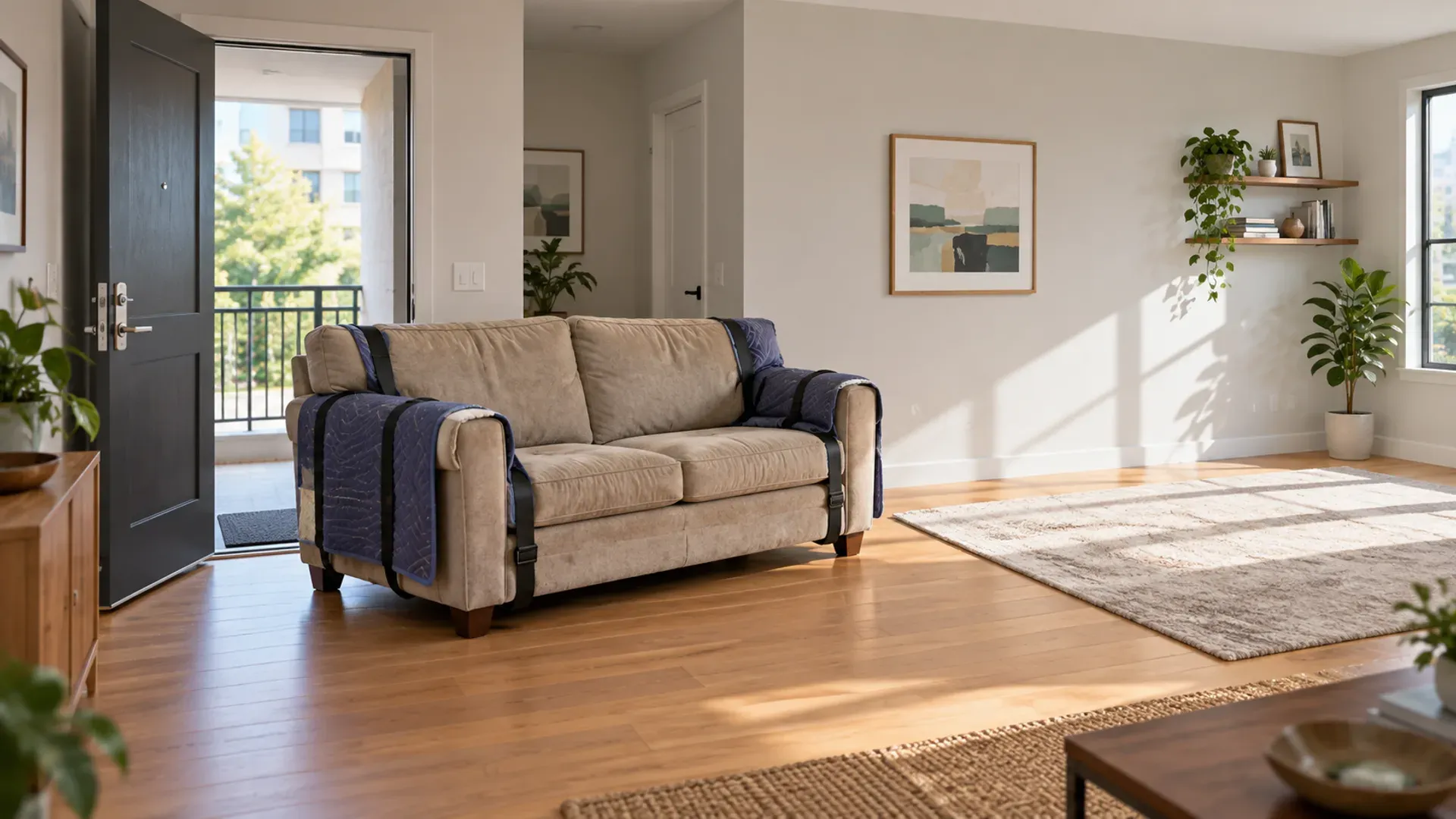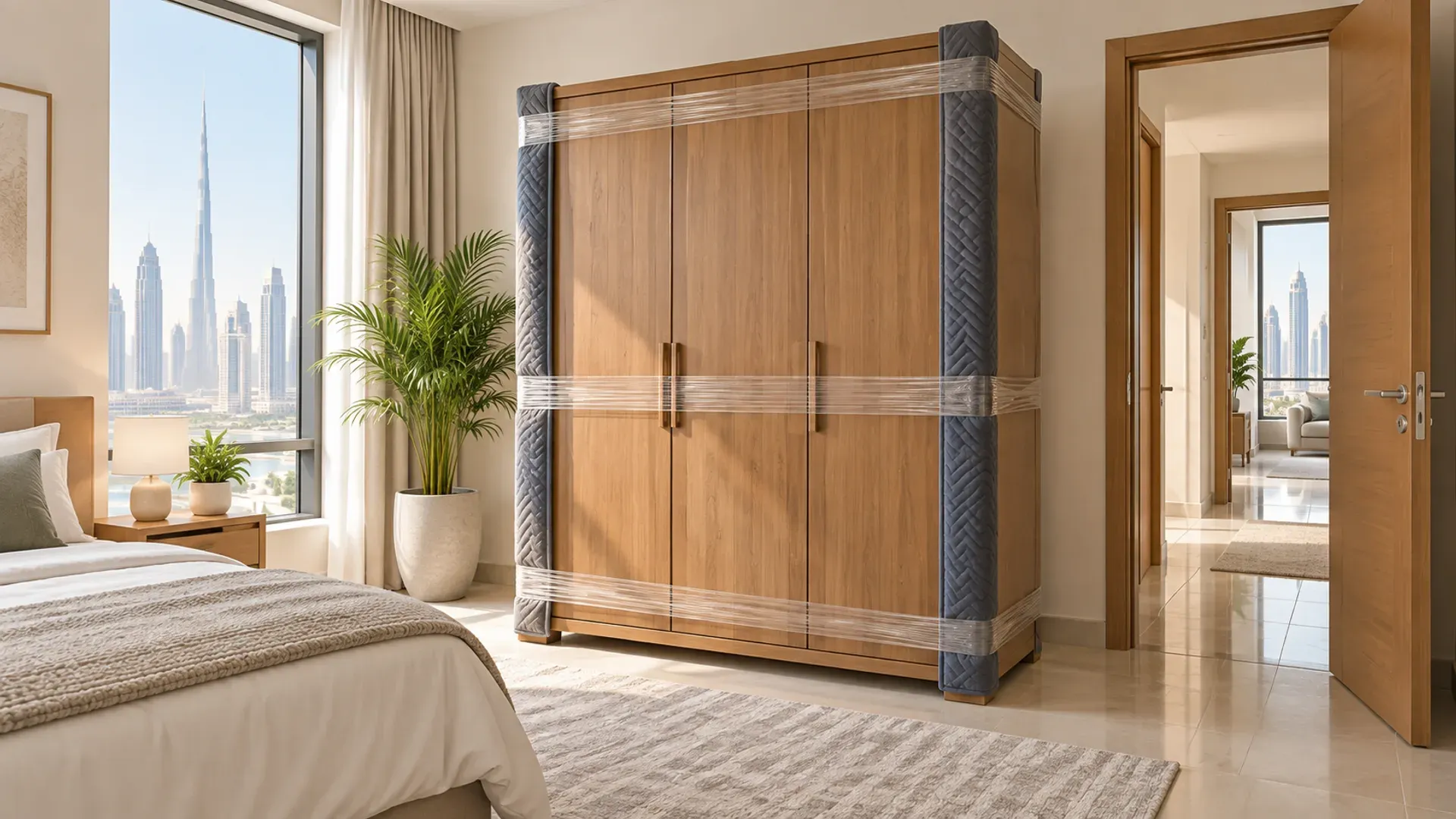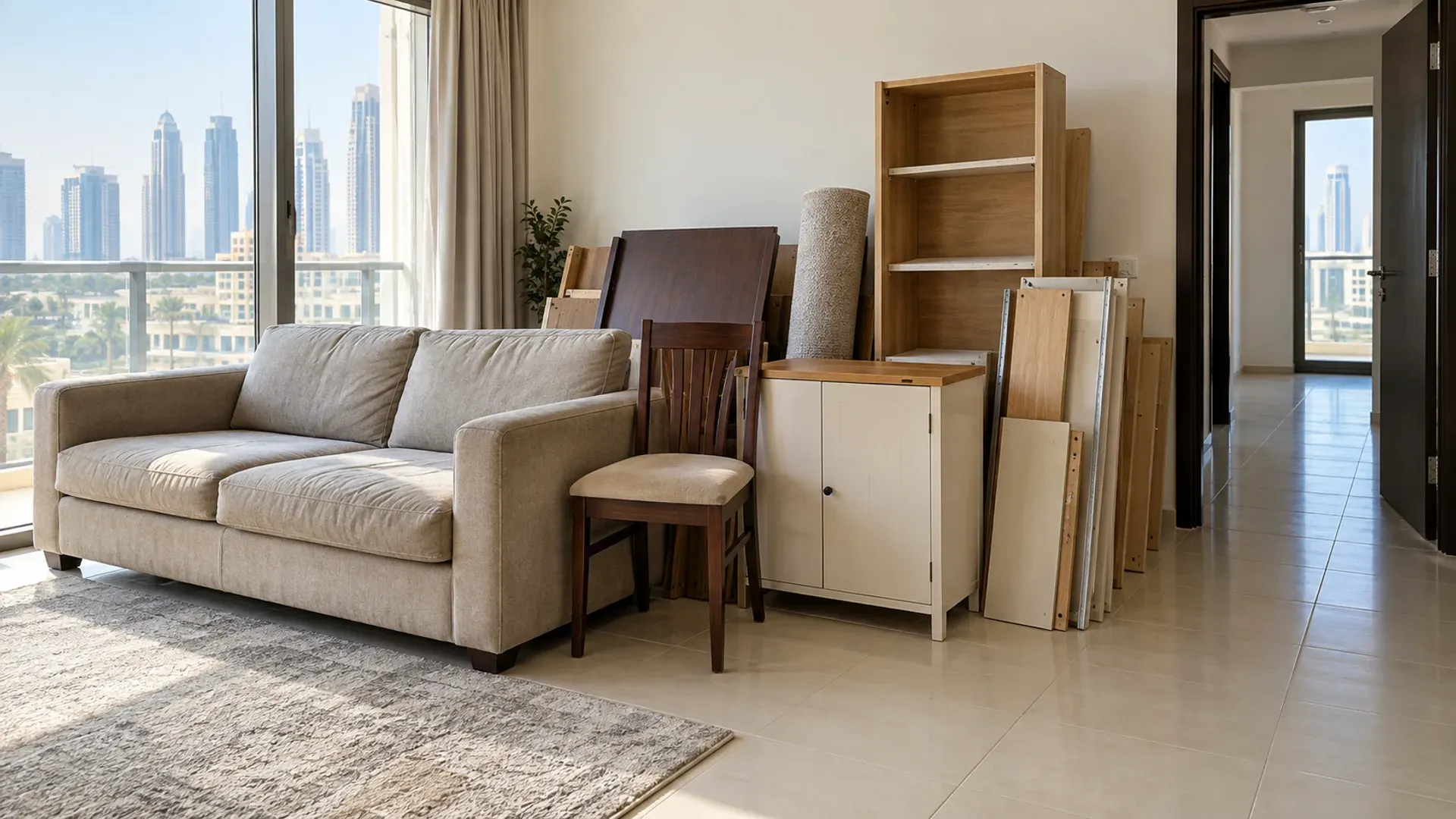
A flatmate left furniture and you still live in the home. Name each piece they left, separate it from what you are keeping and from anything that belongs with the property, and book only the items you are allowed to send. The rooms you still use are not the load.
A photo of one chair in the hall does not show whose it is, or what else they left in a wardrobe.
Write down who owns each piece
Start with a list, not a booking. Walk the rooms you share and the room they used. For each item, write one of three lines: theirs and agreed to leave, yours or still in use, or not yet known. A bed, a desk, a sofa and a lamp can sit on different lines. Do not collapse them into “the flatmate’s stuff”.
Put the person’s name on the line, and the date you last heard from them. If they sent a message that names the pieces, keep that message with the list. If they said “take whatever is in my room”, write that down and still look in the room. A sentence that broad does not tell you whether the passport folder on the desk was included. Open the drawers before you call the contents waste.
Landlord furniture is a fourth fact, not a guess from how old the piece looks. Check the inventory if you were given one. A sofa, a mattress, curtains and a dining table may have been in the flat when you moved in. Those pieces stay even if your flatmate was the one who used them while you shared the kitchen. If there is no inventory, ask the landlord or the agent and wait for the answer before that piece goes on the removal list. Mark it in the room so it is not standing in the outgoing group by the time someone replies.
Joint purchases need a name as well. If you paid for the desk together, the list should say so and say who is keeping it. This page does not price the desk and it does not help you sell it. If you both agree it is waste, it can leave. If one of you wants it, it stays with that person. Do not book it while that answer is open.
Borrowed items belong on the same list. A chair from a parent, a monitor from an employer, a suitcase that was lent for a trip: write the lender. A removal does not return it for you. Tell the lender before the piece is treated as junk.
If you cannot reach the person who left, do not fill the gap with a decision you have not been given. Move the unknown pieces into a room or a corner the crew will not enter, and label that corner. Say on the booking that those pieces are held. A quote that includes them will not match a load that leaves them behind, and a load that takes them will not match a later argument that you had no instruction.
Papers, medicines, jewellery, hard drives and ID stay out of the outgoing piles until you have looked. A drawer in a desk that is leaving is still a drawer. Empty it into a box you control. If you find their documents, tell them, or hold the box. Do not tape the drawer shut and call the desk empty.
This is not a handover of the whole tenancy
Stay on this page when the lease continues and you, or someone else, still live there. The job is the furniture one person left, not an empty flat for an inspection.
When the whole tenancy is ending, the order of work changes. The end-of-tenancy clearance guide is the handover: what has to be gone for everyone, and the date the keys are due. Use it if the whole household is leaving. Come back here only for the narrower question of one person’s pieces while the contract is still running. Do not run both plans on one list. A handover inventory and a flatmate’s leftover bed are different descriptions, and a crew cannot tell them apart from the word “flat”.
If nobody who lives there is arranging the work, and an owner, agent or representative is clearing a home they do not occupy, that is a different authority problem. The property-clearance guide is that case: written permission, a contents record, and one point of contact. Do not use this page to skip that record because the person who left was “only a flatmate”. If you still live there, you are the occupant, and this page is the one that fits.
If the question is whether a landlord can take the cost of leftover furniture from a deposit at the end of a lease, read the deposit guide. This page does not restate that guide and it does not add a figure. The deposit question starts when the tenancy is ending. While you are still in the home, the useful step is the list of pieces and the permission to send them.
A whole apartment of furniture you own, with one route out, is the apartment furniture guide. A bedroom you are emptying because it is your room is the bedroom furniture guide. Use those when the ownership is settled and the question is the inventory and the carry. Use this page when the open question is that another occupant left the pieces and you still live among them.
Downsizing into a smaller home is a different decision again. Do not treat a flatmate’s belongings as stock you can fold into that plan. If you are the one moving to a smaller place and they are staying, their furniture is not yours to send so that your boxes fit.
A short-let manager clearing one furnished flat they operate is not this shared home. That job is the short-let clearance note: landlord inventory, operator furniture and guest leftovers in a flat you run between stays. Stay here when you live in the home and one occupant has moved out.
Keep the rooms you still use
The outgoing pieces should be able to stand in one place that is not your route through the flat. A sofa you still sit on is not outgoing because they used to sit on it too. A desk you have started using is not outgoing because it was in their room last month. If you have taken a piece over, write “kept by me” and move it off the list, or put it back if you were only storing it out of the way.
Their room can be the holding room if you are not sleeping in it. Do not strip the shared kitchen because a stool of theirs is in the corner. Take the stool. Leave the fridge, the pans and the table you still eat at, unless those were theirs and you have agreed they go. Photograph the stool on its own so the note does not look like a kitchen clear-out.
Shared cupboards need the same split. Their shelf of plates is not a reason to empty the cupboard. Box what is theirs if they asked you to discard it or to hold it. Leave your shelf. A photo of an open cupboard without a note will be read as the whole cupboard.
If their furniture blocks a door you use, you can move it to a wall you can spare, without dismantling it, if you can do that without damaging the piece or the floor. Say that you moved it, and from where. Do not take it apart to make the room feel finished. If it will not leave in one piece, the booking can include dismantling. The furniture page says the crew brings tools and takes apart what needs taking apart. You do not have to unscrew a wardrobe to prove the request is serious.
Balcony furniture follows the same ownership line. A chair they put outside is still their chair until someone agrees it goes. Do not add the plants, the hose or a cylinder because they were near the chair. A gas cylinder stays out of the pile until you have asked. The acceptance guide separates cylinders and liquid chemicals from ordinary household furniture.

Children’s belongings, if the person who left had a child in the home, are not a faster decision because the room is small. Keep school papers, medicines and anything you cannot name. If you are unsure, hold them. This page is not a child’s-room clear-out.
Shared pieces you both used
The sofa in the living room is the item that causes the argument, because both of you used it and neither of you labelled it. Write what you know: who paid, whether anyone is collecting it, and whether anyone has said it can go. If the answer is that you are keeping it, it is not in the photos of the load. If the answer is that they are sending a friend to pick it up, leave it where that person can take it and do not book it. If the answer is that you have both agreed it is waste, it can sit with the other outgoing pieces.
Do not invent a value so that one of you “owes” the other. Do not list it on a selling site and also on a removal request. Selling is not this service. A piece that might be sold is not junk while the sale is open. Finish that decision, or decide it is not happening, and then describe what is left.
A mattress is easier to mis-describe than a sofa. Say whose bed it was, whether the frame is going with it, and whether the mattress was supplied with the flat. The frame and the mattress are two lines. A stained mattress you have agreed to discard is still described as a mattress, not as “bedding”. Bedding you are keeping stays in a bag out of the photo.
Cables, a router and a lamp can be theirs even when the furniture is yours. Unplug what is leaving. Leave what you still use connected. Do not pull a wall fitting because a cable ran near their desk. Fixed shelves, curtain rails and lights stay unless the landlord has asked for them to be removed, and that request is a different job from the loose furniture.
If more than one person still lives in the flat, pick one person to approve the list on the day. Two flatmates sending two versions of “take the sofa” is how the wrong piece leaves. Tell the others the time, and ask them to mark anything that must stay. A note on the piece is clearer than a message sent after the carry has started.
Book only the pieces that can go
Once the outgoing list is pieces you are allowed to send, and the held corner is labelled, the furniture can be booked as furniture. Have the furniture taken when the load is those pieces. In the same message, say you still live in the flat. Say how many people will be home. Say which room holds the outgoing items and which rooms are out of bounds.
Name the pieces in words, not only in a wide photo. “Bed base, mattress, four-drawer desk, office chair, two suitcases of clothes they asked to discard.” A wide photo shows the volume. The list shows the permission. If a suitcase is clothes you were told to throw away, say that. If a suitcase is packed for them to collect, it is not on the list.
Do not add the rooms you still use so the job looks like a full clear-out. A full clear-out is a different page and a different quote. If you later need the whole home emptied because everyone is leaving, stop and use the tenancy guide. Do not grow this booking on the day by pointing at the kitchen.
Empty wardrobes and desks that are leaving. Tell the request if a wardrobe is built in and you do not know whether it is a fixture. A loose wardrobe can leave. A wardrobe that is part of the wall needs the landlord’s answer first. The media-wall guide is the same kind of question for a unit fixed to a wall. Do not treat a fitted unit as a bookcase because it is in their room.
Say the floor, and whether the way out is a service lift, a passenger lift or stairs. If the building has no goods lift, use the stair guide for a building with no goods lift. If a lift has to be booked, say whether you have asked the building, and use the service-lift booking guide for that step. This page does not set the building’s rule. It tells you to send the answer you were given.
If there is no service lift and the piece is a sofa that stops at the door, the doorway problem has its own guide. Use it for the measurements. Do not make the flatmate question do that work. Ownership is settled here. The carry of one awkward sofa is settled there.
Write whether anyone else will be in the flat collecting a piece the same day. A friend arriving for the desk, and a crew arriving for the bed, can use the same hour only if both know the split. Say who is taking what. Do not leave the split as a conversation you hope to have in the corridor.
The pre-arrival guide is the general check for a path and for what stays. Add the ownership lines from this page. A clear corridor that hides a held corner will not match the load you described.
Photos that match the list
Send a wide photo of the outgoing group from the doorway of the room where it stands. Then one photo of each large piece, including the mattress and the desk with the drawers open or clearly empty. Photograph the held corner in a separate frame and write “not leaving” on the note. Photograph the label you used if you put one on the wall or the door.
Write these lines with the photos:
- Who left, and whether you still live there.
- Which pieces are agreed to go.
- Which pieces are held because you have no answer.
- Landlord inventory items in the same room, and a note that they stay.
- Joint items, and who is keeping them.
- Drawers and wardrobes emptied, or still holding papers.
- Floor, and lift or stairs.
- Another person collecting a piece the same day, if that is happening.
A close photo of a chair leg does not show the room. A dark bedroom shot does not show whether the wardrobe is empty. If you cannot see behind the bed, say the photo is the side you can see.
Do not photograph their documents to prove the drawer was full. Set the documents aside and photograph the empty drawer. ID and bank cards are not part of the description a crew needs.
If the outgoing pieces are on a balcony, show the railing and the floor so the number of items is visible, and say they are loose chairs or a folded table rather than something bolted down. Bolted frames, a pergola or decking are not this page. Those materials stay off this list.
Clothes they asked you to discard can be bagged. Clothes you are unsure about stay in the held corner. A black bag in the photo should be labelled in the note as clothes agreed as waste, or it will be read as rubbish from the whole flat.
On the day
Walk the outgoing group and the held corner before anything is lifted. Point at the line that is leaving. If they replied overnight and changed the list, say so at the start. A quote for a bed and a desk is the wrong plan if they have now asked for the desk to be kept, or if they have added a wardrobe you had not opened.
Check the rooms you still use. A jacket on their chair, your laptop on their desk, a router on a shelf: move them before the carry. Open one drawer you are no longer sure about. A remote and a charger are easy to lose in a desk that was “empty” last night.
The person who is approving the list should be the one speaking. If you cannot be there, say who can, and whether that person may add pieces or only open the door. Do not leave two flatmates to negotiate a sofa in the lobby.
After the agreed pieces have gone, look at the held corner and at the rooms you kept. The job is finished when the list you sent has left, not when the flat looks like a new tenancy. Cleaning, repainting and a conversation with the landlord about the deposit are not part of this booking. If the lease is later ending, the tenancy guide and the deposit guide are the next reading. They are not a second load you add in the stairwell.
If a piece you meant to hold was the same colour as a piece that left, stop and say so before the crew goes. Do not describe the day as complete and then hope a message will sort the swap. The list and the labels are what make that check possible.
The last useful check is the message you still owe the person who left. Tell them what went, what you are holding, and where the held items are. A removal does not close that conversation. It only takes the pieces you were allowed to send.
Questions
Can I book their furniture if they have stopped replying?
Not the pieces you are unsure about. Hold those, label them, and leave them out of the photos of the load. Book only the pieces they already agreed could go, or that you can show are yours to discard. Silence is not an instruction to empty their room.
What if we bought the sofa together?
Write who is keeping it. If you are keeping it, it stays out of the load. If you have both agreed it is waste, it can go. This page does not set a price for a share of it, and it does not help you sell it.
Is this the same question as a deposit deduction?
No. The deposit guide is the end of a tenancy, when leftover furniture and the security deposit are the issue. This page is the shared home while you still live there. If everyone is leaving, use the end-of-tenancy guide for the handover and the deposit guide for the deduction question.
What if an agent has the keys and nobody lives in the flat?
That is the property-clearance guide. It needs written authority and a contents record from the person who does not occupy the home. Do not use a flatmate note to clear a vacant flat for an agent.
What if they left only boxes, not furniture?
Keep the boxes off this list unless a piece of furniture is leaving with them. Delivery cartons in a flat you still live in follow the delivery-carton plan. A wardrobe is this page. A stack of empty cartons is not a flatmate’s bed.
What if the wardrobe is fixed to the wall?
Ask the landlord before it is treated as loose furniture. A bookcase that stands on the floor can be listed. A unit that is part of the wall is not assumed to leave because it is in their room.