
A mattress is awkward long before it reaches the front door. It is wide, flexible, difficult to grip and easily catches on handles, light fittings and corridor corners. Start by deciding whether the mattress is genuinely finished, then plan the route and collection as one job. That prevents the common situation in which a bedroom is cleared but the mattress remains blocking a hallway while someone searches for a way to move it.
Decide whether the mattress is leaving or changing hands
Separate disposal from reuse at the beginning. A clean mattress in usable condition may have a possible second owner, but that decision belongs to the recipient. Ask before arranging transport and describe the condition honestly. Do not assume that a charity, building worker, friend or buyer will accept a used mattress. Hygiene concerns, size, age and collection arrangements can all affect the answer.
If nobody has agreed to receive it, plan removal rather than leaving it in a lobby, refuse room or beside communal bins. Moving the problem from the bedroom to a shared area does not complete the job. It may also obstruct residents, cleaners or deliveries. Keep the mattress inside the property until the collection window is confirmed, unless building management gives a specific staging location and time.
Check whether the bed base, frame, headboard or protector is leaving too. These are separate pieces with different handling needs. A divan base may split into sections; a wooden frame may need dismantling; a headboard can be wider than the mattress. A clear list produces a more useful quote and enough vehicle space for the whole bed rather than one visible piece.
Record the size, condition and access
You do not need a technical survey, but you do need accurate information. State whether the mattress is single, double, queen, king or another size. If the label is missing, measure the widest and longest points. Mention unusual thickness, attached toppers, powered bases or a mattress that cannot bend. Photograph both faces if damage or staining affects handling.
Access matters as much as mattress size. Tell the removal provider which floor the property is on, whether a lift is available, and whether that lift has to be booked. Mention stairs, narrow turns, long walks to the loading point and parking restrictions. A mattress that moves easily through a villa entrance can take much longer from a high-rise apartment with a small lift and several controlled doors.
Send one wide photo showing the mattress in the room and another showing the tightest part of the route. Include other items in the same collection. The furniture removal service can then be planned around the actual load, access and lifting requirement instead of a vague description such as “one old bed.”
Measure the route before collection day
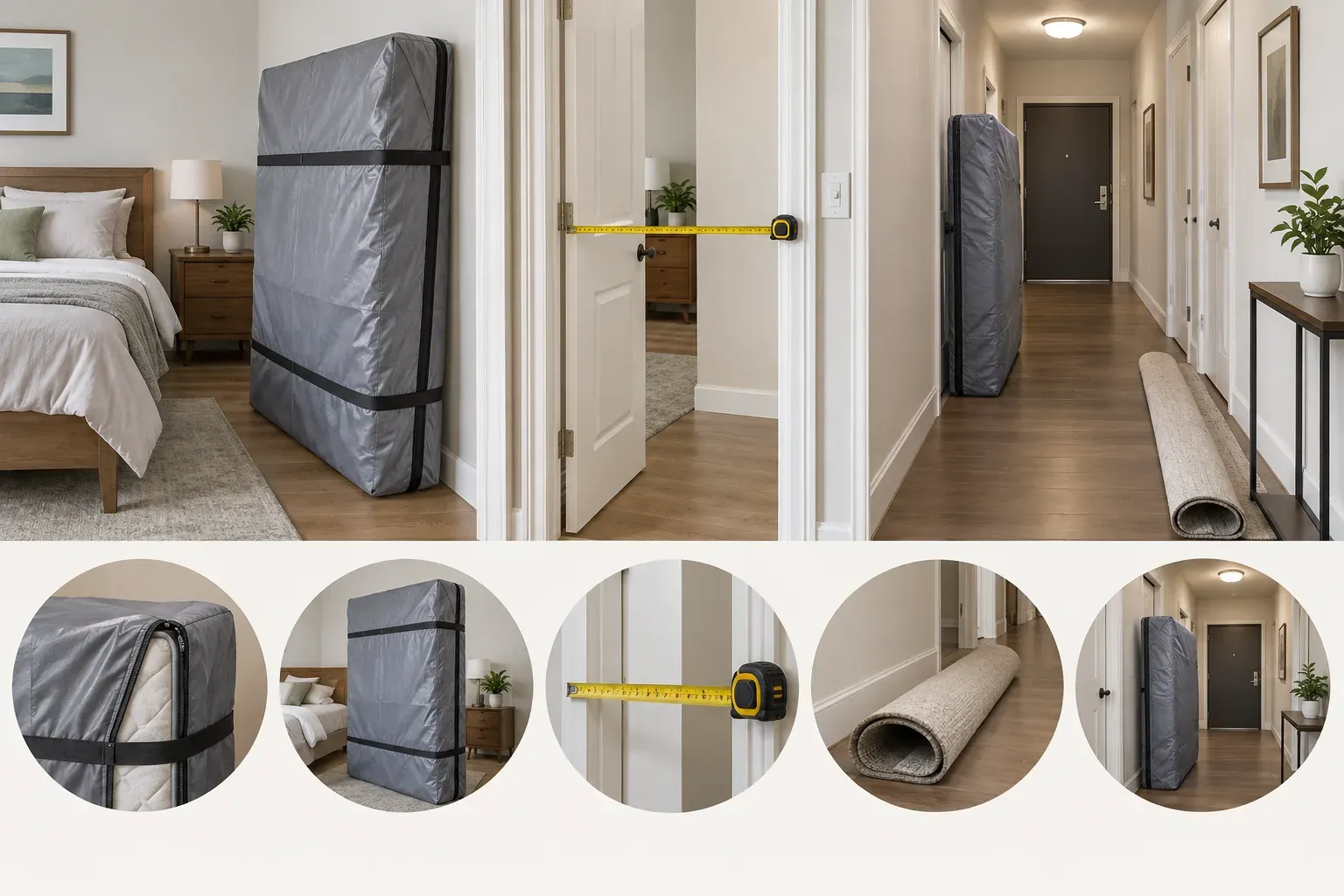
Measure the mattress width and thickness, then compare them with the bedroom doorway, corridor turns, lift opening and vehicle route. Height alone can be misleading because the mattress may need to rotate from upright to diagonal. Look for ceiling lights, sprinkler heads, door closers, wall art and shoe cabinets that reduce usable space.
A flexible mattress may curve slightly, but it should not be folded sharply unless its construction permits it. Foam, spring and hybrid mattresses behave differently. Do not rely on force to make an unknown mattress fit. Sharp bending can damage internal layers and makes a large piece harder to control. The safer approach is to identify the widest route and remove small obstacles before lifting starts.
Open every door on the route and hold it securely. Move stools, plants, rugs and loose cables. Protect sharp corners and glossy lift panels where appropriate. If the mattress is going down stairs, clear the landings completely. A person carrying from below needs space to step and see; a person above needs a stable grip without leaning over a rail.
Prepare the mattress without creating a harder load
Remove bedding, pillows and loose protectors. Bag these separately if they are also leaving. A fitted sheet is not a transport cover: it can slip, hide hand positions and collect dirt. If a mattress bag or suitable protective wrap is available, fit it before moving the mattress into a common corridor. Seal the opening without creating long loose tails of plastic or tape.
Keep the package as simple as possible. Excessive layers add bulk and make the surface slippery. Do not attach other items to the mattress. Bed slats, frame rails and hardware should be grouped separately so that nothing falls during a turn. Put screws and fittings in a labelled bag if the frame may be reused; otherwise secure them so they cannot scratch walls or puncture the wrap.
Moisture changes the job. If the mattress is wet, say so before collection. It will be heavier, harder to grip and may need different protection from the rest of the load. The same applies to severe contamination or pest concerns. Honest information lets the provider decide whether it can be handled and what preparation is required. Hiding the condition until arrival wastes the booking window and exposes other items unnecessarily.
Arrange the building before fixing the truck time
Apartment buildings often control service access. Ask management or reception whether bulky removals need a service-lift booking, move permit, access form, refundable deposit or approved time window. Confirm the loading entrance and where the vehicle may wait. These are building rules, so the building is the authority on what is required for that address.
Book the collection inside the approved window, leaving enough time to bring the crew in and protect the route. A lift slot that ends at 10:00 does not mean a truck should arrive at 09:55. Allow for security registration, access-card collection and travel from the loading bay to the apartment. If the building shares one service lift among residents, contractors and deliveries, ask whether the slot is exclusive or only a permission to use it.
Villas have fewer formal controls but still need access planning. Unlock side gates, move cars that block the entrance and identify any narrow garden paths or steps. Keep pets in a secure room. If the mattress is upstairs, clear the staircase and the area immediately inside the external door so the team can finish the carry without stopping in a pinch point.
Keep the old mattress separate from the replacement delivery
Do not assume a new-mattress retailer will remove the old one. Ask what the delivery includes, whether removal must be purchased in advance, and whether the old mattress must be wrapped or ready at the entrance. Get the answer in the order confirmation if it matters to the day. Delivery teams often work to a narrow slot and may not have vehicle space or authority for an unlisted item.
If you use a separate removal provider, the lowest-risk sequence is old mattress out first, route checked, room cleaned, then replacement delivered. A gap between bookings protects you from delays and leaves space for assembly. If both happen on the same day, avoid overlapping windows. Two vehicles, two teams and one lift can turn a simple exchange into a queue in the corridor.
Keep the new mattress sealed until the old one has cleared the route. Do not lean it against the only usable doorway. Put tools, frame parts and packaging on one side of the room, not across the carry line. If the bed frame needs repair or adjustment, finish that decision before the replacement arrives rather than discovering missing clearance while a delivery team waits.
What the removal quote should make clear
A useful quote identifies the item, access and scope. It should make clear whether carrying, stairs, lift travel, basic dismantling of the bed frame and removal from the property are included. If the price depends on the mattress being dry, wrapped or available during a booked lift window, confirm that condition in writing.
Ask what happens if the list changes. Adding a bed base, headboard, bedside cabinets and bags on arrival changes the volume and work. Send the complete list before the truck is dispatched. When several rooms are being cleared, a whole-load quote may be more sensible than describing every piece in isolation, but the provider still needs photos and an honest inventory.
Be precise about timing. “Morning” can mean a broad arrival window, while a building lift may be booked for one hour. Share the hard deadline and ask whether the proposed arrival fits it. If the mattress must be gone before checkout, cleaning or a delivery, say which event is fixed. The provider can only plan around a constraint it knows about.
Common mistakes that delay mattress removal
- Booking a truck before confirming the service lift or loading entrance.
- Describing a full bed set as “one mattress,” leaving no plan for the base and headboard.
- Moving the mattress into a communal corridor hours before collection.
- Leaving bedding, cables, rugs or small furniture across the route.
- Assuming a flexible mattress can be folded through any turn.
- Scheduling removal and replacement delivery for the same narrow time slot.
- Hiding moisture, contamination or an access problem until the crew arrives.
- Forgetting to measure the lift opening as well as the lift interior.
Each mistake is avoidable with a short sequence: list the whole load, photograph it, confirm building access, measure the tight points and agree the collection window. The physical carry is usually the last part of the work, not the first.
A simple collection-day checklist
Before the team arrives, strip and protect the mattress, group the other bed parts, clear the complete route and keep the building approval available. Make sure the contact phone is answered and that someone who can authorise the removal is present. If security needs names or vehicle details, exchange them before the slot begins.
Walk the route once from the room to the loading point. Check doors, corners, lift availability and the final exit. Photograph existing damage in shared areas if the building requires a condition record. Keep cleaning equipment accessible for after the mattress leaves rather than packing it under other items.
At handover, point out every item in the agreed load and any surface that needs special care. Then let the carrying team control the lift. A mattress is difficult because it blocks sight lines and catches air; extra people crowding the corridor rarely help. Once it is out, check the bedroom, hall and lift for forgotten frame parts or packaging before the booking closes.
The best mattress disposal plan is ordinary and controlled: one complete inventory, one clear route, one confirmed access window and one collection that accounts for the entire bed. That is what turns a bulky bedroom item into a predictable removal rather than a last-minute obstruction.
Plan for more than one mattress
A household clearing several bedrooms needs a load plan, not three copies of a single-item booking. List every mattress by size and match it to its base, frame and headboard. Mark which pieces stay. Photograph each room from the doorway so the provider can see working space and decide an efficient removal order.
Start with the room farthest from the exit if doing so keeps the route open, but let access decide. Moving every mattress into the hall before the crew arrives usually creates congestion. It is often better to prepare each one in place and release it when the previous item has cleared the building. Keep reusable frame hardware with the correct bed instead of combining all screws in one bag.
Multiple mattresses take substantial vehicle space even when they are not heavy. Give the complete count when requesting the quote and mention other bulky items. If a sofa is also being replaced, coordinate it with the old-sofa removal timeline instead of creating two overlapping bookings. Do not expect mattresses to compress safely beneath furniture. A load arranged for three mattresses, bases and a wardrobe is different from a truck sent for one bedroom item.
In a tower, confirm that the lift window is long enough for repeated trips. The loading bay also needs room for steady loading rather than a pile staged on the floor. In a villa, keep the driveway or gate route open until the last item has left. The same principles apply at larger scale: accurate inventory, staged movement and an unobstructed path.
Check the property after the bed is removed
Removing a mattress exposes areas that may not have been accessible for years. Check the floor, wall, sockets and skirting before another bed or cleaning equipment covers them. Retrieve personal items and frame fittings. If you find moisture, pests or damage, deal with the property issue separately rather than transferring it to the replacement mattress.
Sweep or vacuum the room only after the carrying route is clear. Check common corridors and the lift for packaging or small hardware. Return access cards and ask for any building sign-out required. If a deposit was taken for the move, follow the building’s inspection process while the condition is easy to verify.
Keep the collection confirmation with move-out or handover records where timing matters. The useful outcome is not simply that the mattress has crossed the front door. The room, shared route and building process should all be complete, leaving no loose pieces, blocked areas or unfinished collection behind.