Getting a bulky item out of a tower is a route-planning job. The object may fit comfortably inside the apartment yet fail at the first doorway, corridor turn, service lift or loading-bay restriction. Treat the path from room to truck as one connected system. A clear measurement at each point is more useful than guessing from the size of the lift alone.
Start with the item in its current position
Identify exactly what is leaving and whether it separates into smaller parts. A sofa may have removable feet or modules. A wardrobe may contain shelves, rails, mirrors and doors. A dining table may have a detachable top. An appliance may need disconnection before it can move. Photograph the complete item and the joints, fasteners or cables that affect dismantling.
Measure width, depth and height at the largest fixed points. Include handles, arms, trim and protruding feet. For an irregular shape, note which side can safely face down and whether any section is fragile. Do not assume a stated retail dimension describes the item after assembly; fabric, hinges and attached fittings can change the real clearance.
Also record weight where known and explain the material. Solid wood, stone, glass, metal and upholstered furniture require different grips and protection. If the item contains a loose glass shelf or marble top, remove and pack it separately before the main carry. If it cannot be dismantled safely, say so. Planning around one large object is better than discovering midway that a weak joint cannot support lifting.
Map every restriction between the room and the truck
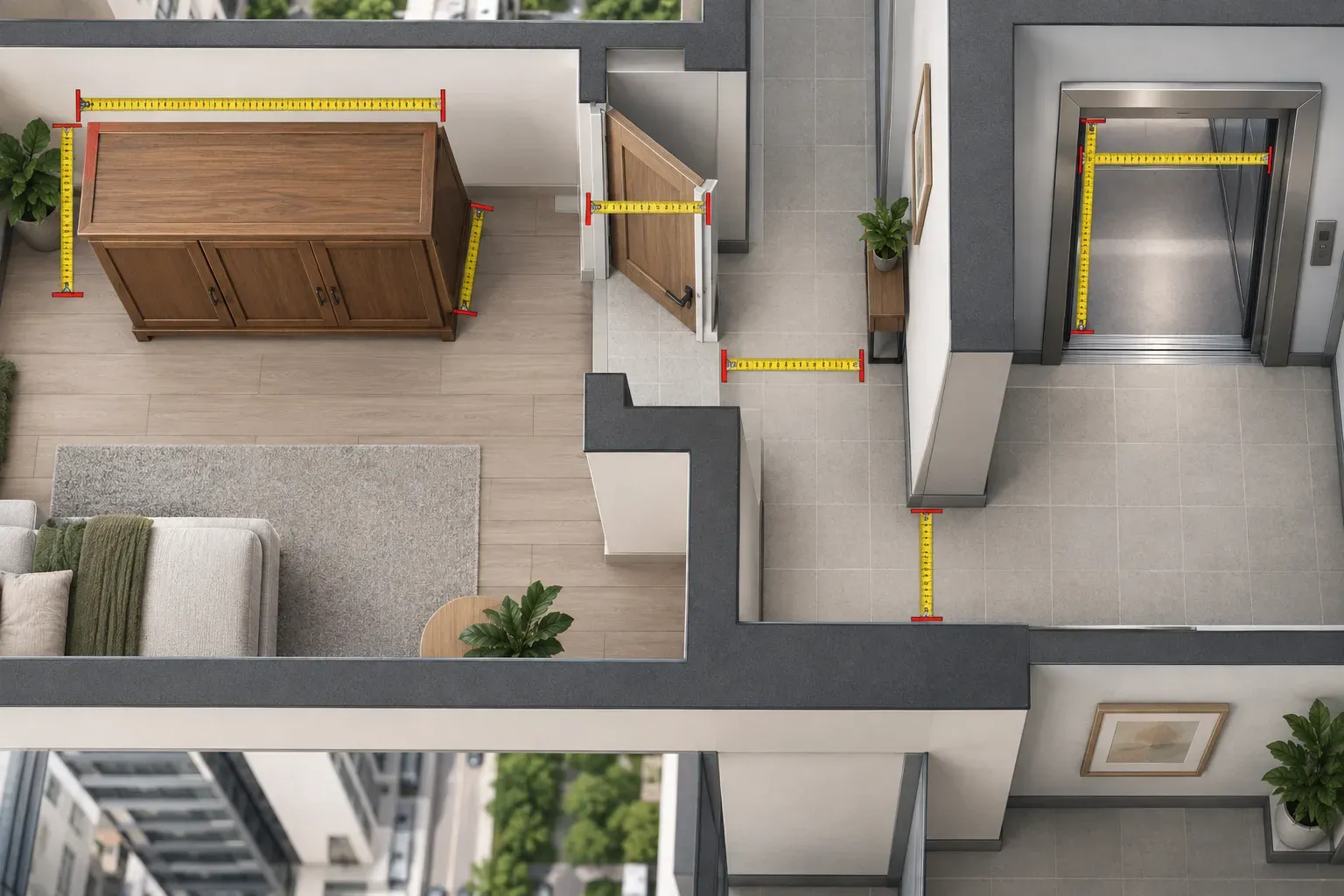
Walk the route in order: room, internal doorway, entrance door, corridor, fire door, lift lobby, lift opening, lift car, ground-floor exit, loading corridor and vehicle bay. Measure the narrowest usable width and height at each point. A wide corridor does not help if a door closer or wall cabinet reduces the turning space at its end.
Look above as well as beside the item. Ceiling lights, sprinklers, exit signs and door closers can block a tall cabinet tilted on a trolley. Check floor transitions, ramps and thresholds. A loaded trolley needs a smooth line and enough space for the person controlling it. Deep thresholds and tight ramps can matter even where the item dimensions fit.
Photograph the tightest turn from both directions. A single straight-on picture hides the space needed to rotate. Send the measurements and images with the item photos when arranging residential junk removal. This lets the provider decide whether to dismantle in the room, use a different orientation or bring additional protection and handling equipment.
Confirm the service lift, not just “a lift”
Passenger-lift access is not guaranteed for bulky removals. Ask the building which lift must be used and whether a booking is required. Record the door opening, internal width, depth and height. The diagonal inside the car may help with a long item, but only if the object can rotate without touching controls, doors or ceiling fittings.
Confirm the permitted load and never treat it as a target. People, trolley, protection and item all contribute. Building management or the lift documentation is the authority on capacity. If the object is unusually heavy, tell management and the removal provider before booking. A route that is dimensionally possible may still be unsuitable for the weight.
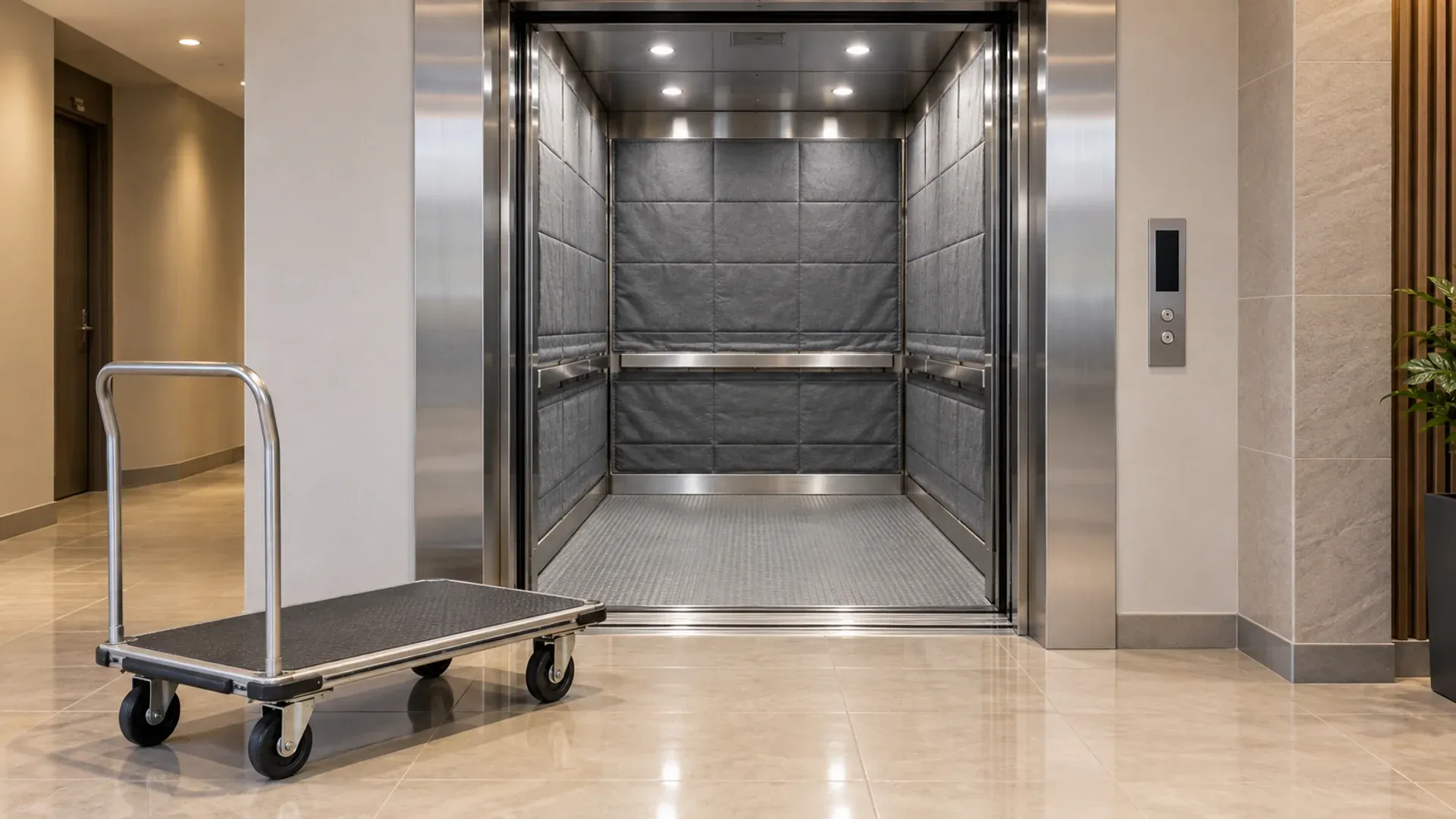
Ask whether protective pads are installed by the building or must be supplied. Confirm who holds the service-lift key or control and whether the lift remains shared during the slot. Find out what happens if another contractor is booked at the same time. These details determine how much work can be completed inside a one-hour window.
Building approval comes before collection timing
Each tower has its own process. Some ask for a move permit, contractor details, identification, insurance information, a deposit or an approved loading time. Others simply require a service-lift reservation. Do not copy requirements from another building, even within the same community. Ask the management office or reception responsible for your address.
Get the approved date and time in writing. Share any vehicle-height limit, loading-bay map, access-card procedure and contact name with the provider. If the loading entrance is separate from the resident entrance, send a map pin or clear directions. A crew delayed at the wrong gate loses the same lift time as a crew delayed inside the apartment.
Allow time for check-in at both ends of the booking. The building may inspect common areas before and after the move. Security may need to call the resident. Loading-bay barriers may require a token or escort. A realistic schedule includes these steps instead of treating the whole permission window as lifting time.
Decide what should be dismantled
Dismantling is useful when it reduces a genuine restriction. Remove sofa feet when they provide the missing centimetres at a doorway. Take wardrobe doors and shelves off when they reduce weight and prevent movement. Separate a modular sofa into its designed sections. Remove table legs when the top cannot turn through the corridor.
Do not dismantle merely because a tool fits the fastener. Flat-pack furniture can weaken after repeated assembly, glued pieces may not separate cleanly, and glass or stone needs controlled support. Identify whether the item is being discarded or preserved. A disposal job may allow cuts or destructive separation only if the owner explicitly authorises it and the work can be done safely without affecting the property.
Keep hardware controlled. Bag screws, label reusable sections and tape doors or drawers only with material that will not damage the finish. Protect sharp exposed brackets. Move dismantled parts in a deliberate order so they do not fill the corridor or block access to the remaining item.
Protect the item and the building route
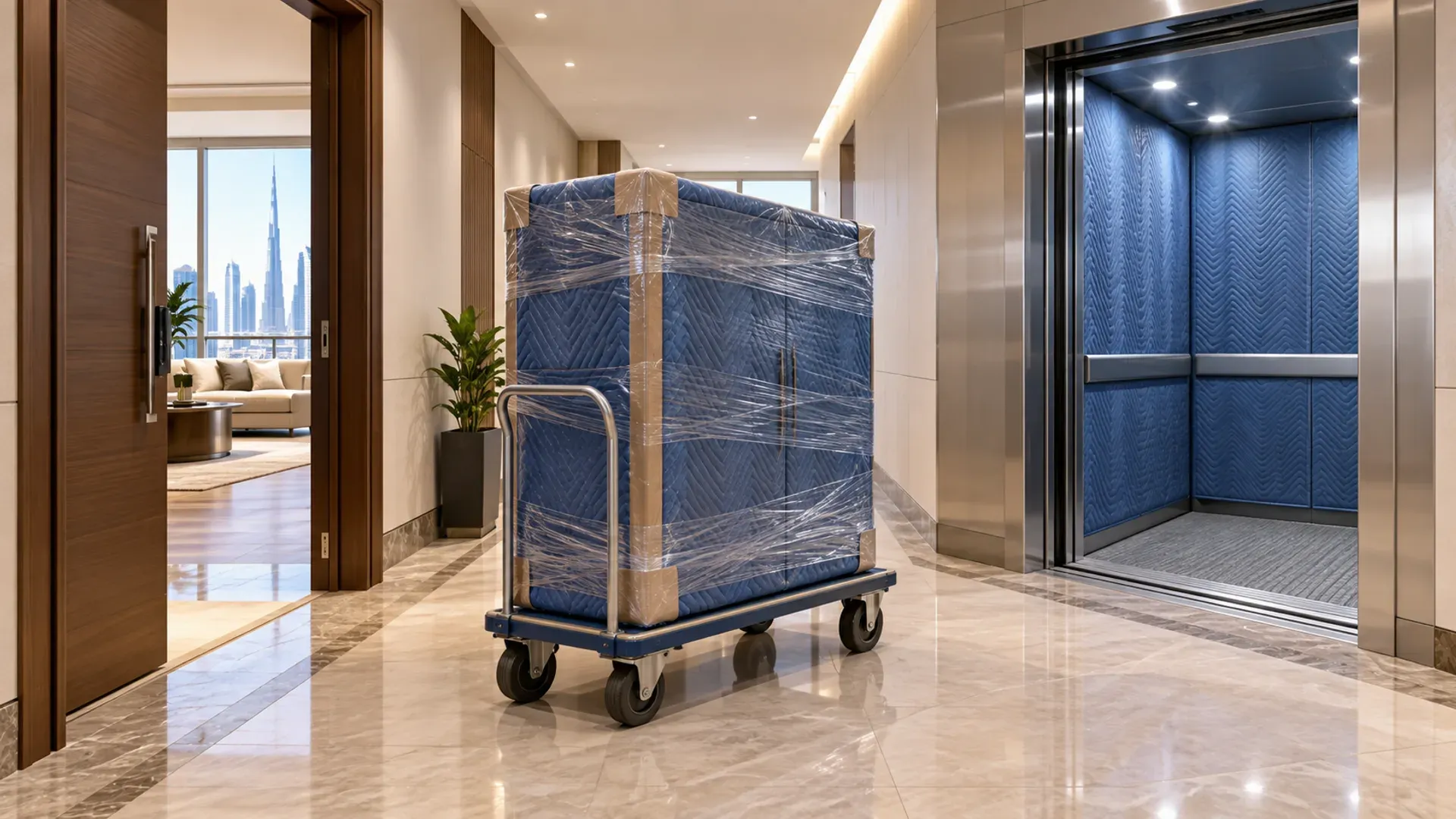
Protection has two purposes: prevent damage and maintain control. Wrap vulnerable corners and surfaces without making handholds slippery. Secure drawers and doors. Use suitable blankets or board protection where required. Keep lift controls, sensors and door tracks uncovered so the lift operates normally.
Floors deserve attention at turns, where trolley wheels and carried weight change direction. Remove loose rugs inside the apartment. Use the building-approved protection in common areas and do not tape directly to finishes unless permitted. If management provides lift pads, check that they are fitted before the item leaves the apartment.
Photograph existing marks if the building requires a condition check. This is practical record-keeping, not an argument in advance. Report new damage immediately rather than waiting until the next day. Clear communication between resident, building and provider protects everyone when many people use the same corridor and lift.
Plan the loading bay and final carry
The route does not end at the ground-floor lift. Confirm how far the item travels to the vehicle, whether there is a ramp, and whether the bay has a height or time restriction. Long basement corridors change equipment and timing. An outdoor loading point may need weather protection. A vehicle that cannot enter the bay may require a longer carry through an approved exit.
Reserve legal, authorised vehicle access. Do not plan around stopping in a fire lane or blocking another building entrance. Ask how security handles vehicle arrival and whether a registration number is needed in advance. If the building limits truck size, provide that information before dispatch so the wrong vehicle is not sent.
Keep the bay clear of personal boxes and packaging. Bulky items need space to turn at the vehicle and a stable area for loading. If several pieces are leaving, decide the order inside the apartment and the order in the truck. The largest item is not always first; route constraints and load stability decide.
When stairs or another method become necessary
If the item does not fit the approved lift, stop and reassess. Stair carries introduce more turns, more lifting time and different risks. Measure the stair width, landings, handrails, ceiling height and doors. Confirm that the building allows the stairwell to be used for moving items and that emergency access remains clear.
External lifting, balcony removal and specialist rigging are separate operations. They should never be improvised by a general removal team. They may require building approval, qualified contractors, exclusion zones and equipment suited to the load. If the normal internal route fails, the honest answer may be specialist assessment or controlled dismantling rather than a more forceful carry.
Sometimes the practical decision is to leave an item for a later specialist booking. That is preferable to damaging a lift, blocking a fire route or creating an uncontrolled load on stairs. Resolve the method before the service-lift slot starts wherever measurements show a likely problem.
A useful tower-removal brief
Send the provider one message containing the item list, photos, dimensions, floor, lift measurements, approved time, loading entrance and known restrictions. Include the building contact for access problems and state whether dismantling is allowed. Mention other collections or deliveries using the same window.
For multiple items, show the room layout rather than sending only close-ups. The crew needs to see working space and order. Mark fragile or reusable pieces clearly. Keep keys, access cards and permits with the person meeting the team, not packed in a box or held by someone away from the property.
On the day, walk the agreed route before lifting begins. Confirm the lift is protected and released, the loading bay is available and all doors open. Remove residents, pets and loose obstacles from the work line. Let the crew control movement around blind corners; calling instructions from several directions creates confusion.
Mistakes that turn a tower removal into a delay
- Measuring the lift interior but not its doorway.
- Booking the crew before receiving building approval.
- Forgetting the turn immediately outside the apartment or lift.
- Assuming passenger-lift permission from a previous delivery still applies.
- Sending item photos without dimensions or access details.
- Leaving dismantled panels and hardware loose in the corridor.
- Ignoring loading-bay height, distance or registration rules.
- Treating stairs or balcony lifting as an unplanned fallback.
A tower move succeeds when the item, route, lift, building permission and vehicle window agree with one another. None of those checks is complicated alone. The value comes from doing them together, before the bulky item leaves its room.
Plan several bulky items as one movement sequence
When a room contains several large pieces, avoid treating each item as an isolated carry. Record the dimensions and dismantling needs of every piece, then decide which one must leave first to create working space. A dining table may block access to a cabinet; a bed frame may need to leave before a wardrobe can rotate. The correct sequence is based on space, not value or visual size.
Keep dismantled parts beside their parent item until they are ready to move. Label reusable panels and bag hardware. Do not stack glass, mirrors or narrow boards against a corridor wall where they can fall or reduce the turning radius. If an item is being kept, protect its finish and agree where it will be reassembled. If it is being removed, keep all of its parts in the outgoing inventory.
The lift sequence matters too. Combine pieces only when the load remains within building limits and can enter and exit safely. Repeatedly holding the doors while rearranging an overloaded car wastes the booking and can interfere with lift operation. A controlled series of smaller trips is often faster than one crowded trip that has to be unloaded and rebuilt.
At the vehicle, load according to stability and the next destination. Do not leave pieces in the loading bay while the crew returns upstairs unless the building has approved a supervised staging area. The aim is continuous movement from room to vehicle without turning shared space into temporary storage.
If the measurements are close
Allow a practical margin. An item with exactly the same stated width as a doorway does not have usable clearance. Hinges, trim, protection, hand positions and a floor that is not perfectly level all consume space. The item also needs room to approach and turn; a mathematical fit on one plane may fail in the real route.
Recheck measurements with one tape and one method. Measure the actual clear opening, not the door leaf. For the lift, measure between the narrowest door edges and note any inner return. For corridors, record the tight point at handles, rails or cabinets. Photograph the tape in place where a measurement controls the plan.
Share close measurements before the booking and ask the provider to choose the method. Possible answers include removing approved parts, changing orientation, using stairs after permission, or arranging a specialist assessment. The answer should never be forcing the object until the building surface or furniture yields. A small uncertainty resolved in advance is cheaper and safer than a large item stopped halfway through a controlled tower route.