
Property clearance is easiest when the person arranging it has clear authority, a written scope and an agreed way to record what is leaving. When an agent, landlord, owner or representative is clearing a home they do not currently occupy, settle who may approve removal, document the contents, arrange access and decide what happens to anything of uncertain ownership before the crew is booked.
This is different from a family clearing their own home. Here the person arranging the job may never have lived in the property, may be dealing with an absent owner or former occupier, and may have to answer questions about every item that left. The purpose of a good plan is to make those answers available before anyone asks.
Confirm who can authorise the clearance
Begin with authority, not with the removal date. Identify the owner, landlord, tenant, management company or representative who can approve the job. Ask for the instruction in writing and keep it with the booking. A casual message saying that the property is “ready to clear” does not say which items may be removed, who is responsible for the decision or who may enter the unit.
Do not assume that holding keys is the same as owning the contents. A property manager may be allowed to prepare a unit for re-letting, but that does not necessarily mean every item inside may be thrown away. Former occupiers, relatives, guarantors and the legal owner of the property may all have an interest in something that remains in a room.
Where the situation involves a death, dispute, unpaid obligations or an unclear tenancy position, stop and take the matter to the person or authority who is entitled to resolve it. A removal crew cannot settle ownership. The estate clearance guide covers the sensitive decisions that follow a bereavement; this guide concerns the ordinary third-party arrangement where the contents have been left or the occupier has asked for help from afar.
Write down the scope of authority
The instruction should say, at minimum, which property is covered, who gave permission, what may be removed, what must be kept and who can be contacted on the day. If the authority applies only to certain rooms or categories, list those limits clearly. A document that says “clear everything” is easy to misunderstand.
Keep a record of the date, the name of the person approving and the way the instruction was received. It does not need to be complicated, but it should be traceable. If somebody later asks why a particular item was removed, the answer should not depend on memory.
Decide who is the point of contact
Name one person who will deal with the removal service. That person should be able to answer questions about the property, approve changes and reach the owner or representative quickly. If the owner is overseas, set a reasonable response window and agree how approvals will be sent.
If several people are involved, avoid parallel instructions. An agent, a tenant and a relative may all send messages to the collector, and the crew should never have to choose between them. Make the nominated contact the only source for scope changes and confirm that everyone else sends their requests through that person.
Provide the collector with the contact name, phone number and the best time to call. If the contact cannot attend, state who will be at the property and whether that person is authorised to approve extra items or only to open the door.
Inspect the property before booking
A decision made without visiting the unit often results in a vague quote and a difficult appointment. If you cannot attend, ask a trusted person to walk through and photograph every room, cupboard, balcony and storage area. Include the inside of wardrobes, kitchen units, built-in storage and any maid's room or parking store linked to the property.
Make a simple inventory as you go. List large furniture, appliances, boxes, outdoor items and anything that looks personal or valuable. Note damage, signs of leakage, pests or hazardous materials. Do not open, test or rearrange potentially unsafe items beyond what is necessary to describe them.

Photograph the property as found
Take wide photographs of each room and close photographs of anything that matters. They should be taken before the crew arrives and before any items are moved. This creates a reference for the condition of the property and the quantity of contents.
Keep the images organised by room and date. If a dispute arises about an item or damage, a time-stamped set of images is far more useful than a general description. Do not post the photographs publicly or send them to anyone who does not need them.
Separate property from rubbish
The most common problem in a third-party clearance is that the person arranging it is deciding what is rubbish for somebody else. A neglected room may contain valuable items, family keepsakes, important papers or equipment that belongs to a company. Sorting is therefore a decision process, not a speed contest.
Use four groups that are simple enough to explain to everyone involved:
1. Items to keep or return to the owner. 2. Items to hold while ownership or permission is checked. 3. Items authorised for removal. 4. Items that need a specialist or separate decision.
Make the hold group physical, not just a list. Put it in a room or area that the crew will not enter, and label it clearly. If there is no safe space on site, ask the owner whether the items can be collected or stored by somebody else before the clearance. Do not use an open corridor or balcony as a holding area for papers, jewellery, electronics or documents.
Protect personal and sensitive items
Passports, identity documents, cheque books, bank cards, medication, jewellery, keepsakes, photographs, laptops, phones and business records need special care. Remove them from general sorting and handle them through the owner, a trusted representative or the relevant authority. Do not ask the crew to review them or decide whether they are valuable.
Paper deserves a separate process. A pile of letters can contain tenancy documents, bills or personal correspondence. Give the owner or representative a chance to check it, and decide whether anything should be kept before the room is cleared. If you are unsure what an item is, keep it out of the removal group.
The leaving Dubai clearance checklist is written for people who are departing, but its inventory approach is helpful here too: decide what is kept, shipped or discarded before the final week rather than during it.
Handle items that belong to the landlord or building
Not everything inside a vacant property belongs to the occupier. Furnished lets may include sofas, beds, curtains, appliances and kitchenware that are part of the landlord's inventory. Fitted wardrobes, built-in cabinets, light fittings and similar items may be part of the premises. Removing them could cause a dispute even though they look like old furniture.
Check the tenancy documents or inventory where one exists. If there is no clear record, ask the owner or landlord to confirm which items are included. Mark those items before the crew arrives and exclude them from the load. If any item is damaged and the landlord wants it removed, record that instruction in writing.
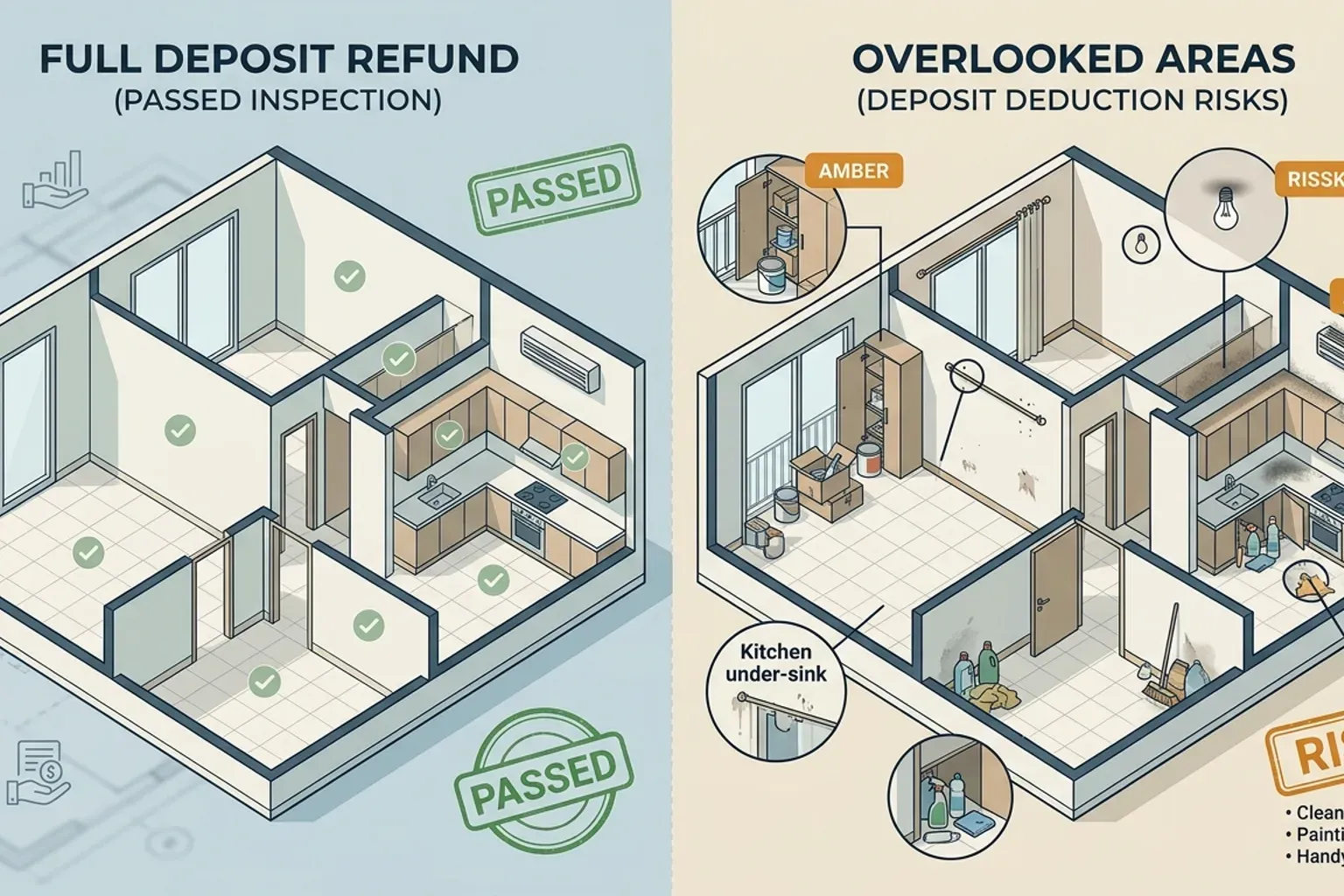
The deposit deductions guide explains why unclear furniture ownership is a common source of handover disagreement. A property manager should not use a clearance to settle that question by default.
Keep fixtures and fittings out of the removal list
Wall units, shelves, light fittings, curtain rails, blinds and bathroom fixtures can look like loose objects. Unless the owner has asked for fit-out removal and the right trade is involved, treat them as part of the property. Clearing loose contents is not the same as stripping the unit.
If the property has a utility meter, water heater, air-conditioning unit or similar connected equipment, do not ask the crew to disconnect it unless that service has been explicitly agreed. Ask the owner or managing company who should handle it.
Arrange access, keys and building permission
A third-party clearance often fails at the door. The building may need advance notice, a contractor permit, a lift booking or a letter from the owner. Gated communities can require a visitor or contractor registration. Security may need the name of the vehicle, the crew and the unit being visited.
Ask the building or community manager what they require. The service lift booking guide and NOC guide explain why these approvals can control the timetable. For villa communities, the gated community clearance guide covers the access points that often create delay.
Decide who holds the key and who will open and close the unit. If the key must be collected from a separate office, confirm opening hours and the identification the holder will require. Make sure someone authorised is available if the lock fails, an alarm sounds or a neighbour questions the visit.
Give the crew a clear arrival plan
Send the address, building access instructions, parking position, floor, lift details and contact number in one message. Explain whether the property is occupied, empty or partly furnished, and describe any rooms that must remain closed. Warn the crew if there are stairs, a narrow corridor, a shared lobby or a restricted loading window.
If an authorised person cannot be present, say so clearly and decide in advance whether the crew may proceed alone. For most third-party jobs, a representative should attend at least the start and the final inspection so decisions can be made and the property can be secured.
Prepare furniture and appliances for removal
Large items need the same practical preparation as any other clearance. Measure the route, identify the biggest piece and decide whether any furniture requires dismantling. Empty wardrobes, drawers, kitchen units and appliances. Defrost and drain fridges and freezers, and disconnect washing machines and similar equipment before the day if they are not already unplugged.
Do not assume that appliances are empty because the property has been unoccupied. Fridges can contain old food, drawers can hold documents and storage cupboards often have forgotten tools or chemicals. Check every unit and remove prohibited or specialist materials as separate items. The what we take guide explains the difference between accepted household items and materials that need separate handling.
Deal with sensitive and unusual contents separately
Medication, cleaning chemicals, paint, gas cylinders, batteries, sharp objects and unidentified liquids should not be mixed into a general load. Describe them to the collector in advance and ask what can be taken. If a material is not accepted, the owner or representative must arrange the correct route.
Do not clean up an unknown substance in a way that could cause harm. If there are signs of pests, mould, flooding or other hazards, record the condition and ask for advice before the crew arrives. A clear description is better than hoping the problem will not be noticed.
Get a quote based on the whole property
A third-party clearance quote needs more information than a simple furniture pickup. Include photographs of every room, the number of large pieces, any boxes or loose items, outdoor and storage areas, and the complete route to the vehicle. Mention anything you expect to remain, and explain which areas the crew must not enter.
Useful details for the house clearance service include:
- The property type, address and floor.
- The authority for the clearance and the on-site contact.
- Whether the property is furnished, empty or partly cleared.
- The main furniture, appliances and storage areas.
- Items that must be kept, held or excluded.
- Building access, permit and lift requirements.
- Key and security arrangements.
- Any hazardous, damaged or unusual contents.
- The date by which the property must be handed back.
Ask what the quote covers, such as carrying, loading and basic dismantling, and what the owner or manager must do beforehand. If the job could change after the crew arrives, ask how extra items will be approved and recorded. A fixed assumption in the quote is better than an unspoken one.
Do not ask for guarantees that cannot be given
A removal service can collect agreed items. It cannot decide that an item is worthless, resolve a family dispute, release a tenant from a lease obligation or certify that a landlord will accept the handover. Keep those matters with the people who have the authority to decide them.
Be careful with promises about speed. A clearance timetable depends on access, building approval, the amount of sorting still required and the number of decisions pending. If the handover date is fixed, work backwards from it and leave time for a final inspection.
Run the day with a simple control sheet
On the day, give the crew a sheet or message that shows the approved sequence. List the rooms in order, the items to be removed, the items to be left and the people to contact. Walk through the property together before loading begins, pointing out held items and the route to the vehicle.
Ask the crew to stop and call the contact if they find anything that is not on the inventory. Do not tell them to “use their judgement” about papers, valuables or anything that appears personal. A short delay while you check is better than a removal that cannot be reversed.
Take photographs when each room is finished. Compare the finished property with the starting images, then check cupboards, balconies, storage rooms and parking spaces. Make sure the held items are still in place and the unit is secure.
Record what happened
Keep a short record after the job: the date, the people involved, the approved scope, the items held, the photographs and any documents supplied. If the owner or landlord asks for confirmation later, you will have a factual account. Do not describe a destination or recycling outcome unless the service has actually confirmed it.
If anything was left behind at the owner's request, note it. If a decision is still pending, say who is responsible and what the deadline is. This avoids the mistaken impression that the property has been fully cleared when some matters are still open.
Close the file properly
After the removal, send the owner or representative a short summary. State what was removed, what remains, what is being held and any matters that need action, such as repairs, cleaning or utility closure. Attach the relevant photographs.
Check that the keys and access cards are returned to the right person. Confirm that the building has been informed that the work is complete and that any permit or lift booking has ended. If a deposit, handover inspection or agent report depends on the clearance, give the responsible party a chance to review the property before further steps are taken.
A good property clearance is rarely about speed alone. It is about authority, a clean record and a controlled sequence. Confirm who can approve the work, inspect the property, separate what may be removed from what must be kept, arrange access and ask for a quote that matches the actual contents. Those steps protect the owner, the manager and the crew.
Questions about property clearance
Who can approve a property clearance?
The person with authority over the property and its contents must approve it, usually the owner, landlord, tenant or an authorised representative. Keep the instruction in writing, and do not rely on holding the keys.
Can an agent clear a property without the owner present?
It may be possible if the owner has given clear written authority and the scope is limited to the items they approved. Hold anything personal, valuable or uncertain until the owner or authorised representative decides.
What should I do with documents found during the clearance?
Do not review them casually or send them with the general waste. Keep them in a secure hold area, tell the owner or representative and decide how they will be handled.
Does the removal crew decide what is rubbish?
No. The person authorising the clearance decides which items may be removed. The crew can collect the agreed load, but it should not be asked to settle ownership or value.
Do I need to clear fixtures and fittings as well?
Not unless that has been separately agreed. Treat built-in cabinets, light fittings and similar items as part of the property, and ask the owner or building manager before removing anything that may be fixed.