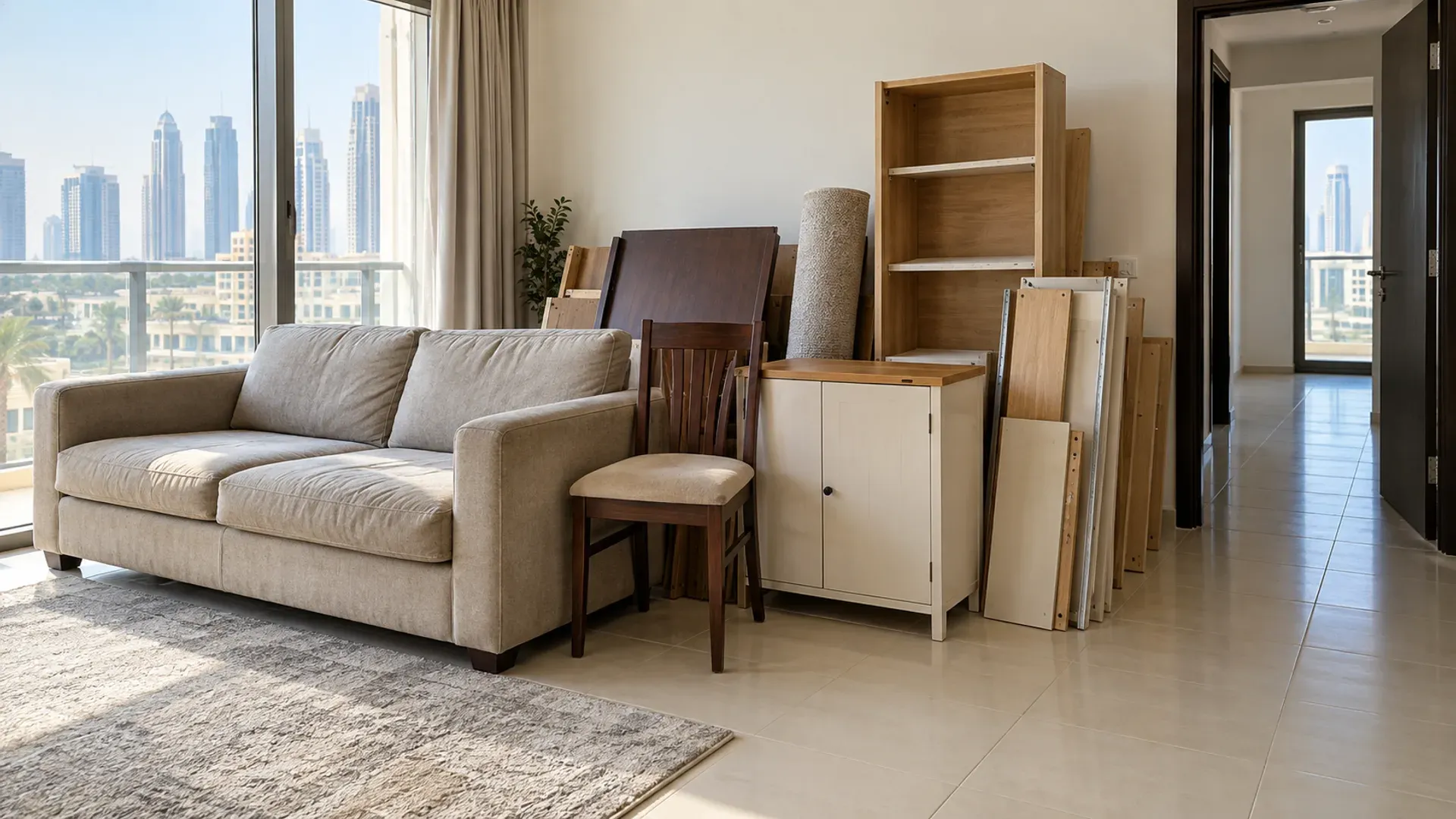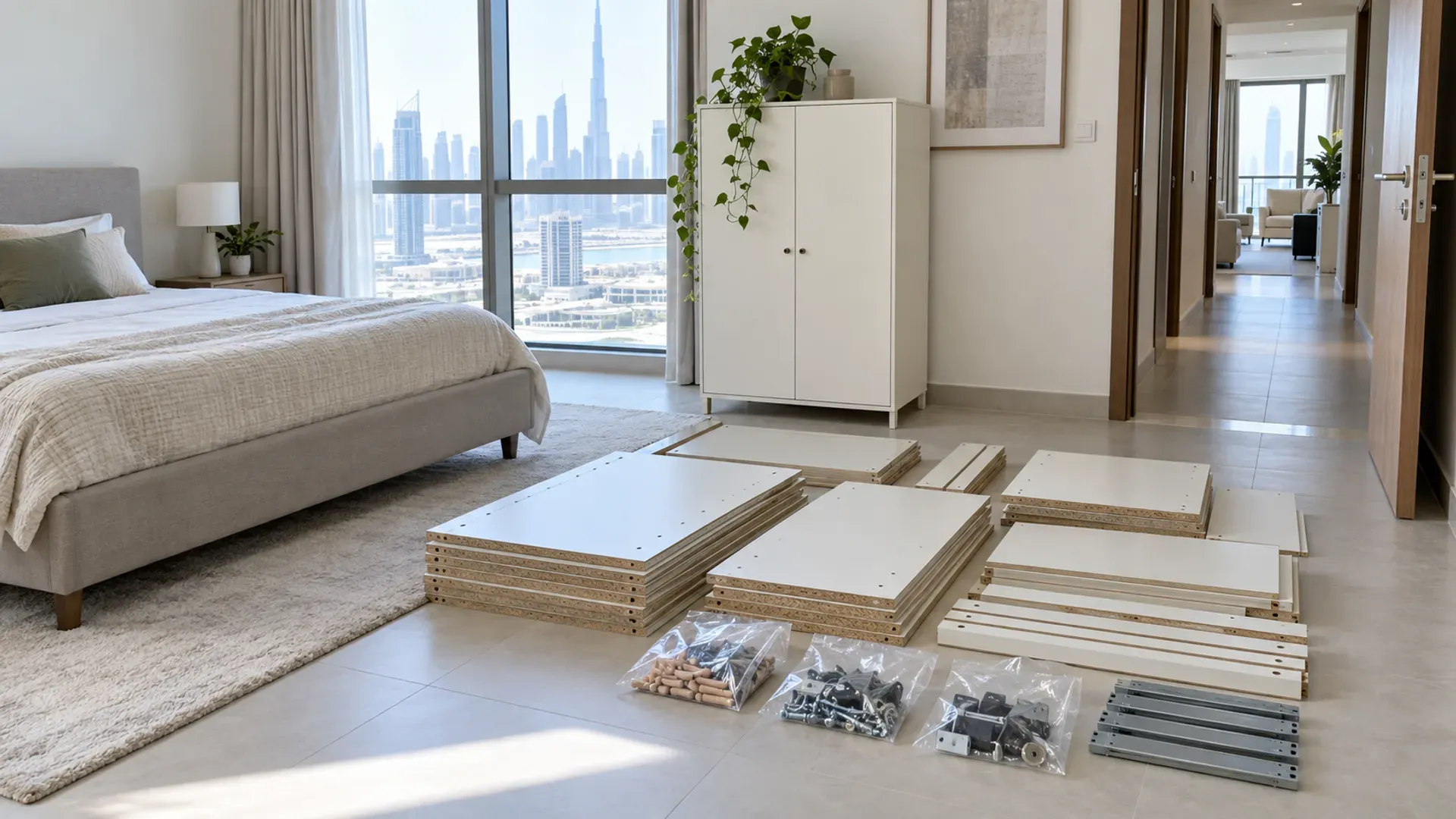
A piece of furniture should be dismantled before collection only when its construction, condition and exit route make that the agreed method. Start with photographs of the complete item and the narrowest parts of the route. Identify whether it was designed to separate, whether it must survive for reuse and who is responsible for taking it apart. Do not start removing screws simply because the item looks too large for the door: uncontrolled dismantling can make furniture unstable, hide sharp fixings and turn a straightforward carry into a box of unlabelled parts.
For unwanted furniture in Dubai, the useful sequence is inspect, measure, agree the scope, clear the route and then dismantle only what the plan requires. A removal provider can assess a disposal job differently from a relocation, so say where the furniture is going before anyone begins.
Decide whether the item is leaving for disposal or reuse
The destination changes every dismantling decision. Furniture being discarded may not need the same cosmetic protection as furniture going to another home, but it still needs controlled handling. Furniture being donated, sold or relocated must remain complete enough for the recipient to use and reassemble.
Do not describe an item as reusable unless a specific recipient has accepted its condition, dimensions and missing parts. A listing, promise or unanswered message is not a collection plan. Set a decision deadline and retain a disposal option if the furniture must leave by a fixed date.
If the item belongs to a landlord, furnished property or employer, confirm authority before altering it. Dismantling is not a harmless holding step: fixings can be damaged, panels can swell or split, and a built-in item may be part of the property. Check the inventory and obtain written instruction where ownership is uncertain.
Keep relocation separate from junk removal
A removal service takes unwanted items away. A mover transporting furniture for future use needs to protect, label and account for every component, then may need to reassemble it. Tell the provider which result you require. Do not assume that a quote for disposal includes careful disassembly, packing, transport and reassembly at another address.
If a recipient is collecting the item, agree who dismantles it and what condition it should be in. Do not leave a stranger to improvise with tools inside the property while a handover or lift booking is running.
Identify how the furniture was constructed
Look for a manufacturer label, assembly instructions or model name before touching fixings. Photograph the item from the front, sides and back, then photograph accessible joints. The aim is to distinguish furniture designed to separate from furniture whose joints are glued, stapled, nailed or concealed beneath upholstery.
Flat-pack furniture often uses cam locks, dowels, confirmat screws and thin backing panels. A solid-wood table may have a top designed to lift from a base, while another may use glued joints that should not be forced. A sofa can have removable feet or modular connectors without having removable arms. A fitted wardrobe may be secured to a wall and is not the same job as a freestanding wardrobe.
Do not infer the construction from appearance alone. Two cabinets of the same size can behave very differently once a fastener is released. Ask for assessment if the item is heavy, unstable, glass-fronted, mirrored, electrically powered or fixed to the building.
Record damage before work begins
Photograph cracked panels, loose backs, swollen board, broken glass, bent mechanisms and previous repairs. Damage affects whether the item can be moved intact and whether it will remain stable as screws are removed. It also tells the handler where sharp edges or unsupported weight may be hidden.
Do not tape over a hazard until it is invisible. Make it safe only by an agreed method and tell everyone handling it what is underneath the covering. Loose glass, protruding screws and splintered board should be identified in the collection request.
Measure the complete route before choosing dismantling
Measure the furniture at its widest, deepest and highest fixed points. Then measure the clear doorway openings, corridor turns, apartment entrance, lift door, usable lift car, stair landings, gates and loading access. Include handles, arms, cornices and other protrusions. A narrow bedroom door is not necessarily the only restriction.
Take wide photographs showing the approach to every tight turn. A dimension without the space needed to rotate the item can be misleading. A wardrobe panel may fit through a door but be too long to turn into the corridor. A dining-table top may clear the lift door but not stand inside the lift car.
If the intact item fits the approved route and can be carried safely, dismantling may add work and risk without solving a problem. If only a designed part needs to come off, a limited separation may be better than reducing the whole item to panels.
Measure the largest resulting piece
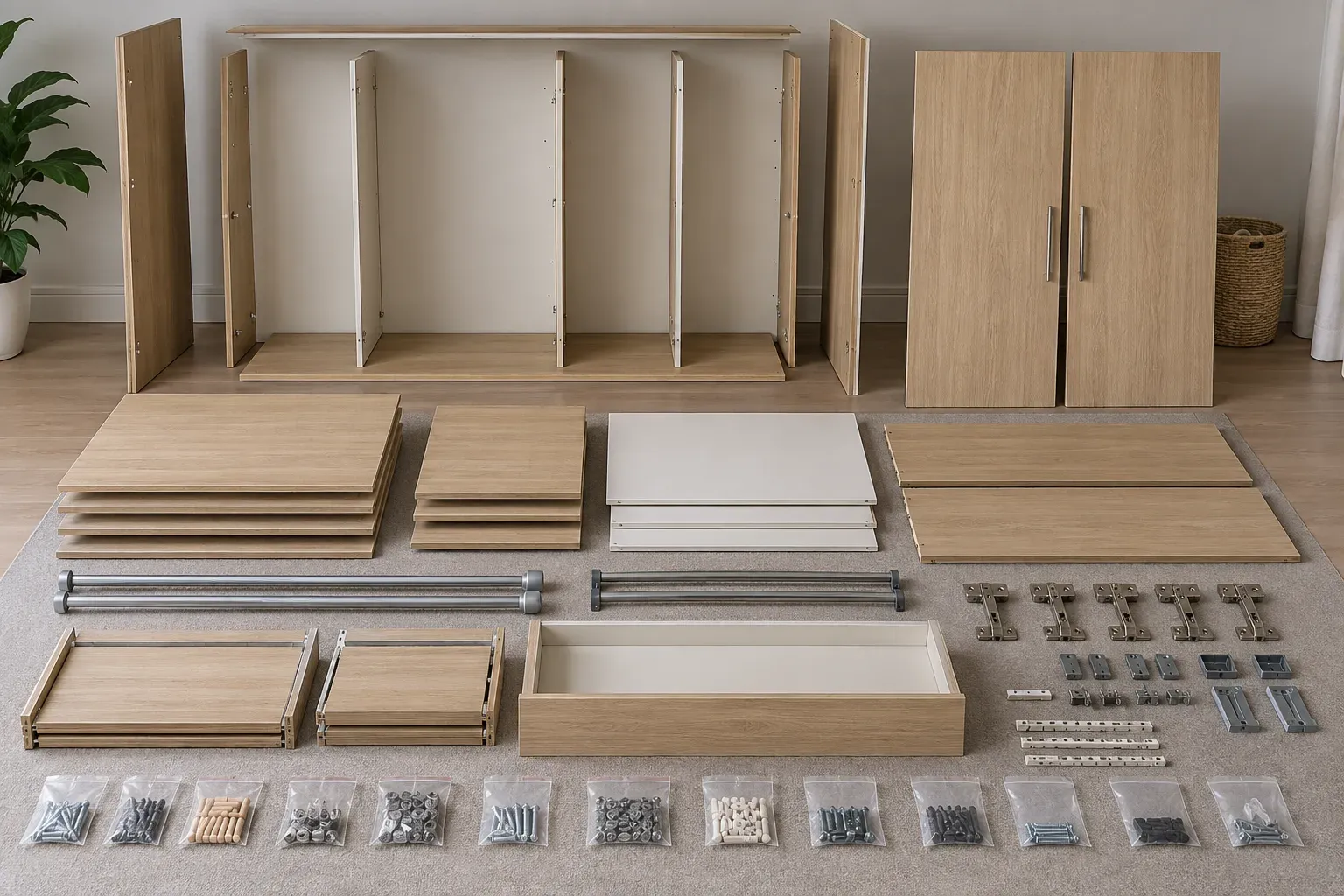
Do not assume that dismantling makes every component small. The longest side panel, headboard, tabletop, sofa frame or wardrobe door may still govern the route. Estimate the size and weight of the largest resulting piece, and show any glass or mirror attached to it.
For a wardrobe, the wardrobe removal guide explains the difference between moving whole, separating designed sections and handling disposal panels. For a bed, the bed-frame guide separates the mattress, base, headboard and storage mechanisms. Use the item-specific guide where its construction creates the real constraint.
Agree who dismantles and what the quote includes
Ask the provider to state whether dismantling is included, excluded or subject to an on-site assessment. The word “removal” does not automatically promise furniture disassembly. A useful scope names the item, expected method, access, disposal or reuse outcome, and responsibility for loose parts.
Ask what happens if concealed construction differs from the photographs. The crew may find glued joints, inaccessible fixings or a wall restraint that changes the method. Agree how a scope change will be communicated rather than creating pressure to continue with an unsafe assumption.
For furniture removal in Dubai, send the full item and route evidence before requesting a time. Include all furniture in the load; several small dismantling jobs can affect the plan more than one intact cabinet.
Keep building work outside the furniture scope
Removing a wall fixing, fitted cabinet, electrical connection or plumbing attachment may require the landlord, building management or an appropriate trade. A furniture collection is not automatic permission to alter the property. Identify skirting cut-outs, anti-tip brackets, silicone, wall anchors, built-in lighting and nearby services.
Do not cut a fixed item away from the building just to meet a pickup time. Confirm ownership, isolation and reinstatement responsibilities first. Any holes, exposed connections or damaged finishes left behind belong in the repair and handover plan.
Prepare the furniture without making it unstable
Empty every drawer, shelf and compartment. Check for documents, keys, medicines, valuables and landlord property. Remove loose contents before measuring or tilting anything; weight that shifts inside a cabinet makes it harder to control.
Take out loose shelves, drawers and cushions only when you can do so without tipping the item or releasing a structural part. Keep the route clear while parts accumulate. Do not lean large panels against glass, a fire door or a shared corridor wall.
If instructions call for a sequence, follow it. Some furniture depends on the back panel, stretcher or top to remain square. Removing the wrong part first can allow the remaining frame to rack or collapse. Support heavy components and keep people away from the working area.
Manage fixings and small components
For reusable furniture, place hardware from each stage in a separate labelled bag and record where it belongs. Photograph connector positions before covering them. Do not mix several items’ screws in one container. Label left and right sections where orientation matters.
For disposal, loose metal fittings still need control. They can scratch floors, puncture bags or disappear underfoot. Ask whether fixings should remain attached, be bagged with the item or be separated. Do not leave them scattered in the room for the crew to discover.
Handle common furniture types differently
There is no universal dismantling method. The right approach follows the item’s designed joints, weight and destination.
Wardrobes and tall cabinets
First establish whether the unit is freestanding, modular or fitted. Empty it, remove only loose shelves and show mirrors, glass doors and anti-tip restraints. A tall cabinet can become unstable as doors or backing are removed. Do not let one person hold it upright while another experiments with screws.
Particleboard panels may not tolerate repeated assembly. Swollen edges or enlarged cam holes can prevent safe reuse. Describe the condition honestly and decide whether preservation is realistic before paying for relocation-style work.
Beds and storage bases
Strip bedding and treat the mattress as a separate item. Identify slats, centre rails, lift-up storage mechanisms, drawers and headboard fixings. Gas-assisted storage bases can contain moving mechanisms; do not release them casually. Keep matching frame parts together and protect any sharp brackets.
Measure the headboard and base sections against stairs and lift access. Even after the side rails come off, a wide upholstered headboard may be the largest component.
Tables, desks and shelving
Remove drawers and loose leaves before deciding whether legs or a base should separate. Glass and stone tops need a specific handling plan and should not be lifted by their edges without appropriate support. Photograph underside fixings without crawling beneath an unstable table.
Long desk tops and shelving uprights can be awkward in corridor turns. State whether cable trays, screens, power modules or wall restraints are present. Office furniture should also be separated from computers, confidential papers and tenant fixtures.
Sofas and recliners
Check whether the sofa is modular, powered, reclining or a sofa bed. Disconnect accessible power only according to its instructions and report cables or battery packs. Secure moving mechanisms before handling. Removable feet may reduce one dimension, but upholstery and frames should not be cut without an agreed disposal method.
If the intact sofa stops at a doorway, use the sofa access guide. It covers three-dimensional movement, sectional connectors and route restrictions. Furniture dismantling should solve an identified access problem, not replace that assessment.
Protect the property and the people doing the work
Clear rugs, lamps, shoes and personal items from the work zone and exit route. Keep children and pets away. Arrange enough space to place each released part flat or securely supported. A cramped room encourages panels to be balanced against walls and creates trip hazards around tools and hardware.
Identify delicate flooring, wall corners, low lights and glass doors. Ask what protection is included. Do not drag panels or frames across finished floors, and do not use passenger corridors or lift lobbies as workshops.
Wear and equipment choices depend on the work and are the responsibility of the person carrying it out. A householder should not improvise specialist dismantling to reduce a quote. If the item cannot be made stable and controllable, stop and ask for a revised plan.
Keep dismantling inside the property
Do not move a partly dismantled item into a corridor, stairwell, car park or pavement. Shared routes must remain clear and building management may control when protective covering, service lifts and loading bays can be used. Complete the agreed preparation in a safe private area.
Book the service lift or community access before the collection window. The service-lift guide provides the questions to ask about time, protection and the loading point.
Send a complete dismantling request
Include:
- Full photographs of every furniture item.
- Close photographs of accessible joints, damage and wall restraints.
- Approximate complete dimensions and the largest expected parts.
- Whether each item is for disposal, donation or relocation.
- Whether it is freestanding, fitted, powered, mirrored or glass-fronted.
- The floor, lift, stairs, turns, gate and loading details.
- The building’s approved access window.
- Any work already completed and every loose part created.
- The date by which the property must be clear.
Ask for acceptance, the expected dismantling boundary, carry-out, disposal route, timing and price. If preservation or reassembly matters, make that a written part of the request. A photograph-based assessment is strongest when it shows the route as well as the furniture.
On collection day
Keep the complete instruction and item list available. Point out furniture that stays and disclose any new damage or unstable section. If the provider is doing the dismantling, leave the item where it is unless asked to prepare something specific. Moving it into a doorway can remove the space needed to work.
Keep labelled hardware with reusable items. For discarded furniture, follow the agreed instruction for loose components. After removal, check for forgotten fittings, exposed wall restraints and damage that needs a separate repair. A clearance crew taking the furniture does not automatically fill holes, repaint walls or reinstall fixtures.
If the actual item or route differs materially from the request, pause and revise the plan. An unexpected glued joint, concealed cable or inaccessible stair turn is information, not a reason to force the original method.
Questions about furniture dismantling
Do I have to dismantle furniture before collection?
Not automatically. Send photographs and route measurements, then ask what preparation is required. Furniture that fits and can be carried safely may leave intact; other items may need designed sections removed or controlled dismantling.
Is dismantling included in furniture removal?
Only if the provider confirms it. Ask what item, method and level of work the quote covers, and whether fitted units, glass, mechanisms or reassembly are excluded.
Can flat-pack furniture be reused after dismantling?
Sometimes, but condition and construction decide. Enlarged fixing holes, swollen board and damaged edges can prevent reliable reassembly. Do not promise reuse until the recipient and handler have assessed it.
Should I remove all the screws before the crew arrives?
No. Remove only parts covered by an agreed preparation plan. Unplanned screw removal can make the item unstable and create loose sharp hardware.
What if the furniture belongs to my landlord?
Do not dismantle or dispose of it without clear authority. Check the inventory and obtain written instruction from the owner or property manager.