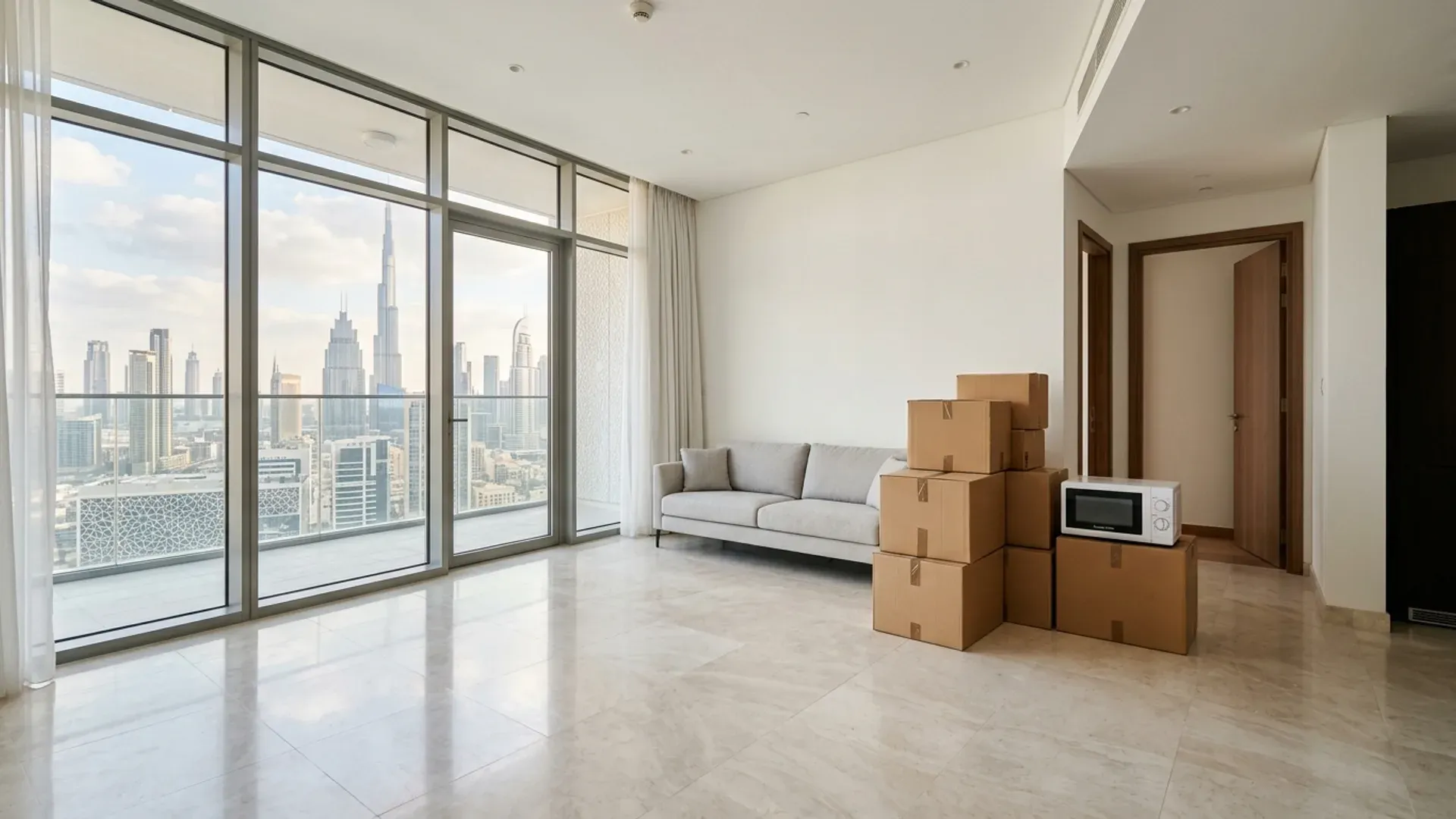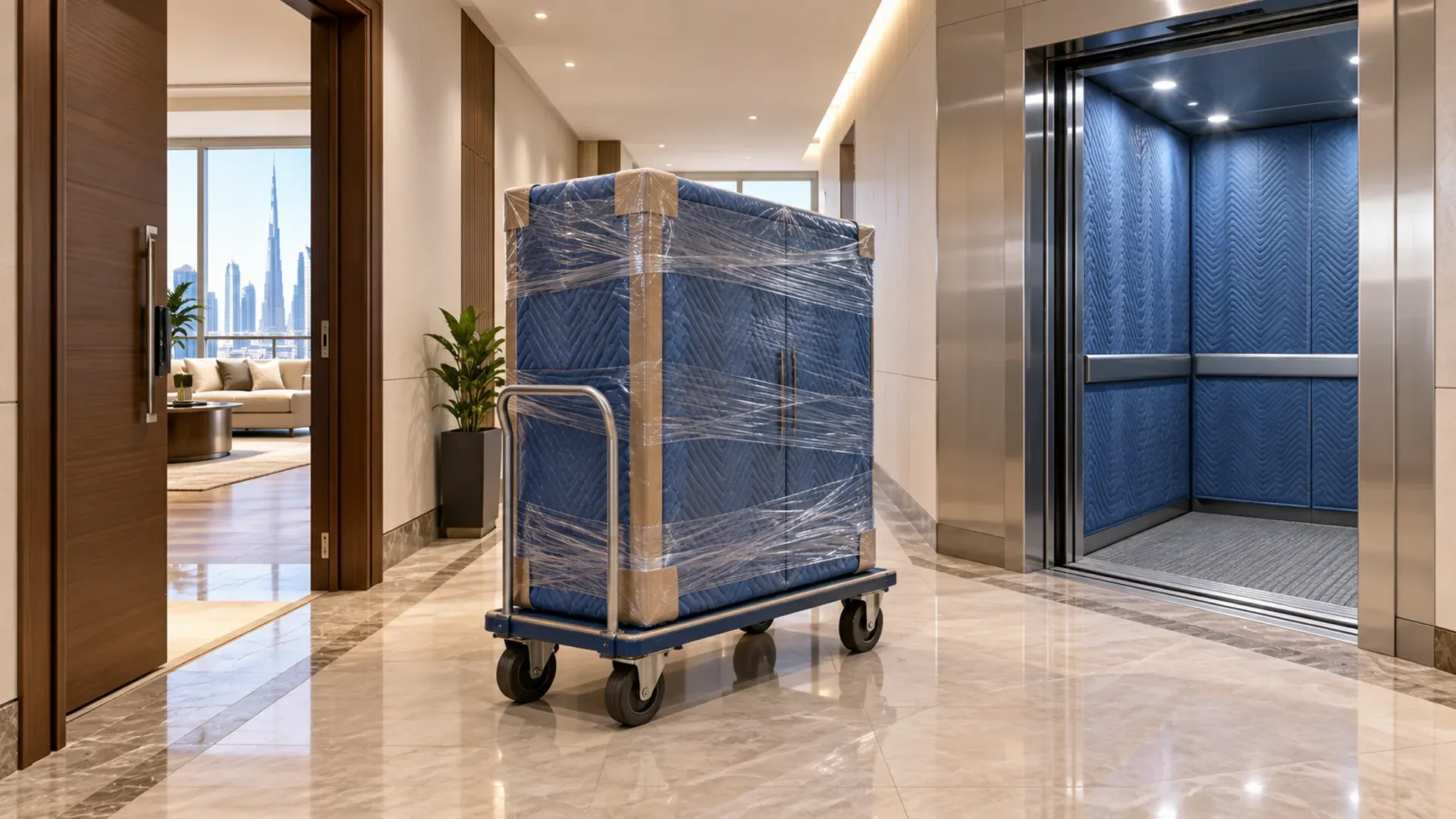
Apartment furniture removal works best as one coordinated inventory tied to one approved building route. List every outgoing piece room by room, settle ownership, identify what must be dismantled, measure the largest resulting component and confirm the lift and loading window before collection is booked.
Do not begin by dragging furniture into the corridor. Shared space is not a staging area, and early movement can block the route needed for safe dismantling. Keep each item in place until the full apartment and building sequence is understood.
Freeze the apartment inventory
Walk every room with the person authorised to decide. Mark furniture as keep, move elsewhere, remove or hold. Include balconies, utility cupboards, entrance storage and furniture used to store smaller belongings. In a furnished rental, compare questionable items with the tenancy inventory or obtain a written decision from the owner or agent.
Use one room-by-room list. Give each piece a short identifier so photographs, dimensions and labels agree. “Bedroom wardrobe B1” is clearer than “the brown one,” especially when similar furniture appears in several rooms.
Open drawers, cabinets, storage beds and ottomans. Remove documents, keys, medication, jewellery, chargers and personal photographs. Do not fill unwanted furniture with loose items; hidden contents add weight and can fall during carrying.
Separate furniture from the rest of the clearance
An apartment handover may also involve appliances, clothes, boxes, curtains and cleaning. Record those separately. A furniture-removal plan should not quietly expand into a complete home clearance after the quote is confirmed.
List mattresses apart from bed frames, televisions apart from stands and removable mirrors apart from dressing tables. Flag wall-mounted, fitted or hard-wired items. Collection does not automatically include carpentry, electrical isolation, wall repair or removal of landlord fixtures.
If the whole property is being emptied, the studio-apartment clearance guide shows how to manage ownership and sequencing in a one-room home, while the end-of-tenancy guide covers the wider handover timeline.
Describe each item for handling
For every piece, record approximate dimensions, material, condition, whether it is empty and whether it separates by design. Photograph the front, sides and any feature that changes handling.
Pay particular attention to:
- Wardrobes with mirrored doors, internal drawers or joined modules.
- Beds with storage mechanisms, large headboards or solid divan bases.
- Dining tables with glass or stone tops and removable legs.
- Sofas with recliners, corner sections or sofa-bed mechanisms.
- Cabinets with glass shelves, stone inserts or loose doors.
- Desks joined to cable trays, screens or return sections.
- Damaged furniture with loose panels, sharp fixings or unstable frames.
The room name is not a useful quantity. Two apartments of the same size can contain very different loads. Counts, dimensions and clear photographs allow the provider to assess the actual work.
Decide what should be dismantled
Do not dismantle everything automatically. A small table that fits the route may be safer intact, while a tall wardrobe may need controlled separation before it leaves the room. Destination matters too: a reusable transfer needs labelled panels and protected fittings; disposal may allow a different agreed method.
Find manufacturer joints and photograph fixings. Avoid forcing glued, swollen or damaged boards. Label panels by item and bag hardware. Keep mirrors, glass and stone parts upright and protected in a stable area rather than stacking them flat beneath other furniture.
Use the furniture dismantling guide to compare the intact item, the largest resulting part and the available working space. The goal is not the smallest possible pile; it is a controlled set of pieces that can travel safely through the approved route.
Measure from the item to the vehicle
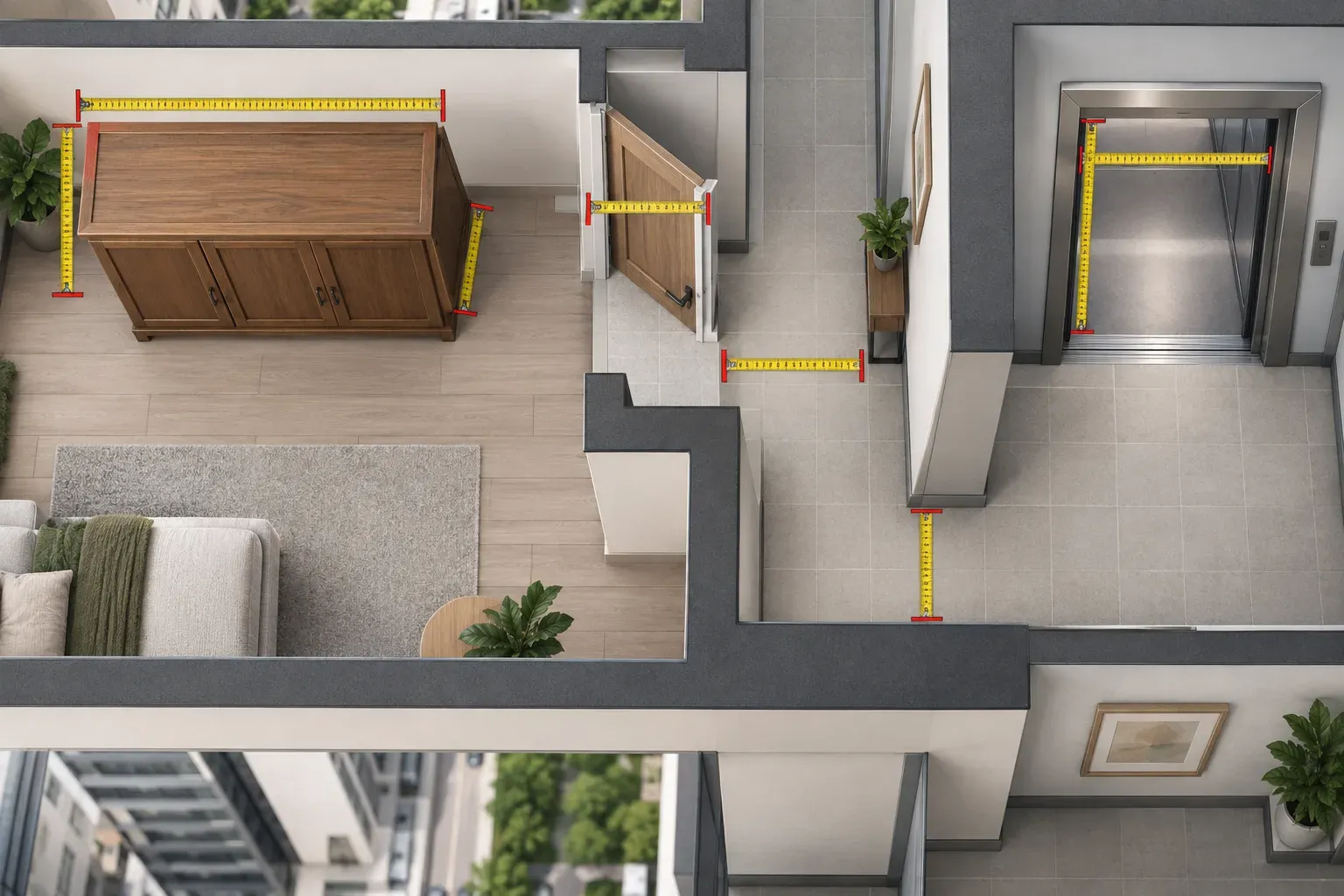
Measure the largest rigid component first. Record its height, width, depth and any awkward diagonal or protruding feature. Then walk its full route through the room door, apartment entrance, corridor, service lift, lobby, loading area and vehicle position.
Measure clear openings, not nominal door or lift sizes. Handles, closers, frames and protection reduce usable space. Record the turn before and after every tight opening. A cabinet may fit through the apartment door but fail at the ninety-degree approach to the lift.
Check floor changes, ramps, steps and long carries. Photograph the route in order. If stairs are the approved fallback, disclose the floor and landing geometry before booking; stair carrying is not an automatic substitute for an unavailable lift.
Confirm current building permission
Ask management or security about the service lift, moving hours, contractor registration, protective materials, loading-bay access and vehicle restrictions. Get the approved window in writing where the building provides written confirmation.
Do not rely on the rules from a previous move. A passenger lift used for a small delivery may not be approved for a furniture clearance. The service-lift booking guide sets out the information to confirm with the building.
If a permit or NOC is requested, establish who applies, what documents are needed and when approval expires. Keep the confirmation, access cards and contact details with the person meeting the crew.
Build the removal sequence inside the apartment
Start with the route, not the nearest item. Remove small loose furniture and approved dismantled parts that create working space, but keep essential tools, fixings and route protection accessible. The largest pieces often determine which room must be opened first.
For each room, choose a finish point before moving to the next. Compare the item count against the inventory and check cupboards or under-bed spaces. This reduces missed pieces and prevents outgoing furniture from mixing with retained items elsewhere.
Keep the apartment entrance and fire route open. Do not build a stack beside the lift while waiting for the collection vehicle. If the building permits temporary staging, use only the approved location and supervision method.
Coordinate residents, deliveries and other contractors
Choose one apartment contact who can answer keep-or-remove questions. Tell residents when rooms and corridors need to stay clear. Secure pets and keep children away from the working line.
Avoid overlapping the clearance with movers, cleaners, maintenance teams or a large replacement delivery unless every party and the building has accepted the sequence. Two crews competing for one lift waste the access window and increase the chance of items being misdirected.
Furniture removal is not a moving service. Clearly separate pieces going to another address from pieces approved for collection. Label destination groups and do not expect the removal crew to decide which possessions should be retained.
Quote the whole apartment accurately
Send the provider a complete set of information:
- The room-by-room item list and clear photographs.
- Dimensions of the largest intact or dismantled parts.
- Glass, mirrors, stone, mechanisms and existing damage.
- Fixed, wall-mounted or ownership-pending items.
- Floor number, route photographs and close measurements.
- Confirmed lift, loading and contractor requirements.
- The target date and any handover or delivery deadline.
- Work another trade must finish before collection.
Update the inventory when something changes. Adding a sofa, two cabinets and balcony furniture on the morning of collection changes the load and may change the sequence or vehicle plan.
A residential junk-removal service can assess the complete apartment load when the items and route are visible. If only furniture is involved, the furniture-removal service is the more specific reference for accepted pieces and booking.
Prepare without creating a corridor problem
Empty and label furniture, remove only agreed loose parts and keep fixings organised. Roll rugs that obstruct the route, move retained decorations and protect fragile belongings. Do not place panels against communal walls or leave drawers and cushions beside the lift.
Photograph pre-existing marks on doors, floors and lift interiors where appropriate. Confirm who supplies any protection required by the building. Keep parking and loading instructions ready for the driver rather than trying to resolve them after furniture reaches the lobby.
On arrival, walk the inventory and route with the crew. Point out held items and the largest component. If building access has changed, stop and revise the plan before loading begins.
Reconcile the apartment after loading
Check each room against the original list. Look inside built-in storage, behind doors and on balconies. Confirm that retained furniture and landlord property remain in place. Count separated panels, cushions, glass parts and hardware as parts of their parent items.
Walk the common route and approved staging area. Remove loose packaging, fittings and protective material that belongs to the job. The collection scope is not automatically a cleaning or repair service, so agree any sweeping or reinstatement responsibility in advance.
Take photographs of the cleared rooms if an owner, agent or handover inspector needs a record. For a multi-item tower job, the bulky-items guide adds detailed lift and loading checks for the largest pieces.
Work backwards from a handover or delivery deadline
If the apartment must be returned on a fixed date, do not place furniture removal in the final available hour. Work backwards from the inspection or key return. Allow time for the inventory decision, building approval, final quote, collection, a room-by-room check and any separate cleaning or repair work.
Finish decisions before dismantling. An undecided wardrobe cannot be safely half prepared, and a landlord item removed in error creates a larger problem than a held item collected later. Set a decision cutoff and keep unresolved furniture on the hold list.
Replacement deliveries create a different deadline. Confirm whether the retailer removes the old item; do not assume it. Measure the incoming piece as well as the outgoing one because the cleared route must work in both directions. If the same lift slot is intended for removal and delivery, obtain agreement from the building and both providers.
For a staged apartment project, use a simple sequence:
1. Confirm ownership and destinations. 2. Approve the building window. 3. Empty and photograph every outgoing piece. 4. Release only the furniture that genuinely needs dismantling. 5. Complete the final count and quote update. 6. Remove furniture through the reserved route. 7. Reconcile rooms and shared areas before the next contractor starts.
Keep essential seating, beds or work furniture until their planned phase if the apartment remains occupied. Mark them clearly so an efficient-looking room sweep does not remove something still needed. Conversely, do not leave the largest awkward item until last if it blocks the route for everything else.
If access approval arrives late, change the collection time rather than moving furniture into a common corridor while waiting. The building window is part of the job, not an administrative detail added after physical preparation.
Keep a final contact list with the resident or tenant, building security, property manager and collection provider. If a lift fault, vehicle restriction or ownership question appears, the person on site can reach the decision-maker without abandoning the furniture in shared space. Record any revised instruction in the same inventory used for sign-off.
Common questions
Should furniture be moved beside the apartment door first?
Usually not. It can block the working area and shared exit route. Empty and label items in place, then let the planned sequence control when they move.
Can furniture use the passenger lift?
Only when current building management permits it and the item fits the complete route. Confirm the approved lift, time and protection requirements directly with the property.
Who dismantles wardrobes and beds?
Agree that responsibility when booking. Simple designed separation may be part of the confirmed scope; fitted work, technical release and wall repair are separate unless expressly arranged.
What if an item does not fit the service lift?
Stop and reassess before moving it into the corridor. The answer may be approved dismantling, permitted stairs or specialist work. Do not assume an external lift, balcony or emergency route can be used.
What is the best information for a quote?
Send the complete item list, wide and detailed photographs, the largest measurements, floor and route details, and the confirmed building window together. That describes the actual apartment job rather than only its number of bedrooms.