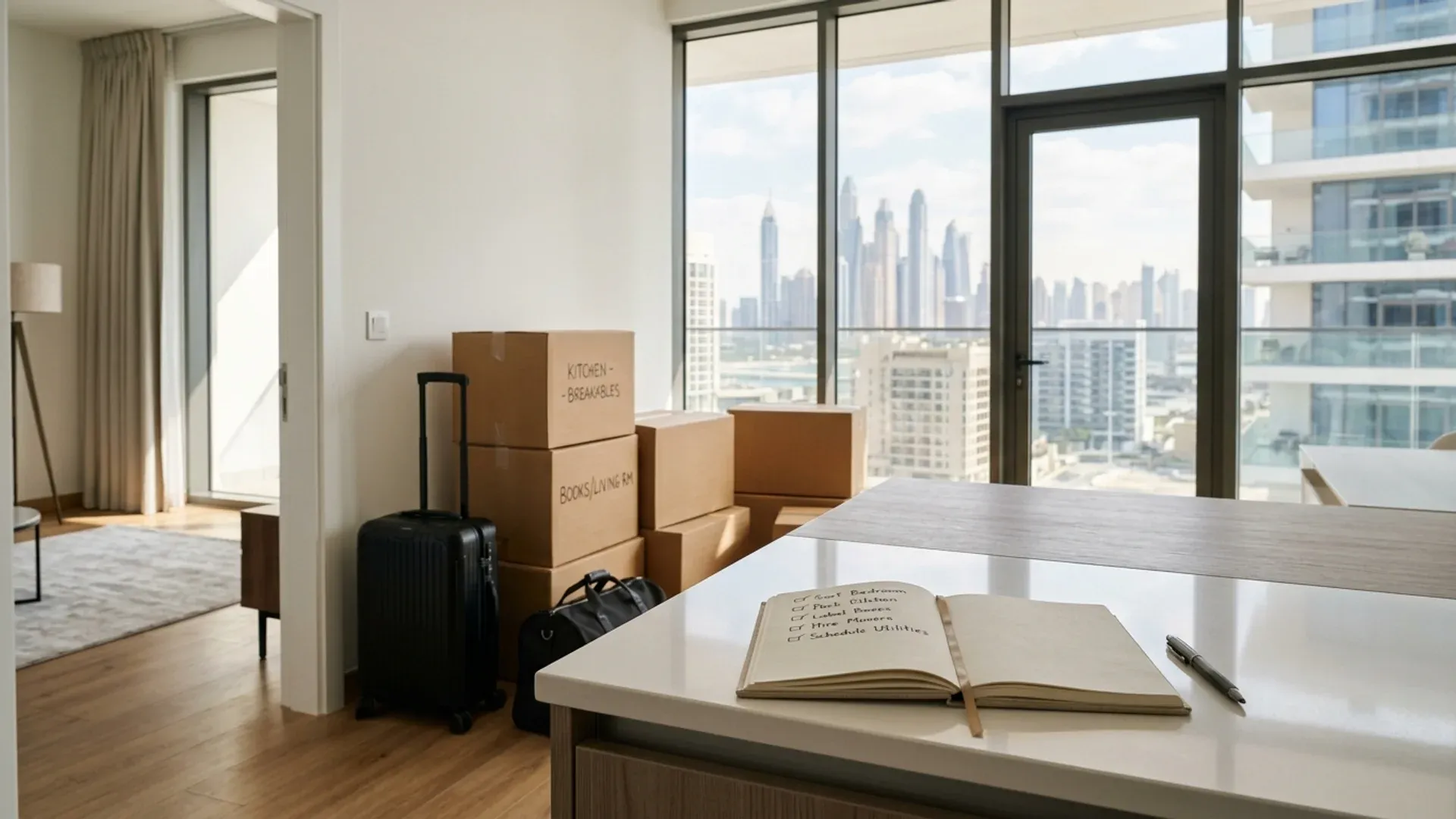
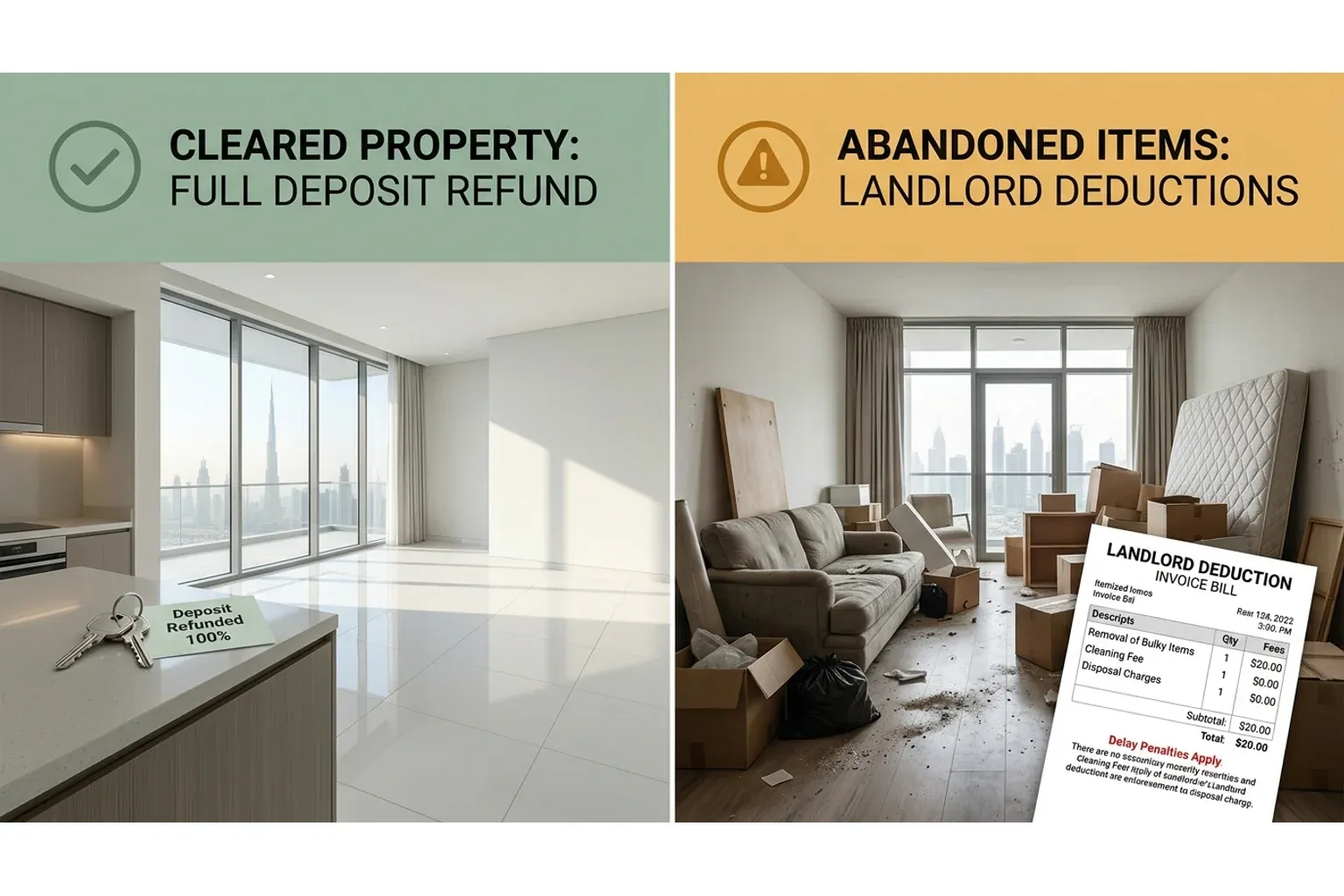
If you leave unwanted furniture behind in a rented property in Dubai, the landlord has legal grounds to deduct the cost of removal and disposal directly from your security deposit. In Dubai rental agreements, delivering a property with abandoned furnishings or unapproved items is considered a failure to restore the premises to its agreed condition, leaving the tenant financially liable for the clearance expenses.
Understanding what Dubai tenancy law specifies about security deposits, how landlords and property managers calculate clearance costs, and how to carry out a proper end-of-tenancy clearance protects your money before the final handover walkthrough.
Dubai tenancy law on property handover and security deposits
Tenancy relationships across the Emirate of Dubai are governed by Law No. (26) of 2007 Regulating Relationship Between Landlords and Tenants in the Emirate of Dubai%20of%202007%20Regarding%20regulation%20between%20the%20lessor%20and%20the%20lessee.pdf), as amended by Law No. (33) of 2008%20of%202008%20Amending%20Law%20No.%20(26)%20of%202007.html).
Two specific articles in the tenancy law define the legal framework governing security deposits and the condition of the leased property upon departure:
Article 20: The purpose of the security deposit
Article 20 of Law No. (26) of 2007 states that when entering into a lease contract, the landlord may obtain from the tenant a security deposit to guarantee the maintenance of the leased property upon the expiry of the lease contract. The law requires the landlord to refund this deposit or any remaining balance to the tenant once the tenancy concludes.
The critical legal concept is that the deposit exists specifically to secure the physical restoration of the premises. If the tenant leaves unwanted items, debris, or damaged fixtures that the landlord must pay third parties to remove or rectify, those costs are legally chargeable against the deposit funds.
Article 21: Handover condition and wear and tear
Article 21 sets out the tenant explicit statutory obligation upon handover: the tenant must, upon expiry of the tenancy agreement, deliver the leased property to the landlord in the same condition in which it was received at the time of entering into the contract, except for ordinary wear and tear or damage due to reasons beyond the tenant control.
Abandoned furniture, broken beds, old mattresses, unwanted kitchen appliances, and leftover gym equipment do not constitute ordinary wear and tear. Ordinary wear and tear refers exclusively to the inevitable, gradual deterioration resulting from normal, reasonable residential occupancy, such as minor paint fading or subtle surface scuffs on high-traffic floor areas.
Leaving personal property behind requires active physical intervention, transport, and disposal labour to return the property to a vacant state. Consequently, landlords are fully entitled to treat leftover furniture as an unfulfilled handover obligation.
Why landlord disposal deductions cost far more than private clearance
Many tenants mistakenly assume that leaving a few unwanted furniture items behind will only result in a nominal deduction of a few hundred dirhams. In reality, landlord deductions for furniture removal are almost always substantially higher than hiring a professional house clearance service yourself.
There are four structural reasons why landlord disposal charges are significantly inflated:
1. Landlords do not shop around for budget quotes
When a tenant vacates, the property owner or managing real estate agency wants the unit turned over quickly for repainting and the next incoming tenant. They will not spend time seeking competitive disposal quotes or comparing service providers. They will hire whatever emergency facilities maintenance contractor or commercial moving firm is available on their vendor list, regardless of the price.
2. Emergency callout and commercial labour surcharges
Contractors called out on short notice to clear an apartment under tight re-leasing deadlines charge emergency rates. They factor in emergency vehicle dispatch, rapid labour deployment, building elevator coordination, and commercial disposal fees, resulting in invoices that often exceed standard scheduled market rates by two to three times.
3. Administrative and handling fees
Major property management companies in Dubai routinely add an administrative coordination surcharge of ten to twenty percent on top of third-party contractor invoices. If an outsourced maintenance firm bills one thousand dirhams to remove a sectional sofa and two wardrobes, the managing agent may add an administrative charge, deducting twelve hundred dirhams or more from your deposit.
4. Holding delays and loss of rental income
In contentious situations where substantial furniture is left behind and prevents the landlord from handing keys over to a new registered tenant, the landlord may attempt to claim compensation for lost rent or delayed re-letting periods during the dispute.
The myth of leaving furniture for the next tenant
One of the most frequent rationalizations tenants use when leaving items behind is the belief that they are doing the landlord or future occupant a favour. A tenant might think that a clean dining table, a sturdy bookshelf, or an extra bedside cabinet will be appreciated by the next person moving into the apartment.
In the professional Dubai rental market, this assumption is almost universally false for several practical reasons:
Unfurnished lease agreements
The vast majority of residential leases registered on the Ejari system in Dubai are categorized as unfurnished properties. When an apartment is rented unfurnished, the tenancy contract binds the landlord to provide a vacant, empty space. An incoming tenant who has already signed an unfurnished lease has usually purchased or shipped their own furniture and will demand that the property be completely empty before accepting handover.
Landlord liability for left-behind items
Landlords do not want responsibility for furniture they did not purchase. If an old washing machine or refrigerator left by a prior tenant breaks down three months into a new tenancy, the incoming tenant may argue that the appliance was part of the leased premises and demand landlord-funded repairs. To eliminate this liability, landlords insist that all uninventoried items be cleared.
Pest control and sanitization concerns
Used soft furnishings, such as fabric sofas, rugs, headboards and second-hand mattresses, present potential hygiene and pest risks. Managing agents routinely require soft furnishings to be removed prior to mandatory end-of-tenancy pest control and sanitization treatments.
Unless a landlord explicitly requests in writing that you leave specific furnishings behind as part of an official amendment to the lease agreement, always assume that every single item must be cleared before the final inspection.
The role of check-in and check-out inventory reports
Protecting your security deposit against unjustified deductions begins on the day you move into the property and concludes on the day you hand back the keys.
The inventory report is the primary piece of documentary evidence used to establish what belongs to the property and what must be removed:
The move-in check-in report
When you first occupy a rental property in Dubai, a comprehensive check-in report should be conducted. This document includes time-stamped photographs documenting the exact physical condition of walls, floors, doors, sanitary fittings, and any landlord-supplied appliances or furniture pieces included in the original lease.
If you rented a fully furnished or semi-furnished apartment, every included item should be itemized with its condition noted. If an item does not appear on the original signed inventory, it is legally your responsibility to remove it when you leave.
The move-out check-out inspection
At the conclusion of the lease, the landlord, property manager, or an independent handover inspector conducts a formal walkthrough. They compare the current state of the property against the initial check-in report.
During this inspection, any foreign item left in the unit is flagged as an outstanding clearance item. If you have already vacated and returned the keys without removing your personal effects, the inspector records the items on the checkout report and requests contractor quotations for their removal.
How the Rental Dispute Center reviews deposit deductions
If a tenant disputes deposit deductions, the dispute is adjudicated by the Rental Dispute Center at the Dubai Land Department. When reviewing deposit cases, RDC judges examine:
- The original tenancy contract and registered Ejari details.
- The initial signed move-in condition report and inventory list.
- The exit inspection report and photographic evidence from the date of handover.
- Original invoices and receipts proving the actual expenses incurred by the landlord to clear or repair the premises.
If the landlord presents photographic evidence of left-behind furniture accompanied by a legitimate contractor invoice for disposal, the RDC will routinely uphold the deduction. However, landlords are not permitted to arbitrarily withhold the entire deposit without demonstrating genuine, incurred costs.
High-risk furniture items that trigger deposit deductions
Certain categories of household items are disproportionately responsible for end-of-tenancy deposit disputes in Dubai apartments and villas:
Large flat-pack wardrobes and storage units
Tenants often install extensive flat-pack wardrobes in master bedrooms or secondary storage spaces. Because dismantling large particleboard wardrobes requires significant time and appropriate tools, departing tenants frequently leave them behind hoping they will be accepted. In reality, landlords consider large wardrobes a nuisance that requires specialized disassembly labour.
Used mattresses and box springs
Mattresses cannot be disposed of via municipal trash chutes or standard household bin rooms. Because mattresses are heavy, bulky, and difficult to transport without a commercial vehicle, tenants under time pressure frequently leave them leaning against bedroom walls. A single abandoned mattress is one of the most common triggers for emergency clearance deductions.
Balcony furniture, heavy planters and artificial turf
Balconies are frequently neglected during move-out preparations. Heavy ceramic or concrete plant pots filled with dried soil, weathered outdoor wicker sets, and glued artificial turf are difficult to move and cannot be thrown into regular refuse systems. Landlords will charge substantial contractor fees to carry heavy planters down service elevators and clear outdoor spaces.
Unapproved wall mount brackets and shelving
Removing a wall-mounted television often leaves heavy steel mounting brackets anchored deep into concrete walls with expansion bolts. If you remove the television but leave the metal bracket behind, or remove the bracket but leave large holes unpatched, the landlord will deduct charges for handyman labour, wall filler and touch-up repainting.
Leftover appliances not part of the lease
Secondary counter appliances, water dispensers, microwaves and washing machines purchased by the tenant must be cleared. If an appliance is left behind without landlord agreement, it will be treated as abandoned waste and removed at your expense.
What to do if you are running out of time before handover
Tenants facing tight move-out deadlines often find themselves overwhelmed in the final forty-eight hours before lease expiry. If your handover inspection is scheduled for tomorrow and you still have unwanted furniture filling your rooms, take immediate action rather than walking away and forfeiting your deposit:
1. Prioritize immediate disposal over selling
Do not waste precious hours trying to sell low-value items on online classifieds or classified message groups. At the eleventh hour, buyer cancellations, haggling, and missed pickup appointments will derail your handover schedule. Accept that unwanted items must be cleared immediately.
2. Book a professional same-day clearance service
Contact a dedicated same-day junk removal service that can dispatch a vehicle and labour crew directly to your property. A licensed clearance crew will dismantle beds, unbolt shelving, and load all unwanted items directly into their truck in a single visit, ensuring the apartment is empty before your landlord arrives.
3. Coordinate building access and service lift passes
Verify that your building security will permit the removal crew to access the service lift and loading bay. As detailed in our comprehensive guide on obtaining an NOC to move furniture in Dubai, having the appropriate building permit or contractor gate pass ensures your clearance crew does not get blocked at the gate.
4. Carry out an exit photographic record
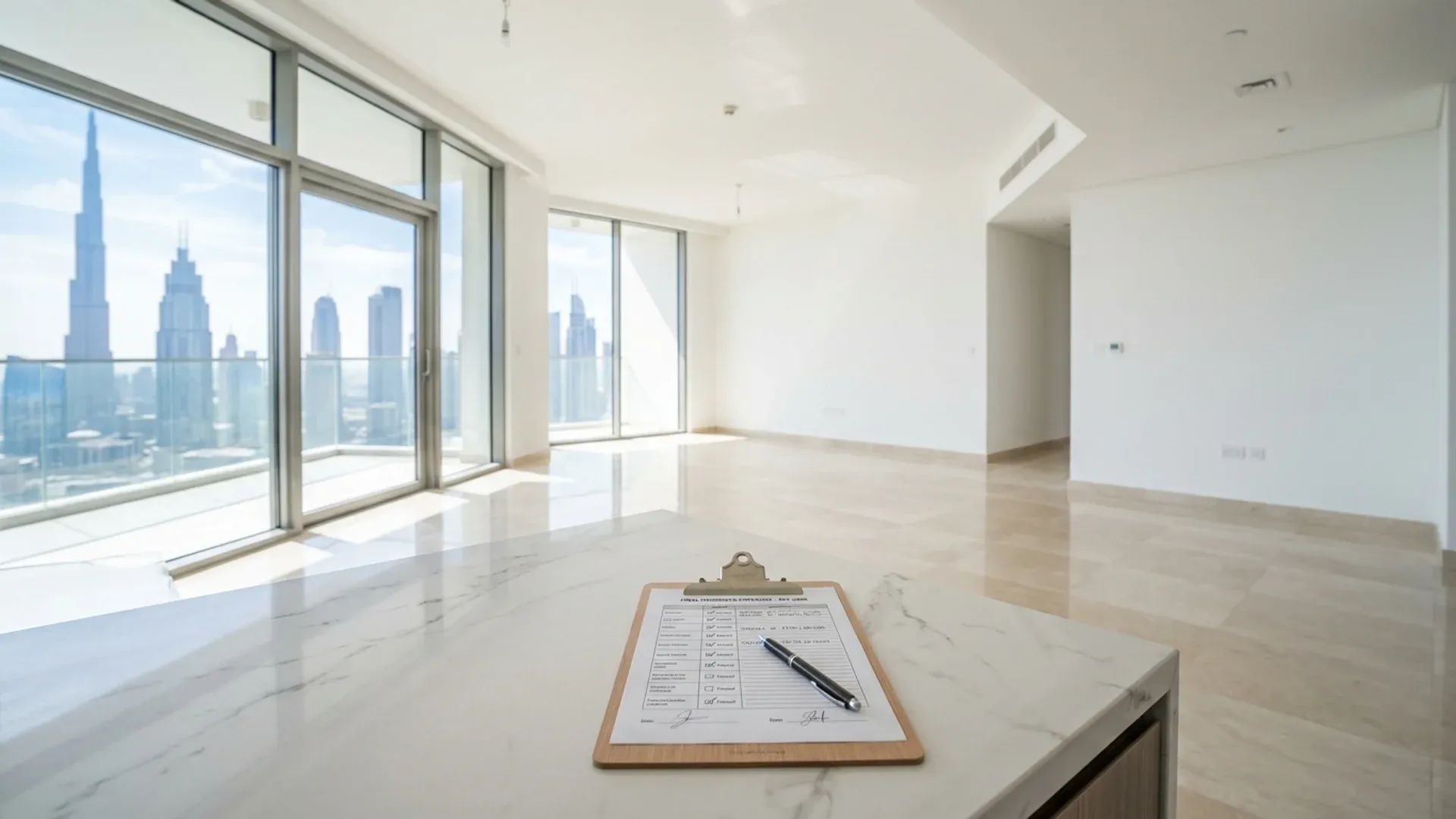
Once the clearance crew has loaded the last item, walk through every room, balcony, utility closet and kitchen cabinet. Take clear, well-lit, time-stamped photographs showing that every single space is completely empty, clean and restored to its handover state. Having photographic proof of an empty apartment taken on handover day is your strongest defence against any subsequent unjustified clearance claims.
Step-by-step handover preparation plan to guarantee your full deposit
To ensure you receive your security deposit back in full and on time, follow this structured countdown plan in the weeks leading up to your tenancy conclusion:
- Three weeks before handover: Review your original lease contract and check-in inventory. Identify all furnishings, fixtures and appliances that belong to you and must be cleared from the property.
- Two weeks before handover: Decide which items you will transport to your new home, which you will donate, and which must be disposed of. Begin booking your removal logistics.
- One week before handover: Schedule your furniture removal appointment to ensure all unwanted pieces are collected several days before the final inspection. This allows time for any necessary wall patching, minor repairs, or professional deep cleaning.
- Three days before handover: Submit your building move-out permit application and confirm your service lift reservation with building management.
- Two days before handover: Have your clearance crew collect all unwanted furniture, mattresses, electronics and miscellaneous items from the property.
- One day before handover: Complete end-of-tenancy cleaning and minor touch-ups. Ensure light bulbs are functioning and all keys, access cards and parking fobs are gathered.
- Handover day: Attend the walkthrough inspection with the landlord or agent in person. Walk through the premises together, sign the agreed checkout inspection form, and record the agreed deposit refund amount and timeline in writing.
For residents who are not just changing apartments but leaving the country permanently, consult our comprehensive moving out of Dubai checklist for a complete timeline covering utility disconnections, banking, and property handover.
You can also read our specialized guide on end-of-tenancy clearance in Dubai for additional details on what must be removed before property handover.
How our clearance team protects your deposit
Our professional team specializes in end-of-tenancy property clearances designed to satisfy the strict handover standards of Dubai landlords and property management agencies:
- We remove all specified furniture, white goods, mattresses, broken fixtures and accumulated household clutter directly from inside your home.
- Our crews carry appropriate tools to safely dismantle large wardrobes, bed frames and modular shelving without scratching floors or damaging doorframes.
- We provide all necessary trade licenses, vehicle details and crew documentation required by your building management for security permits and service lift bookings.
- We offer rapid, flexible scheduling, including urgent same-day appointments for tenants facing imminent inspection deadlines.
By clearing your property proactively with a professional team, you retain complete control over your clearance costs, hand back a spotless, vacant home, and ensure your security deposit is returned to your account without deductions.