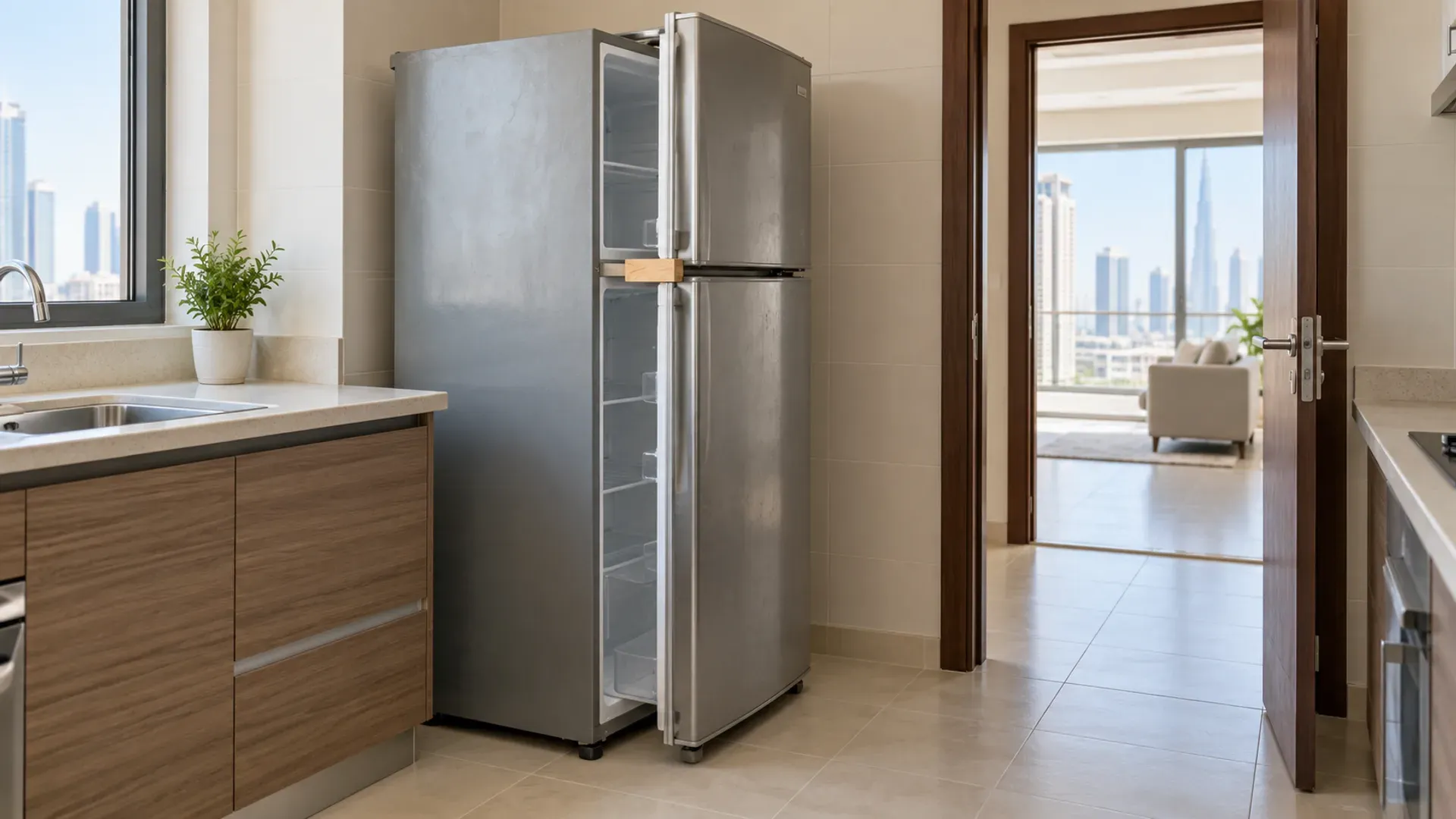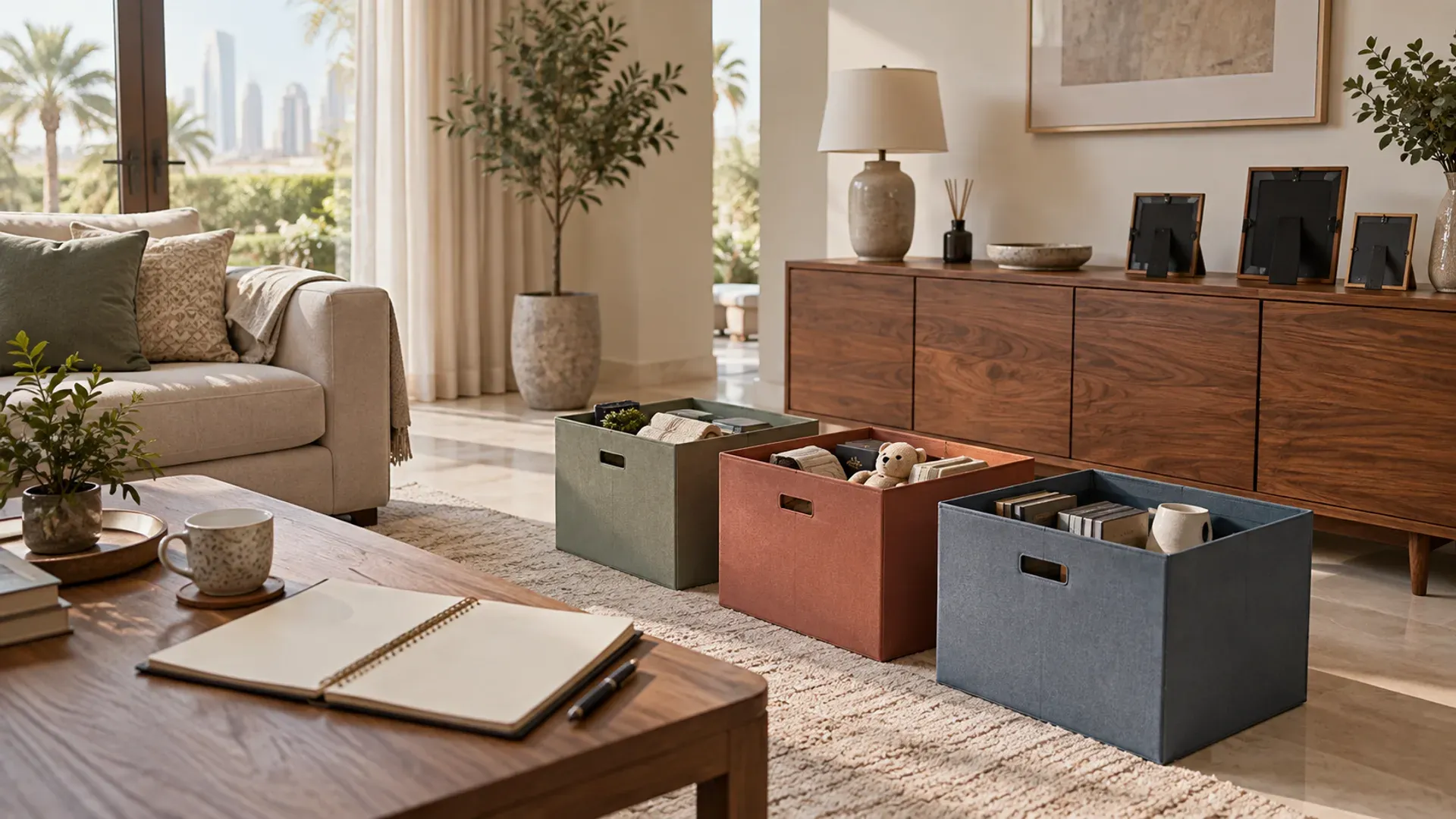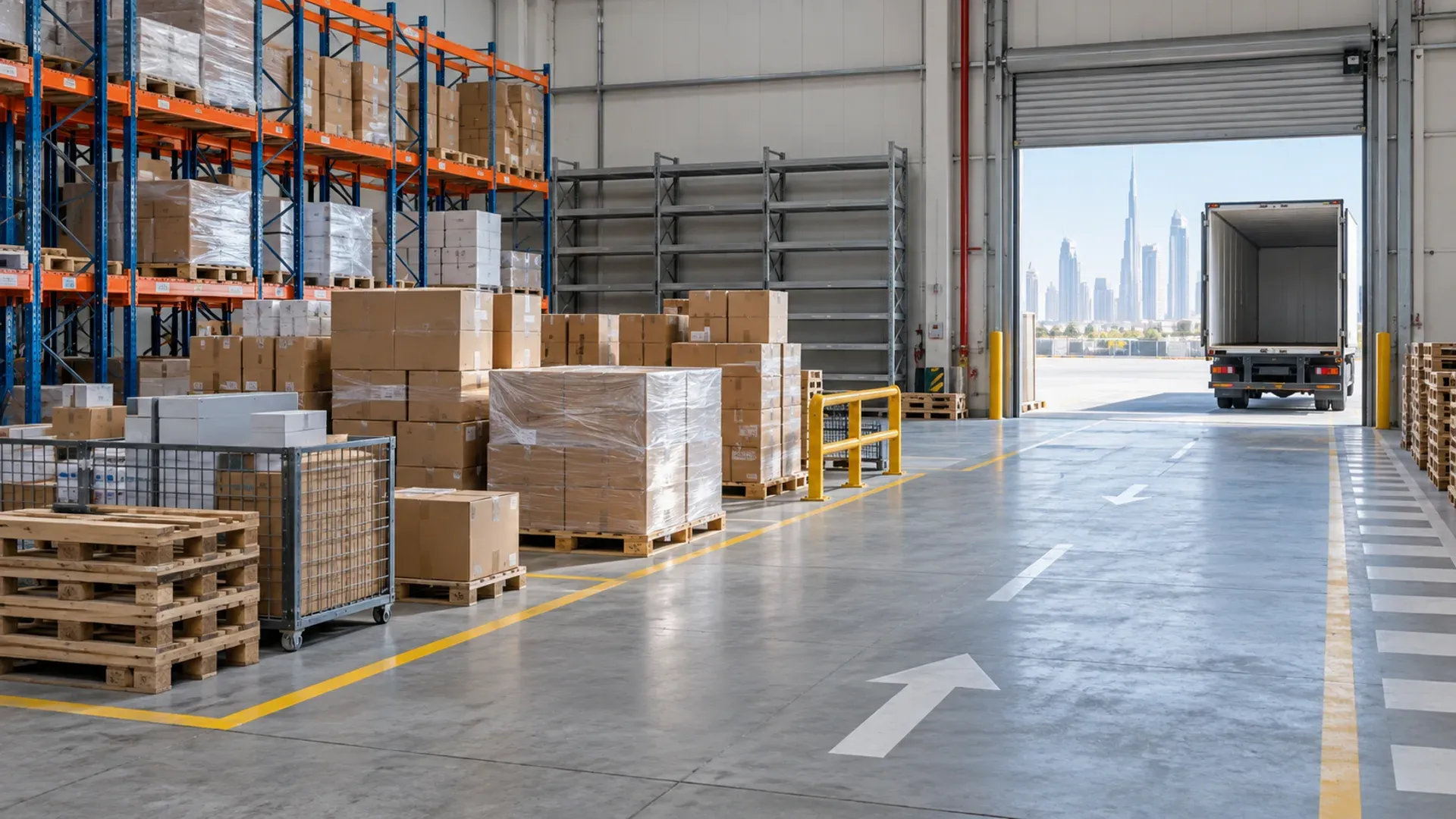
Empty product cartons are the packaging around goods that were for sale, or goods an online seller was packing to send. They are not the boxes left by a house move. Open them, keep anything still for sale or still on order out of the pile, and book only the packaging you are allowed to discard.
A stack of postal boxes in a hallway can look like a move. The difference is what the carton held, and whether anyone still needs it intact.
Say what the cartons were for
Start with one sentence you could hand to someone else. “These are empty cartons from stock we sold.” “These are cartons we use again for the next orders.” “These came with the sofa when we moved in.” Only the first of those belongs on this page. The second stays in the business. The third is a move.
The packing-material guide owns packaging left when someone has moved: what to flatten, what a building’s recycling route can take, and the test for dry board versus board that is food-soiled or coated with plastic. Read that guide if the boxes are the remains of arriving or leaving a home. Do not use this page to rewrite that test.
Deliveries into a flat you still live in — a sofa, a washing machine, a run of things you bought — are the shipping-carton plan. Those cartons arrived because you were the customer. Stay on that plan when that is the case. Come here when the cartons exist because you, or the business, were sending goods out or storing them for sale.
A shop being emptied is a wider job. The shop-clearance guide covers stock, fixtures, access and who may release them. This page is only the empty product cartons once that stock decision is already made. A warehouse being emptied is wider again. The warehouse-clearance guide is the unit: zones, retained stock, and what may leave. This page is the packaging pile, not the aisle.
Write the address type in the same note: a spare room used for orders, a shop back room, or a warehouse unit. The carton count does not say which of those it is.
Keep goods, orders and returns out of the pile
A carton is not waste while it still holds something the business has not released. Open it before it joins the outgoing stack. Look for the product, a spare part, a manual, an invoice and a returns label. A sealed carton with a barcode is a reason to stop, not a reason to flatten faster.
Saleable stock follows the business’s own transfer, sale or write-off. A clearance does not decide that a scuffed box means the goods inside are rubbish. If the goods are staying, move them to a labelled place that will not be in the photo of the packaging. If another carrier is collecting them, leave those cartons intact and out of this booking until that carrier has gone.
Customer orders that have not been handed over are not packaging. A printed label with a name and an address means the carton is still a parcel. Finish the handover, or cancel it in the business’s own process, before the stack is treated as waste. A crew cannot tell an open order from an empty box by the tape colour.
Returns that are still open stay intact as well. The carton may be the one the item has to travel back in. Keep it with the return, not with the discarded board. When the return is finished and the carton is empty and yours to drop, it can join the packaging pile.
Damaged packaging does not, by itself, authorise the contents. A crushed carton can still hold stock. Empty it into the stock decision first. Then decide whether that empty carton is waste.
Flatten only the cartons you are allowed to destroy
Some product cartons are used again. Branded boxes, a standard size the packer wants, and cartons a courier expects you to keep should stay intact, stacked, and out of the waste photo. Mark that stack in words: “keep for packing”. Do not rely on a piece of tape the next person will not read.
Cartons you are allowed to discard can be flattened if you have already checked they are empty. Take off loose tape where it peels without tearing the board into scraps you then have to chase. Bundle sheets so a person can lift them. Leave a carton whole if it is wet, if it still has staples you cannot make safe, or if you are not sure it is empty. Say which of those it is.
Do not crush a carton to hide the volume. An intact stack and a flattened bundle take different space, and the quote follows the photo. If half the pile is still boxed and half is flat, say so. One close photo of a logo does not show that split.
Count by the place the cartons stand, not by a single total you hope is right. Back room, mezzanine, a cage, the side of a roller door. If you cannot see the rear of a stack, say the photo is the front. Do not climb a pile to count the back row.
Keep board, foam, film and crates on separate lines
Product packaging is rarely one material. A carton may arrive with foam corners, a plastic bag, stretch film and, for a heavier item, a small crate. Those are separate lines even when they came from the same supplier.
Follow the packing guide for how to bag foam and film so they do not scatter, and for the recycling test on the board. This page does not add a second set of bin rules. Dry, empty, flattened board is described as board. Food-stained or plastic-coated board is described as that, and kept off a stack you hope a recycling container will take. If a leak has soaked the pile, use the note on wet cardboard for the wet sheets, and keep them off the dry product cartons.
Foam, polystyrene shapes and loose beads are not the carton. Bag them. Do not let a bag of foam become the subject of the booking, and do not call the whole load “boxes” when half of it is foam from a delivery. Foam left after an appliance arrives at a home is the polystyrene note. Here, the foam is only a line beside the product cartons: what bag it is in, and that it is not hidden under the board.
Film and strapping go in their own bag. A loose roll on the floor will be walked through the rest of the pile. Crates and any small pallet stay visible, with nails and broken edges photographed. Do not slide a crate under flattened sheets. If a crate still holds a product or a part, it is not packaging yet.
Batteries, aerosols, liquids and anything with a hazard label do not go in the carton pile because they were in the same store. The acceptance guide is the boundary for those. Leave them out and say they are out.
A warehouse unit, including packaging in Al Quoz
Where the cartons are in a warehouse, the unit is the context and the packaging is the load. Warehouse packaging in Al Quoz goes with the junk load from those warehouses, workshops and showrooms. If the unit has a shutter or a dock, photograph the pile from there. Packaging is already one of the things that page takes out. Flatten and keep the board dry the way the packing guide describes. The household bulky-waste guide is not the plan for a warehouse clear-out. Describe the opening and the pile you can see. Do not add a gate rule or a lift size.
On this page, the Al Quoz sentence applies only when the pile is empty product cartons, or product cartons plus the foam and film you have already separated. Send the unit number and a photo from the shutter, with retained stock out of the frame or behind a line you can point at. Say whether a forklift is on site only if one is actually there. Do not promise a number of trucks.
If the job is the whole bay — stock, racking, furniture and packaging together — stop and use the warehouse guide. This URL is the packaging. Mixing the two descriptions is how retained stock gets stood in the clearance zone. Give the retained stock a boundary before the cartons are booked.
Other warehouse districts are not given a new page here. If your unit is not in Al Quoz, the same carton rules apply and you do not need a community name in the note. Name the unit, the shutter and the pile.
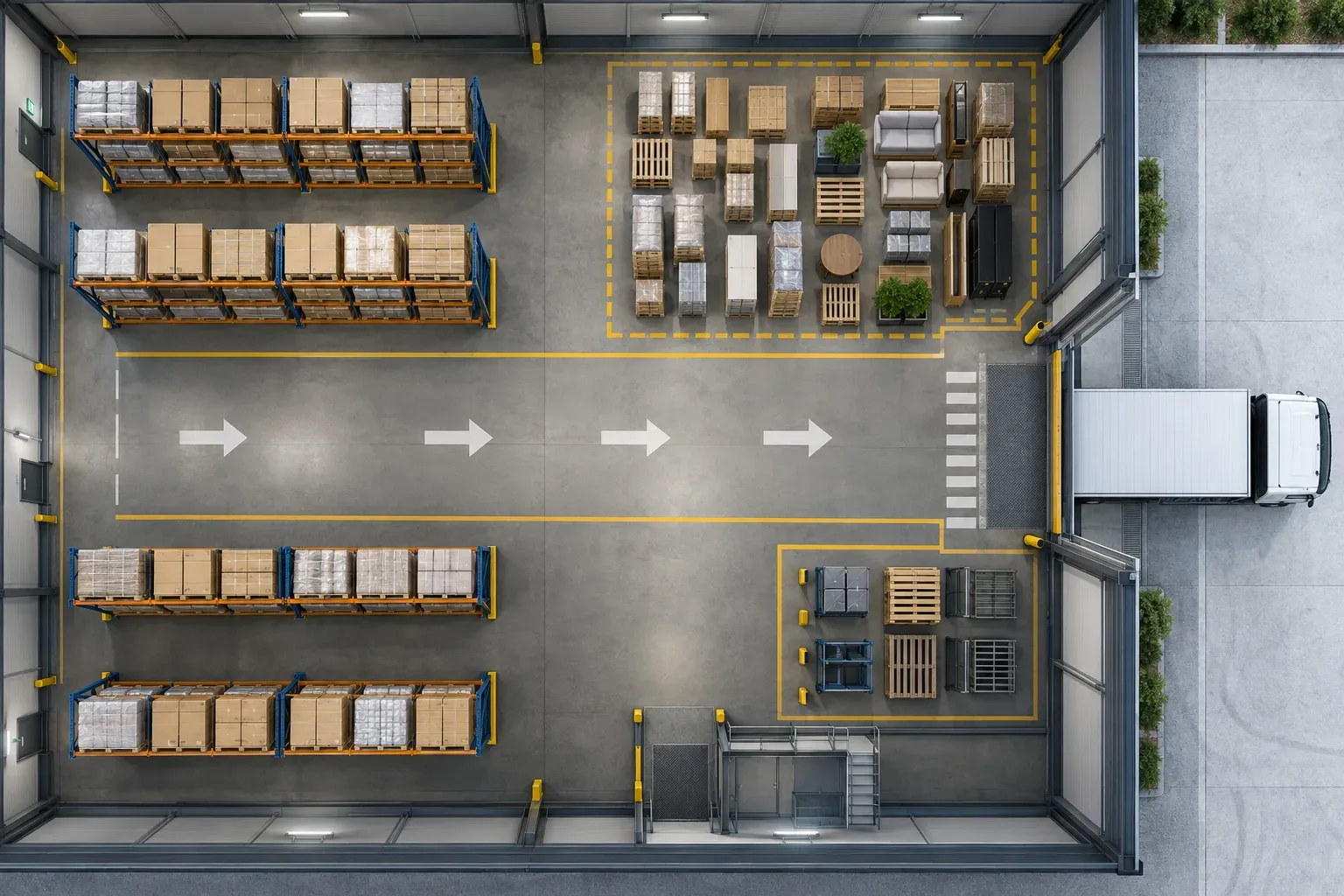
The plan shows retained stock kept apart from a staging zone and a clear route to the door. Copy that split in the room you have: goods on one side, empty cartons on the other, walking space between them. The drawing is not a photo of your cartons. Your photo still has to show the packaging.
A shop back room is not the whole shop
A shop’s packaging store can fill a cage while the sales floor still looks normal. Walk that store on its own. Count the empty product cartons, and count any cartons that still hold goods, as two groups. The second group is stock. It stays on the shop-clearance decision until someone who can release it has done so.
Do not add the counter, the shelves, the lighting or the sign because they are in the same photo. Fixed fittings are outside this pile. Loose display props can be named only if you have decided they are waste and they are not part of a fit-out. A refit that produces timber, metal and board from the shopfront is the retail fit-out guide, not a stack of product boxes.
If the shop is still trading, do not build the pile in the mall corridor or in front of the shutter. Keep it in the room you control until the collection is agreed. Say whether customers are still in the unit, and which door the cartons will use.
A single row of empty cartons behind the till is still this page if the question is those cartons. It becomes shop clearance when the instruction is to empty the unit. Do not upgrade the words because the row looks untidy.
A seller packing from home
An online seller working from a flat can have the same cartons as a shop, in a smaller room. The test does not change. Cartons that held goods you sold, or that you packed for orders, are this page. Cartons that arrived because you bought something for the home are the shipping-carton plan. If both are in the same room, split them before you photograph. A mixed photo will be read as one pile.
Outgoing parcels stay out of the waste until the order has left or been cancelled. A returns carton stays out until the return is finished. Empty cartons you will use for tomorrow’s orders stay in the “keep for packing” stack, in a cupboard that is not the outgoing photo.
The rooms you live in are not the load. A bedroom you sleep in should not be in the wide photo unless the cartons are actually there. Move the outgoing packaging to one place you can spare, without blocking the door you use. Do not flatten cartons on a bed and then book “the room”.
If you also want a sofa or a broken shelf taken, name those items. They are not product boxes. The packaging note stays accurate only if the cartons are described as cartons.
Book the packaging with the junk
Collect the product boxes with the junk when the pile is empty packaging you are allowed to send, and the goods are already gone or clearly marked to stay. This is a junk load of cartons and the separated film, foam or crates. It is not a recycling contract, and it is not a house-move unpack.
In the message, say:
- where the pile is, in one room or one unit
- whether the cartons are flattened, still intact, or both
- that you have checked they are empty, or which ones you could not check
- that saleable goods, open orders and returns are out of the pile
- what else is beside the board: bags of foam, film, a crate
- the door, shutter or dock the load will use
A wide photo from the doorway, plus one photo of anything wet, nailed or still sealed, is the useful pair. Do not send a set of close-ups of brand names. The brand on the carton does not change the volume.
Say it is empty product cartons to go with the junk. Do not describe the visit as a recycling collection. The packing guide remains the place that explains sorting and the building container. If your building has a container that accepts a small amount of dry flattened board, that guide is where you check the limit. A room or a cage of product cartons is beyond a sentence about a household bin. Book it.
If the pile is mixed with tiles, gypsum or timber from building work, it is not this note. Use the renovation-waste guide for that mix, and photograph the cartons only if they are a separate stack you want in the same visit. Say they are separate.
Before anything is loaded
On the day, walk the keep stack and the waste stack with the person who knows the orders. Move any carton that gained a label overnight. A label that appeared after the quote means that carton is a parcel again until someone says otherwise.
Show the bags of foam and film so they are not left under the board and then described as missing. Show the crate if there is one. Confirm the retained stock, or the next day’s packing boxes, are outside the route.
If the pile has grown since the photo, say so before loading starts. A second row behind the one you counted is still your row to declare. After the load, walk the cage, the back room and the spare room once. An empty product carton behind a door is still one of these cartons. A carton with goods in it is not, and it should still be where you left the stock.