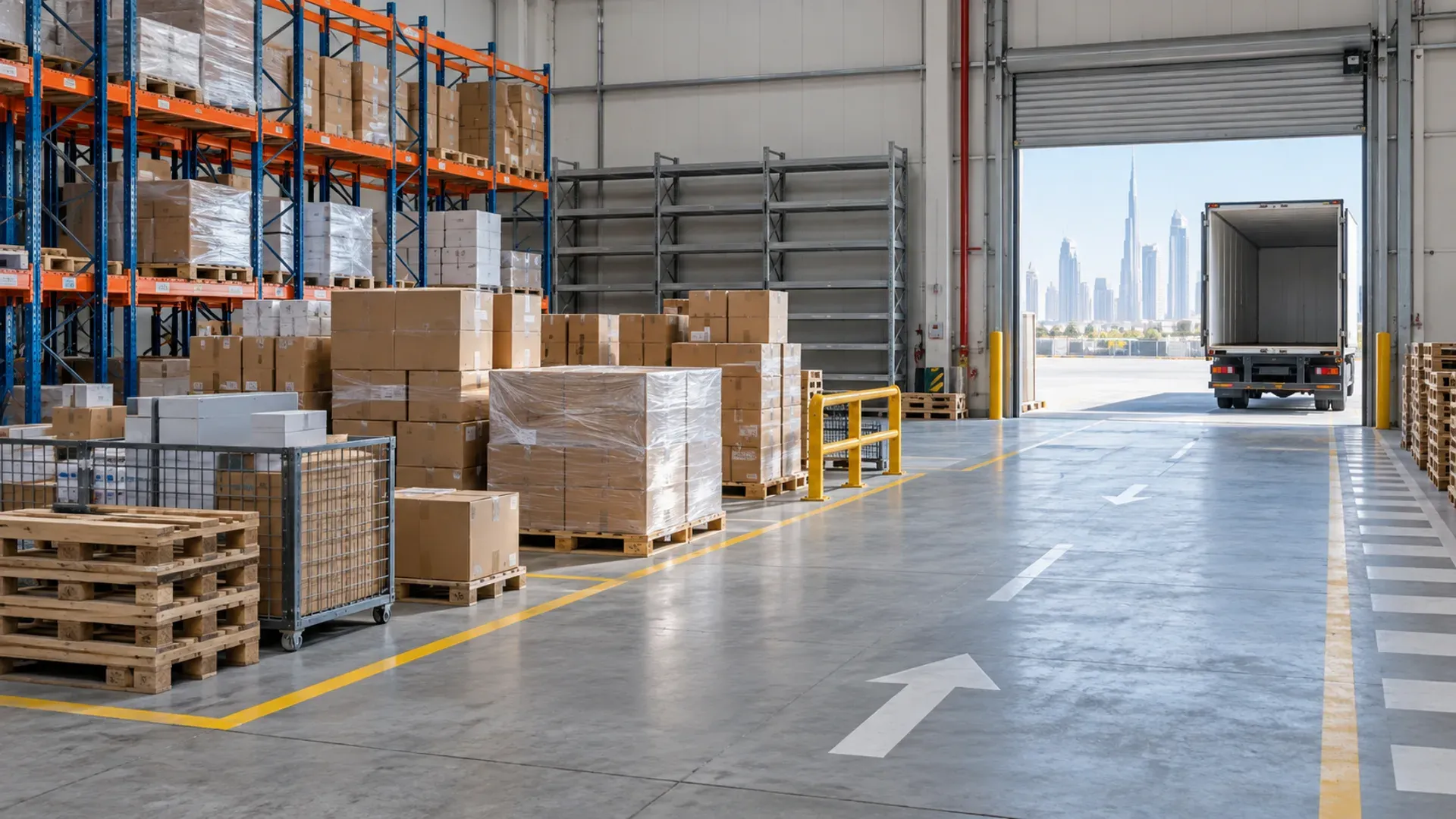
A warehouse clear-out must protect live stock, staff movement and loading operations while removing material at scale. Begin with an inventory boundary: identify what remains, what leaves, what needs specialist handling and which routes must stay operational. Vehicle size and labour can only be planned after those decisions are visible.
Separate stock from the clearance scope
Do not start with one mixed list. Divide the warehouse into saleable stock, customer property, returns, packaging, fixtures, damaged items, empty pallets and material approved for removal. Assign an owner to every category. A clearance crew cannot decide whether an unlabelled carton is obsolete or awaiting dispatch.
Use physical zones that match the inventory. Keep retained stock within marked racking or protected bays and place approved clearance items in a controlled staging area. Items awaiting a decision should remain outside both streams until authorised.
Record quantities in units that help planning. Pallet positions, cage counts, shelving bays and individual bulky assets describe the load better than “warehouse contents.” Add dimensions and estimated weight where an object is long, dense or mechanically handled.
Photograph the complete zone, not only the front row. Upper rack levels, mezzanines, rear stores and external compounds can hold significant material. Include access doors, aisle widths, dock arrangement and any step or ramp between the items and vehicle.
Survey the operational constraints
Walk the site with operations, facilities and the clearance provider. Establish which activities continue during the work: goods-in, dispatch, picking, maintenance or customer collection. Map the times and areas those functions require.
Confirm safe pedestrian paths, vehicle routes and equipment rules. Forklifts, pallet trucks and removal trolleys should not compete in an uncontrolled aisle. The site operator remains responsible for its traffic plan and should define where visiting crews may work.
Check loading access. Record shutter dimensions, dock height, ramp gradient, yard turning space and vehicle restrictions. State whether a dock leveller or tail lift is available and authorised. Long carries from a rear unit or mezzanine change the time and handling method.
Inspect the condition of stored material. Collapsed cartons, unstable stacks, sharp metal and water-damaged boards require a different approach from intact pallets. Do not move an unsafe stack merely to improve a photograph; disclose it and agree a controlled method.
Create a clearance-zone plan
Divide the job into release zones that can be isolated, cleared and checked. Work from the farthest practical area towards the loading point while preserving access to stock that remains. A clear plan prevents removed material from crossing active picking lanes repeatedly.
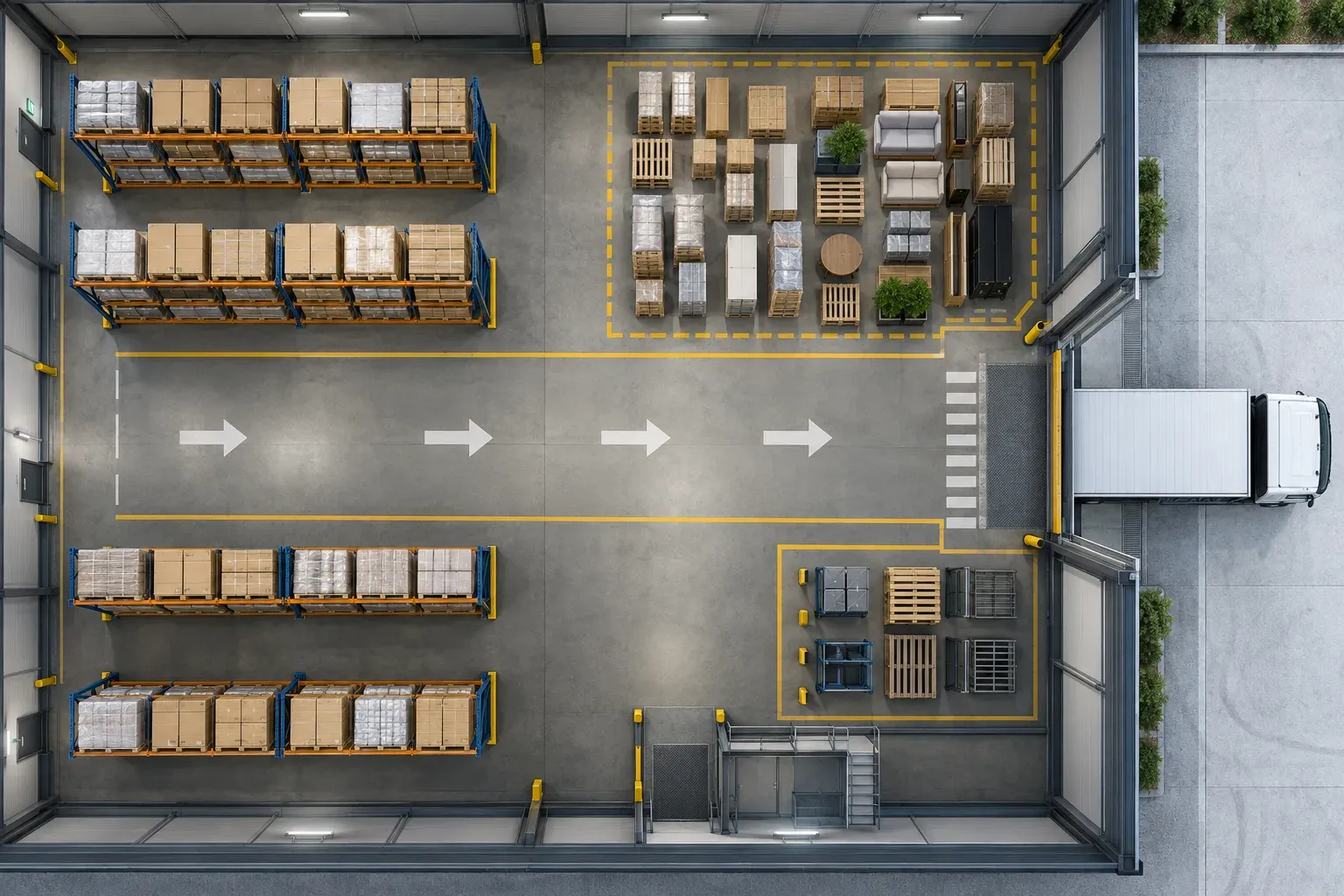
Give each zone a start condition. Stock transfers, system adjustments and owner approvals should be complete before the clearance team enters. Give it a finish condition as well: approved items removed, loose packaging contained, retained stock undisturbed and the floor left safe for the next operation.
Do not dismantle all shelving at once. It consumes floor space and can block the route with long frames. Release a manageable section, remove its contents, confirm whether the structure is free-standing, then dismantle under an agreed sequence.
Maintain a live exceptions list. If a pallet lacks approval, a bay remains in use or a fixture connects to services, keep it outside the active scope and assign a decision owner. Uncertainty should pause that item rather than the entire job.
Protect stock that stays
Retained stock needs a visible boundary and enough distance from handling activity. Cover only where appropriate and maintain any storage conditions the product requires. Do not place clearance material against racking that remains loaded.
Control dust and loose packaging. Dismantling boards, sweeping and vehicle movement can affect nearby goods. If the warehouse contains sensitive product, the operator should set protection and cleaning requirements before work begins.
Keep inventory identification visible. Moving a retained pallet “temporarily” without recording it can create a larger operational problem than the clearance solves. Any relocation of live stock should follow the warehouse’s normal authorisation and system process.
Schedule work around critical dispatches and receipts. A loading door promised to the clearance vehicle cannot simultaneously handle an inbound trailer. Publish a dock timetable and nominate one person to release the bay.
Decide what can enter a general load
Describe material accurately during the survey. Empty shelving, office furniture, clean packaging and approved general contents differ from oils, chemicals, batteries, pressurised cylinders, unknown drums, food waste and damaged electrical equipment. Never bury an uncertain item in a mixed pile.
Use safety information already held by the warehouse. Labels, product records and responsible staff can identify materials that need a specialist route. If contents are unknown, isolate them and obtain competent advice. A general clearance should proceed only with the material it has agreed to handle.
Keep liquids upright and contained while their correct route is determined. Do not decant, mix or abandon them. Empty containers may still carry residue and should not be treated as ordinary packaging without confirmation.
Data-bearing devices, customer property and controlled stock need their authorised business processes. The removal of physical equipment does not itself provide data destruction, chain of custody or regulated disposal. Confirm those requirements separately.
Plan racks, shelving and fixed equipment
Identify whether storage equipment is owned, leased or part of the premises. Check load status and structural condition before dismantling. Racking should be emptied and released by the responsible site team; a partially loaded structure is not a normal furniture item.
Long beams and uprights require horizontal space and a stable stacking plan. Measure the route, doors and vehicle body. Keep fixings contained and sharp ends protected. Do not lean long sections in an active aisle.
Machinery, compactors, dock equipment and connected appliances may need specialist isolation and lifting. Record model, dimensions, weight information and connection points where available. Keep them out of the general scope until capability and method are confirmed.
Office and welfare areas should be inventoried separately. Desks, lockers, kitchen appliances and files create different handling and decision requirements from warehouse stock. When fitted office areas are included, use the office strip-out plan to define fixed-work boundaries and phased handover. Linking the areas to the same project is reasonable, but hiding them inside the pallet estimate is not.
Coordinate people, vehicles and equipment
Name a site lead with authority to control access and approve scope questions. The clearance provider should have one corresponding lead. They need a shared briefing on traffic rules, emergency arrangements, permitted equipment and work boundaries.
Separate pedestrians from vehicle movement. Use the warehouse’s established controls rather than inventing markings on the day. Visiting drivers need the correct entrance, waiting location and instructions before arrival.
Confirm who supplies handling equipment and who may operate it. Availability does not equal authorisation. A warehouse forklift should only be used under the site’s rules by an approved operator, with loads that fit its capacity and attachments.
Manage vehicle turnaround. A large load may need several trips, but the yard might not hold waiting vehicles. Sequence arrivals to the released dock slots and keep emergency access clear.
Scope vehicle capacity honestly
Volume, density and shape all matter. Flattened cardboard may occupy little space but require containment. Metal shelving can be long and awkward. Dense fixtures may reach vehicle or handling limits before visible volume is full.
Give the provider counts and dimensions rather than asking how much “a warehouse” fits in a truck. Include pallets, cages, long sections, loose cartons and bulky assets. State whether items are already at ground-level staging or still distributed through racks and rooms.
Allow for stable loading. Fragile or reusable items cannot simply sit beneath steel frames. Mixed shapes may use vehicle space less efficiently than neat boxes. A complete inventory lets the provider plan load order and likely trips.
If you are comparing direct collection with a container, use the same material list and full labour requirement. The skip or junk-removal guide sets out the placement, duration and loading questions that change the comparison.
Price and approve the scope
A warehouse clearance quote should identify zones, quantities, access, labour assumptions, vehicle movements and accepted materials. It should state dismantling boundaries, exclusions and the process for changes. Ask whether basic sweep-up and removal of packing generated by the work are included.
Compare like with like. One bidder may assume all items are staged at the shutter while another includes removal from racks and offices. One may exclude long shelving or stair carries. These differences matter more than a headline total.
Agree how additions are authorised. An operations manager may discover another store after work starts, but the team still needs to check time, capacity and material. Record the change before loading rather than disputing it at close-out.
The commercial clearance service should receive the same inventory, site plan and access details used for internal approval. That keeps the requested service aligned with the actual warehouse operation.
Prepare before collection day
Freeze the approved scope and mark every zone. Remove customer orders, personal possessions and records from clearance areas. Complete stock adjustments and transfers through normal business controls. Ensure decision-pending material is physically separate.
Confirm loading slots, vehicle registration requirements and site induction. Clear the working route without moving approved material into emergency paths. Make keys and access controls available to the site lead.
Check that specialist removals and isolations are either complete or clearly excluded. Secure loose contents and disclose damaged stacks. Keep the staging zone within its planned capacity; overflowing into the main aisle defeats the route plan.
Brief affected staff and third-party carriers. They should know which bays and aisles are restricted and when normal operation resumes. Update the provider if the day’s dispatch plan changes access.
Run the clearance in controlled stages
Begin with a joint walk-through. Confirm the first zone, retained stock, traffic controls and load sequence. Photograph the starting condition if the project record requires it.
Complete one zone before releasing the next. Move approved material through the protected route and load it according to shape and stability. Keep packaging and hardware contained. Pause when an item differs from the inventory.
Inspect the cleared zone with the site lead. Confirm that racking or fixtures meant to remain are undamaged and that no saleable stock entered the load. Record exceptions immediately.
At each vehicle departure, check the loading area and close the dock according to site rules. Do not leave loose material waiting outside an unattended shutter.
Close out the warehouse safely
Walk every scoped zone, including mezzanines, external cages, offices and small stores. Compare against the inventory and exception list. Remove temporary staging markers when they are no longer needed.
Check aisles, exits and loading areas for fixings, stretch wrap and splinters. Restore the space to the operator’s agreed condition. Report damage or incomplete work while responsible people are still present.
Keep the final record with asset and facilities documentation. It should show what scope was completed, what remained and who owns each follow-up. An empty-looking bay is not sufficient evidence when controlled stock and business assets were involved.
Warehouse-clearance checklist
- Separate retained stock, customer property and approved removals.
- Inventory by pallet, cage, bay and individual bulky asset.
- Identify unknown, hazardous and specialist materials early.
- Map active operations, traffic controls and loading slots.
- Protect retained stock and preserve required conditions.
- Confirm ownership and release of racking and equipment.
- Stage only within a controlled, adequately sized zone.
- Give the provider dimensions, density and handling constraints.
- Approve scope changes before loading.
- Inspect each zone and record exceptions at close-out.
Questions to resolve before the site date
Can clearance happen while dispatch continues?
Yes, if the operator can separate people, vehicles, stock and time slots under its site controls. The clearance plan should identify which aisles and loading bays belong to each activity. If separation cannot be maintained, pause the affected operation or schedule that clearance phase for another window.
Should everything be moved to the loading door first?
Only use a staging zone that has been sized and approved. Moving the whole scope at once can block docks, hide stock identity and create unstable piles. Release material by zone and coordinate staging with the vehicle arrival so the floor remains workable.
Can loaded racking be dismantled during clearance?
Racking should be emptied and formally released before dismantling. Its ownership, condition and safe method must be established by the responsible site team. Do not treat a loaded or damaged storage structure as ordinary loose furniture.
What if an unknown container is discovered?
Stop handling it, isolate the immediate area according to the warehouse process and notify the site lead. Use labels and business records to identify the contents and obtain the correct specialist advice. Never open, mix or conceal an unknown substance in the general load.
Warehouse clearance is manageable when stock control and removal planning use the same map. Separate ownership first, protect the live operation and release zones only when their decisions are complete. That creates a clear route from an approved inventory to a safe, documented finish.