Old furniture in Dubai has four practical routes: keep or repair it, transfer it to a confirmed recipient, request the official bulky-waste service when the property is eligible, or book a paid collection that includes the carrying and access your job requires. Decide from condition, timing, location and route before moving anything into a corridor or beside a bin.
Inspect the furniture before choosing a route
Start with condition, not appearance. Check frames, joints, bases, upholstery, drawers, glass, mirrors and signs of moisture. Empty every compartment and remove personal items. Photograph the complete piece and any damage.
Ask whether the item remains safe and useful. A scratched solid table may still have years of use, while a clean-looking cabinet with swollen panels may not survive another move. Unstable, contaminated or broken pieces should not be presented as ready for reuse.
Measure height, width and depth, including handles and feet. Then measure the path from the room to the loading point. Doorways, turns, stairs, lifts and gates determine whether the item can leave intact.
Decide whether preservation matters. Moving a reusable item requires protected finishes, organised hardware and a known destination. Controlled disposal may allow a different dismantling sequence.
Route one: keep, repair or repurpose
Keeping the item avoids a collection when it still fits the home and has a realistic use. Tighten only appropriate fittings, replace simple hardware where the structure is sound and clean materials according to their care requirements.
Do not use cosmetic work to hide structural weakness. A loose arm, broken frame or badly swollen board needs an honest assessment. Specialist upholstery, joinery or glass work may cost more than replacement, but that is a decision for the owner and repairer.
Repurposing works when the result has a defined place. Keeping every loose shelf or damaged panel “for later” can simply move the disposal problem into a store room. Retain parts only when their future use and safe storage are clear.
If furniture must move to another room, confirm the route first. An item that entered before a renovation or door change may no longer follow the same path.
Route two: sell or give it to a confirmed recipient
Use accurate photos, dimensions and condition notes. State whether the item is assembled, dismantled, upstairs or subject to a lift booking. A recipient needs enough information to judge both the object and collection work.
Set a collection deadline. Expressions of interest do not clear a property. Confirm the person, date, vehicle and who will carry or dismantle. Keep a backup route if the collection fails.
Do not leave promised furniture in a shared corridor or outside the property. It can block access, suffer damage and create uncertainty over responsibility. Keep it safely inside until the recipient is ready.
For donation, obtain acceptance from the specific organisation or recipient. Acceptance policies and capacity can change. Never claim that an item will be donated merely because it appears reusable.
Route three: Dubai Municipality bulky-waste service
Dubai Municipality’s current service directory lists a service to dispose of household appliances and furniture. It describes the service as free, says it is completed within three working days, and states that investment zones are excluded. Check the current details and eligibility on the official Dubai Municipality services page when arranging a collection.
The Municipality has also described the service as covering used household furniture, electrical appliances and electronics for Dubai residents outside real-estate development zones and free zones. Its official bulky-waste service announcement explains that requests are handled through its unified system.
Eligibility is therefore an address question, not a general promise for every Dubai property. If a development, free zone or building uses another waste arrangement, follow the responsible management’s instructions.
Confirm the current application route, accepted items, preparation and collection point directly with the Municipality. Do not rely on an old social post or a neighbour’s experience at another address.
Route four: paid furniture collection
Paid collection is useful when the job needs carrying from inside, dismantling, a fixed building slot, multiple items or timing outside another route. The quote should describe the furniture, access and included labour.
The furniture removal service can be scoped from photos, measurements and property details. State whether the item should remain reusable and identify mirrors, damaged frames or unusually heavy materials.
Compare providers on the same inventory. Confirm carrying, basic dismantling, stairs, lift access, vehicle capacity, exclusions and the process for additions. A low figure for kerbside pickup is not comparable with a quote that includes removal from an upper-floor room.
Choose a legal, authorised route. Do not leave furniture beside communal bins or on undeveloped land in the hope that somebody takes it.
Compare the four routes
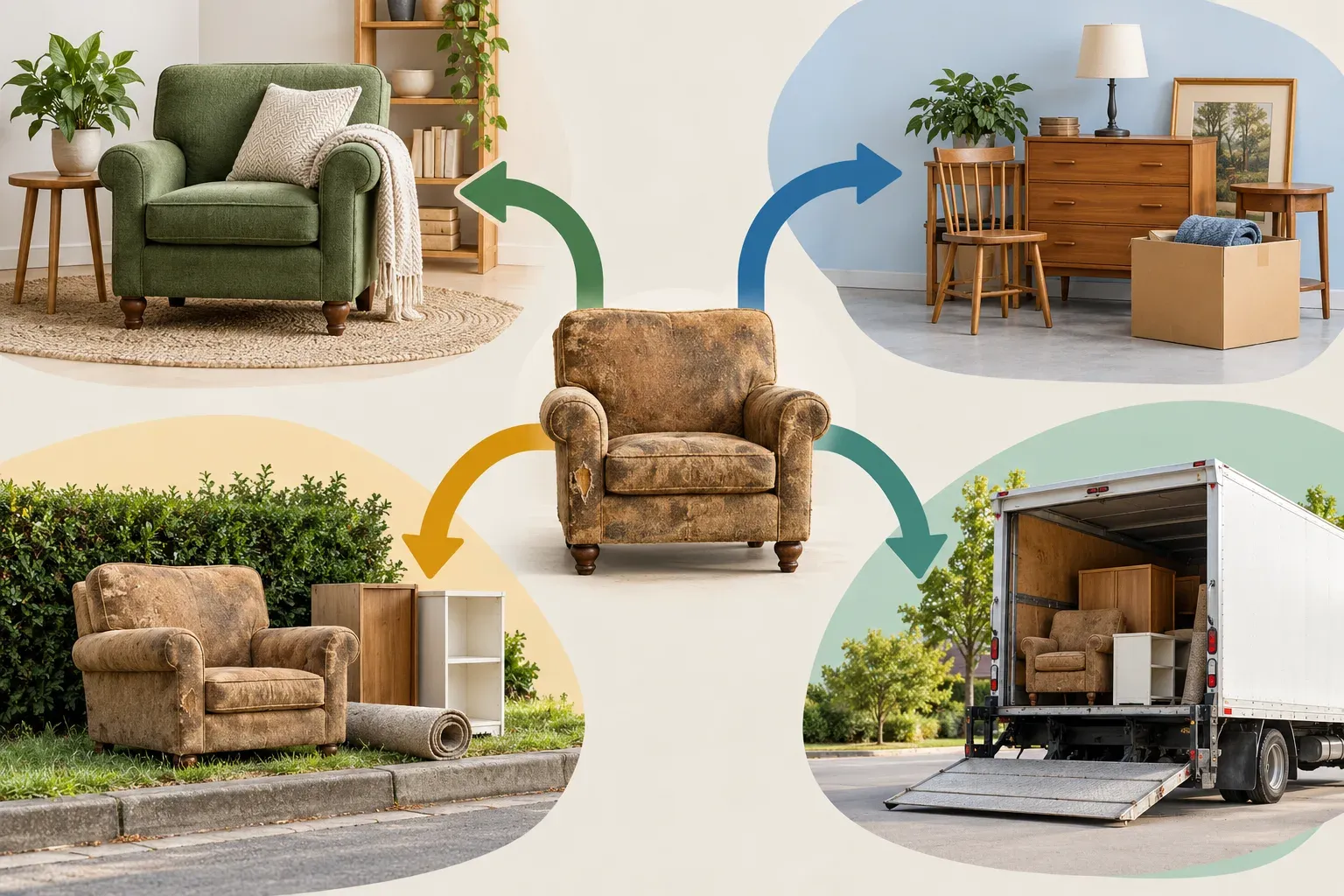
Keeping or repair suits a sound item with a real use. Recipient transfer suits furniture that is accepted, accurately described and collected by a deadline. The Municipality route may suit eligible residential addresses and items within its current service. Paid collection suits work that needs labour, access coordination or a defined appointment.
Cost is only one factor. Time, certainty, carrying, building rules, item condition and destination all matter. A free route that cannot serve the address or meet the handover date does not complete the job.
Use one primary route and one backup. Avoid promising the same item to several people or placing it outside while an official request is still pending.
Prepare sofas and upholstered furniture
Remove cushions and check storage compartments. Look beneath and behind the piece for personal items. Photograph stains, tears, pests, moisture and broken mechanisms honestly.
Measure the rigid frame rather than compressible cushions. Check doorways and turns. Recliners and sofa beds can be heavier and may contain moving mechanisms; disclose them before collection.
Do not cut upholstery or break the frame merely to get it outside. Controlled dismantling requires a stable working area and awareness of hidden metal, springs and sharp fixings.
If the sofa will not fit, use the doorway guide to check feet, modules, frame dimensions and alternative routes before forcing it.
Prepare wardrobes, cabinets and shelves
Empty drawers and shelves. Remove loose glass and secure moving parts. Identify wall restraints and confirm whether the item is freestanding or fitted.
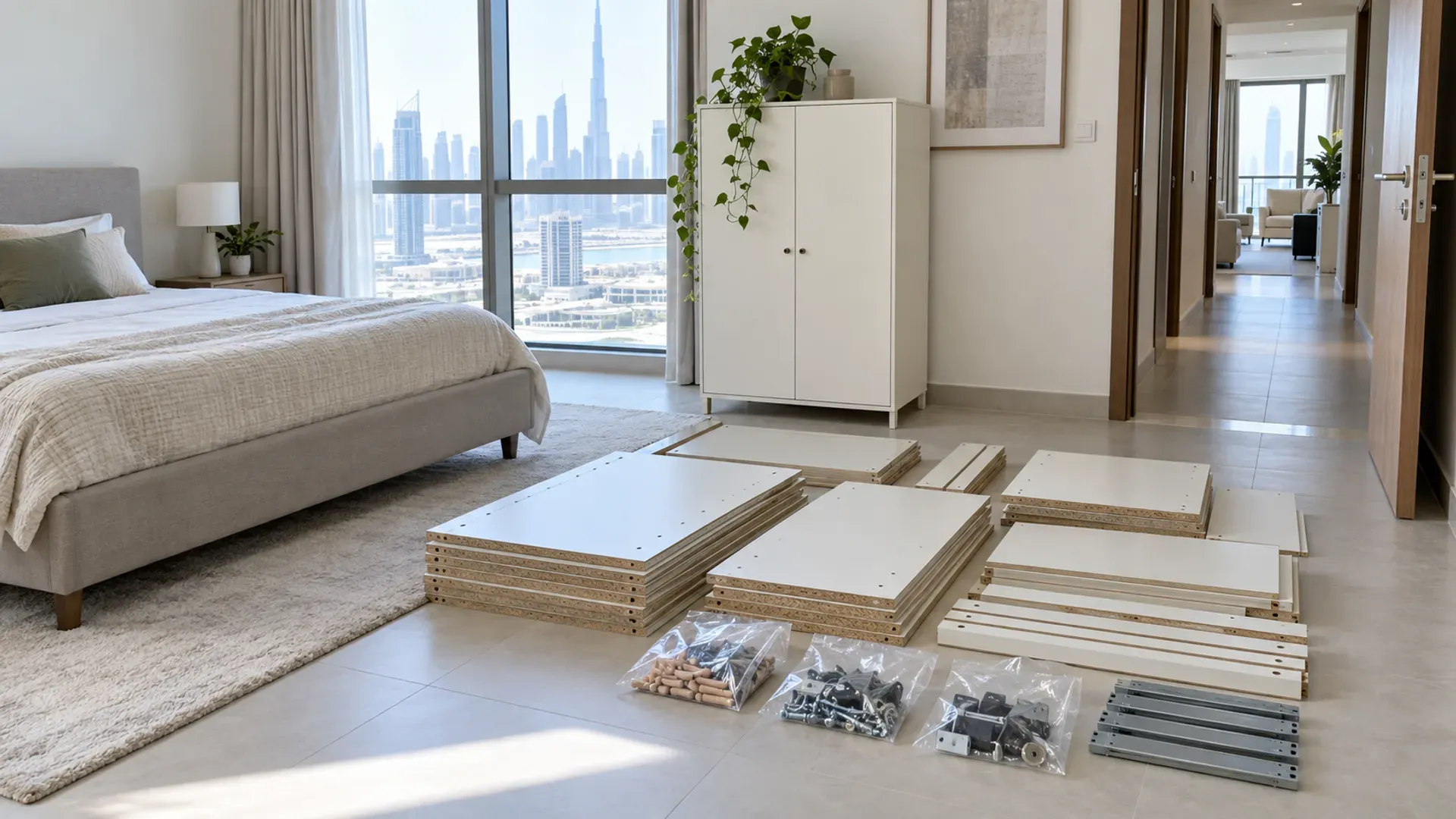
Take photos before dismantling. Keep hardware by item when reuse matters. Long panels still need lift and vehicle space, so include them in the inventory.
Flat-pack items may have weakened fixing holes or swollen edges. The flat-pack furniture guide helps assess whether another assembly is realistic.
Never release structural fixings while an unsupported cabinet carries weight. If uncertain, leave dismantling to the agreed collection scope.
Prepare tables, beds and mixed sets
Record every component. A dining set includes the table leaves, legs and chairs. A bed may include frame, slats, headboard, storage base and mattress. Omitting parts changes the load.
Support tabletops before removing legs. Contain bolts and brackets. Protect stone or glass surfaces separately and disclose cracks.
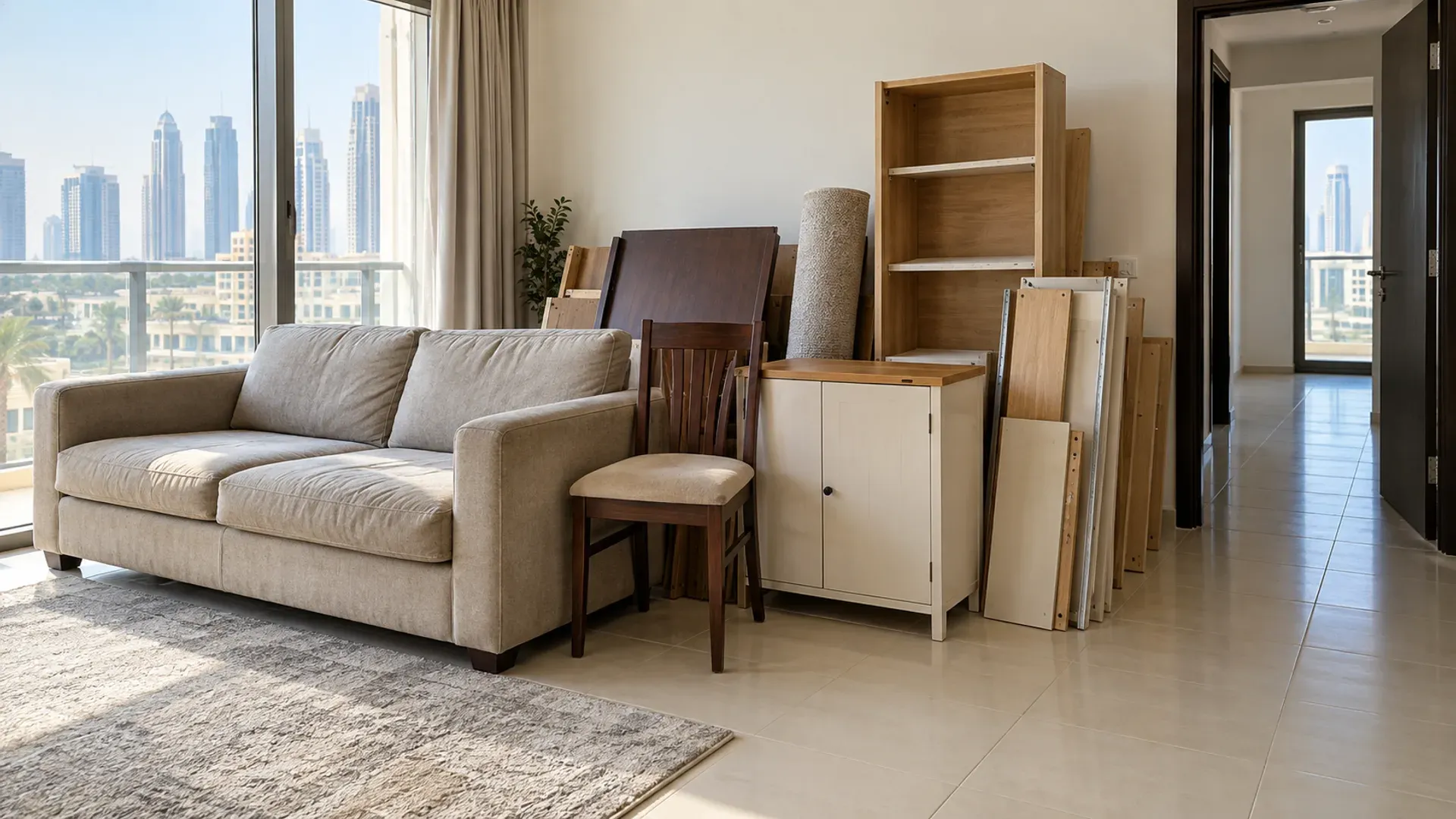
For mixed furniture, group by room without blocking the route. Do not build one unstable pile. Large items can remain where they stand if the crew is carrying from inside.
Tell the provider or recipient whether assembly instructions are available. Do not promise that dismantled parts form a complete set unless you have checked them.
Plan apartment and tower access
Ask building management about service-lift reservations, contractor registration, permitted hours and loading access. Confirm who provides lift padding and how long check-in takes.
Measure lift doors and the car, but also measure corridor turns and the route from the room. A cabinet that fits the lift may not turn through the lobby.
Keep common corridors, fire doors and lift controls clear. Do not stage furniture outside the apartment before the approved window unless management has designated a safe area.
Give the collector the loading entrance and map pin. Basement height limits or remote bays can change vehicle choice and carry time.
Plan villa access
Clear gates, driveways and side paths. Move resident vehicles and secure pets. Check steps, landscaping, overhead structures and gate width.
If the villa is in a controlled community, confirm the current entry process and vehicle details. The gated-community guide explains how to combine gate approval with the property route.
Keep furniture inside the boundary until collection begins. Do not use the road, verge or neighbour’s frontage as temporary storage without permission.
For garden or garage furniture, disclose weather damage, rust and sharp edges. Separate liquids, chemicals and unknown containers from ordinary furniture.
Arrange timing around a move or delivery
Remove old furniture before replacement delivery where possible. Separate the appointments and leave time to clean and inspect the newly exposed area.
Do not assume a retailer will remove the old item. Check the written delivery terms. If removal is offered, confirm item type, condition, floor and access.
For a tenancy handover, work backwards from the inspection. Leave a buffer after collection for cleaning and overlooked items. A recipient cancellation should not consume the last available day.
Update the collector when the inventory changes. Adding another wardrobe or bed on the day can affect time and vehicle space.
What not to do
- Do not leave furniture beside communal bins without an approved arrangement.
- Do not advertise damaged furniture as ready for reuse.
- Do not move bulky items into a corridor before collection.
- Do not dismantle an unsupported frame.
- Do not mix glass and sharp hardware into general bags.
- Do not assume every address is eligible for the same official service.
- Do not rely on an unconfirmed recipient near a deadline.
- Do not hide extra items from the quote.
Furniture-disposal checklist
- Inspect condition, stability and contents.
- Photograph and measure each large item.
- Measure the complete exit route.
- Decide whether preservation matters.
- Confirm a recipient and deadline for reuse.
- Check current Municipality eligibility on the official service page.
- Obtain a complete paid quote when labour is needed.
- Arrange building or community access.
- Keep shared areas clear.
- Inspect the room and route after collection.
Questions people ask about old furniture
Can I leave furniture next to the building bins?
Only use a collection point that the responsible building manager or service has expressly approved. Ordinary bin areas and corridors may not accommodate bulky items. Confirm the route and timing first, and keep the item inside when no approved arrangement exists.
Is good condition enough for donation?
No. A recipient decides whether it accepts the item, and may consider dimensions, material, hygiene, completeness and collection logistics. Send honest photos and obtain confirmation. A reusable appearance is a reason to ask, not proof of acceptance.
Should I dismantle everything?
Not automatically. An intact item may be stronger and easier to understand, while another will not clear the doorway without dismantling. Ask the collector or recipient, measure the route and preserve hardware when reuse matters.
What if the furniture belongs to the landlord?
Keep it out of the removal scope until ownership and instructions are clear. Compare the property inventory and obtain written direction from the authorised contact. A clearance appointment should execute a decision, not make it.
Can several small pieces be treated as one item?
List them separately or provide a photo and count. Chairs, drawers, shelves and loose panels consume space and handling time. A complete list keeps an official request or paid quote accurate.
What if the chosen route falls through?
Move the item back to a safe position and use the backup plan. Do not leave it in a corridor or road. Update any handover timeline and confirm the new collection before staging it again.
Final route check
Before acting, write the chosen route beside every item. Confirm the recipient or service, date, starting location and person responsible for access. Keep the photographs and measurements with that record.
Recheck the official page on the day you submit a Municipality request. For a paid booking, recheck the written scope before dispatch. For a recipient transfer, confirm that the vehicle and carrying plan still work.
If any essential detail is missing, keep the furniture stable inside and resolve it first. A short delay is better than turning a usable room into an obstructed staging area.
Old-furniture disposal is simplest when the route matches the item and address. Confirm reuse instead of assuming it, verify official-service eligibility from the current source, and use a properly scoped collection when carrying or timing demands it.