
Skip hire and booked junk removal solve different versions of the same problem. A skip gives you a container to fill over time. A removal crew loads an agreed set of items during a scheduled visit. The right choice depends on the material, property access, project duration, lifting responsibility and whether you have a legal place for a container.
The basic difference
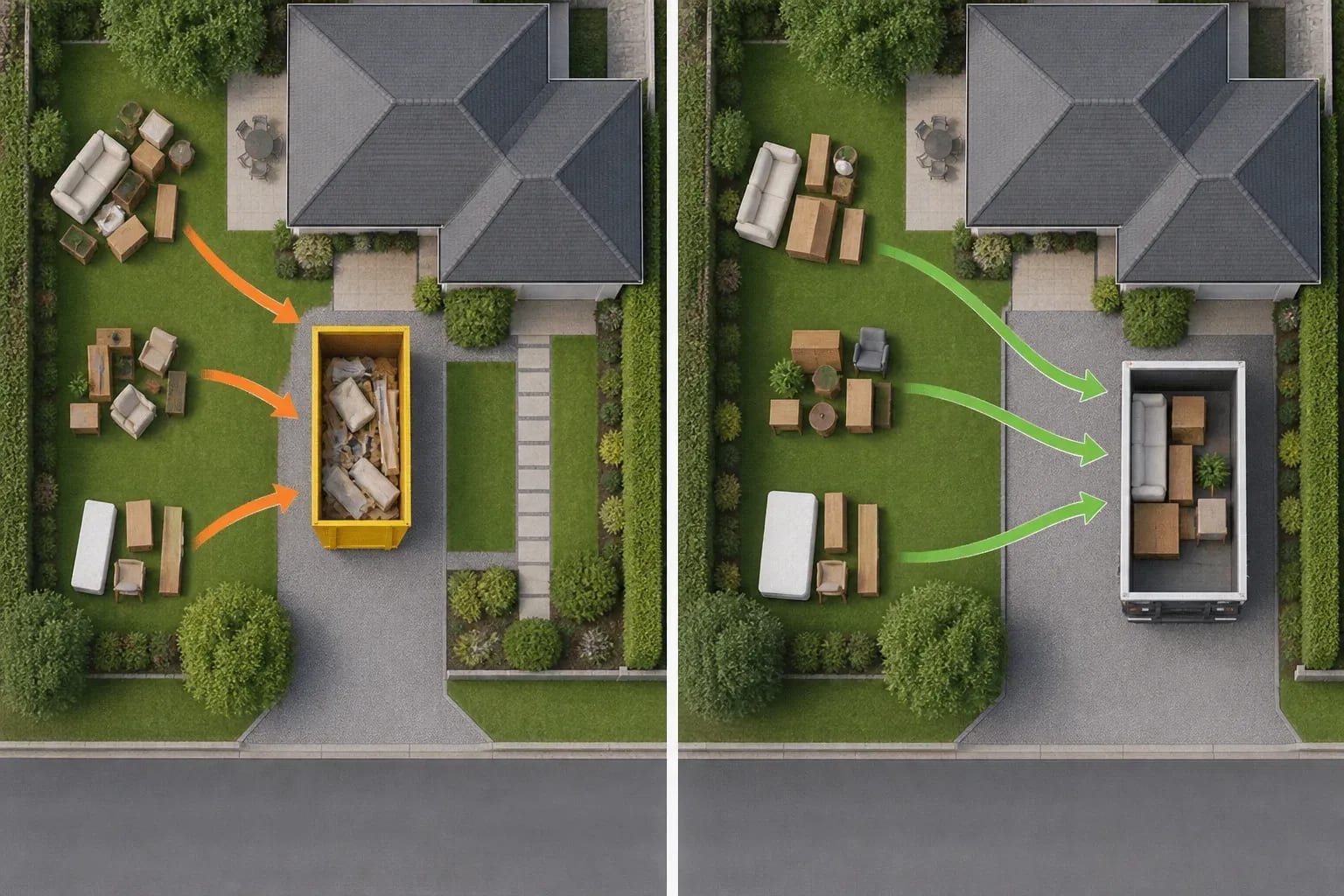
With a skip, the container is delivered, remains for an agreed period and is collected later. The customer normally moves material into it. That can suit work producing waste gradually, provided the site has appropriate space and the supplier accepts the material.
With direct-load removal, items remain inside the property until the booked crew arrives. The crew carries and loads the agreed items, then the vehicle leaves. That can suit household furniture, appliances and mixed bulky items when access and scope are clear.
Neither option is automatically cheaper or faster. Price structures, permitted materials, access and labour differ. Compare the complete job rather than the advertised container size or pickup headline.
Start with the material
List what is leaving and how it is produced. Renovation debris, soil, garden waste, furniture and appliances have different weights and handling needs. Ask each supplier what it accepts. Do not assume every container or removal vehicle can take every waste type.
Estimate volume honestly. A dismantled wardrobe uses space differently from rubble. Sofas and mattresses contain air and awkward shapes. Dense material can reach a weight limit before a container looks full. Provide photos and quantities rather than relying on “small renovation” or “one room.”
Keep restricted, hazardous or unknown material separate until the supplier confirms a route. Mixing an unacceptable item into a skip or collection load can create refusal, extra handling or delay.
Consider who will do the lifting
Skip hire usually transfers loading work to the customer or contractor. Every item must reach the container, often over a threshold or up a side wall. That requires time, labour and a safe route. Heavy furniture may still need a separate team.
Direct-load removal includes carrying when that is part of the quote. The crew can move items from rooms, use the approved lift and load the vehicle. This is often the practical difference for apartments, move-outs and single bulky items.
Compare labour costs and risk. A low container price may not include the people needed to dismantle and carry. A crew quote may cost more than a bare container but cover work you would otherwise arrange separately.
Check whether a skip can be placed
A container needs a suitable, authorised location with enough access for delivery and collection. A private driveway may work only if dimensions, surface strength and gates allow the delivery vehicle to operate. Shared roads, parking spaces and community areas may require permission or may not be available.
Do not assume a tower loading bay can hold a skip. Ask building or community management before ordering. Consider vehicle turning space, overhead clearance, underground services, trees and the effect on neighbours and emergency access.
If the container would sit outside property you control, determine the required permission through the relevant authority or property manager. The supplier should explain its delivery requirements, but the property holder still needs to ensure the location is authorised.
Compare timing
A skip works over a period. It can support a project where material appears each day and workers can load as they go. The container must remain accessible and within the agreed hire period. Early or late collection terms matter.
Direct-load removal works in a defined window. Prepare the full load, confirm access and let the team clear it in one visit. It suits deadlines such as handover, delivery or inspection, provided the scope is ready.
For work spread over weeks, repeated direct collections may be less convenient. For a completed pile that must disappear today, waiting for container delivery and later collection may add steps. Match the service to the production schedule.
Compare property disruption
A skip occupies space while it is on site. It may affect parking, appearance, gates and neighbour access. Material is visible and can attract unauthorised additions if the container is accessible. Ask about covers and site responsibilities.
Direct-load removal occupies the route for a shorter period but creates concentrated activity. The building may require a lift slot and vehicle window. Items stay inside until collection, so the property must hold them safely.
Think about noise and working hours. Loading rubble into a metal container over several days affects the site differently from one scheduled furniture carry. Building and community rules decide what is acceptable.
Understand volume and weight
Container sizes are volume measures, but the contract may also control weight and fill level. Dense material can be the limiting factor. Items should not project above permitted levels or prevent safe collection. Ask the supplier for the exact conditions.
Removal quotes may be based on item list, vehicle space, labour, access or a combination. Send photos and disclose dense or unusually heavy material. “Half a truck” is not useful unless the provider defines the vehicle and load conditions.
Do not compare unlike figures. A skip price without labour and permits is not equivalent to a crew price including carrying and disposal. Build a full cost list for each route.
When skip hire may fit
A skip may be suitable when material is generated gradually, the site has authorised space, people are available to load, and the accepted-material rules match the project. It can provide one controlled place for project waste instead of many small piles.
It may also help where repeated loading throughout a renovation is more efficient than scheduling several collections. The project manager must keep the container within rules, prevent overfilling and coordinate collection.
This is a suitability decision, not a universal recommendation. Confirm the specific supplier’s terms, container access and permissions before work starts.
When direct-load removal may fit
Direct-load removal may suit apartments, villas without container space, end-of-tenancy clearances and bulky furniture. It is useful when the load already exists and the customer needs carrying as well as transport.
The waste removal service should be briefed with material, volume, access and deadline. For household furniture, related services may be more precise. The provider can say whether one visit is suitable or whether the material needs another route.
Direct loading also reduces the time waste sits outside, but it requires the full load to be ready and access to be available during the appointment.
Questions to ask a skip supplier
- Which materials are accepted and excluded?
- What are the container’s dimensions and capacity conditions?
- What weight or fill-level limits apply?
- How long is the hire period and how is collection scheduled?
- What access does the delivery vehicle require?
- Who arranges any placement permission?
- Are covers, extensions or waiting time available?
- What happens if prohibited material is found?
Record the answers that affect your project. A general website description cannot replace the terms for the specific container and address.
Questions to ask a removal provider
- Is carrying from inside included?
- What dismantling is included?
- How is the quote calculated?
- Which materials cannot be collected?
- What vehicle and access information is needed?
- Are stairs, long carries or lift bookings included?
- Can the full load be completed in one visit?
- What happens if the item list changes?
Send the same inventory to each option. Comparison is impossible if the skip quote covers renovation debris while the crew quote includes furniture, labour and an appliance.
Build a true cost comparison
For skip hire, include delivery, hire period, collection, permits or private-space arrangements, loading labour, protection and any overage or prohibited-item charges. Include the cost of moving heavy items to the container.
For direct removal, include the quoted load, labour, dismantling, stairs or lift access, parking and any second trip. Clarify whether cleaning or sweeping is included rather than assuming it.
Add the cost of delay and occupied space where it matters. A container blocking a parking space for a week has a practical cost. A crew booked before the load is ready may require another visit. The cheapest listed line can become the more expensive complete job.
Avoid common planning mistakes
- Ordering a container before confirming authorised placement.
- Comparing a bare skip price with an all-labour removal quote.
- Ignoring weight because the container still has visible space.
- Assuming every waste type is accepted.
- Forgetting the labour and route needed to fill the skip.
- Booking direct removal before the project load is complete.
- Understating stairs, long carries or loading restrictions.
- Allowing mixed or unknown material into either load.
The remedy is one inventory, two complete scopes and written terms. Decide only after each option covers the same real job.
Apartment and tower projects
For most towers, container placement is a building question before it is a supplier question. Shared loading bays and parking areas are controlled spaces. Ask management whether a skip is possible, and expect that it may not be.
Direct removal still needs planning. Book the service lift, protect the route and confirm the vehicle entrance. Group items safely inside rather than filling a corridor. The pre-arrival checklist helps prepare the load without moving bulky items into common space.
For renovation work, contractors may already have an approved waste plan. Coordinate with them rather than creating a second route that conflicts with building permissions.
Villa and site projects
A villa may offer private placement space, but check gates, driveway strength, vehicle manoeuvring and community rules. Protect surfaces and underground services. Keep the container away from emergency access and neighbour property.
Direct collection may still be better for a small finished pile or furniture that needs carrying. A skip may be more practical for material produced over several days. Some projects benefit from separate routes: a suitable container for accepted renovation material and a booked crew for bulky household items.
Do not combine methods without separate inventories. Clear ownership prevents prohibited or fragile items from ending up in the wrong load.
Make the decision
Choose skip hire when the material, duration, authorised space and loading labour align. Choose direct-load removal when the load is ready, carrying is needed and a short scheduled clearance fits the property. If neither scope accepts part of the material, arrange the correct specialist route instead of hiding it in a mixed load.
Confirm the choice in writing, including dates, access, materials and full price conditions. Tell building or community management what service will arrive. Prepare the site according to that method.
Example project decisions
One sofa, a mattress and household bags
The load is already known and needs carrying from inside. Direct removal usually matches the work because a crew can collect the items in one appointment. A skip would still need an authorised position, customer loading and protection while it remains on site.
A bathroom renovation lasting several days
Material will be produced gradually and may be dense. An approved skip or contractor-managed waste arrangement can be practical when the accepted material, weight limit and placement all work. Keep fixtures or substances that require another route out of the container.
An apartment move-out with mixed furniture
Tower restrictions often make direct removal easier to coordinate. The item list is defined, the crew handles the carry and the vehicle leaves after loading. The resident still needs a service-lift slot, approved loading access and enough time for the complete volume.
A villa garden and storage-room clearance
Choose from the actual mix. A ready pile of furniture, boxes and household items may suit direct collection. Material produced over a longer landscaping or repair project may suit a permitted container. Separate green waste, chemicals or other restricted material according to the provider’s rules.
An office replacing furniture in phases
Direct removal can clear a known floor or department at a scheduled time, reducing obstruction in shared areas. A container may suit an approved project zone when material will accumulate over days. Building management, loading access and business-hours restrictions often decide the workable method.
A simple decision checklist
Choose only after you can answer these questions:
- Is the complete material already present and listed?
- Does it need carrying or dismantling from inside the property?
- Is there authorised private space for a container?
- Who will load it, and can they do so safely?
- How long will the project continue producing material?
- Are the material type and estimated weight accepted?
- What permits, lift bookings or parking arrangements apply?
- Does the full price include delivery, labour, collection and likely extras?
- Will the chosen method obstruct residents, neighbours or emergency access?
- Is there a separate route for prohibited or specialist items?
If several answers remain unknown, do not reserve equipment yet. Complete the inventory and property checks first. A written comparison based on the same load is more reliable than deciding from container size or a headline collection price.
Frequently asked questions
Is junk removal always faster than skip hire?
It can be faster for a ready load because collection and departure happen in one arranged visit. A skip may be more useful when waste is still being produced. Availability, permits, access and correct preparation affect both timelines.
Can a skip be placed on any driveway?
No. The supplier and property manager must confirm suitable access and placement. Consider vehicle delivery space, surface capacity, gates, overhead clearance, community rules and emergency routes.
Does direct removal include all waste types?
No service should be assumed to accept everything. Give the provider an accurate material list and ask about exclusions. Batteries, chemicals, pressurised containers, medical waste and some construction materials may require specialist handling.
Which option is better for an apartment?
Direct removal is often easier when there is no authorised container space, but it still requires lift and loading coordination. The correct answer depends on the building, load, carry route and material rather than the property label alone.
The best alternative is the one that accounts for the whole job. Container space alone does not solve lifting, and a crew visit cannot collect material that is still being produced. Match the method to how the waste exists, where it can be held and who will move it.