
A clearance in a gated Dubai community depends on two access plans: permission to enter the community and a safe route through the property. Confirm the actual community process, visitor details, vehicle restrictions and timing before the crew is dispatched. Then prepare the villa, driveway and item list so the approved window can be used for removal rather than decisions.
Start with the community’s current access process
Ask the owner, tenant, landlord or community contact which access procedure applies to the address and job. Requirements can differ by community, gate and type of visit. Use current written instructions from the responsible management team rather than assuming a process from another property.
Explain the work accurately. A crew collecting bulky household items may be handled differently from a courier or regular visitor. State the date, expected duration, vehicle type and number of workers where requested. If the community needs contractor documents or identification, find out how and when they must be submitted.
Confirm which gate the vehicle should use. Navigation may lead to a resident-only entrance or a gate with a height restriction. Send the provider a map pin and the approved gate name or number without relying only on the villa address.
Keep the approval reference and contact details with the person meeting the crew. If access is denied or redirected, that person should be able to speak with security and management. The driver should not have to interpret private correspondence at the barrier.
Distinguish entry approval from work permission
Gate entry alone may not authorise a clearance, moving activity or vehicle stop. Confirm whether the community controls working hours, common-area use, contractor access, noise or heavy vehicles. Follow the written conditions for the property.
If the villa is tenanted, establish who can approve removal of the items. Community access staff do not decide ownership. A landlord, tenant or authorised representative should identify what leaves and what remains.
Fixed items may require a separate property or contractor approval. A general collection does not authorise detaching built-in wardrobes, pergolas, gates, kitchen fittings or connected equipment. Confirm responsibility before including them in the inventory.
Avoid unsupported assumptions about NOCs or universal permit rules. The useful question is simple: what does the responsible management require for this address, date, crew and vehicle? Obtain that answer before booking the final slot.
Give the provider a complete access brief
Send the community name, villa number, approved gate, map pin and contact person. Include any vehicle size or height limit and the permitted arrival window. Mention checkpoints inside a large development and whether the driver must call before entering.
Describe the route from the gate to the villa. Narrow streets, traffic-calming features, weight restrictions, construction diversions and limited turning space can affect vehicle choice. State whether the vehicle may enter the driveway or must remain in an approved roadside position.
At the property, measure gate width, driveway gradient and overhead clearance. Note trees, shade structures, balconies and low services. Confirm that the surface can support the planned vehicle; when uncertain, keep the vehicle in an authorised road position and plan the carry.
The villa clearance service can be scoped around the item inventory and the approved property route. Photos of the gate, driveway and grouped load help match the crew and vehicle to the real access.
Map the route from each item to the vehicle
Walk from upper rooms, garden structures, stores and the garage to the loading point. Check stairs, landings, doorways, patio turns, steps and side passages. A wide community road does not solve a narrow villa gate or an internal staircase.
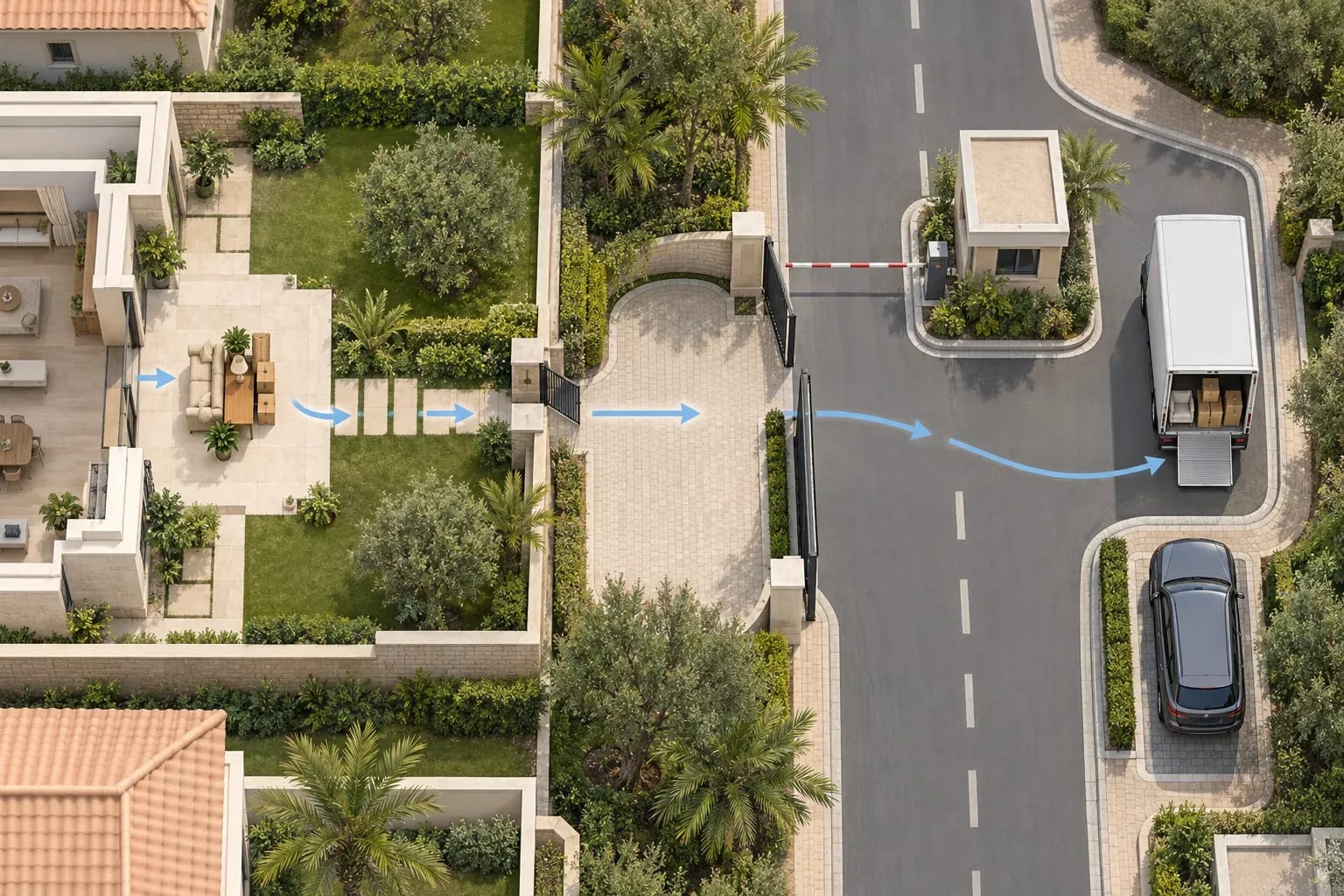
Choose one primary carry route and keep it available. Remove loose pots, hoses, rugs, bicycles and decorative objects. Secure pets away from open doors and gates. Keep children and visitors out of the working path.
Protect vulnerable finishes where appropriate without narrowing the passage. Stone steps, timber doors and landscaped edges may need care. Do not cover drains, gate sensors or safety equipment.
If material sits in several external areas, decide the order. Start with the zone that would otherwise become blocked. Keep loose garden material contained and separate from furniture or fragile household items.
Plan the vehicle position
Confirm exactly where the vehicle may stop and for how long. It must not block another villa, emergency access, a footpath or a community junction. Hazard lights do not convert a restricted position into an approved one.
Move resident vehicles from the driveway before arrival if the collection vehicle or carry route needs the space. Coordinate with neighbours only when their access may be affected, and do not use another property’s frontage without permission.
Consider the loading direction. Rear doors or a tail lift need working space. A vehicle may fit through a gate but lack room to turn or open safely. Share photos showing the whole area, not a close-up of the entrance.
Keep items inside the property until the crew is ready unless an authorised staging area has been agreed. Furniture on the street can obstruct movement, become damaged and create confusion over ownership.
Choose a realistic appointment window
Use the community’s permitted times and allow for security check-in. The collection window must include travel from the gate, property walk-through, carrying, loading and exit. A one-hour permission does not equal one hour beside the front door.
Avoid stacking the clearance directly against a tenancy handover, cleaner, delivery or inspection. Delays at the gate or changes in vehicle routing can compress the job. Leave a practical buffer before the next appointment.
For a large villa, estimate time from the complete inventory and distances between zones. A garage beside the driveway is different from upper-floor bedrooms and a rear garden reached through a side passage. Share these details before the provider confirms resources.
If timing is critical, nominate one contact who answers the phone and can meet security. Multiple contacts giving different instructions often create delays at the point where the approved window is already running.
Prepare the item inventory
List items by area: bedrooms, living spaces, kitchen, balcony, garden, garage, roof access and external stores. Photograph each group and identify large pieces individually. Include dismantled parts and loose components, which still occupy vehicle space.
Separate removals from items staying. Empty drawers, cupboards and appliances. Take out documents, medication, keys and personal belongings. The crew should receive one clear decision for every object in the work area.
Tell the provider about mirrors, glass, stone, damaged furniture, sharp material and unusually heavy objects. Identify fitted or connected items instead of describing them as ordinary furniture. Arrange competent disconnection where required.
For wardrobes and large cabinets, decide whether they may move intact or need controlled dismantling. The wardrobe removal guide explains how construction, mirrors and route measurements affect that decision.
Manage garden and garage areas
External spaces are easy to underestimate. Include garden furniture, planters, cut branches, tools, play equipment and store contents in the inventory. Soil, liquids, chemicals and pressurised containers need clear disclosure and may require another route.
Keep green material contained without mixing unknown substances into it. Do not leave loose branches across a side passage. If the work involves cutting, dismantling a structure or disconnecting equipment, confirm the responsible specialist before the clearance date.
Garages often contain retained assets beside removals. Mark bicycles, tools, spare tiles and vehicle accessories clearly. Check shelves and high storage. Keep community access cards, remotes and keys separate from packed items.
Ensure the garage door and gate operate before arrival. A power or remote problem can change the carry route. Have a manual access option where the property equipment provides one.
Coordinate security and arrival
Send required details by the stated deadline and verify approval before dispatch. Recheck the vehicle or crew details if the booking changes. An approval tied to different information may not work at the gate.
The site contact should be present or reachable before the vehicle arrives. Meet the crew at the location security directs. Avoid asking a vehicle to wait in a live lane while paperwork is found.
At the villa, complete a walk-through before lifting begins. Confirm the full load, exclusions, route and vehicle position. Point out fragile finishes, weak furniture and outdoor hazards.
If security or management changes the instructions, pause and update the plan. A different gate or loading position may affect time and carrying distance. Agree any resulting scope change before work continues.
Keep common areas clear
Gated communities still depend on shared roads, footpaths, verges and visitor areas. Do not stage items outside the boundary without explicit approval. Keep gates, utility access and neighbouring driveways clear.
Control packaging and small debris. Wind can carry cardboard, wrap and leaves into the street. Contain them during the work and inspect the vehicle area before departure.
Manage noise within the permitted conditions. Basic furniture dismantling may still create disturbance. Avoid unnecessary engine idling, shouting or dragging items over external surfaces.
If the route crosses a pedestrian area, use the community’s required controls and keep the crossing brief. The crew should not create its own unauthorised barrier or cone layout on a shared road.
Avoid common access failures
- Booking the crew before confirming the applicable community process.
- Sending only the villa pin and not the approved gate.
- Registering a different vehicle or crew from the final booking.
- Treating visitor entry as permission for moving work.
- Forgetting height, weight, gate-width or turning restrictions.
- Leaving resident cars in the planned loading space.
- Placing furniture on the road before arrival.
- Omitting upper floors, gardens, garages or external stores.
- Packing access cards, remotes and approval documents.
- Scheduling the clearance immediately before handover.
Most failed arrivals begin with incomplete information. A short access brief shared with the provider and site contact prevents more delay than trying to solve every detail at the gate.
Prepare during the final 24 hours
Confirm the appointment, gate instructions and primary contact. Send the final inventory and photographs of additions. Check that community approval still matches the expected vehicle and crew details.
Clear the internal and driveway route. Move personal vehicles as planned, unlock approved access points and test gates. Keep items stable in their rooms or safe groups; do not fill the street or footpath.
Separate keys, remotes, access cards and documents. Keep pets in a closed room away from the route. Tell household members which items are leaving and which areas will be unavailable.
On arrival, use the pre-collection checklist to complete the walk-through and resolve any change before loading starts.
Check the property after loading
Walk every scoped area and look behind doors, inside stores and around dismantling points. Confirm that personal belongings and retained parts remain. Collect loose hardware and packaging.
Inspect the driveway, gate area and approved vehicle position. Remove temporary protection and sweep loose debris where needed. Make sure gate sensors and access equipment work normally.
Complete any community exit or security process and return borrowed access items. Report damage or an incomplete item while the relevant people are still available.
Keep a simple record if the clearance supports a move-out or handover. Note remaining exceptions and their owners. The job ends when the agreed items have left, shared access is clear and the property can move to its next scheduled activity.
Gated-community clearance checklist
- Obtain current instructions for the actual community and address.
- Confirm the approved gate, date, hours, vehicle and crew details.
- Distinguish gate entry from permission to carry out the work.
- Send a map pin and named contact to the provider.
- Check road, gate, driveway and overhead restrictions.
- Inventory every internal and external area.
- Keep items inside the boundary until loading begins.
- Clear the villa route and move resident vehicles.
- Protect access cards, keys and approval references.
- Inspect the property and shared area after departure.
Gated-community clearance becomes straightforward when access approval and property preparation are completed as one plan. Confirm the real rules, give the crew an exact route and keep the approved loading area clear. That allows the appointment to begin at the villa instead of becoming a negotiation at the gate.