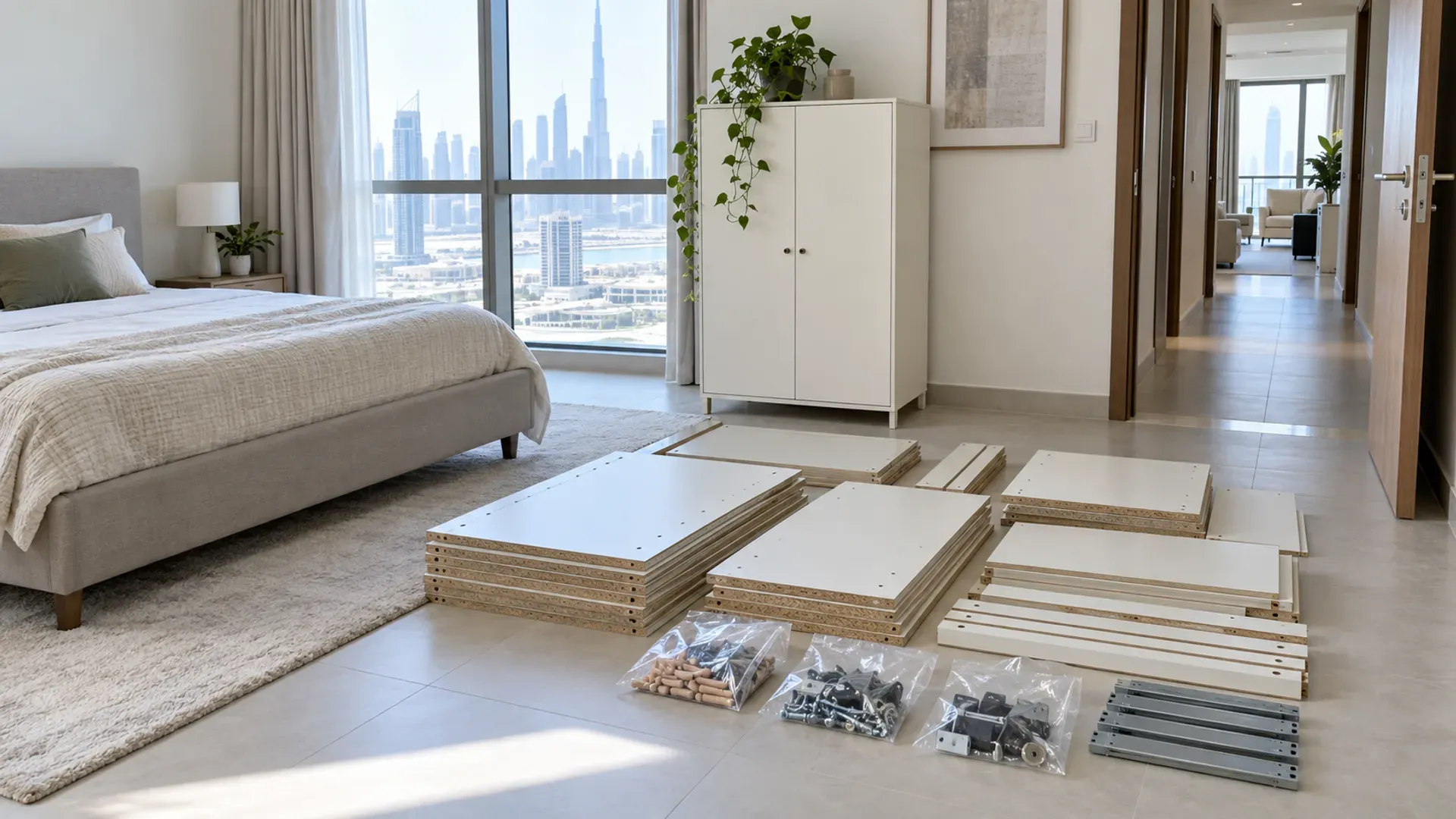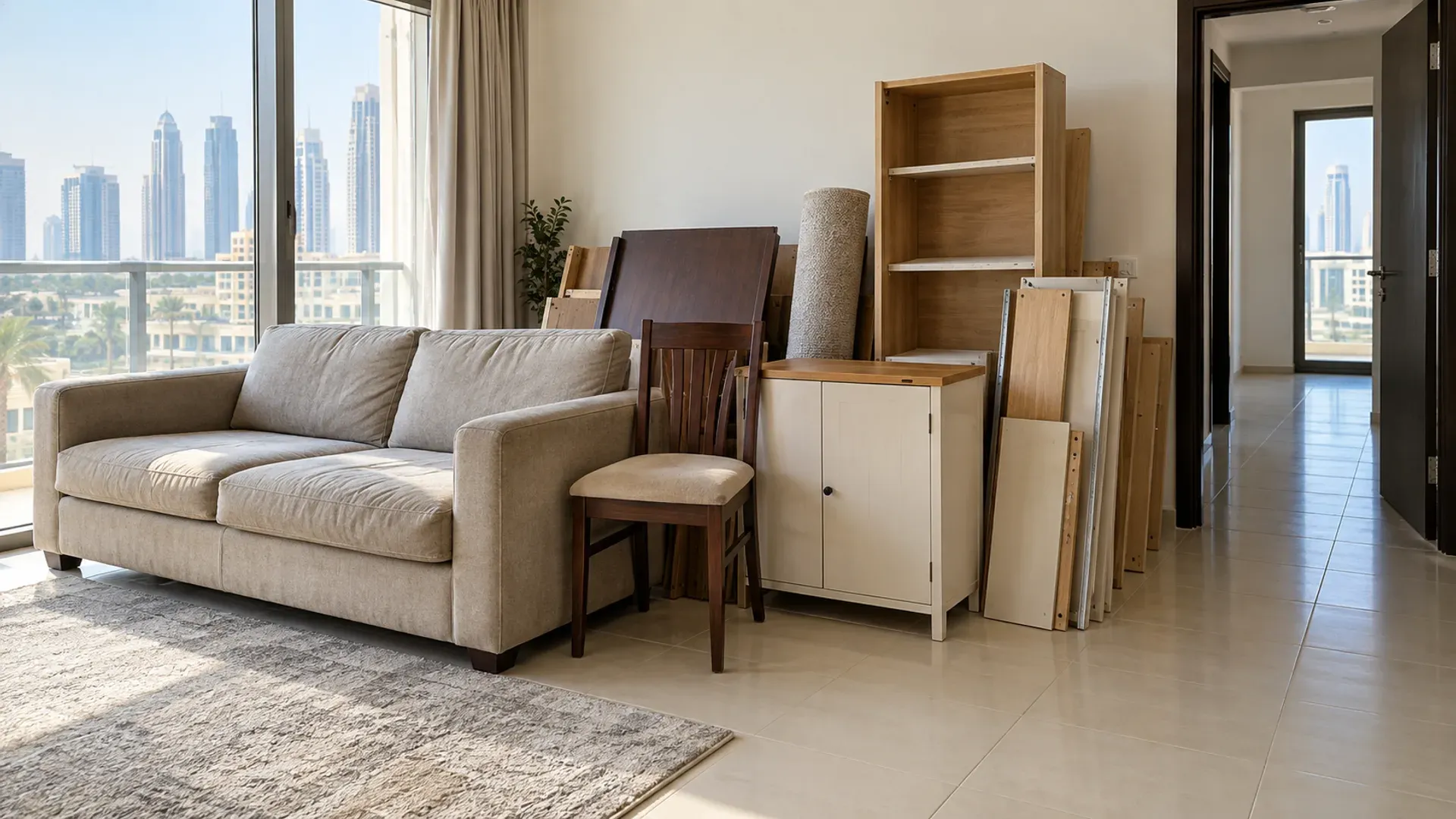
Broken furniture needs a disposal route, not a reuse plan. Once a frame has snapped, a board has swollen or a glass top has cracked, stop trying to find it a new home and make it safe to stay where it is until collection. Photograph the damage, keep loose parts together, cover sharp edges, and leave the item inside the property rather than in a corridor or beside the bins.
The next decision is who carries it. A piece that can still be lifted in one unit is a different job from one that sheds parts, leaks or bends when moved. Describe that difference honestly before anyone arrives, because it decides how the item is handled and whether it can travel through your building in its current state.
Decide whether the damage is final
Not every fault makes furniture worthless. A loose handle, a scratched top or a wobbling joint that only needs tightening may be a repair. The question for this article is narrower: is the piece now unsafe or unusable in a way that no reasonable recipient would accept? If the answer is yes, treat it as broken and plan for removal.
Structural damage is the clearest signal. A snapped leg, a split bed rail, a cracked chair seat or a sofa frame that sags in the middle cannot carry weight safely. Glue and extra screws may hold it for a while, but passing it on in that condition transfers the risk to someone else. The same applies to a chest of drawers whose runners have collapsed, so that drawers fall out or jam when opened.
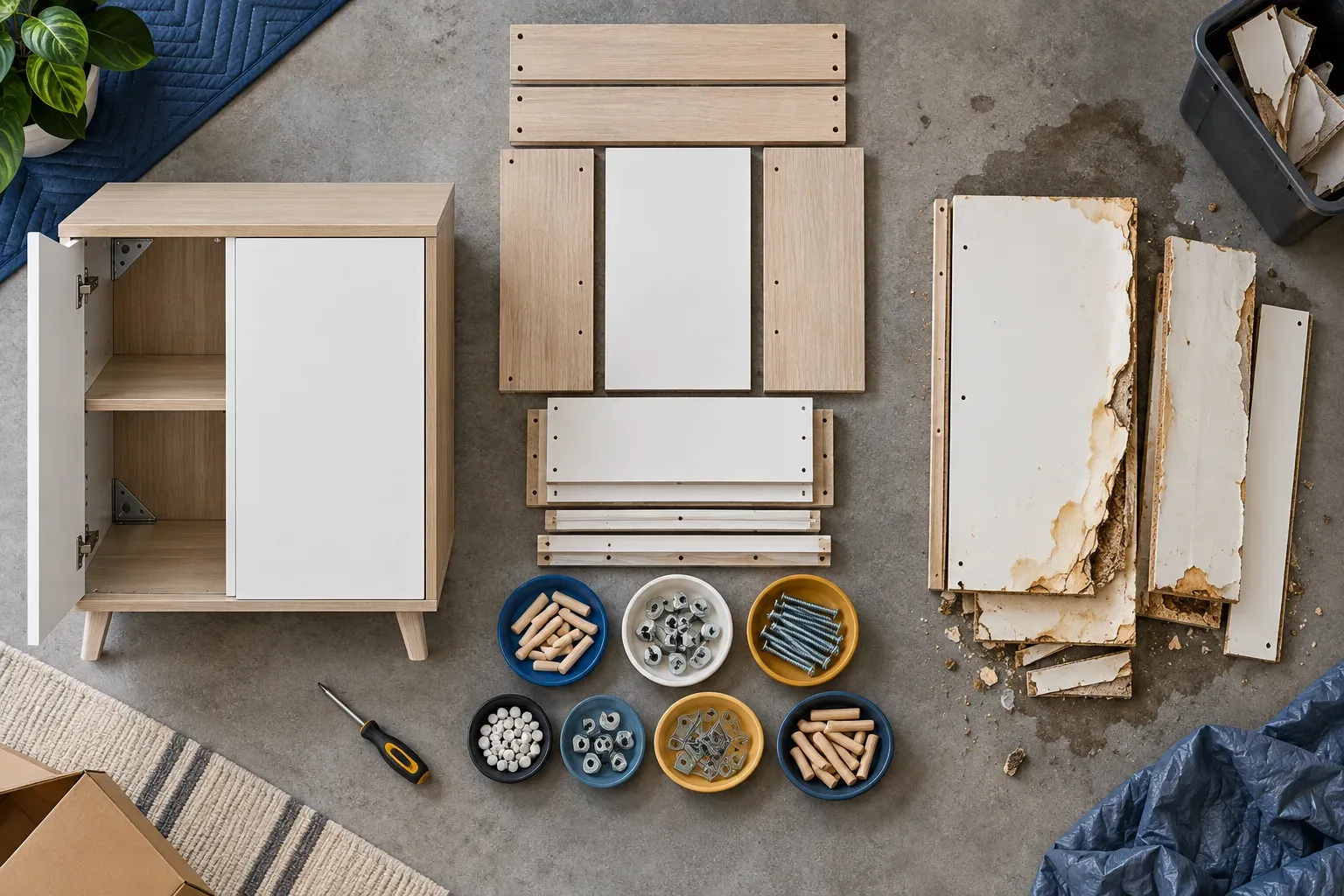
Water damage is often less obvious. Chipboard and similar composite boards swell when they absorb water, and the swelling does not reverse when the board dries. Look for raised, crumbling edges around the base of wardrobes, kitchen-adjacent units and bathroom cabinets. Screws in swollen board lose their grip, which is why a cabinet that looks upright can fold sideways when lifted.
Upholstered pieces need a different check. Torn fabric, exposed foam, broken springs pushing through the base and heavy staining are reasons to stop treating a sofa or armchair as reusable. If you have seen signs of insects, a persistent smell or mould on the fabric or frame, say so plainly when you arrange collection. You do not need to diagnose the cause; you only need to describe what you can see so the item is handled and kept apart appropriately.
Mechanisms deserve their own category. Recliners, sofa beds, storage beds with gas lifts and adjustable office chairs contain springs, struts or hinged frames under tension. When a mechanism breaks, it may stay folded, jam open or release suddenly. That makes the item awkward to carry and is a reason not to try fixing or dismantling it yourself.
Glass and mirrors are the last group. A cracked tabletop, a chipped shelf or a mirror with a split across it can break further when the furniture is tilted. Check glass doors on display cabinets too, since they may be held only by small clips.
Why broken pieces should not be offered for reuse
Donation works for furniture that is clean, stable and complete. A broken item fails at least one of those tests, and offering it anyway costs time you may not have. Recipients who agree to collect a piece expect to use it. If they arrive and find a split frame or a collapsed drawer, the item may stay with you, and the deadline is closer than it was.
There is also a fairness issue. Furniture that might injure someone, or that carries pest or mould concerns, should not be passed into another home. If the item is worth a second look, the furniture donation guide sets out what usable furniture actually means and how to confirm acceptance before anyone travels. If it clearly fails those tests, skip that step and go straight to arranging removal.
Mixed sets need a split decision. A dining table may be sound while two of its chairs are broken. A bedroom set may include a usable chest of drawers beside a cracked bed frame. Separate the sound pieces from the broken ones, decide each group on its own merits, and do not let one damaged item drag a usable piece into the disposal pile, or the reverse.
Make it safe before anyone moves it
The aim at this stage is not to prepare the item for a long journey. It is to stop the damage getting worse and to prevent anyone being hurt while the piece waits.
Start with stability. If a wardrobe, bookcase or cabinet leans, has a broken base or has lost its back panel, empty it completely and keep people away from it. Do not climb on it, lean heavy items against it or try to straighten it by pushing. If a tall unit looks likely to tip, lay nothing on top of it and tell whoever is collecting it that it is unstable.
Then deal with sharp edges and loose parts:
- Cover cracked glass edges with strong tape or thick card, and tape across a cracked mirror or pane so pieces stay in place if it breaks further.
- Put detached legs, handles, knobs, castors and shelf pins in a bag, label it, and keep it with the item.
- Keep any screws, bolts and brackets that have already come out together in one bag rather than leaving them on the floor.
- Wrap or cover protruding nails, staples and broken springs where you can do so without force.
- Bag loose upholstery foam or torn fabric that is shedding, so it does not spread through the home or a shared corridor.
Leave mechanisms alone. A recliner, sofa bed or lift-up bed base with a broken strut or spring should not be forced open or closed to make it smaller. Stored tension can release without warning. Note its current position, photograph it, and let the collector decide how to handle it.
Do not dismantle damaged furniture just because dismantling helps with intact pieces. Taking apart a sound flat-pack wardrobe is controlled work; taking apart a wardrobe with swollen, crumbling board may leave you with panels that break as they are carried. The flat-pack furniture guide explains when dismantling helps and when a damaged unit is better left as it is.
Keep it inside until collection day
Broken furniture can be tempting to move out of the way, especially when a new item is arriving. Resist putting it in a shared corridor, lift lobby, car park or beside the building bins. In a shared space it obstructs other residents, it can injure someone who does not know it is unstable, and responsibility for it becomes unclear.
The rules support keeping it inside. Article 6 of Law No. (18) of 2024 Regulating Waste Management%20of%202024%20Regulating%20Waste%20Management.html) prohibits dumping materials that may damage a waste container or a waste transport vehicle, and prohibits accumulating or discarding waste in buildings and public places. A broken sofa left by the bins is not handed over to anyone; it is simply left. The guide to dumping rules and fines explains the law and the published penalties in more detail.
Choose a holding spot inside the property that keeps the item out of daily traffic and close to the exit route. A balcony is not a good place for a cracked glass top or a heavy cabinet. A spare room, a corner of the living area or a villa garage is a better choice. Keep doors and fire exits clear.
Which disposal route fits a broken item
The realistic routes for broken furniture are fewer than for sound furniture, because reuse is no longer one of them. That leaves an official collection where your address qualifies, or a paid collection that includes carrying from inside the property.
The Municipality bulky-waste service
The Dubai Municipality services directory lists a free service for disposing of household appliances and furniture, with a published service time of three working days, and it excludes investment zones. Its official announcement describes exclusions for real-estate development zones and free zones. Check eligibility for your address and the current preparation instructions before relying on it.
Think about how a broken item fits that service. If the collection needs the furniture to be at an accessible point, someone still has to get it there safely. A cracked glass cabinet in a tenth-floor apartment is a carrying problem before it is a disposal problem. The bulky-waste service guide explains eligibility and preparation in detail.
A paid collection from inside the home
A paid collection is the practical answer when the item is heavy, unstable, upstairs, in a tower, or needs to leave on a fixed date. You can ask to have broken furniture carried out and taken away by sending photos of the damage along with the usual size and access details. The quote should state what is included, such as carrying, any dismantling and the building route.
For a fuller comparison of keeping, repairing, giving away and collecting old furniture in general, use the old furniture disposal guide.
Describe the damage when asking for a quote
A quote for broken furniture depends on how the item can be handled, so the request needs more detail than a single photo of the whole room. Send a clear photo of each broken piece, then close views of the damage itself. Take the photos in decent light, and include something fixed, such as a door frame, so the size is easy to judge.
Add a short written description for each item:
- What it is, and roughly how big it is.
- What is broken: a leg, the frame, a drawer, a mechanism, the glass, the upholstery.
- Whether it can still be lifted as one piece without bending or shedding parts.
- Whether any part is wet, leaking, swollen or soiled.
- Whether there is cracked glass or a mirror involved.
- Whether a mechanism is jammed open, stuck closed or under tension.
- Which bag of loose parts belongs with it.
Then describe the route out. Give the floor, whether there is a lift, the narrowest doorway or stair the item has to pass, and where a vehicle can stop. A broken item may not be dismantled the way a sound one would be, so a doorway that would normally be manageable may need more thought. If the piece is a large sofa, the guide on a sofa that will not fit through the door covers the measurements that matter.
Be accurate rather than reassuring. Describing a collapsing wardrobe as solid only moves the problem to collection day. An accurate description gives you a quote that reflects the actual job.
Plan the route through the building
In an apartment tower, a damaged item still has to use the building's normal route for bulky goods. Where your building requires a service-lift booking or a move permit, arrange it before confirming the collection time. Ask management what protection they expect inside the lift and along the corridor, especially for an item with exposed edges or loose upholstery. The service-lift booking guide lists the questions to settle first.
Clear the path inside the home before the collection. Remove rugs that could slide, move small furniture away from the route and keep children and pets in another room. Make sure the bag of loose parts is beside the item, not packed away somewhere else.
In a villa or townhouse, the route is often simpler but stairs can still be the hard part. A broken bed frame or wardrobe on an upper floor has to come down a staircase that may have a tight turn. Do not try to slide a damaged piece down the stairs yourself to save time; if it fails partway, it can damage walls, banisters and floors, or injure the person below it. Check gate access and parking if the property is in a gated community, so the vehicle can reach the door.
Bed frames raise particular questions about slats, rails and storage bases. If the broken piece is a bed, the bed frame disposal guide explains how to describe each part and what to separate from the mattress.
Check ownership before anything leaves
In a rented home, some broken furniture may belong to the landlord. A furnished apartment may come with an inventory, and a damaged bed, sofa or table on that list is not yours to dispose of. Removing it without agreement can create a dispute at handover, even if the item was clearly beyond use.
Check the inventory and ask the landlord or agent in writing before arranging collection. They may want to inspect the damage, replace the item themselves or agree that it can go. Keep their answer with your photos. If they agree to removal, note which items were theirs when you request a quote.
When the goal is a clean handover, time matters. Leave enough room before the inspection for the collection, any building booking and a final clean of the space where the furniture stood. The landlord inspection guide explains what to check before the walkthrough.
After the broken pieces have gone
Once the collection is finished, check the spot where each item stood. Broken furniture can leave fragments behind: glass splinters, screws, broken castors, foam crumbs or wood splinters under where the base used to be. Sweep or vacuum carefully, paying attention to glass, and check that any loose parts bag did not get left in a cupboard.
Questions about broken furniture
Can I put a broken chair out with the household rubbish?
Not if it is furniture-sized. A chair, table or cabinet does not fit a household container, and Dubai's waste law prohibits dumping materials that may damage a container or collection vehicle, as well as discarding waste in buildings and public places. Keep it inside and arrange a bulky-item route.
Should I break the furniture up to make it smaller?
Generally, no. Breaking up a damaged piece creates sharp edges, splinters and loose fixings, and can release a jammed mechanism. Leave it as it is, photograph it, and let the collector decide how it should be handled.
What if only part of a set is broken?
Treat the pieces separately. Keep or pass on the sound items if they are genuinely usable, and arrange removal for the broken ones. Make it clear in your quote request which items are leaving.