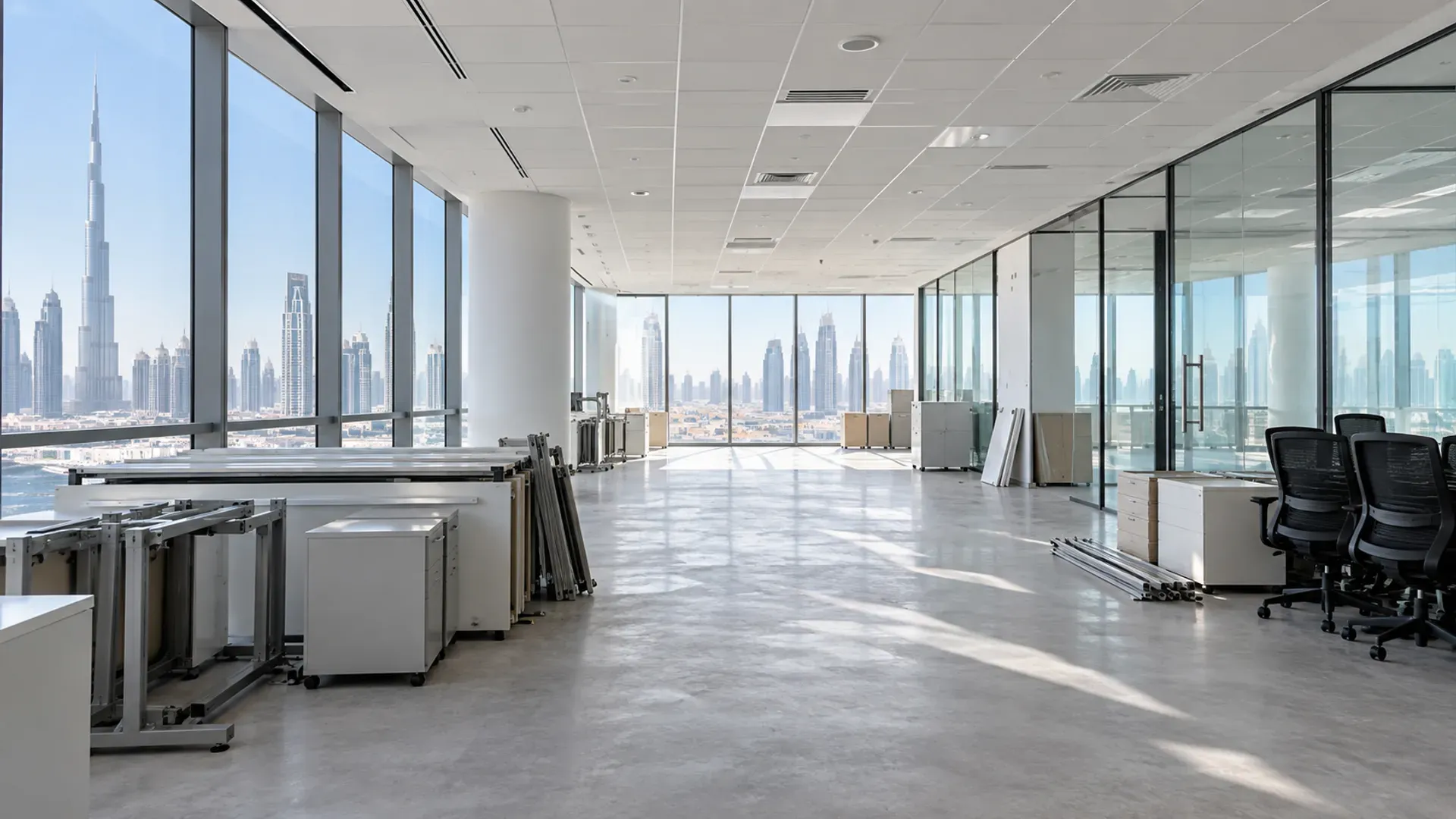
Offices book clearances for evenings and weekends because the work competes with the business for the same corridors, lifts and loading space. Dismantling desks, wheeling trolleys and holding a goods lift for repeated trips is slow and noisy when staff, visitors and other tenants are moving through the same route. Outside trading hours, that route can belong to the clearance alone.
The choice is not automatic. Out-of-hours work only helps when the building permits it, the right people can open and close the site, and the load is ready before the crew arrives. This guide explains when a night or weekend slot is worth arranging, what has to be agreed with building management, and how to prepare so the window is spent loading rather than waiting.
What an out-of-hours slot actually solves
The main benefit is separation. During the working day, a clearance shares space with people who are trying to do something else. Every trolley pass through reception, every hold on the service lift and every stack of panels near a fire exit has to be managed around them. When the office is closed, those conflicts largely disappear and the work can move at the pace the route allows.
The second benefit is continuity. A business that needs to trade on Monday can clear a floor, a department or a storeroom after close and open again with the space empty. Staff do not lose desk time, customers do not walk through a half-dismantled reception, and nobody has to explain to a visitor why the corridor is full of partitions.
The third is predictability for the building. Some facilities teams prefer heavy movement when lifts and loading areas are quiet, because it can reduce the chance of conflict with deliveries, tenant traffic and cleaning. Whether that preference applies to your building is something to ask, not assume.
What an out-of-hours slot does not solve is a poorly defined scope. If nobody has decided which furniture stays, which IT equipment has been wiped and which cabinets still hold files, the crew will spend the quiet hours waiting for answers. A night slot multiplies the value of good preparation and exposes the lack of it.
When daytime work is the better choice
Some clearances do not need a special window. A small storeroom, a single meeting room or a handful of chairs collected from a ground-floor unit with direct loading access may be finished quickly enough that disruption is minimal. Paying attention to building rules still matters, but the extra coordination of a night booking may not be worth it.
Daytime can also be easier when decisions are still being made on the day. If a manager needs to confirm which items go, or a records team must sign off cabinets before they leave, it helps to have those people on site. An evening slot with nobody available to answer a question can stall.
Consider the building too. A building may restrict heavy movement to particular hours, limit after-hours access, require extra security arrangements or charge for opening loading areas outside normal times. Ask the facilities or property management team what applies before you decide which window you want.
What the building has to agree first
Out-of-hours clearance is a building question before it is a scheduling question. The crew can only work in the window the building allows, using the route the building approves. Start with facilities management and get the answers in writing where possible.
Questions worth asking:
- Which hours and days are heavy movement and contractor work permitted?
- Does the goods or service lift need to be reserved, and for how long?
- Is the loading bay available in that window, and is there a time limit per vehicle?
- Who opens and closes the loading area and the office floor after hours?
- Does the building need a contractor registration, permit or list of names in advance?
- What protection is required for lift interiors, floors and corners?
- Are there noise restrictions affecting dismantling at night?
- Who from the tenant side must be present while work is carried out?
The answers decide the plan. A building that allows evening work but only one lift slot shapes the job differently from one that releases the loading bay for a whole weekend morning. Where the building asks for a service-lift booking, the commercial junk removal crew arranges it as part of planning, so give the facilities contact details when you request the quote.
Allow lead time. Approvals, security lists and lift reservations can take time to arrange. If the clearance has a deadline, such as a lease end or the start of a fit-out, ask the building about its notice requirements early.
Who needs to be on site
An empty office still has owners. Somebody from the business should be reachable during the window and, ideally, present at the start. That person confirms what is leaving, opens locked rooms, answers questions about borderline items and signs off the space at the end.
Agree that person's role in advance. They should know the inventory, have authority to decide on items that were not on the original list, and be able to contact IT or records teams if a question arises. If the building requires its own security or facilities staff to escort contractors after hours, confirm who that is and when they start.
On the clearance side, a named crew lead confirms the inventory with you before loading begins. That conversation is quicker and more useful when the tenant representative has the same list in hand.
Preparing the office before the window opens
The quiet hours are valuable only if they are spent on carrying and loading. Most of the preparation happens during the working days before.
Decide and mark what is leaving
Walk the space and make a clear list: workstations, pedestals, chairs, meeting tables, partitions, storage cabinets, kitchen appliances, signage and anything else in scope. Mark items that stay with a consistent label or move them into a room that is excluded from the job. Ambiguity costs more at night, when nobody is around to resolve it.
Clear the contents
Cabinets, pedestals and drawers should be empty unless the plan specifically includes their contents. Files, stationery and personal belongings left inside slow the work and create risk. If records need secure handling, arrange that separately and before the clearance. Do not assume a general clearance is a confidential destruction service.
Prepare IT equipment properly
Computers, monitors, printers and servers need decisions before collection. Back up and wipe devices according to the company's own data policy, remove anything that must be retained and keep a list of what is leaving. On collection, IT equipment travels with the load as e-waste for licensed handlers rather than general waste. The appliance and e-waste disposal page explains how electrical items are handled. Data security remains the business's responsibility to complete before the equipment is released.
Keep routes and exits clear
Do not stack furniture in corridors, fire exits or shared lobbies in anticipation of the crew. Group items inside the space, away from doors, so the route from the floor to the lift remains open. Building management may object to anything staged in common areas, even after hours.
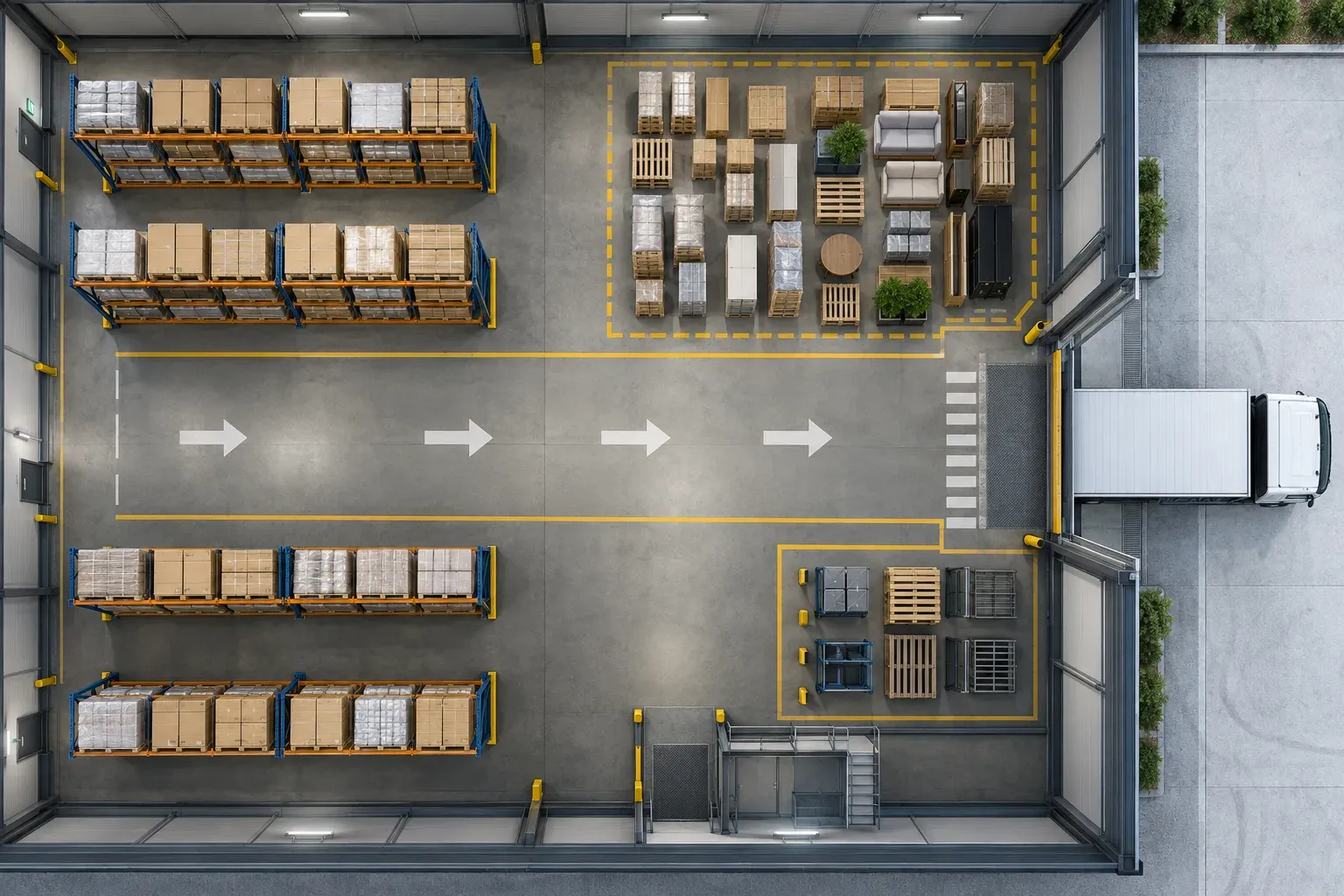
The same principle applies to warehouses and back-of-house areas: keep retained stock protected and separate, group the outgoing items in one staging zone and leave a broad, unobstructed route to the loading door. The crew then moves directly from the staging area to the vehicle instead of picking through mixed material.
How an out-of-hours clearance runs
Once the building has approved the window and the space is ready, the sequence is straightforward.
The crew arrives at the agreed time and completes any building check-in. The crew lead walks the space with the tenant representative and confirms the inventory against the quote. Lift and floor protection is put in place where required. Workstations are dismantled on site, partitions and cabinets are carried out, and items move to the vehicle in an order that keeps the route clear. When the work is finished, the space is swept before the crew leaves.
The important variable is the route. A single goods lift with a short reservation can limit the job more than the volume itself. A long walk from the lift to the loading bay, a security gate or a restricted vehicle position can add time to every trip. These details are why the quote asks for photos of the space and information about access, not just a list of furniture.
Large floors may be phased. A department can be cleared on one evening and the next department on another, or the work can be split across a night and the following weekend morning. Phasing is useful when the building limits the length of each window or when parts of the office must remain operational during the transition. The office strip-out guide covers phasing a whole floor in more detail.
Shops, warehouses and mixed premises
Out-of-hours timing is not only for offices. A shop being stripped before a new fit-out may need the work done after closing so the unit can reopen or so mall management's access rules are respected. A warehouse may want old racking, dead stock and packaging cleared when deliveries and dispatch are quiet.
Retail units inside malls may operate under the mall's own contractor rules, including service corridors, loading docks and permitted hours. Ask the mall operations team before booking, and include their requirements in your request for a quote.
Warehouses may have more loading space, but they also have moving vehicles, forklifts and stock that must not be disturbed. Clearance outside operating hours separates the two activities. The warehouse clearance guide explains how to protect retained stock and plan the staging area.
Where waste builds up continuously, a recurring pickup on a regular schedule can replace repeated one-off requests. That suits premises producing packaging or general commercial waste week after week, rather than a single strip-out.
How out-of-hours work is scoped and quoted
The quote comes from photos and a description, not a site visit. Send wide photos of each area, close-ups of large or unusual items, and the answers you received from building management about hours, lifts and loading. Tell us the window you can offer: the evening, the weekend day or the sequence of phases.
The quote is fixed and covers labour, loading and disposal. Nothing changes on the day unless the load does. If extra items appear that were not in the photos, the crew lead raises it before loading them, so the change is agreed rather than discovered on an invoice.
Pickups run seven days a week, and out-of-hours work is available for office and commercial jobs. Whether a specific evening or weekend slot is free depends on the schedule at the time you ask, so give as much notice as you can and mention any hard deadline.
Factors that shape the quote include:
- The volume and type of furniture, fixtures and equipment.
- How much dismantling is needed on site.
- The number of floors, the lift arrangement and the distance to the vehicle.
- Any time limits on lift or loading-bay use.
- Whether the job is done in one window or several phases.
- Any items that need a separate route, such as e-waste.
Common mistakes with night and weekend clearances
The avoidable problems with out-of-hours jobs come from assumptions rather than from the work itself.
- Booking a crew before confirming the building's permitted hours.
- Assuming the loading bay will be open because the office has access cards.
- Leaving cabinets full or devices unwiped, then trying to resolve it during the slot.
- Sending nobody with authority to answer questions on the night.
- Staging furniture in shared corridors or near fire exits.
- Forgetting that the lift reservation may be shorter than the job needs.
- Mixing items that stay with items that go, without clear labels.
- Not telling the building's security team the crew's arrival time.
Each of these is avoidable with one round of questions to facilities management and a walk-through of the space before the window.
Working out whether you need out of hours at all
Use a simple test. If the clearance would block a shared route the business or other tenants need during the day, or if the building restricts heavy movement to certain hours, out-of-hours work is likely the practical answer. If the job is small, access is direct and nothing competes for the route, daytime may be simpler.
Also consider the cost of disruption. A clearance that closes a reception for a morning or makes a department work around stacked furniture has a real cost even if no invoice reflects it. Moving that work into a quiet window may be the cheaper option overall, once lost working time is counted.
If you are unsure, ask building management first and then describe both options in your quote request. The crew can plan around whichever window the building allows.
Send photos of the space, the building's access rules and the hours you can give us through the commercial clearance page, and the plan and fixed price will be built around that window.
Frequently asked questions
Can an office be cleared overnight in one go?
It depends on the volume, the lift and loading arrangements, and how long the building allows work to continue. A smaller office with good access may be cleared in one window. A larger floor may be phased across several evenings or a weekend so each window stays within the building's rules.
Does somebody from our company need to stay for the whole clearance?
At minimum, someone should confirm the inventory with the crew lead at the start and be reachable throughout. Some buildings also expect a tenant representative or escort after hours. Check the building's requirement and agree who will attend.
Will out-of-hours work cost more than a daytime clearance?
Every job is quoted from photos with a fixed price covering labour, loading and disposal. Ask for the quote with the window you need, and if you are flexible, mention it so the options can be compared on the same load.
What happens to our old computers and monitors?
They travel with the load as e-waste for licensed handlers rather than general waste. Wiping and backing up devices must be completed by your business before collection.
Can you take items from several floors in the same night?
Yes, if the building allows lift use between those floors in that window and the items are ready. Include photos of each floor and the lift arrangement so the plan reflects the full route.