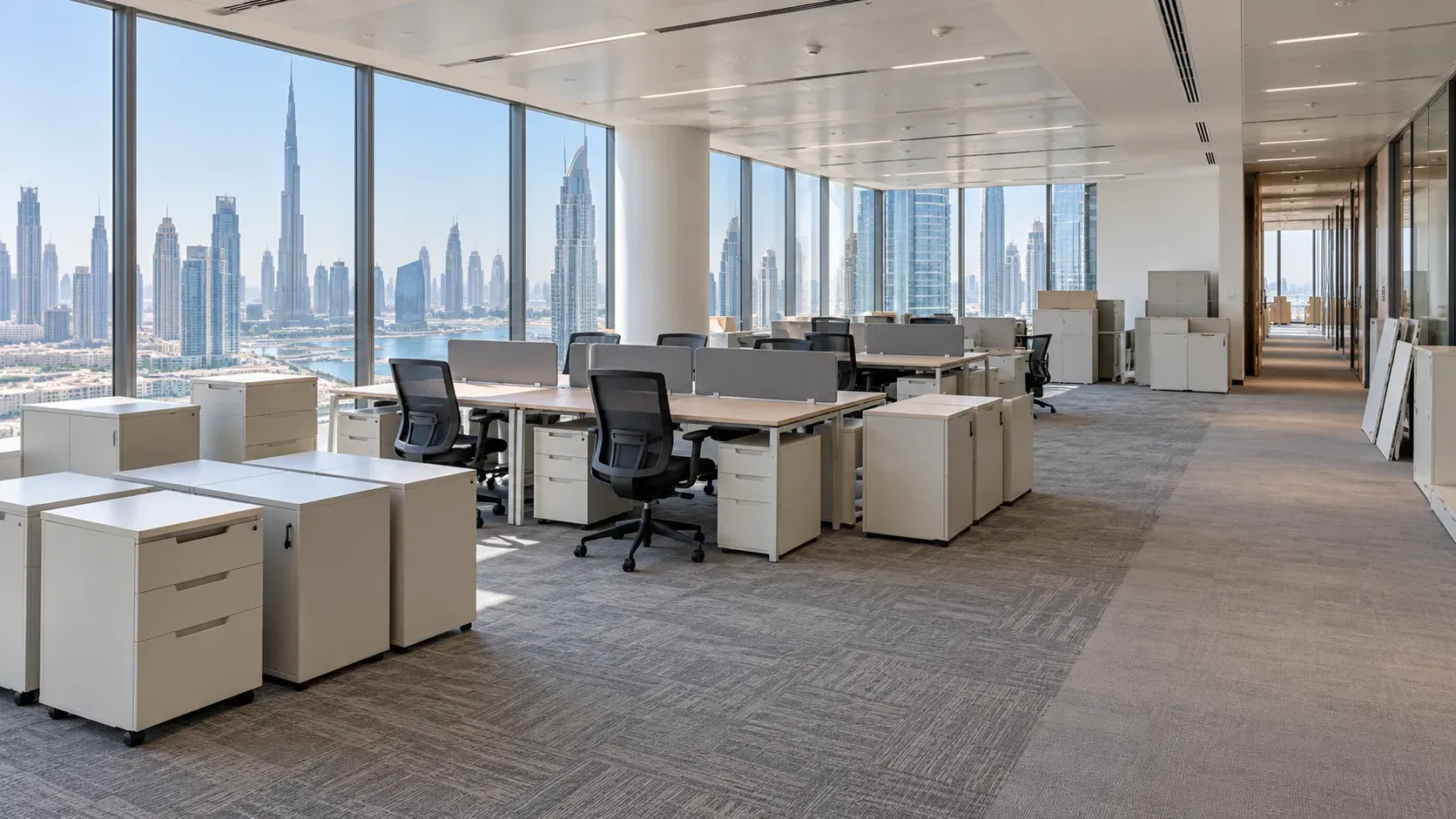
Junk removal during an office relocation is a separate workstream from moving the business. Decide what transfers, what stays with the landlord, what needs secure handling and what is approved for removal; then schedule the unwanted load around packing, technical disconnection and building access.
A removal crew should not be expected to choose assets, transport relocation stock to the new office or disconnect live systems unless those services are explicitly agreed. The safest plan gives every item one owner, one destination and one time window before loading starts.
Separate the move from the clearance
Create two inventories. The relocation inventory lists furniture, records, equipment and supplies going to the new premises or storage. The clearance inventory lists only items authorised for reuse elsewhere, specialist processing or removal. Do not let “not on the moving truck” become the only test.
Assign a lead for each workstream and one person who can resolve conflicts. The mover, IT provider, fit-out contractor, landlord and junk-removal crew may all work in the same building, but they do not share the same scope.
Write the boundary into each booking. Junk removal does not automatically include packing live business contents, delivering retained furniture, reinstalling equipment, dismantling fixed fit-out or cleaning the empty office.
Set the relocation milestones
List the last working day, packing completion, IT shutdown, mover arrival, junk-removal window, cleaning and landlord inspection. Add contingency between dependent jobs. A delayed IT handover should not leave the removal crew waiting beside equipment that is still live or undecided.
Confirm access before promising an internal deadline. Building security, loading bays, goods lifts and contractor registration may control when the work can happen.
Freeze asset decisions before anything moves
Use categories such as MOVE, RETAIN ON SITE, RETURN TO LESSOR, TRANSFER TO STAFF, REUSE OR DONATE, REMOVE, SPECIALIST ROUTE and UNDECIDED. Attach a unique asset or zone reference where the business already uses one.
Get approval from the person responsible for assets, finance or facilities. A desk that appears worn may still be recorded on an asset register. A leased printer, coffee machine or network device may need to go back to a supplier. A removal crew cannot settle those questions.
Keep undecided items in a protected zone outside the removal route. If approval does not arrive by the cut-off, exclude them from the load rather than using silence as permission.
Record the condition and destination
Photograph bulky assets and note their condition before the move. Record whether an approved item is intended for another branch, resale, donation, material recovery or general removal. Confirm any recipient directly; useful appearance does not guarantee acceptance.
Do not promise a reuse or recycling outcome without evidence from the responsible destination. The business can state its intention during planning, but its final record should describe what was actually confirmed.
Divide the office into accountable zones
Map workstations, meeting rooms, reception, kitchen, print area, store, server room and management offices. Give each zone an owner who checks drawers, cupboards and local equipment before it is released.
Use a visible status at each zone: NOT STARTED, PACKING, MOVE COMPLETE, READY FOR CLEARANCE and SIGNED OFF. This prevents a chair or monitor from being removed while a department is still working.
Clear in a sequence that protects the business. For example, obsolete store contents may leave early while live workstations remain untouched until the move. The sequence should reflect operations, not simply which room is closest to the lift.
Keep private areas controlled
Limit access to personnel files, finance rooms, executive storage and IT spaces. Have the responsible employee remove confidential material before general crews enter. Do not leave keys or access cards inside furniture approved for removal.
If the old office remains operational, mark a protected route and keep noise, dust and blocked corridors away from staff and visitors as far as the building plan allows.
Treat data and electronics as their own workstream
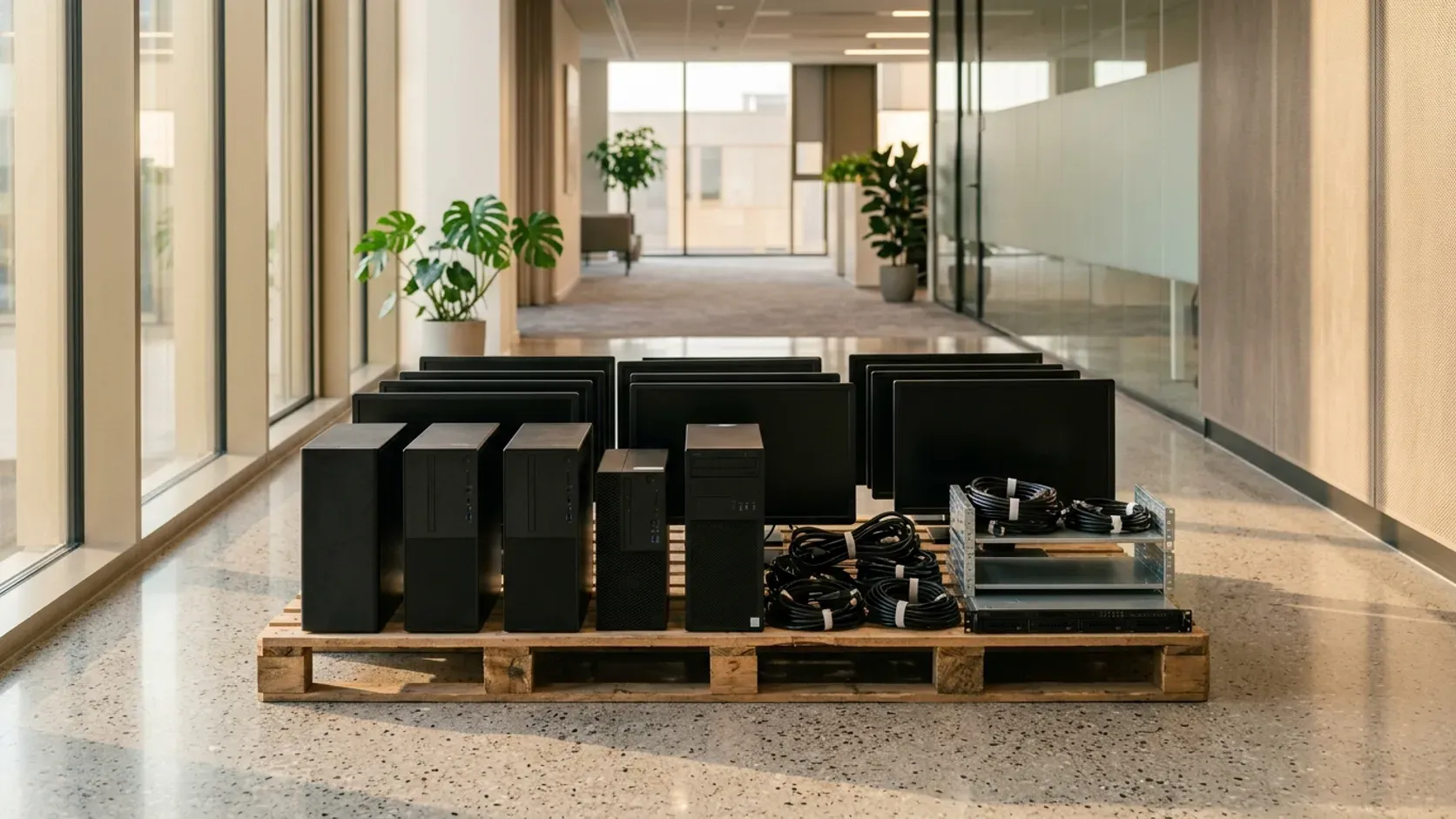
Inventory computers, monitors, phones, printers, drives, network equipment, access-control devices and backup media. Record asset identifiers where the business requires them. Disconnect and release equipment only through the responsible IT or technical team.
Data deletion, physical destruction and certified recycling are distinct services. Do not assume a general collection includes them. Ask the chosen provider what documentation and controls are actually available, then keep devices secure until that process begins.
Separate loose batteries, UPS units, damaged electronics and unknown devices. Do not place them inside filing cabinets or mixed furniture loads. The IT equipment disposal guide provides a fuller chain-of-custody planning method.
Remove accounts and access deliberately
Before equipment leaves business control, address logged-in accounts, saved credentials, printer storage, access cards and connected mobile devices through the organisation's policy. Removing a cable does not remove data.
Keep a handover log for any device transferred to another office, employee, supplier or specialist. Junk removal should begin only after the device has been released from the live asset and data process.
Sort furniture by destination and construction
Count desks, returns, pedestals, chairs, meeting tables, cabinets, shelving, reception pieces and kitchen furniture individually. Give the dimensions of large items and show modular connections, glass, stone, electrical adjustment or visible damage.
Empty every drawer and cabinet with the zone owner's approval. Remove labels, keys, files and personal belongings. Keep keys and fixings with furniture that is moving; do not tape them inside an item approved for disposal.
Decide whether each item must survive dismantling. Furniture moving to the new office needs controlled labelling and component protection. An unwanted item may use a different method, but only after its destination is final. See the office furniture removal guide for condition and material sorting.
Separate fixed fit-out
Built-in counters, partitions, wall cabinets, flooring, ceilings, lights, data cabling and fixed kitchen equipment are not loose office furniture. Their removal may affect services, fire systems, finishes or the landlord's reinstatement requirements.
Keep fit-out work with the appropriately responsible contractor and the approved reinstatement scope. Do not ask a loose-item crew to detach something simply because the moving company has left it behind.
Control records, stationery and branded material
Have the records owner review paper before it enters any removal area. Separate live records, archive files, ordinary recyclable paper and confidential destruction. Boxes marked only “old files” are not ready for general collection.
Remove or control letterhead, stamps, ID cards, uniforms, signage and branded packaging. Even where the material has little financial value, uncontrolled disposal may create reputational or security problems.
Inventory unused stationery and consumables that will transfer or be offered internally. Keep toner, inks, cleaning products and other special materials separate from general paper and furniture.
Verify destruction rather than assuming it
If confidential destruction is required, select a provider and process that meet the organisation's needs. Confirm collection controls and documentation in advance. A standard junk-removal receipt should not be described as a destruction certificate.
Keep confidential containers closed, supervised and outside the general staging area until the authorised handoff occurs.
Deal with kitchens and utility areas before clearance
Remove food, liquids and personal contents from fridges, cupboards and drawers. Assign someone to check dates and make decisions; do not leave food disposal to a furniture crew. Clean and dry appliances after appropriate shutdown.
Connected dishwashers, water dispensers, cookers and fixed coffee systems may need a suitable technician. Separate disconnection from carrying. State whether an appliance is already isolated, freestanding and released for removal.
Keep cleaning chemicals, aerosols, gas cylinders and unknown liquids out of a general office load. Leave them sealed and labelled and obtain the correct specialist advice.
Return supplier-owned equipment
Water dispensers, coffee machines, cylinders, sanitary units and vending equipment may belong to service suppliers. Check contracts and labels before adding them to either the move or removal inventory.
Schedule returns early. Supplier property discovered during the final hour can block a complete handover even when the rest of the office is empty.
Build separate staging lanes
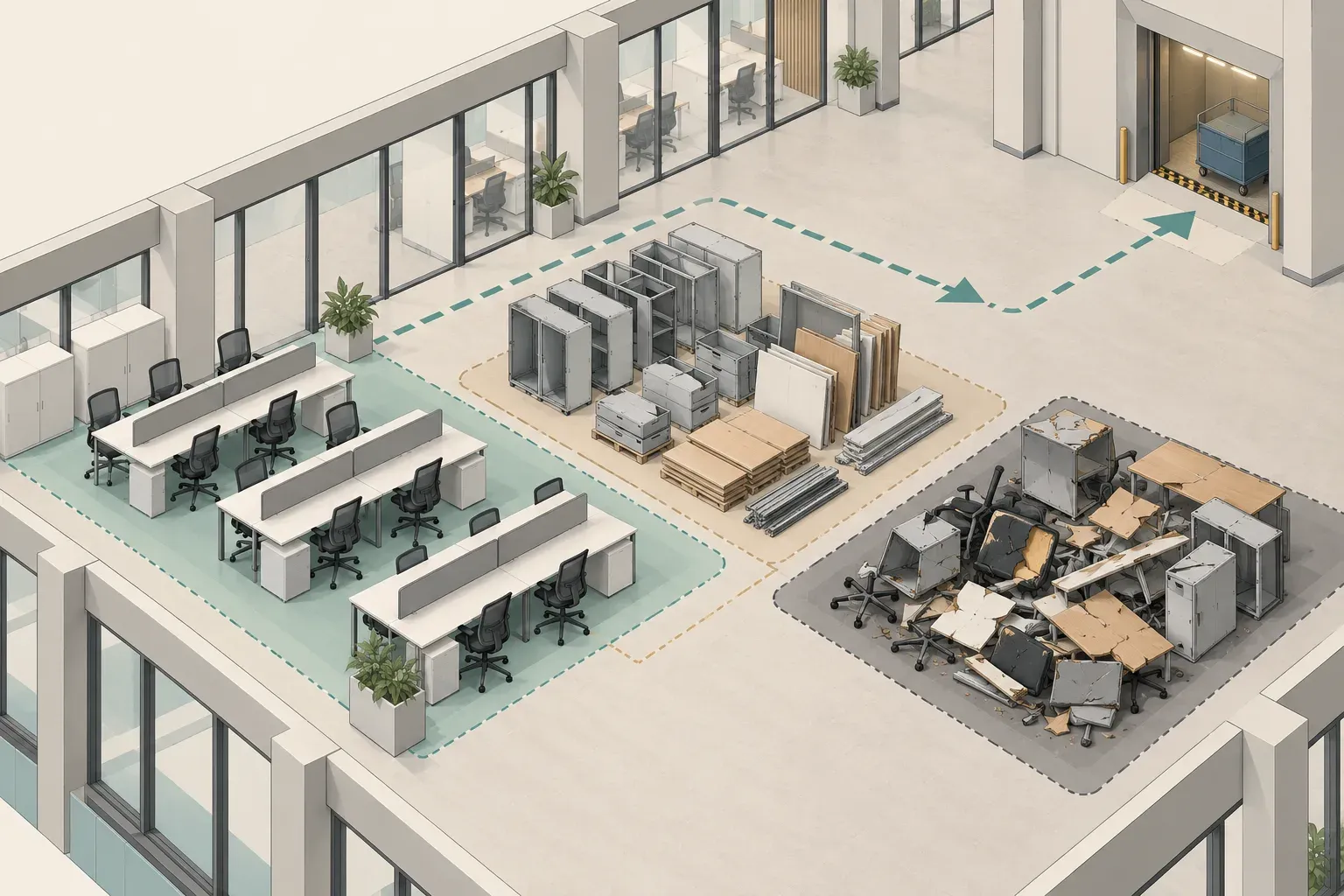
Use clearly signed areas for MOVE, REMOVE, SPECIALIST HANDOFF and HOLD. Keep the moving company's packed cartons physically separate from the junk-removal load. If space is limited, use different time windows rather than relying only on labels in one crowded bay.
Arrange furniture so tags remain visible and routes remain open. Do not block fire equipment, doors, lifts or occupied corridors. Keep fragile and unstable items controlled rather than piling them for speed.
The facilities lead should walk the lanes before loading and release each one. A last check is faster than recovering a retained item after it has left the building.
Use one change process
Late changes will happen. Require the authorised lead to update the inventory and the physical label together. A verbal “take that as well” from someone outside the approval chain should not change the load.
Tell both the mover and removal provider about material changes to volume. Adding cabinets, archive boxes or appliances may affect labour, vehicle planning and the booked window.
Coordinate the building route
Confirm contractor registration, insurance or document requirements, goods-lift access, loading-bay booking, parking, floor protection and permitted hours with current building management. Requirements vary; obtain them for the actual date rather than copying an old move plan.
Walk the route from every zone to the loading point. Measure large furniture against doors and lift dimensions, identify turns and check whether dismantled parts can be carried safely. Reserve space for both the moving and clearance teams without making them compete for one lift.
Protect reception and shared corridors from mixed traffic. If the building remains occupied, coordinate noise, trolley movement and door security with management.
Avoid overlapping loading crews
Two vehicles and two crews at one loading bay can stall both jobs. Give the mover and removal provider defined windows, with a responsible site contact authorised to adjust the sequence.
Do not plan the unwanted load so early that staff are still deciding, or so late that there is no time to correct a missed zone before handover.
Request a quote from the final clearance inventory
Provide:
- The old office location, floor and authorised contacts.
- The relocation and handover dates.
- A zone-by-zone list of approved removal items.
- Counts and dimensions of furniture, boxes and appliances.
- Separate lists for electronics, confidential records and specialist materials.
- Confirmation of any technical disconnection still required.
- Photographs of the load, largest items and full route.
- Goods-lift, loading-bay, security and contractor requirements.
- The timing of movers, IT providers, cleaners and fit-out contractors.
- The exact exclusions: relocation stock, leased assets and undecided items.
Send this scope to the commercial junk removal service and ask what is accepted, what preparation is required and what labour is included. Do not represent the booking as an office-moving service; it covers the authorised unwanted load only.
Sign off before the lease handover
After loading, have each zone owner check cupboards, drawers, stores and shared rooms. Reconcile the asset and removal registers. Confirm that access cards, keys, records, supplier property and relocation cartons are accounted for.
Inspect the route and staging areas. Record damage or remaining work for the responsible contractor. Junk removal does not certify reinstatement, cleaning, technical isolation or landlord acceptance.
Keep the final collection and specialist handoff records actually supplied. If the business reports environmental outcomes, base them on evidence rather than estimates made from the appearance of the load.
Questions about junk removal during an office relocation
Is junk removal the same as an office move?
No. The mover transports retained business property to its new destination. Junk removal handles only the unwanted load approved in its separate scope.
Can the crew decide which desks are unwanted?
No. An authorised business representative should release every asset. Keep undecided and leased items outside the removal zone.
Can computers leave with old furniture?
Only after the responsible asset and data process releases them and the collection route is confirmed. Keep electronics separate and secure until then.
Who disconnects appliances and equipment?
Use the suitable technical provider where disconnection is required. Tell the removal provider when an item is safely isolated and ready to carry; do not assume disconnection is included.
When should the unwanted load leave?
After asset decisions and required technical handoffs are complete, but early enough to inspect the office and correct missed items before cleaning and landlord handover.