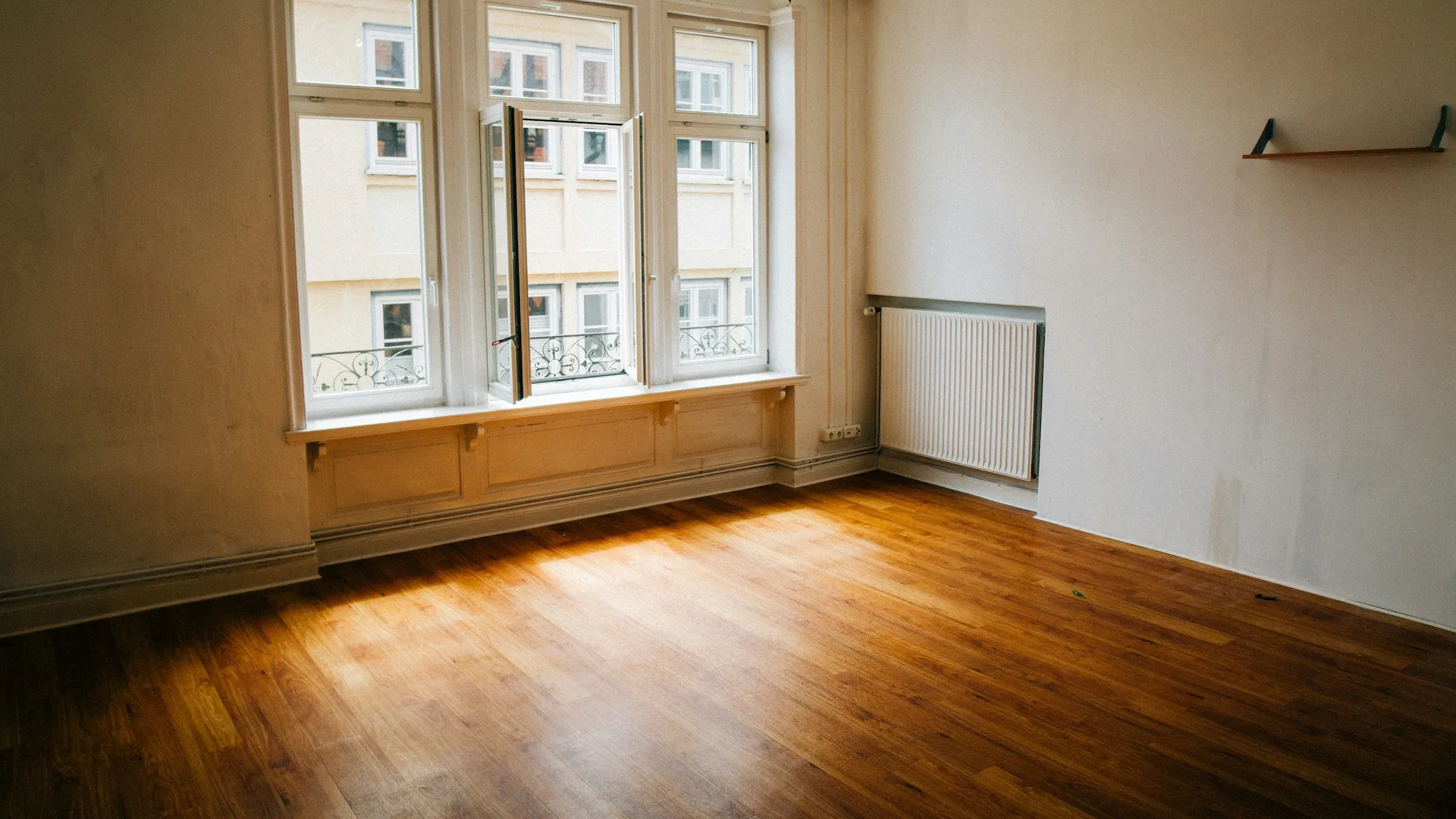
Clearing an apartment before viewings is a contents and access job. Pick the date the unit must be in the condition you have chosen, list what leaves and what stays, and book the building route early enough for that date. This page does not advise on price, marketing, commission, contracts or the legal steps of a sale. Those questions belong with the people you have appointed for them.
The useful split is physical. Some items leave before anyone is shown the apartment. Some stay because you want them in the unit during that period. Some are on hold until you confirm they are yours to remove. A clearance crew cannot make that split for you.
Set the date the apartment must be ready
Write down the first date someone else may walk through the unit, and a later date by which it must be empty or handed on, if you have been given one. The two dates are not the same. A viewing can happen while agreed furniture is still inside. A completion, a tenant’s last day or a building inspection can require a different condition. Use the dates you have actually been given. Do not invent a gap and then treat it as a rule.
Work backwards from the earlier date that constrains the collection. If the unit must look a certain way on Thursday, the collection has to finish before the cleaning, the key handover or the access window that comes first. Put those later tasks on the same sheet so the removal is not booked into a slot the building has already given to someone else.
If you do not yet have a viewing date, still freeze a decision date for the contents. An open-ended “we will clear it when the buyer is ready” leaves the load undefined. Choose a review point, finish the inventory, and move the collection only when the building and the provider have both accepted the new window.
Keep sale questions off the removal list
Decide what is physically in the apartment. Do not ask a removal booking to tell you what a later occupant might prefer, what a room “should” contain, or what an item is worth. If you are transferring a piece to a buyer, a relative or another household, that transfer is finished only when the person has agreed and the item has actually gone. Until then it still occupies the unit and still needs a fallback.
This is not a guide to preparing a home for a smaller move. When you are choosing what will fit the next place you will live in, use the downsizing clearance plan. The questions there are about capacity. The questions here are about a vacant apartment and a date.
If you are the tenant, not the owner arranging a sale, the handover standard is different. The end-of-tenancy clearance guide covers what has to be gone before a tenant hands the keys back. Do not mix a tenant’s inventory obligations with an owner’s choice about what remains during viewings.
If an agent, relative or manager is clearing a home they do not occupy, authority has to be settled first. That is the subject of the property clearance guide. This article assumes the owner, or a person the owner has clearly instructed, is making the stay-or-go decisions for their own vacant unit.
Walk the vacant apartment once
Visit the unit before you request a quote. If you are abroad, send one person with a key and a written list of rooms. Include the entrance, each bedroom, the kitchen, bathrooms, balcony, store, parking bay and a maid’s room or locker if one belongs to the apartment. A living-room photo does not describe the store.
Take wide photographs and then close photographs of large items. Open cupboards. Look above wardrobes, under beds and inside the oven, the fridge and the washer if those appliances are still there. A vacant apartment can still hold the last occupant’s leftovers: hangers, cleaning bottles, a mattress in a spare room, boxes in the utility cupboard.
Write a single inventory. Give each line a room, a short description and one of three marks: leaves, stays, or hold. “Miscellaneous” is not a line. A group of small objects can be “two sealed boxes from the hall cupboard” if that is accurate and you have checked them for papers or items you must keep.
Protect documents and access items first
Remove passports, title papers, tenancy papers, bank papers and personal photographs before anything else is staged. Put keys, access cards, parking remotes and gate fobs in a separate pouch that does not go near the outgoing pile. A clearance of unwanted furniture is not a handover of the building’s access devices.
If meters, intercom handsets, fire equipment or landlord appliances are fitted, leave them in place and note them as not part of the load. Do not unscrew a building device because it looks unused. If you are unsure, ask the building or the person who manages the unit, and wait for the answer before it is listed for removal.
Choose what stays during viewings
Staying is a practical choice about the room, not a pricing tactic. You might leave a bed, a sofa or a dining table because you want them in the apartment for the period you have planned. You might remove them because you want the rooms empty. Either choice is yours. Write it on the inventory so the collector is not asked to guess from a remark about “making it presentable”.
Items that stay need a place that is not the carrying path. If the sofa stays and the media unit leaves, the sofa must not block the cabinet’s route to the door. If a bed stays, strip it of personal bedding you do not want seen or removed, and say clearly that the frame is not in the load.
Items that leave should be grouped, emptied and labelled. Do not store spare belongings inside a wardrobe that is also leaving. Empty it, then list the bags separately. Personal photos, medicines, mail and children’s items should not remain in a unit that other people will enter. Remove them even when the furniture itself is marked “stays”.
Hold is for pieces you cannot yet release. Put an unconfirmed request from a buyer, a relative’s possible collection and an unresolved ownership question on hold. Give the hold a deadline before the collection day. If the deadline passes without a confirmed transfer, move the item to “leaves” or “stays” yourself. Do not leave the decision to the crew at the door.

Fitted items and freestanding items
A freestanding sofa, bed, table or appliance can be listed for collection once it is empty and disconnected as that item requires. A wardrobe, kitchen run or media unit that is screwed to the wall may be part of the property. Photograph the fixings. If it is fixed joinery, a collection crew is not the trade that releases it. Ask the person responsible for the apartment before it is added to the load.
Appliances need their own preparation. A fridge, washer or oven that is leaving has to be empty, and disconnection of water, gas or a hard-wired supply is a separate task from carrying the unit out. Where several appliances are leaving together, build one list so each unit’s status is visible. The old-appliance removal guide is the place for that register. Do not fold appliance preparation into a vague line that says “kitchen”.
Curtains, blinds, light fittings and bathroom accessories are easy to forget and easy to argue about later. If they are yours and you want them gone, list them. If they belong to the apartment, leave them. The same test applies to a satellite dish, a wall bracket and a shelf that was installed after you bought the unit. Ownership first, then removal.
Book the building before the collection day
Ask the building what it requires for a removal from this apartment: service lift, loading bay, time window, permission, protection of common areas, or a form you have to submit. Requirements differ. The answer is the one your building gives you, not a general picture of how towers work. The service-lift guide and the furniture NOC guide explain the questions to ask. They do not replace the building’s own instruction.
Book the access window before you promise a collection time. If the building only releases the lift in the morning, the crew’s arrival has to sit inside that morning. If a viewing is set for the afternoon, the collection, the exit and cleaning you have arranged need to finish in an order that leaves the unit as you intended. Write that order down. Do not rely on two teams to sort it out in the corridor.
Tell security who is coming, which company, and which bay they should use, once you know those facts. Leave parking guidance that matches the building’s rules. A truck that cannot stop near the lobby is a failed plan even when the inventory was perfect.
If you will not be at the apartment, name one person who can open the door, walk the crew through the inventory and refuse items that are marked “stays”. That person needs a copy of the list and a way to reach you. Give them authority in writing if they may approve a small addition. If they may only open the door, say that too, so a extra wardrobe is not taken on a nod.
Measure the pieces that can stall the route
Large furniture still has to fit the doors, the lift and the turn into the corridor. For a single awkward object, use the bulky-item pickup guide and send photos of the object and the tight points. Where the job is the apartment’s furniture as a set, the apartment furniture plan keeps one inventory tied to one building route. Use those pages for the carrying problem. Keep this page for the sale-period decisions: what is vacant, what stays for the viewing window, and who is allowed to remove it.
Balcony sets, a spare mattress and boxes in a parking store are part of the same apartment. List them on the same inventory. A quote prepared without the store will not include it. If the store has chemicals, paint, gas cylinders or other items the acceptance notes exclude, photograph the labels and ask before they are placed with the furniture. Do not hide them in a box.
Hand the finished load to a house clearance
When the leave list is stable, the hold list is resolved and the building window is confirmed, request the collection against that list. House clearance is the service for taking the approved contents out of the home. Send the room photos, the marked inventory and the access details. Ask for a quote on the items marked “leaves”, not on a sentence that says the apartment is being sold.
Say what will still be in the unit when the crew arrives. A bed that stays, a fridge that stays, or a room that is already empty changes the walk-through. Point out damage you want noted, without asking the crew to repair it. Repairs, painting, deep cleaning and photography for a listing are other appointments. Book them around the removal. Do not add them to the clearance because the same day feels convenient.
If a buyer or agent asks for a different set of furniture to remain, update the inventory and tell the provider before the day. A change at the door is how a wanted item leaves or an unwanted item stays. Keep one list. If several people are messaging, choose one sender.
After the collection, walk the unit against the list. Check cupboards, the balcony and the store again. Confirm the access cards are still in your pouch. Note anything that was agreed to stay and is still there. That walk-through is your record of the physical condition you chose. It is not a valuation and it is not a legal completion.
Once the dates, the marked inventory and the building window agree with each other, the clearance can be booked without turning it into a sale. Keep the papers, the keys and the stay list out of the outgoing pile, and let the house-clearance request describe only what is leaving.
Common questions about clearing before viewings
Can I leave furniture in the apartment for the viewing period?
Yes, if it is yours to leave and you have marked it “stays”. Tell the collector, and keep it out of the route. Whether a later buyer wants that furniture is a separate agreement between the people involved in the sale. This guide does not interpret that agreement. Until a transfer is finished, the item remains your planning problem.
Will the crew decide what makes the apartment look ready?
No. You decide what leaves and what stays. The crew removes the approved load. Comments about presentation, price or what a buyer might like are outside the job. Put the decision on the inventory before the appointment.
What if the apartment is still occupied?
This plan is for a vacant or vacated unit. If a tenant is mid-handover, use the end-of-tenancy clearance guide. If a representative is clearing a home they do not occupy, use the property clearance guide. Do not book a sale clear-out over the top of someone else’s belongings.
Do I need the unit completely empty?
Only if that is the condition you, the building or the transaction’s instructions actually require. Read the instruction you have. An empty room and a room with an agreed bed are both valid outcomes. The collection should match the instruction, not a general preference for empty apartments.