Show-flat furniture that is not the buyer's stays where it was placed until the person who supplied it releases it in writing. Holding the keys, a snagging list or a handover date does not make that furniture yours to dump. Book only the pieces the release names.
Access and ownership are different facts. You can be allowed into the unit and still be forbidden to remove the sofa, the bed or the dining table that were put there for viewings.
Write down who supplied the furniture
Start with the supplier, not with the pile. The furniture in a show flat may belong to the developer, to an interior company, to a sales gallery, or to a landlord who dressed the unit. A sticker, a delivery note, an inventory or an email that names the pieces is the record. If you cannot find one, ask before you move a single item. “It was here when I got the keys” is not a release.
Write the supplier’s name, the unit number and the date you asked. If the answer is “we will collect it ourselves”, leave the furniture in place and keep that message with the booking notes you do not send. Their collection is not this one. If the answer names some pieces and is silent on others, only the named pieces can be considered. Silence is not a yes.
A sales agent’s verbal “take it all” is weaker than a message that lists the pieces and says the display contract has ended. Ask for the list. If the person in the unit is a contractor finishing snags, they may have keys and still have no authority over the furniture. Ask who pays for the display, and write down what that person says.
Do not remove labels, protective film or a gallery tag to make a piece look like ordinary household furniture. The tag is evidence. Photograph it, then leave it on until the release says the piece may go. A tag you have peeled off cannot be checked later against the list.
Fitted lights, fixed joinery, a built-in wardrobe and an appliance that is part of the unit stay unless the release says those items are detached and may leave. This page does not interpret a sale contract, a price or the legal steps of a purchase. It asks a practical question: which loose pieces have you been told, in writing, to send?
A release has to name the pieces
A useful release names the unit, the pieces that leave, the pieces that stay, the person who approved it and the date. “Clear the flat” does not do that work. A show flat can hold a sofa that is display stock, a dining table the buyer has bought, and a bed that must stay for the next viewing. Those three decisions cannot share one sentence.
Match the release to the room. If the message says “living room sofa and two chairs”, the bedroom is not included. If it says “all loose furniture on the inventory dated 2 March”, find that inventory and tick the lines. If you do not have the inventory the message mentions, you do not have a list yet. Stop and ask for it.
Pieces that stay need a place you will not photograph as waste. Move them only if you must open a path, and put them back, or group them in one corner and say they stay. Do not stack “staying” chairs in the corridor. The corridor is not your store, and a chair outside the unit can be read as a chair that is leaving.
Unknown pieces stay in the unit. A side table with no line on the release, a mirror you are not sure is fixed, and a rug with a gallery label are unknown until someone who can release them has done so. Photograph them as “not in this load”. Do not add them on the day because the room looks unfinished.
If two people send two lists, do not merge them yourself. A developer’s list and an interior company’s list can overlap or contradict. Ask the person you were told to obey which list wins, and book from that reply. Parallel instructions are how a piece that should have stayed leaves in the first load.
An owner clearing their own flat is a different job
An owner deciding what of their own furniture stays for viewings, and what leaves before a sale, follows the plan for clearing an apartment before selling. That page is their inventory and their dates. It does not advise on price or contracts. Stay there when the furniture is theirs.
Come here when the furniture was placed for display and the person now in the unit has not been given it. A buyer walking through a dressed flat, a tenant collecting keys, or a site manager preparing a handover can be in that position. The rooms look like a home. The ownership does not follow the look.
Do not use the pre-sale plan to justify removing a gallery sofa because a viewing is over. The end of a viewing period is a date. It is not, by itself, a transfer of the furniture. If the supplier’s collection is booked for the day after the viewing, the furniture stays until that collection. Your booking should not be the thing that makes the supplier’s pieces disappear.
If you are the owner and a few display pieces were left among your own furniture, split them before you photograph. Your pieces can follow the pre-sale plan. The display pieces follow this page until they are released. One wide photo of a mixed room will be read as one owner’s load.
A home someone lived in is a different job
A clearance arranged by an owner, agent or representative for a property they do not occupy, where the contents were left by someone who lived there, follows the property-clearance guide. That guide is authority, a contents record and items of uncertain ownership after an occupation. A show flat was dressed. It was not vacated by a household in the same way.
A manager replacing furniture in one furnished flat they operate follows the short-let clearance note, not this page. Guest leftovers, a landlord’s inventory and the operator’s own pieces are that job. Display stock in a show flat is not a guest’s leftover and not a short-let changeover.
If a show flat was later lived in, say so, and split the two histories. Furniture that arrived as display and is still on the supplier’s list stays on this page. Furniture a resident brought, and that someone with authority has released, belongs on the property-clearance record. Do not let the dressed-room photos erase the second history. Write which pieces came from which.
Estate clearance after a death is a different authority again. Do not use a show-flat release, or the absence of one, to decide items in a home where someone has died. That decision sits with the people entitled to make it. This page does not help with it.
Flat-pack display is still not yours to take apart
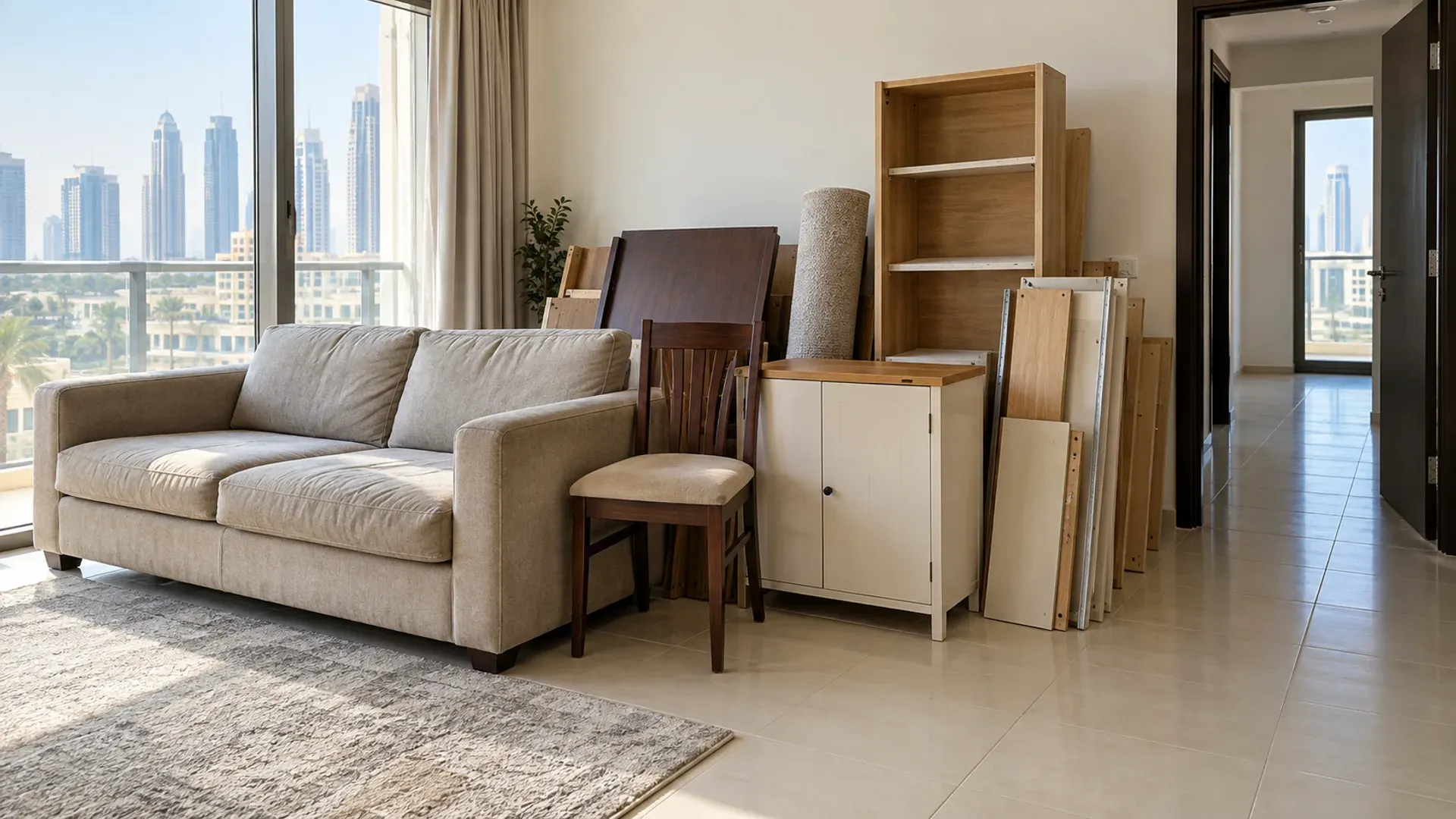
A display piece that was built from a flat pack is still display stock. Do not unscrew it to see whether it will fit the lift, and do not take the back off to make it lighter, until the release names that piece. Taking it apart can destroy the supplier’s ability to use it again, and it can turn one owned item into a pile of panels nobody has agreed to send.
When the release does name the piece, the flat-pack disposal guide is the preparation: condition, loose hardware, swollen board and whether the frame should travel whole. Use that guide for the piece you are allowed to handle. Do not use it as a reason to dismantle the pieces the release left off.
Keep screws and fittings with the piece if the release asks for the item to be moved whole or rebuilt elsewhere. A bag of cams thrown into a general waste sack is not a neutral act. If you were not told to dismantle, leave the joints alone and say the piece is still assembled.
Glass shelves, a mirror and a stone top need the same pause. Count them, photograph cracks, and leave them in or on the piece until the release includes them. A glass top on a display table is not loose scrap because it lifts off. If it is not on the list, it stays with the table.
Split the unit into three groups
Walk the unit with the release in your hand. Make three groups you can point at.
The first group is released and leaving. Each piece should match a line. A sofa with a chaise is one line or two, depending on what was written. Do not upgrade a line from “sofa” to “sofa, cushions, side tables and lamp” unless those items are written too. Cushions and a lamp can be props on a different list.
The second group is staying. That includes furniture the next person has been told is included, furniture the supplier will collect, and fitted items. Group loose staying pieces in one place you can keep out of the leaving photo, without blocking the door you need. Say, in the note, that this corner stays.
The third group is unknown. It stays in the room where you found it, or in a corner marked “not released”. Unknown is not a polite name for waste. It is a hold. If the day ends and the hold is still a hold, the pieces are still in the unit.

The drawing shows decision groups and a path to the door. Copy the split, not the floor plan: released pieces on one side, staying pieces on another, a document set that does not go in the load. The drawing is not a photograph of a show flat. Your photo still has to show the pieces the release named.
A brochure, a price card, a roll of vinyl lettering and a box of sample finishes are not furniture. Bag the paper if you have been told it is waste, and keep it off the sofa. Do not throw a sample box into the furniture load to save a decision. If you were not told the paper may go, leave it for the person who dressed the flat.
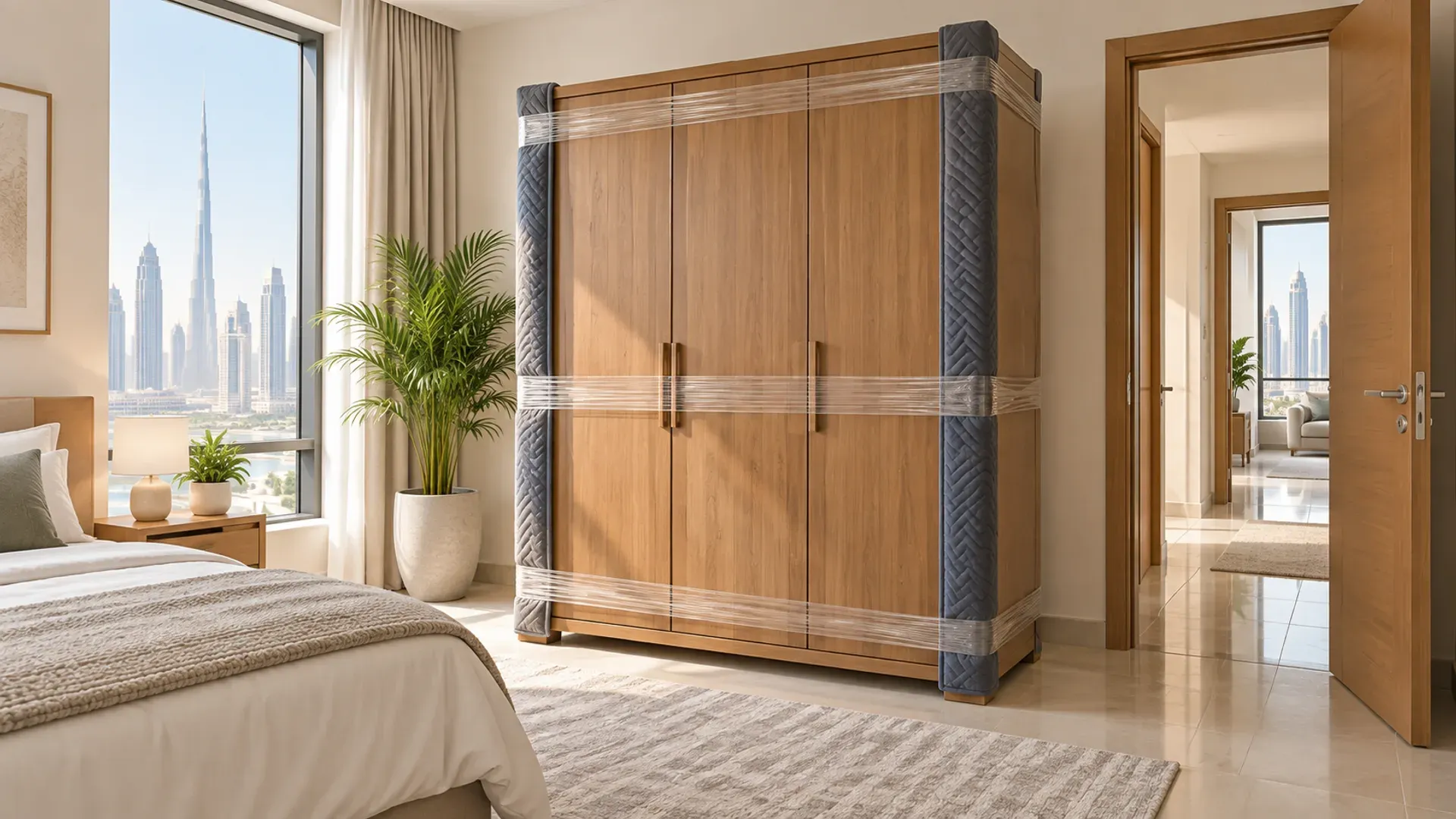
Protective film, corner guards and a loose mattress cover come off only if the release allows the piece to leave and you can remove them without tools that mark the finish. If the supplier wants the piece collected in its film, leave the film on and say so. A bare sofa and a wrapped sofa are different instructions.
Photograph the release, not the brochure
Send the release, or the lines from it, with the photos. A photo of a styled room is a brochure. The booking needs the pieces that are leaving, photographed so a person can count them. One photo per large piece, plus one wide photo of the leaving group, is the useful set. The wide photo should not include the staying corner unless you have labelled that corner in the message.
Photograph damage before the piece moves: a chip, a tear, a missing foot, a crack in glass. The record is the condition on the day, not a promise about what happens to the piece afterwards. Do not describe a scuff as permission to add extra items that were not released.
If a piece will not pass a door, photograph the piece and the door. Do not dismantle it in order to take that photo. Say it is still assembled and that the door is the tight point. Preparation for a released awkward piece can follow the flat-pack guide, or the guide for that kind of furniture, after the release is clear. This page does not become a carrying manual for the whole unit.
Keep the supplier’s collection, if there is one, out of the frame. Their pieces should not appear as yours. If both collections are on the same morning, write the order: who arrives first, which door they use, and which pieces each visit may touch. Two teams and one unspoken pile is how the wrong sofa leaves.
Remove only the furniture you are allowed to
Remove only the furniture you are allowed to when the release names loose pieces and you can show them. This is a furniture collection of that list. It is not a clearance of a show flat, and it is not a sale. The pre-sale plan remains the owner’s own furniture. The property-clearance guide remains a home someone lived in. The flat-pack guide remains the condition of a piece you are already allowed to handle.
In the message, say:
- the unit number and who issued the release
- the pieces that leave, in the words the release uses
- the pieces that stay, and where you have grouped them
- anything still on hold because the list was silent
- whether a supplier is collecting other pieces the same day
- the door, the lift instruction you were given, or “no lift instruction yet”
- that you have not dismantled pieces the release left whole
Do not write “show-flat furniture” as the only description. Name the sofa, the bed, the table, the chairs. A count without names will not match the release when the visit starts.
If a released piece is a fridge or another appliance, name it as that appliance and follow the preparation for that appliance. Do not hide it in the word “furniture”, and do not add appliances that are fixed to the unit because they appear in the same photo. A fitted oven is not a loose chair.
If the release is still a promise for tomorrow, you are early. Leave the furniture where it stands. A collection booked against an expected email cannot decide ownership at the door.
On the day the pieces leave
Walk the release with the person who is allowed to point. Touch each leaving piece once, in the room, before it reaches the door. If a piece on the leaving list is not on the release, take it off the list. If a piece on the release is missing, say so before the visit is treated as complete. Do not substitute a similar chair from the staying corner.
Check the hold corner and the staying corner after the load has gone. Tags, film the supplier asked to keep, and the document pack should still be in the unit. Fitted joinery should still be fitted. A hole where a gallery shelf was is a question for the person who released the shelf, not a detail to discover after the keys are returned.
Return access cards, fobs and the release copy to the person who asked for them. A unit that looks empty can still fail a handover if the display stock that should have stayed has gone, or if the stock that should have gone is in a bedroom you did not open. Open that bedroom before you lock up. The list, not the styled photograph, is the record of what this visit was for.