A plumbed drinking-water cabinet stays on the supply until the pipe is isolated and capped. Do not cut the tube to free the unit. Empty the reservoir, take the bottles off, and book the cabinet only once it stands clear of the wall.
A bottle that lifts off the top, with no tube into the back, is a different machine. Unplug that one, empty it, and describe it as a bottle cooler. A dehumidifier with its own tank, and no drinking-water pipe, is the dehumidifier note. Do not use the pipe steps on that unit. The rest of this page is the unit with a water pipe.
Name the machine before you book it
Look at the back and the underside before you call the cabinet a fridge, a heater or “the office cooler”. The name changes who disconnects it and which guide applies.
A freestanding cabinet with a replaceable bottle on top, and no pipe, has no supply to cap. Lift the bottle off if it comes away without tools. Empty any drip tray. Unplug an ordinary accessible plug. Photograph the cabinet with the bottle off so the booking is not priced as a plumbed job. Stop there. Do not take the back panel off to see whether a pipe is hiding.
A plumbed unit has a tube you can see. It may run from a valve on the wall, from under a sink, or from a small filter housing into the back of the cabinet. The tube is the reason this page exists. Photograph it from where you stand. Do not pull the cabinet forward to prove the connection if the tube is short. A short tube can tear, and a torn tube is a leak in the room, not a finished disconnection.
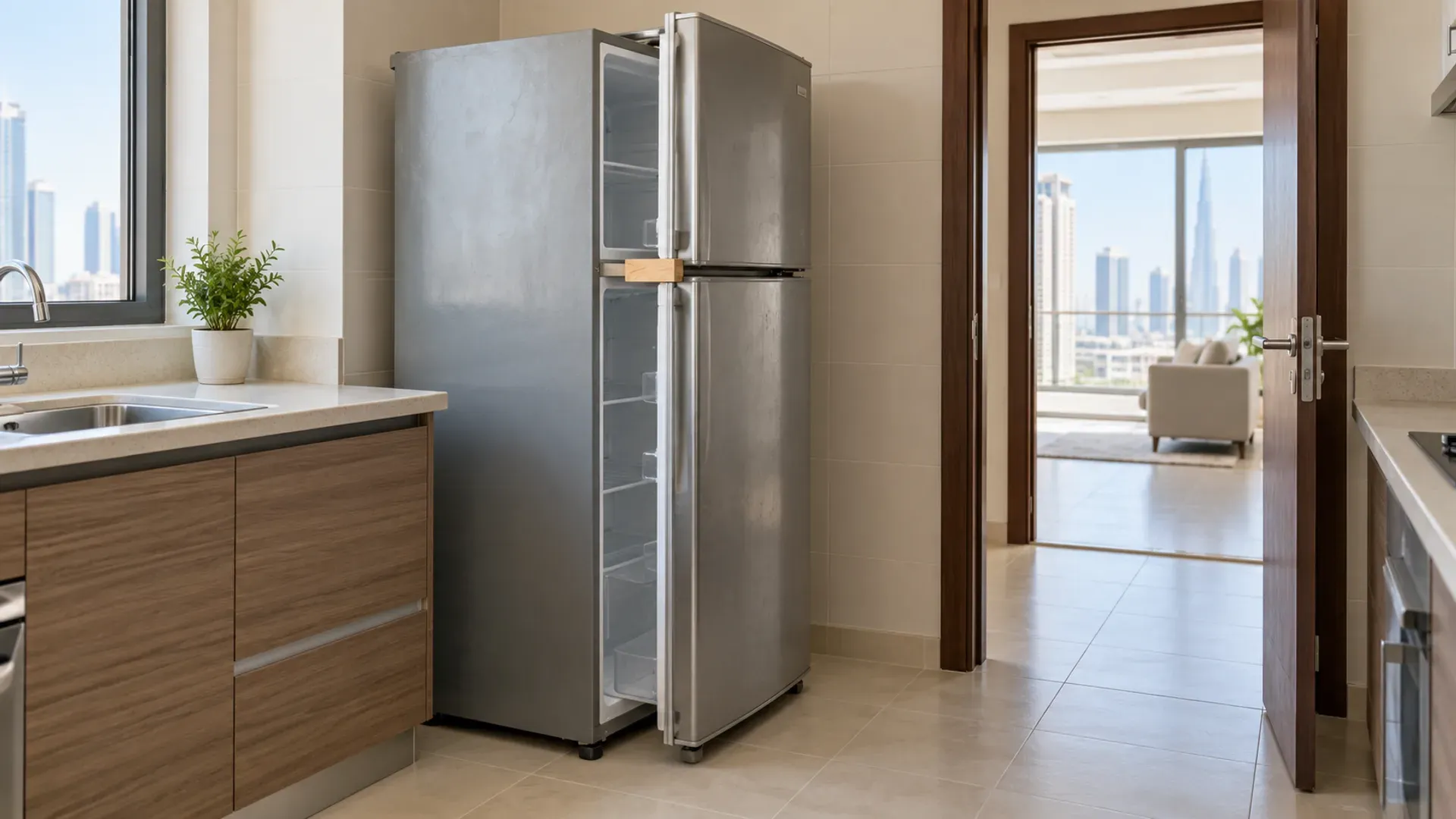
A water spout in a refrigerator door belongs to the refrigerator. That appliance is food storage with a cooling circuit, shelves and a door seal. Use the fridge disposal guide for it, including any internal water line the fridge instructions describe. Do not send the fridge photo as if it were this cabinet, and do not use this page to open the fridge’s rear panel.
A tank that heats water is a water heater. It may sit on a bathroom wall, in a cupboard or on a floor, and it holds hot water under pressure. The water-heater guide is that tank: ownership, a qualified disconnection, a full drain, and the wall left with the pipes capped. A cabinet that only chills or dispenses drinking water is not that tank. If you are looking at a heater, leave this page.
Several unlike appliances in one booking need a register, not one cooler note. The old-appliance guide is the list: which unit is freestanding, which is still connected, and who releases each one. Come back here for the single drinking-water cabinet whose open question is the pipe.
A cooler built into a joinery run, or screwed to a cupboard, is not free because the front looks like a cabinet. Look for brackets, screws into the side panel, and a plinth that covers the tube. Do not lever it out of the joinery. If you cannot see how it releases, say it is still fixed and stop.
Confirm the cabinet is yours to send
A cooler supplied with a furnished flat, listed on an inventory, or labelled as a rental from a water company is not yours to discard because it is in the way. Read the inventory or the label. If a supplier’s sticker says that company collects the unit, leave it for them and keep their instruction with the booking note. Keys and a move-out date do not replace that instruction.
In an office, the cabinet may belong to the employer, the building, or the company that refills the bottles. Ask the person who pays for the water. A unit in a pantry is still one machine. It is not permission to clear the pantry, the mugs or the microwave beside it.
Write down what you were told and who said it. “Take the cooler” from a colleague is weaker than a message that names the cabinet and says the contract has ended. If the answer is still open, leave the unit where it stands and keep it out of the outgoing photos.
Spare bottles, a box of cups and a filter cartridge in a drawer are contents, not part of the cabinet. Put them in a place you control. If the water company wants the bottles back, that return is their collection, not this one.
Leave the pipe intact
Find the shut-off only if you can see it without opening a sealed panel or forcing the cabinet off the wall. A small valve on the tube, or a valve under the sink that you already use, can be closed by the person responsible for the plumbing. If you cannot see a valve, do not go looking with a knife.
Do not cut, saw or pull the tube until it splits. A cut pipe does not make the cabinet “ready”. It leaves an open supply in the wall or under the sink, and it leaves the cabinet with a torn stub that still drips. The person who installed the unit, or a plumber the property uses, isolates the supply and caps the open end. Ask them to do that before you book the carry.
When they finish, look at the end they left. A cap, a plug or a closed valve you can point at is what the photo needs. A tube pushed back into a hole, or taped with household tape, is not a cap. Say so, and do not book the cabinet while water can still reach it.
Electricity is a separate step. If a normal plug is reachable, unplug it after the water side is finished, and only if you can do that without pulling the cabinet against the tube. Do not cut a cable. If the cable disappears into the wall, the floor or the joinery, stop and photograph that. A removal crew is not there to make a live connection safe.
Do not open the back panel, the grille or any sealed cooling part to make the cabinet lighter or shorter. If you can see a compressor-style housing or a vented rear like a small fridge, say that in the request and leave the housing closed. This page does not identify a refrigerant, and it does not tell you to release one. A cooling circuit stays intact. The fridge guide is the preparation note if the machine is actually a refrigerator. A drinking-water cabinet that merely has a cold setting is still described as this cabinet, with the rear left alone.
Hot water is not expected from this unit. If the tube or the cabinet is hot, or water comes out scalding, stop and treat the connection as a heater problem. Use the water-heater guide and a qualified person. Do not keep draining it into a bucket on the assumption that it is a cold cooler.
Empty the reservoir before anyone tilts it
Water left inside makes the cabinet heavier and can pour out when it is tilted through a doorway. Empty it while it is still standing in its normal place, after the supply is shut and the pipe is capped.
Take the bottle off the top if there is one. Pour it out in a sink, or hand it back if it is a deposit bottle. Do not leave a full bottle on the cabinet for the carry. The bottle is tall, it can fall, and it is not part of the cabinet’s frame.
Empty the drip tray and any internal reservoir the unit already lets you drain. Use the drain the manufacturer provided if you have the instructions and the tap is on the outside. Stand a tray under it. Keep the water off the plug and off the floor you will walk. If you cannot find a drain without opening the back, do not tip the cabinet onto its face or its rear to “get the last of it out”. Say the reservoir may still hold water, and leave the cabinet upright.
Cups, lids and a loose drip grid go in a box you are keeping or in the rubbish you have already decided to send. They should not rattle inside the cabinet. A filter cartridge comes out only if it slides out the way the unit is designed to open. Bag it, label it, and say whether you are keeping it or sending it. If you do not know what the cartridge contains, do not rinse it into a sink and do not hide it in the cabinet. Put the bag where it can be seen in the photo.
Wipe the standing water you can reach. A dry floor is part of the route. A puddle under a capped pipe means the cap is not holding. Stop and call the person who capped it back before you book a collection.
Leave the building’s side of the connection
The cabinet leaves. The capped pipe, the valve and any filter housing that is still fixed under the sink stay, unless the person responsible for the property has released those parts in writing and they are already detached.
Do not remove a sink, a worktop or a cupboard to chase the tube. Do not unscrew a wall valve that serves something else. If one valve also feeds a tap, closing it and then removing it is a plumbing job, not preparation for a pickup.
Brackets and screws that held the cabinet to a wall or a plinth need the same split. If a new cooler will use them, leave them and say so. If the landlord expects the wall left as it was, ask before you fill holes or before you leave a bracket hanging. Photograph the wall with the cabinet still in place, and again after it is standing free, so the record shows the pipe capped and the cabinet no longer attached.
A stain, a swollen skirting board or a drip mark is a condition of the room. Photograph it. Do not describe it as something the collection will repair. This booking carries the cabinet. It does not replumb the pantry or repaint the wall.
Measure the free cabinet and the route
Measure after the bottles are off and the pipe is disconnected, and before anyone tries the doorway. Record height, width and depth at the widest points, including a tap, a drip-tray bulge and any cage that did not come off. If the top bottle cage lifts off without tools and without opening the body, measure again without it and say both figures. The larger figure is the one that has to pass the door if the cage is still on when the cabinet moves.
Walk the route the cabinet will take: the room door, the corridor, the apartment door, and either the lift or the stairs. Photograph the tightest point from both directions. A cabinet that clears the kitchen door can still stop at a lift entrance or at a turn where it cannot be tilted. Do not rehearse that tilt while water may still be inside, and do not tilt it to “see if it fits” once the pipe is capped if you cannot set it back safely.
Keep the route clear of the bottles, the cups and anything you are keeping. Do not stand the cabinet in a shared corridor while you wait. If the building has told you a goods lift must be booked, send that instruction with the request and use the service-lift booking guide for the questions to ask. This page does not set the building’s rule.
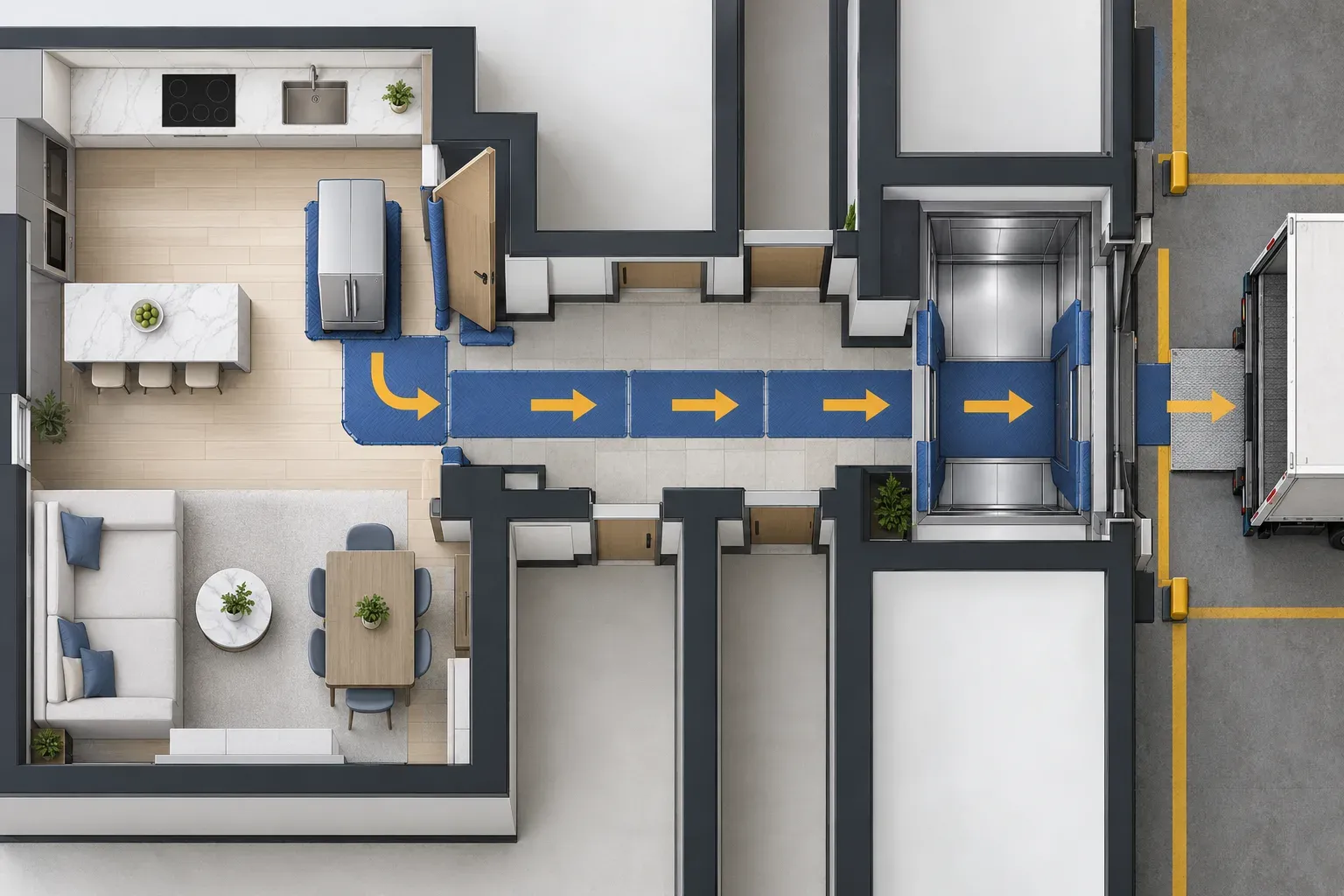
The drawing shows a refrigerator on a measured path. Use it as a reminder to record the path, not as a picture of this cooler. Your photo still has to show the drinking-water cabinet, the capped pipe, and the doorway it must pass.
In a house, the route may be a utility room, a step at the kitchen door and a driveway. Say if there are stairs, and if the cabinet is still upstairs. Do not carry it down yourself to make the booking look simpler. Say where it will be waiting.
Book the pickup only after it is free
A junk pickup once it is disconnected is the collection of the cabinet, not the plumbing. In the same message, say the supply is capped, the reservoir is empty or still holding water you could not drain, and the plug is out or there is no accessible plug. Name one unit. “Cooler” is not enough if a fridge is standing next to it.
Send three photos: the whole cabinet from the front, the capped pipe where it used to connect, and the tightest point on the route. Add the measurements. If the rear looks like a sealed cooling housing, say that and say you have not opened it. If a supplier is collecting the bottles on another day, say the bottles are not in this load.
Do not add the rest of the pantry so the job looks larger. A kettle, a microwave and a box of cups are a different list. If those are also leaving, name them. If they are staying, move them out of the frame. A room of unlike appliances, with this cooler as one line, belongs on the old-appliance register so each connection is assigned to someone.
If the cabinet is still plumbed when you write the message, you are early. Finish the cap first. A crew booked against a live pipe cannot invent a safe disconnection at the doorway, and this service does not take on plumbing by being asked to “just cut it”.
A heater that was mistaken for a cooler should come off this booking. Point the request at the water-heater guide’s sequence instead of hoping the photos will be read as a cold cabinet. A refrigerator with a door dispenser stays on the fridge guide even if you have also removed this cabinet.
On the day it leaves
Keep the capped pipe visible until the cabinet is on the way out, so nobody cuts it to “help”. Keep the floor dry. One person who knows which unit is leaving should meet the carry. Two people pointing at two different coolers is how the rented one goes and the owned one stays.
Walk the route once more: bottle cage, drip tray, filter bag, and any carton of cups you did not mean to send. Check under the sink that the cap is still the one you photographed. If it is wet, stop the carry and get the pipe seen before the cabinet moves. The cabinet can wait. An open supply cannot.
Leave the wall as the property person asked: bracket on or bracket off, holes untouched unless you were told to fill them. The collection ends when the free cabinet is loaded and the pipe you were told to leave is still capped.