An old water heater can only be collected once it is confirmed as yours to remove, disconnected by a qualified technician and fully drained. Until all three are true, it is still part of the home's plumbing and electrics, not an item waiting for pickup. Settle ownership first, then arrange the disconnection, then book the collection with photographs of the unit and the route out. Treat the empty tank like any other bulky appliance from that point: carry it out through a protected route and keep it out of shared corridors and bin rooms.
Check who the water heater belongs to
In a rented apartment or villa, the water heater is usually part of the property rather than the tenant's belongings. It is fixed to the wall, connected to the supply and listed, in many cases, in the inventory alongside the air conditioning and kitchen fittings. Removing it without permission can turn a simple replacement into a handover dispute. Read the tenancy contract and the inventory before anyone touches it, and get written approval from the landlord or managing agent if you intend to take it out.
Some buildings maintain water heating centrally or through the building's own maintenance team. Where that is the case, a faulty unit may be the building's responsibility to replace, and the old one may be collected by the same contractor. Ask building management before arranging anything privately. If you own the property, the decision is yours, but the same practical steps still apply.
Keep the landlord's approval in writing. The landlord inspection guide explains why fixtures that disappear without a record tend to cause disagreement at handover.
Identify the type of unit
The type of water heater decides who needs to be involved and how hard the removal will be. Look at the unit itself, the label on its side and the way it is mounted.
Wall-mounted electric storage tanks
This is the familiar cylinder fixed high on a bathroom, kitchen or utility-room wall, with an inlet, an outlet and an electrical connection. It is mounted on brackets or a hanging plate. Once drained and disconnected it is awkward rather than heavy, but lifting it off its brackets needs two people because it is held at head height or above.
Floor-standing tanks
Larger cylinders stand on the floor, often in a utility room, storage cupboard or plant space. They hold more water, so draining takes longer and the unit stays heavy until it is completely empty. Check the doorway and any turn on the way out, because a tall cylinder may need to be tilted to pass.
Instant and tankless heaters
Point-of-use and tankless units are small and light, but they are wired and plumbed in like any other heater. Their size makes them easy to underestimate. They still need proper disconnection, and they still belong to whoever owns the installation.
Solar and central systems
Rooftop solar heaters and systems that serve several outlets or units from a central plant are a different category. They involve roof work, pipework across the property and sometimes shared equipment. Speak to the system's maintenance contractor or a specialist installer about decommissioning, and arrange collection only for the components they have removed and released to you.
Arrange disconnection by a qualified technician
Disconnecting a water heater means working with mains electricity and pressurised water at the same time. That is a job for a qualified plumber or electrician, or for the installer fitting the replacement. Do not cut cables or pipes to free the unit, and do not rely on a removal crew to do it unless they have confirmed in writing that disconnection is part of their scope.
When you request a collection, ask directly whether disconnection is included. If it is not, book a technician first and schedule the collection after the work is finished. Leaving the question until collection day risks a crew arriving at a unit they cannot move.
A competent disconnection normally covers several stages, which you can check before the technician leaves:
- the power is isolated at the breaker, and the heater has been off long enough for the water inside to cool
- the cold-water supply to the unit is shut off
- the tank is drained completely through its drain point or outlet
- the electrical connection is made safe at the wall, not left as loose live cable
- the pipe ends are capped so that no water escapes when the supply is restored
- the unit is released from its brackets or left ready for two people to lift
Hot water is a real hazard. A heater that has only just been switched off can hold water hot enough to scald, so draining should wait until it has cooled. The technician will judge this, but avoid pressuring anyone to rush it to meet a collection slot.
Drain it before anyone tries to lift it
A storage heater that still holds water is far heavier than it looks and can slosh or leak as it is tilted. Draining is not optional. Ask the technician to empty the tank fully and to leave it in a place where any remaining drips will not damage flooring. A towel or tray under the outlet is sensible until the collection.
Old tanks can contain sediment and scale, and the last of the water may come out discoloured. Corrosion can weaken the outlet or the base. If the unit was replaced because it was leaking, mention this when you request a quote. A tank with a rusted base may drip on the way out, so wrapping the bottom or placing it on a protective sheet helps keep the route clean.
Bag any loose fittings and keep them with the unit, so nothing is left scattered on a bathroom floor.
Deal with the wall before handover
Taking a heater down leaves fixing holes, a bracket or hanging plate, and capped pipe ends behind. What happens next depends on whether a replacement is going in. If a new unit will hang on the same brackets, leave them in place and tell the installer. If the space is being left empty, agree with the landlord whether the brackets should come off and whether holes need filling.
Do not remove brackets, wall plates or sealed pipe caps on your own initiative in a rented property. They may be exactly what the landlord expects to see at the inspection, and the absence of a cap is a leak risk. Photograph the wall before and after the unit comes down so there is a record of how it was left.
If the heater is coming out as part of a bathroom or kitchen refit, the wall work belongs to the contractor's scope. The renovation waste guide covers separating fixtures and debris from the general load during that kind of project.
Plan the route out of the property
Water heaters tend to sit in tight spaces: above a bath, behind a bathroom door, inside a utility cupboard or in a laundry area off the kitchen. Measure the narrowest point between the unit and the front door, including any door that only opens partway. A drained wall-mounted tank may pass a standard doorway, while a floor-standing cylinder may need tilting, and the turn out of a small bathroom can be the hardest part of the whole job.
Clear the route before collection day and make sure the floor is dry; wet tiles and a cylinder are a poor combination.
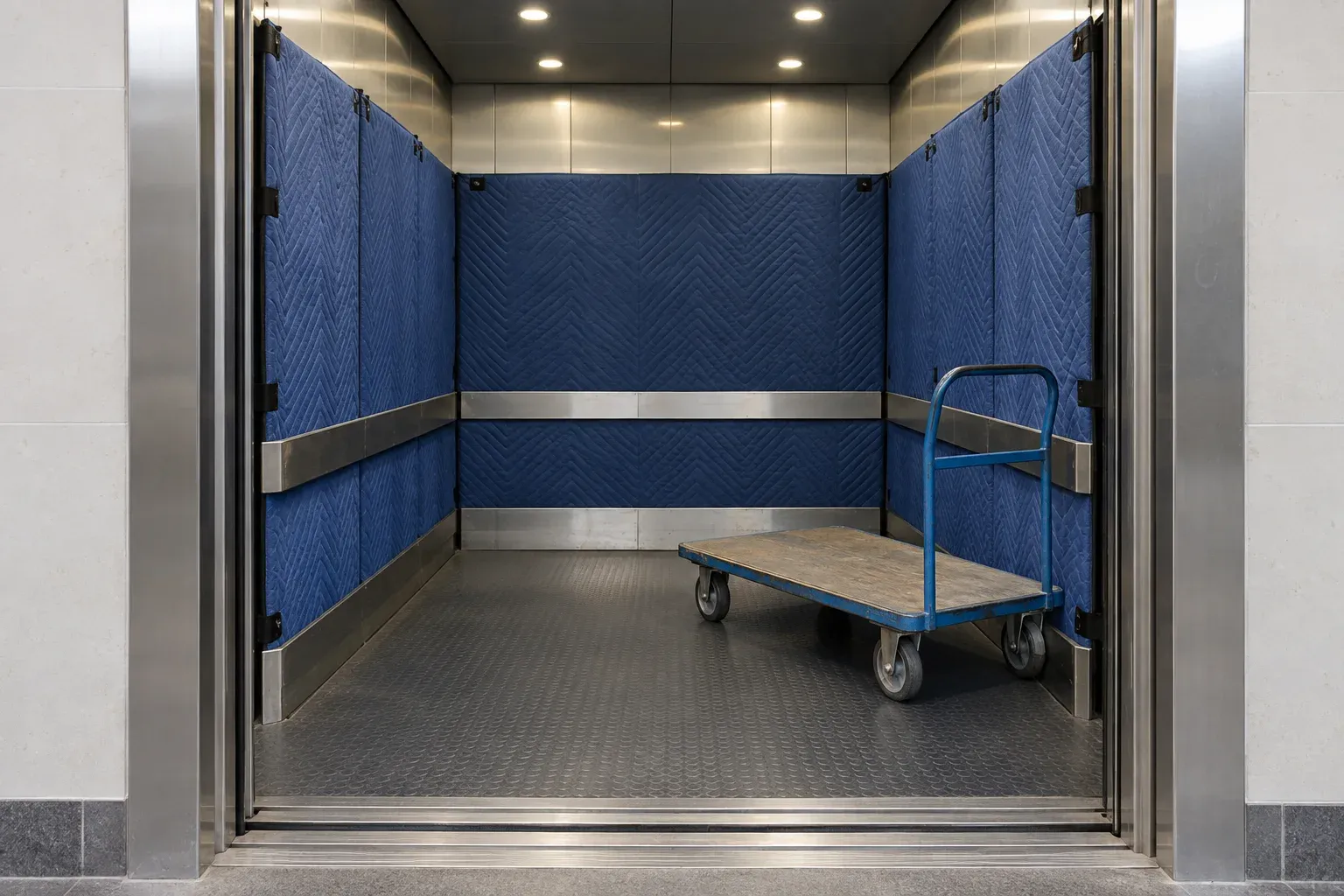
In a tower, the route continues through the corridor to the service lift and the loading area. Where a building requires a service-lift booking, a protected lift or a time window for moving appliances, find this out from management before fixing the collection time. The service lift booking guide lists the questions to ask.
In a villa, water heaters are sometimes installed in a loft space, on the roof or in an outbuilding. Do not carry a tank down a ladder or across a roof yourself. Roof and loft units need safe access, and the person disconnecting them is usually best placed to lower them to a floor where they can be carried normally. Tell the collector exactly where the unit will be waiting and whether there are stairs between it and the vehicle.
Choose a disposal route
Once the heater is disconnected, drained and released, it is an unwanted electrical appliance. Several routes may apply, and the right one depends on timing, where the unit is and whether a replacement is involved.
The installer of the replacement
If a new heater is being fitted, ask the installer or retailer whether they will take the old unit away. Some include it; others do not, or charge separately. Check the written terms of the job rather than relying on a verbal mention, and confirm whether removal means taking it off the wall, taking it out of the home, or both. If they will not take it, plan another route before the installation day so the old cylinder does not sit in the bathroom afterwards.
The Dubai Municipality bulky-waste service
The Dubai Municipality services directory lists a free service for disposing of household appliances and furniture, with a three-working-day service time, and states that investment zones are excluded. An official Municipality announcement names used electrical appliances among the bulky items it collects. Check that your address is covered and follow the current booking instructions before placing anything for collection. The Municipality bulky-waste guide explains eligibility and preparation in more detail.
This route depends on the unit already being disconnected, drained and ready at an accessible point. It does not arrange the technician or carry the heater out of a bathroom on your behalf.
A paid appliance collection
A paid crew suits a heater that is upstairs, behind narrow doors, in a tower that needs a lift booking, or that has to be gone by a fixed date. Our appliance disposal service collects old appliances with straps and a trolley, protects floors and lift interiors on the way out, and routes metal and e-waste to licensed handlers. Send photographs first so the crew can confirm the unit, its position and the access before a slot is booked, and state clearly whether disconnection has already been done.
Keep it out of shared spaces
An old water heater should stay inside the property until it is collected. Do not leave it in the corridor, beside the lift, in the bin room or next to the building's bins on the assumption that someone will take it. Dubai's waste law prohibits discarding waste in public places and in buildings, and the illegal dumping guide sets out what that covers. A drained cylinder can still drip, and a heavy object in a narrow corridor is an obstruction for other residents.
Water heaters also contain metal, insulation and electrical components, which is why they belong in an appliance or e-waste route rather than ordinary household rubbish. The e-waste guide explains how electrical items differ from general waste.
Time it around the replacement
If the old heater is being replaced, a workable sequence is: the new unit is delivered, the technician disconnects and drains the old one, the new one is installed, and the old one leaves. Decide in advance where the old unit will wait between removal and collection. A bathroom you need to use the same evening is a poor holding area for a dripping tank.
A same-day collection keeps the home clear but depends on the installation finishing on time. If a building service-lift booking is needed for both the new delivery and the old unit's removal, ask whether one booking can cover both movements.
If other appliances are leaving at the same time, list them in the same request; the washing machine removal guide and the old AC unit guide cover the preparation those need.
What to send when you ask for a quote
A clear request lets the collector confirm the job without guessing. Include:
- a photograph of the heater as installed, showing how it is mounted
- a photograph of it after removal, if it is already off the wall
- the type: wall-mounted tank, floor-standing cylinder, instant unit or part of a larger system
- the capacity or model label, if it is visible
- whether it has been disconnected and drained, and by whom
- whether it leaks or has visible corrosion
- the room it is in, the floor level and any stairs or narrow turns
- lift access, any service-lift booking requirement and parking for the vehicle
- any other appliances or items leaving at the same time
- the date by which it must be gone
State the landlord's approval if the home is rented. It answers the ownership question before anyone asks it.
Mistakes that delay water heater removal
Booking the collection before arranging the disconnection is an easily avoided problem: the crew arrives, the unit is still wired and full, and the visit achieves nothing. Assuming the installer will take the old unit leaves a similar gap if the written terms do not say so. Removing a landlord's heater, brackets or pipe caps without permission creates a handover problem no collection can fix. Describe a roof, loft or narrow-bathroom position exactly, so the right access and help are arranged.
Once the heater has gone, check the wall, the floor beneath where it hung and the pipe caps, and photograph the space for your records.
Questions about water heater removal
Can a removal crew disconnect my water heater?
Only if they confirm that disconnection is included in their scope. Otherwise, arrange a qualified plumber or electrician to isolate the power, shut off the water and drain the tank before the collection.
My water heater is in a rented flat. Can I replace it myself?
Check the tenancy contract and ask the landlord or managing agent first. The heater is usually part of the property, and some buildings handle replacements through their own maintenance team.
Does the tank need to be completely empty?
Yes. A storage heater that still holds water is much heavier, can leak on the way out and is unsafe to lift. Ask the technician to drain it fully and leave it to finish dripping before collection.
Can I put an old water heater by the building's bins?
No. Keep it inside the property until it is collected through the Municipality's bulky-waste service, the installer or a booked appliance collection.
What about a solar water heater on the roof?
Rooftop and central systems need a specialist to decommission them safely. Arrange that work first, then book collection for the parts that have been removed and brought down.