A duvet that will not go down the chute is a bulky soft load, and so is the pillow stuffed in beside it. Open the bags, count what is actually in them, and keep that bedding out of the chute and out of a mattress wrap. The bins page already says what a chute is for. This page is only the bedding.
A booking that says “some bags” will be read as ordinary rubbish. If the bags are full of duvets, the note has to say bedding before anyone plans the carry or the space on the vehicle.
Open the bag before you name it
Tip the bag, or open it wide enough to see the layers. A sack that lived on a wardrobe shelf can hold a duvet, two pillows, a mattress topper, a set of curtains and a winter coat. Those are different lines. “Bedding” is a heading, not a permission to leave the bag shut.
Write three counts: duvets, pillows, and everything else. If you cannot fill the counts, you have not looked. A vacuum bag that is still sealed hides the volume. Open it. The size it was compressed to is not the size it will be once the seal is broken, and it is not a promise that it will stay flat on the day.
Read any label you can see. A single, a double and a king are different folds, and a protector or a topper is not a duvet because it was stored in the same cover. Say what the label says. If there is no label, say “no label” and describe the fold: a thick quilt, a thin blanket, a pair of pillows.
Clothes in the same bag are not bedding. Put wearable clothes aside until you have decided they are leaving too. A coat in a duvet bag will be carried as a duvet unless you take it out. This page does not sort a wardrobe. It stops the wardrobe being hidden inside the bedding.
Children’s bedding, a cot duvet and a bed duvet can leave together only if you have named both. A small item in a large bag is easy to miss, and easy to leave behind in the cupboard you thought was empty.
Keep the bedding off the mattress
If a mattress is also leaving, the mattress has its own route. Wrapping, the doorway and the bed it came off are the mattress guide. Take the duvets and pillows off the mattress before that wrap goes on. A fitted sheet is not a bag for spare quilts, and a quilt strapped to a mattress changes the size the mattress guide just measured.
Bag the bedding on its own. If the bags are the whole job, and the mattress is staying, you do not need the mattress page at all. If both are leaving, say so as two lines. Same room is not same item.
Do not roll the pillows into the mattress cover to “save a bag”. The person carrying the mattress cannot see the pillows, and the pillows have no edge to hold. They also fall out at the first turn.
A bed frame, a headboard and a set of slats are furniture. They are not made into bedding by a duvet draped over them. Name the frame on its own line or leave it out of this booking. This page will not tell you how to dismantle a bed.
Sheets you are keeping should come off the pile before the photo. A wide photo of a bed will be read as the bed leaving. If only the spare duvets are leaving, fold the sheet you use tonight and put it where the photo does not include it, or point at it and write “sheet stays”.
The chute is already explained elsewhere
The bins guide is the page for what a household bin and a chute are meant to take, and for the materials that guide keeps out of a recyclables container. It already says a chute is for bagged household waste, and that anything which does not fit comfortably in a normal bag does not belong in it. This page does not add a fine, a building rule or a second copy of that guide.
If the duvet will not fit the chute, stop. Do not fold it tighter and try again. A quilt that jams is a blockage, and the pillows behind it are still in the flat. Do not post one pillow as a test. A pillow that goes down does not make a duvet acceptable, and it does not empty the shelf.
Do not leave the bags in the bin room, beside the chute or in a lobby because they would not fit. Those places are shared. Unless the building has told you a bag may wait there, the bags stay in the home until they leave with the visit you booked.
A clothing route named on the bins page is for clothing. A bulky duvet is not a shirt. Do not relabel the bag as clothes to make it sound like a drop-off you have not checked. If you are unsure a textile point takes quilts, ask that point, or keep the quilts on this list. This page does not invent a place that accepts them.
The acceptance list for a mixed clearance, including the line that bulky duvets and pillows can leave with a household load, is what the crew takes. That page is the inventory of categories. This page is the preparation of one soft load that will not fit a chute. Do not copy the whole acceptance list into the booking. Name the bedding you have actually counted.
Dry, damp and dirty are facts, not a wash cycle
Say what the bedding is like. Clean and dry is one description. Damp is another. Stained, torn or stored for years in a balcony cupboard is another. The person who lifts the bag needs the truth, because a wet quilt is heavier and it marks the other bags.
Do not wash a duvet on the morning of the collection to make it “ready”. A machine that has not finished, and a quilt that is still wet, is a different object from the one in the photo. If you have already washed it, wait until it is dry or say that it is damp. Do not bag a wet quilt and hope it is not noticed.
If you do not know whether the fill is feathers or synthetic, say you do not know. Do not cut the cover to check. A cut cover spills fill through the stair, which is the same problem as a split bag of beads. Leave the cover intact.
A smell you notice is worth one plain sentence: “stored on the balcony” or “damp when I opened the bag”. Do not diagnose mould, and do not claim a treatment. If you would not put your face against it, say that it is not clean and keep it in its own bag, separate from the bags you would still call dry.
Pests are a fact only if you can see them. If you can, say so and do not shake the bag out in the hallway. If you cannot, do not add the word because the cupboard felt old. An invented condition is as useless as a hidden one.
Protectors, mattress toppers and thin blankets can share a bag with each other if you have named them. They should not share a bag with a duvet you have not counted. The topper is often the heavy piece. A bag that looks soft and lifts like a wet sandbag is usually a topper or a damp quilt you did not mention.
Bag them so a person can lift them
Several bags you can carry are a different job from one sack nobody can get through the door. Fill each bag so the top still closes and you can hold it without dragging it. A bag that scrapes the floor will split, and a split bag of pillows is a scatter.
Do not force two king duvets into a sack meant for a single. Fold one duvet, bag it, and start the next bag. Tie the neck. A loose corner hanging out will catch a door and pull the rest with it.
Pillows can go in their own bag. They shift. A mix of pillows and a single heavy duvet makes the heavy piece slide. If you only have one bag large enough, put the duvet in it and carry the pillows in a second, smaller bag. Write both on the note.
Vacuum bags that you opened should not be resealed unless you know they will hold. A bag that hisses open on the stair becomes the full size in the worst place. Prefer a simple tied bag whose size you can see.
Keep the bags off a bed you are still using, once you have counted them, so they are not remade into the bed. Put them in the room they will leave from, not back on the high shelf. A shelf you cannot reach on the day is a bag that does not leave.
Label them. “Duvets — 2” and “Pillows — 4” are enough. A label that says “rubbish” will be treated as rubbish you did not count.
Curtains, a rug and a pile of towels are not duvets. If they are leaving too, give them a line and a bag of their own. A rug rolled inside a duvet bag is a weight and a length the photo will not show. The acceptance page already separates rugs from bedding. Follow that split in the bags, even when both will go on the same visit.
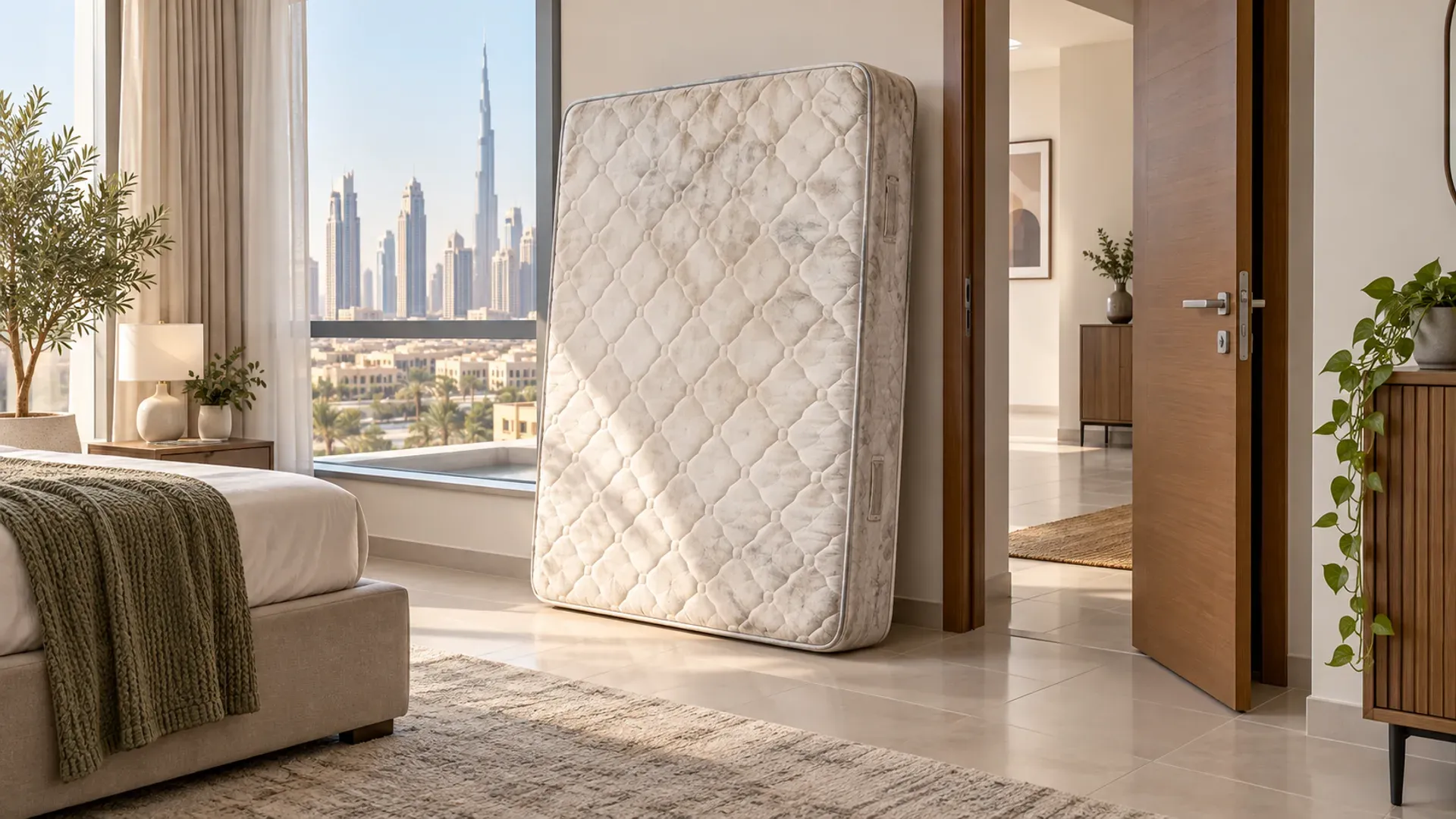
The picture is a mattress by a bedroom door. It is not a bag of duvets or pillows, and it is not a chute. Use it only as a picture of soft bulky bedding’s neighbour: a mattress is a different object and a different page. Your photos still have to show the open bags.
What else was in the cupboard
The shelf that held the duvets often holds other things you meant to decide later. A spare blanket, a bag of clothes, a boxed gift and a suitcase are four decisions. Make them before the photo, or the photo will make them for you.
A suitcase you are keeping should be closed and moved off the pile. A suitcase you are sending should be empty of documents, medicine and anything you still need, and it should be named as a suitcase. Do not fill it with pillows and call it bedding. The frame of a suitcase is a hard object inside a soft load.
Hangers, a storage box and a torn carton are not bedding either. Leave them out of the duvet bags. If the carton is part of a move, it belongs with the packing sort, not in this note.
If the bedding belongs to someone who has not agreed it can go, leave it. A flatmate’s quilt, a landlord’s spare and a guest’s pillow are not yours because they were on your shelf. Ask, and keep the answer. If you do not have an answer, the bag stays out of the booking. Write “not released” rather than hoping the question will not be asked on the day.
Children’s soft toys mixed into the pillow bag should come out unless you have decided the toys are leaving. A toy is easy to regret, and it is not a pillow. This page does not tell you what to keep. It tells you not to hide the choice inside a tied sack.
Photograph the open bags
Send three photos.
The first is the bags closed and labelled, with a doorway or a bed edge in the frame so the size is clear. A photo of a cupboard door does not show the load.
The second is one bag opened so the duvet and the pillows can be told apart. You can close it again before it is carried. The open photo is the proof of the count.
The third is the place they will leave from, and the door. If a chute, a bin room or a lobby is in the photo, say that the bags are not to be left there. The photo is the route inside the home, not a suggestion to stage them in the common area.
Add the counts in the same message as the photos: how many duvets, how many pillows, what else, and whether any bag is damp. A count without a photo will be read as a guess. A photo of a closed black sack without a count will be read as one sack.
If a mattress, a bed or a wardrobe is in the room and is not leaving, say “stays”. If it is leaving, name the other page that prepares it, and do not let this note swallow it.
Write the floor in ordinary words. A villa ground floor and a tower bedroom are different carries. If you have a lift instruction, copy it. If you do not, write “no lift instruction yet”. Do not turn one building’s rule into a rule for the next.
Book the bedding on its own
A rubbish pickup for the bedding is the booking once the counts are real and the bags are in the room. This is the soft load that will not fit a chute. It is not a clearance of the bedroom, and it is not a mattress collection unless you have named the mattress separately.
In the message, say:
- the counts of duvets and pillows
- what else is in the bags, or that the bags are only bedding
- whether any bag is damp, torn or stored somewhere dirty
- that the bags are a size you can lift, and how many bags
- that they will not fit the chute, and that you have not put them in it
- whether a mattress or a bed is a separate list or is staying
- anything you are not sending that was in the same cupboard
- the floor and the door, and any lift note you already have
Do not write “bags of rubbish” as the only line. Name the bedding. A single overfilled sack is not the same as four bags you can carry, and the note should say which one you packed.
If you have not opened the bags, you are early. Open them first. A collection booked against a sealed shelf cannot know what is inside it.
The bins guide remains the chute and the containers. The mattress guide remains the mattress. The acceptance page remains the wider list of what a household load can include.
On the morning it leaves
Leave the labelled bags where the photos showed them. Do not rebuild the bed with the spare duvet because the room looked bare. Point at the sheet, the mattress or the clothes you are keeping so they are not picked up with the spare quilts.
Walk once to the door. A laundry rack, a suitcase you are keeping and the empty cupboard door can block the turn. Move them. Do not stack the bags in the corridor to save space in the bedroom unless the building has said that corridor may hold them.
If a bag has split overnight, rebag it before anyone lifts. Loose fill and loose pillows are the delay. Do not kick the fill into a corner and hope it is included. Put it in a bag and say the count has not changed, or that it has.
Check the cupboard after the bags have gone. The second duvet under a hat box is a new list if it is still there. Do not describe it as part of the visit that already left. A closed cupboard you did not open is how that second duvet appears.
The fact that makes the visit match the room is the count you wrote with the bags open: duvets, pillows, and nothing else tied in with them.