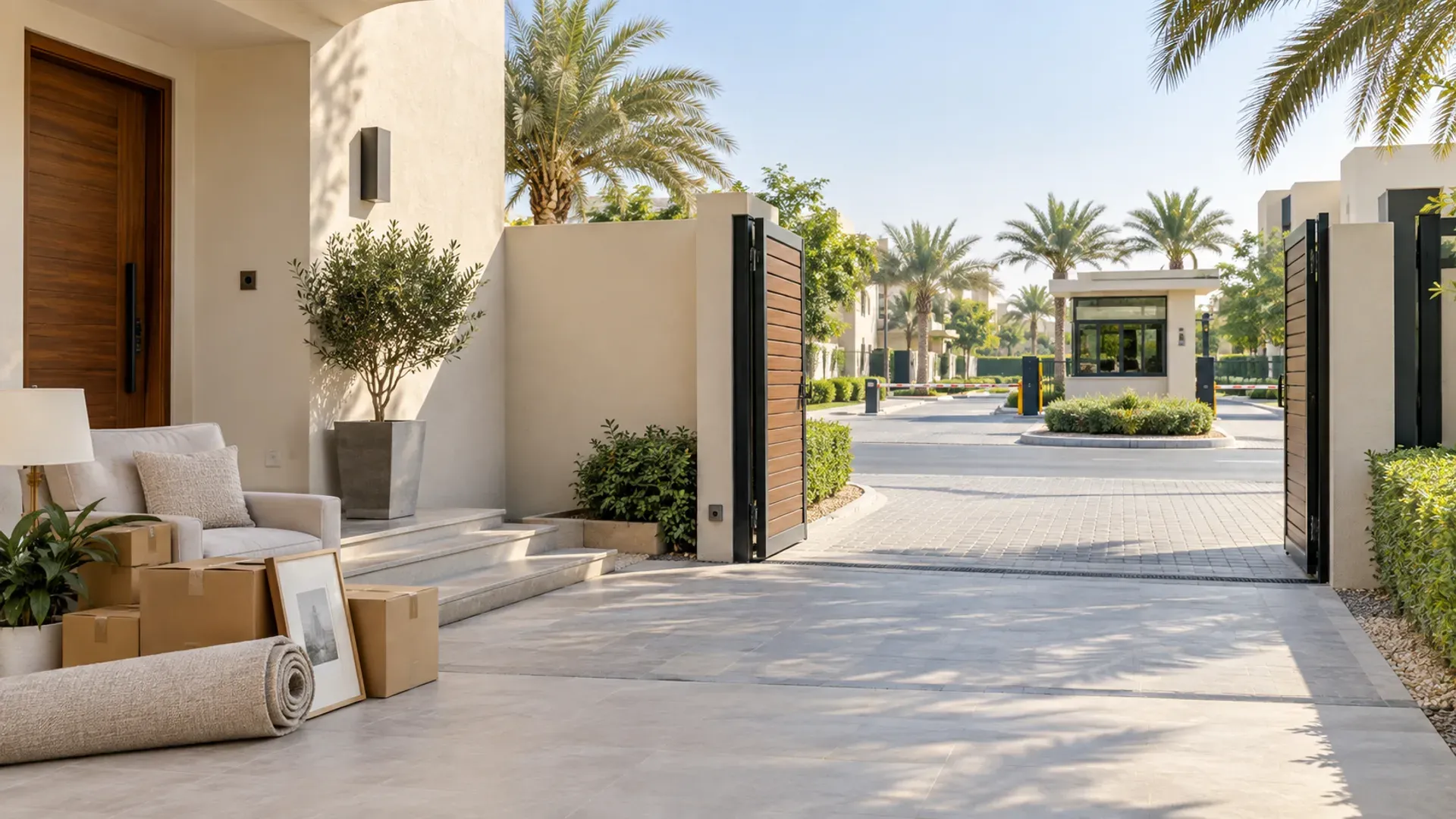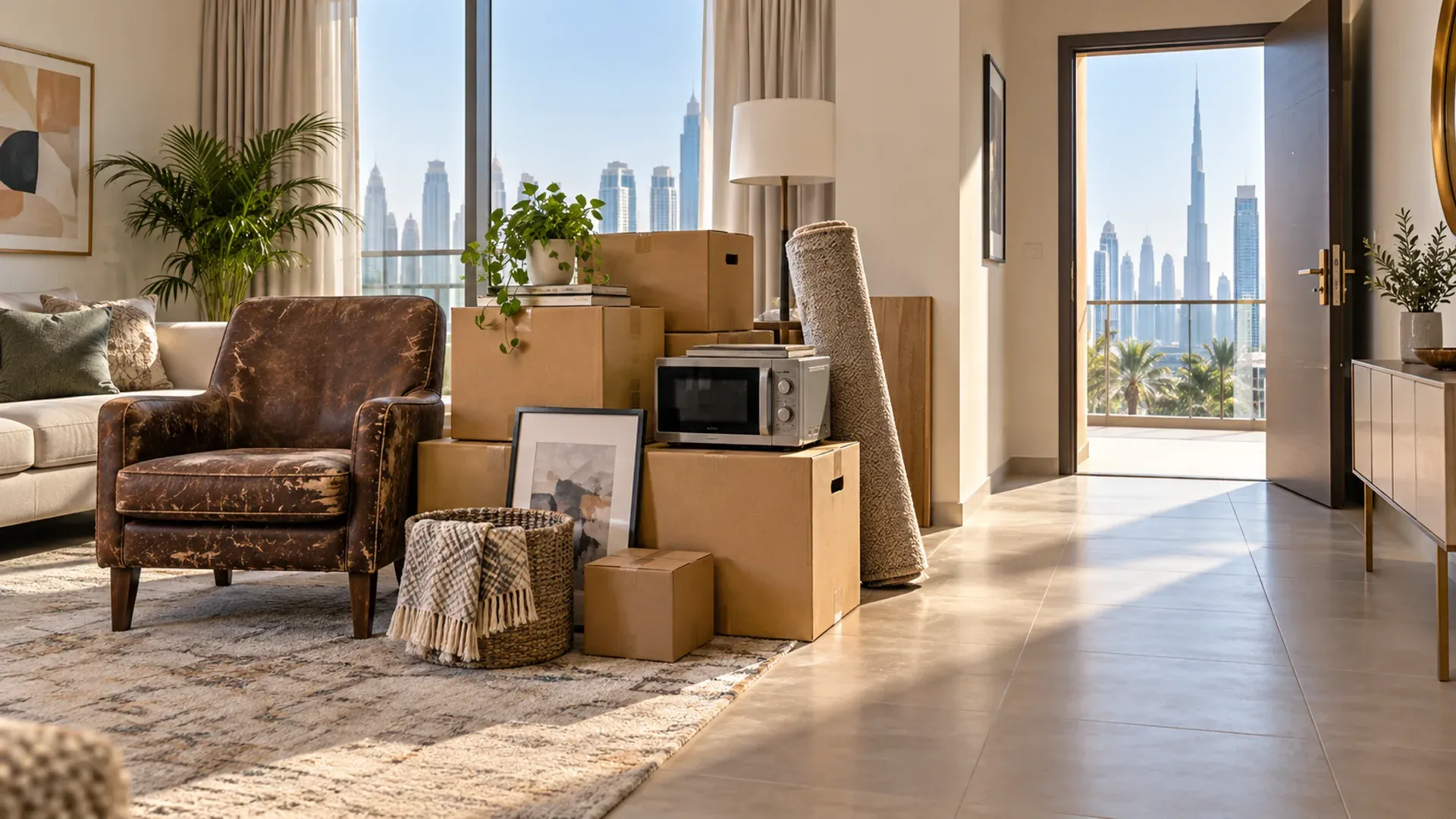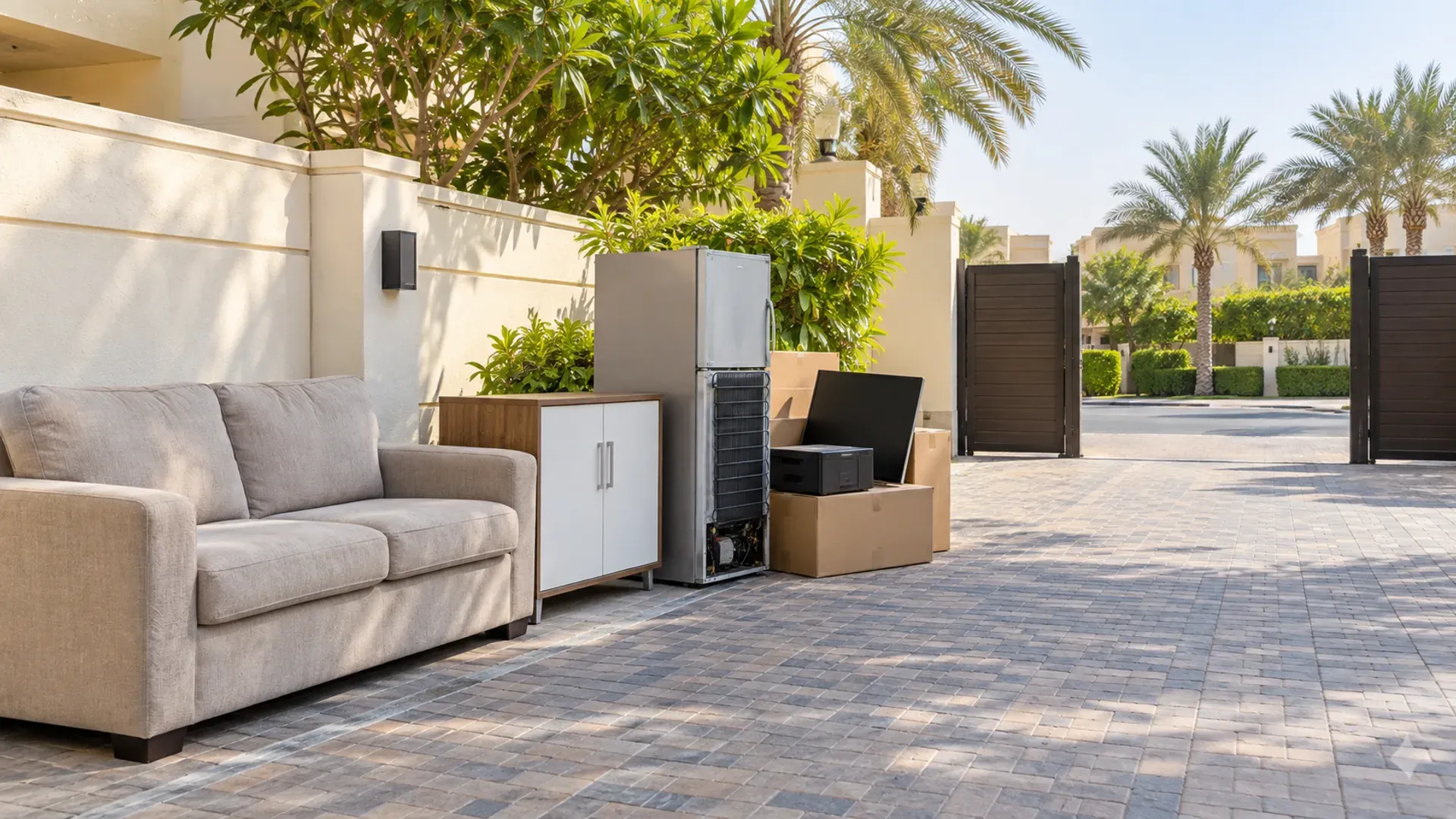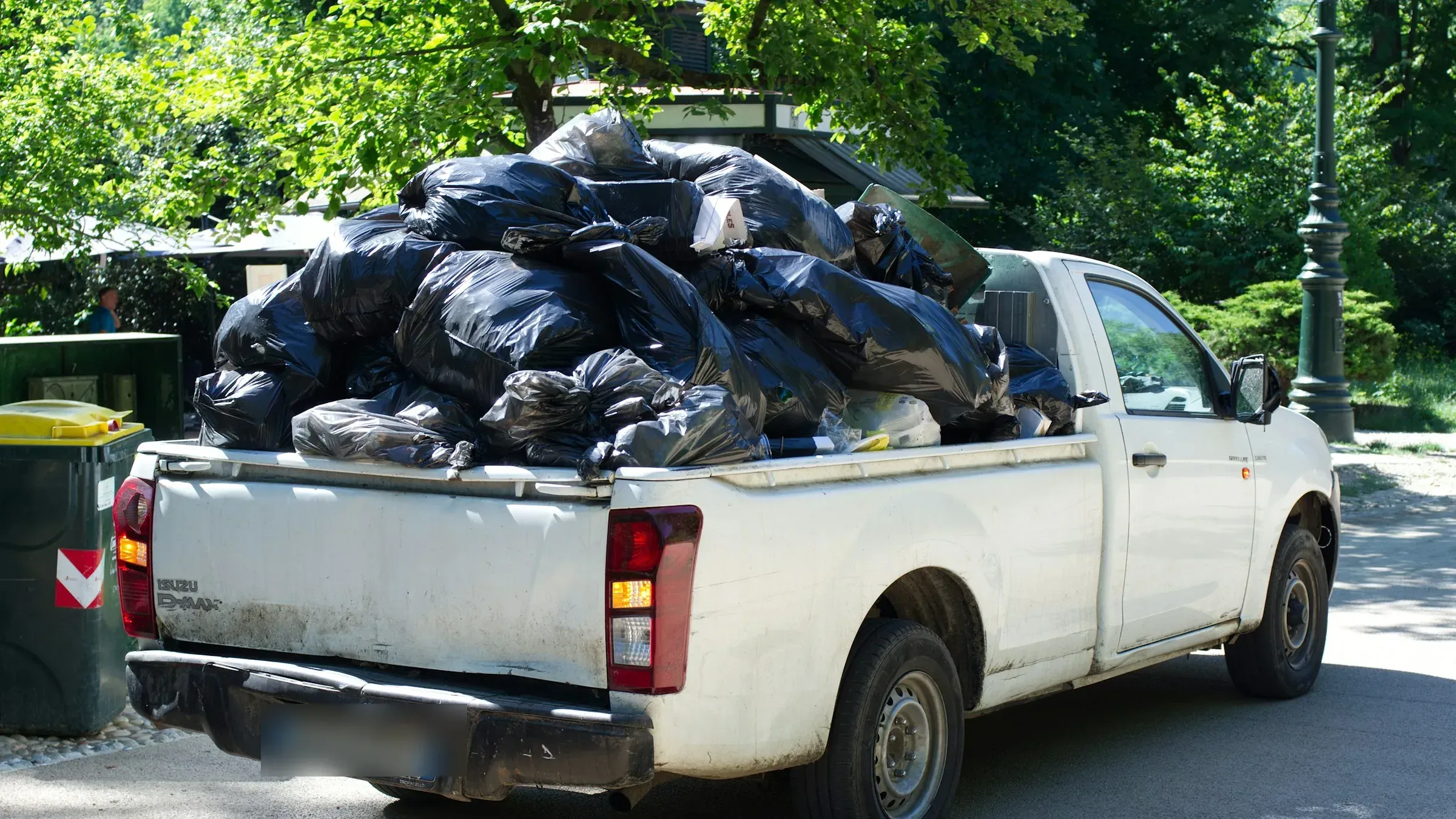
Dubai’s household bins are for everyday general waste and sorted recyclables, not for furniture, electronics, batteries, chemicals or gas cylinders. Dubai Municipality’s Waste Segregation Guide sends each of those to its own route, from the bulky-waste programme to Smart Sustainability Oasis drop-off points and approved specialist companies. Knowing which item goes where keeps the bin room usable and keeps you on the right side of the rules.
How the bin system is meant to work
Dubai Municipality’s Waste Segregation Guide applies to commercial, residential, industrial and institutional waste producers, and names villas, residential buildings and residential complexes among them.
It sets a minimum “three bins” system:
- a green container for recyclable dry mixed materials
- a black container for the remaining non-recyclable general waste
- a brown container for organic waste
Where bags are used instead, the guide calls for at least two: a black bag for general waste and a clear bag for recyclables.
The guide’s colour table marks organic waste as “for future implementation”, so not every building will have a brown container yet. Follow the containers and signage your building actually provides.
Everything this article covers sits outside those containers. If you are asking what you can’t throw in Dubai bins, the short answer is anything bulky, electronic, hazardous or pressurised.
Furniture and large appliances
Why they don’t go in the bin
A sofa, mattress, wardrobe or fridge does not fit a household container, and forcing one in or leaving it beside the bins blocks the area for everyone else. Article 6 of Law No. (18) of 2024 Regulating Waste Management%20of%202024%20Regulating%20Waste%20Management.html) prohibits dumping materials that may damage a waste container or a waste transport vehicle, and prohibits accumulating or discarding waste in buildings and public places.
Where they go instead
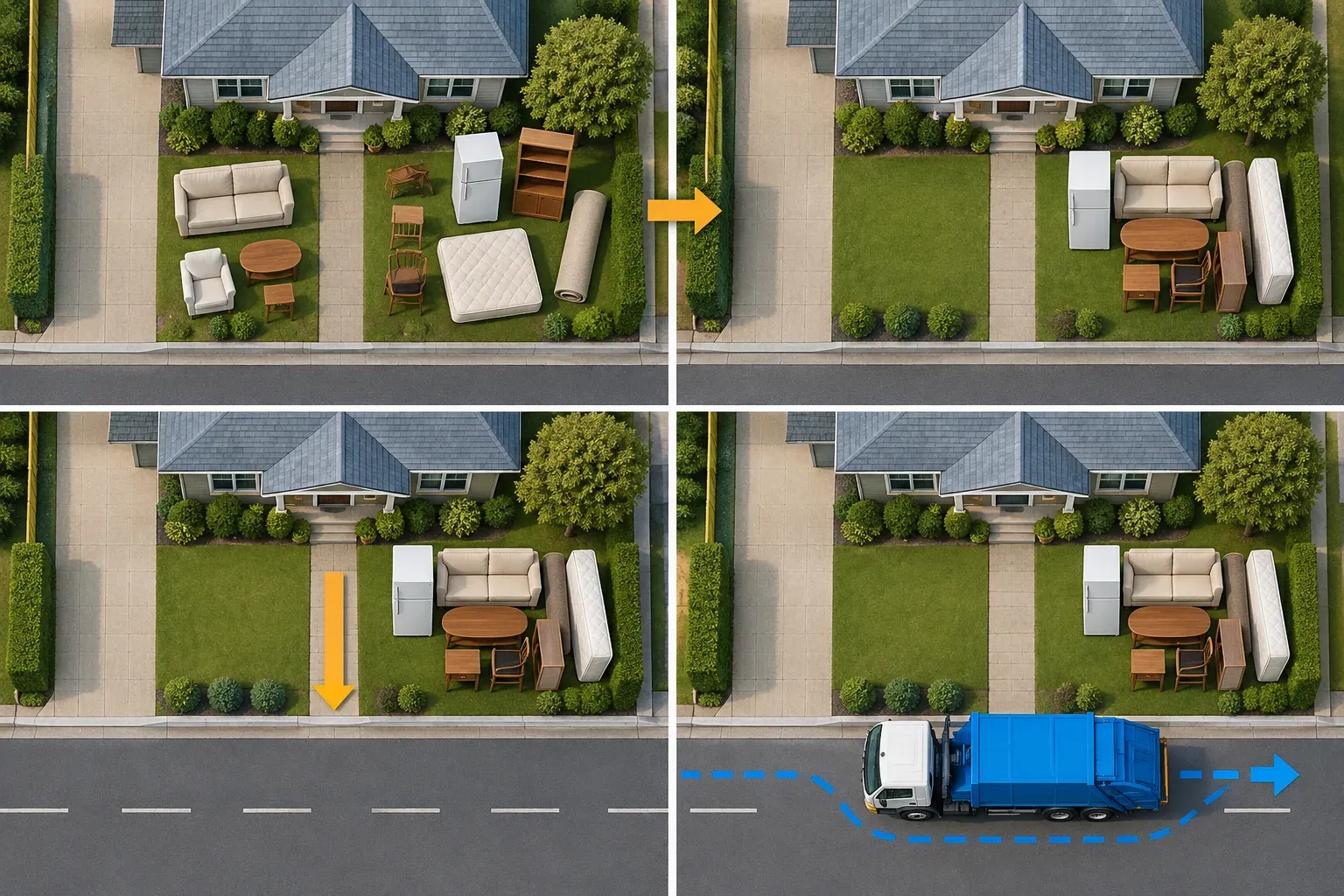
The Waste Segregation Guide states that furniture and white goods can be managed through the Municipality’s bulky-waste collection programme, and gives the hotline 800-900.
The Dubai Municipality services directory describes that service as free, with a published service time of three working days, and excludes investment zones. The official bulky-waste service guide explains eligibility and preparation in detail.
Until the collection is confirmed, keep large items inside the property. Leaving them by the bins is not a holding arrangement; the dumping fines guide sets out the legal position.
Electronics, batteries and lamps
Electronics
Phones, laptops, chargers, cables, small appliances, monitors and televisions are electronic waste. The Waste Segregation Guide directs households to place them at a Dubai Municipality Smart Sustainability Oasis, or to contact an approved e-waste processing company.
Batteries and lamps
The guide gives batteries and lamps the same two routes. Keep loose batteries together in a closed container rather than in a bin bag, and never crush or puncture them.
Where the drop-off points are
The guide lists Smart Sustainability Oasis centres at Al Twar Center, the Quranic Garden in Al Khawaneej, Mirdif Park and Nadd Al Hamar Park, and refers readers to the Municipality for others. The e-waste disposal guide covers preparing devices, wiping data and choosing between routes.
Hazardous and pressurised items
Paint, pesticide and chemical containers
The Waste Segregation Guide states that for paint and pesticide containers, a household or individual may contact an approved hazardous waste collection and processing company. It also lists metal containers for chemicals such as white spirit, paints or engine oils, and plastic bottles containing chemicals, as non-recyclable, so they do not belong in the recyclables container either.
Keep leftover paint and chemicals in their original, closed containers. Do not pour them into drains or decant them into food or drink bottles.
Gas cylinders and fire extinguishers
The guide lists fire extinguishers and Freon, LPG, oxygen, helium and neon cylinders among non-recyclable metal items. Pressurised cylinders should never go in a household bin or a compacting truck. Ask the supplier or an approved specialist company how to return or dispose of them.
Aerosol cans
The guide notes that aerosol cans may need special handling and depressurisation, and lists them as non-recyclable in the metal stream. Do not pierce them.
Medicines, oils and anything you cannot identify
Medicine strips are listed among non-recyclable plastics, and used oil has its own collection companies in the guide’s list of specialist operators. If you cannot identify a substance, do not guess: keep it sealed and ask an approved hazardous waste company.
What the recyclables container won’t take
The green container is for clean, dry recyclable materials. The Waste Segregation Guide lists items that look recyclable but are not accepted in that stream. A selection:
Paper and cardboard
Used paper towels, tissues, kitchen paper, paper cups and plates, wax or parchment paper, laminated or glittered gift wrap, and soiled or oily paper. Cardboard contaminated with food or coated with plastic, such as some take-away boxes, is also excluded.
Plastics
Polystyrene cups and plates, bubble wrap, packing foam, crisp and sweet wrappers, laminated food pouches, plastic toys, medicine strips, toothpaste tubes and plastic bottles that held chemicals.
Metal
Aerosol cans, metal containers for chemicals or engine oil, gas cylinders, fire extinguishers and vehicle oil and air filters.
Glass
Glass cookware such as oven dishes, drinking glasses, vases, ceramics and crockery, nail varnish bottles, microwave plates and fibreglass. Glass bottles, jars and non-food bottles such as perfume bottles are recyclable; the items listed here are not.
The guide also asks that recyclables be emptied and rinsed, crushed where possible, with lids replaced, and that food contamination be removed from boxes. Anything excluded from the recyclables stream goes in the general waste container, unless it falls into one of the special categories above.
Clothing and textiles
The Waste Segregation Guide directs clothing to a Smart Sustainability Oasis, or to approved organisations and companies. Clean, wearable clothing and textiles have a route of their own; they do not need to go in the general bin.
Garden waste and building material
Garden waste
Palm fronds, branches and large volumes of cuttings are a different stream from household waste. Municipality guidance classifies horticultural waste separately. Keep it out of household containers and confirm the route for it on its own terms. The palm frond guide covers the practical side.
Renovation and fit-out material
Tiles, plasterboard, timber offcuts, sanitaryware and similar material are not household waste. The guide sets separate container colours for construction and demolition sites. Ask whoever carries out the work how the material will be removed, and do not leave it in a residential bin area.
Responsibilities in a building
What the building provides
The Waste Segregation Guide expects waste producers, including residential complexes, villas and residential buildings, to provide enough properly coloured and labelled containers, with signage in Arabic and English.
The guide lists fines for non-compliance by organisations and complexes, including AED 5,000 for failing to provide compliant storage containers and AED 1,000 for not following the competent department’s directions to replace containers when waste exceeds their capacity. It notes that these are not the only fines concerning non-compliance.
What residents do
Use the containers provided, for the materials they are labelled for. Bag general waste properly. Keep recyclables clean. Take everything else to its own route rather than leaving it beside the bins.
If your building has a designated area for bulky items, use it only with management’s permission and within its conditions.
If the containers are full or the wrong type for what you have, tell building management rather than leaving waste beside them. The guide expects containers to be replaced or increased when waste outgrows them, and management can only act on problems it knows about.
Kitchen waste and cooking oil
Food waste
Food scraps belong in general waste unless your building provides a separate organic container. The guide’s brown container for organic waste is marked for future implementation, so follow your building’s signage. Bag food waste securely so it does not leak or attract pests, and never put it in the recyclables container: the guide asks that food contamination be removed from recyclable boxes and packaging.
Used cooking oil
Do not pour cooking oil down a sink or into a bin bag where it can leak. Let it cool, keep it in a sealed container and ask about a collection route. The guide’s list of specialist operators includes used oil collection companies.
Bagging and bin-room practice
How waste is presented matters as much as what it is.
Tie and size bags properly
Tie general waste bags closed and do not overfill them. A split bag in a chute or bin room makes a mess for everyone and for the collection team.
Keep recyclables loose or in clear bags
Where your building uses bags for recyclables, the guide calls for clear bags, so the contents can be seen. Flatten cardboard so it takes less space.
Use chutes for what they are designed for
A rubbish chute is designed for bagged household waste. Glass, heavy items, sharp objects, electronics and anything bulky can block or damage it. If an item does not fit comfortably in a normal bag, it does not belong in the chute.
Keep the bin area clear
Bin rooms and collection points are shared spaces. Leaving boxes, furniture or equipment on the floor obstructs residents, cleaning staff and collection crews.
Sorting during a clear-out
A move-out, renovation or big declutter produces far more than a normal week. Sort as you go rather than at the end.
Set aside separate areas for general waste, recyclables, electronics, hazardous items and bulky items. Label boxes clearly. Book the bulky-waste collection or a paid removal early, and plan a drop-off trip for electronics and batteries.
The pre-arrival checklist covers preparing a home before any collection team arrives.
When paid removal helps
Some items fall between routes or need labour: a sofa on the twelfth floor, a garage of mixed boxes, broken flat-pack furniture or a move-out with a deadline. Paid removal can collect a mixed load in one visit once each item’s acceptance is confirmed.
The junk removal service quotes from photos and covers labour, loading and disposal. It does not accept hazardous chemicals, paint solvents, gas cylinders or medical waste, which need the specialist routes described above.
Quick sorting checklist
- General food and household waste: black container or black bag.
- Clean, dry paper, cardboard, bottles, cans and jars: green container or clear bag.
- Furniture and white goods: Municipality bulky-waste programme or paid collection.
- Electronics, batteries and lamps: Smart Sustainability Oasis or approved e-waste company.
- Paint, pesticide and chemical containers: approved hazardous waste company.
- Gas cylinders and fire extinguishers: supplier or approved specialist.
- Clothing: Smart Sustainability Oasis or approved organisations.
- Garden and renovation waste: their own routes, never the household bin.
Keep the source date visible
The guidance in this article was checked on 2 October 2026 against Dubai Municipality’s Waste Segregation Guide, its services directory and the Dubai Legislation Portal. Container systems, drop-off locations and accepted materials can change, so the current official guidance and your building’s own signage control.
Dubai’s bins handle everyday waste and clean recyclables. Furniture, electronics, batteries, chemicals, cylinders, garden waste and building material all have routes of their own. Sort each item into the right route before it leaves your home, and nothing needs to be left beside the bins.
Questions about Dubai bins
Can I leave an old sofa next to the building bins?
No. Furniture belongs in the Municipality’s bulky-waste programme or a paid collection. Leaving it by the bins can block the area and may breach the prohibitions in Article 6 of Law No. (18) of 2024.
Can batteries go in the recycling bin?
No. The Waste Segregation Guide directs batteries and lamps to a Smart Sustainability Oasis or an approved e-waste processing company, not to household containers.
What do I do with leftover paint?
Keep it sealed in its original container. The guide says households may contact an approved hazardous waste collection and processing company for paint and pesticide containers.
Why is my takeaway box not recyclable?
The guide excludes plastic-coated and food-contaminated cardboard from the recyclable stream. Remove food, and if the box is coated or soiled, put it in general waste.
My building only has one type of bin. What should I do?
Use what your building provides and ask management about its plans for segregated containers. Keep bulky, electronic and hazardous items out of every household container regardless.