A bicycle is ready for collection when you can name each bike, show where it is stored, and measure it against the actual route out. A folding bike in a hall, a child’s bike on a balcony and two adult bikes in a basement cage are different jobs. A treadmill or a weight bench is a different job again. Count the bikes first. Do not book “some bikes” and leave the locks, seats and batteries to be discovered at the door.
Write down the number, the type and the room or store. A photo of one bike does not describe the others leaning behind it.
List each bicycle on its own line
Walk to the place the bikes actually are. That may be a villa garage, an apartment balcony, a maid’s room, a hall cupboard or a storage cage away from the flat. List each machine separately: adult, child, folding, cargo, or a bike with a motor. Add a trailer or a tag-along only if it is leaving too.
Photograph each bike from the side so the length and the handlebar width are visible. Add a closer view of a bent wheel, a missing pedal, a cracked frame or a child seat. If bikes are tangled together, separate them enough for the photos before you ask for a quote. A pile reads as one object and travels as several.
Note the brand and frame size only if the label is readable. The collector needs the shape and the condition more than a catalogue name. Say if a wheel does not turn, if the handlebar is loose, or if the bike cannot stand up.
If a bike is being passed to a named person, that transfer is finished only when the person has collected it. Until then it is still in your space and still needs a fallback on the removal list. Do not hold the rest of the clearance for an unanswered message.
Take off what is not part of the frame
Remove baskets, pumps, lights, bottles and bags that you are keeping. A basket left on the bars makes the bike wider than the frame. If those pieces are leaving too, bag them and write the bag on the inventory so they are not lost as loose scrap.
Child seats, training wheels and stabilisers should be named. Leave a seat fitted if you cannot release it without damaging the rails, and say so. Do not leave a loose seat swinging from a strap.
Look at the pedals and the handlebar ends. They are the parts that catch on a door and on a lift frame. If a pedal comes off with a normal tool and you can keep the bolt, you may remove it and bag it with the bike. If it is seized, leave it and mention it. Forcing a seized pedal can leave a sharp spindle.
Deal with the lock before the day
A lock that is closed around a wheel, a frame or a basement rail is part of the job. If you have the key or the code, open the lock and keep it with your own keys if you still need it. If the lock is seized, cut only if you are allowed to and you can do it safely. Otherwise photograph the lock and say the bike is still secured.
Do not ask a collection crew to break a lock whose owner is unclear. A bike locked to a building rail may not be yours to remove. If the bike might belong to the building, a neighbour or a previous resident, leave it locked until the person responsible confirms it can go.
A chain or D-lock that you have opened should not stay looped through the wheel. It will jam the lift door and the garage gate. Bag it or fit it so it cannot swing.
Declare a motor, a battery and a charger
Some bikes have a battery on the frame, under the rack or inside the downtube, plus a charger and a key. Photograph those parts. Tell the provider the bike has a motor before the visit. Do not pack the battery inside a carton of other goods and do not tape over the casing so it looks like a normal frame.
The acceptance notes for this service list ordinary bicycles with household fitness items. They also exclude loose automotive batteries and treat some battery packs as items to identify rather than to hide. A motor bike’s battery is one of those items to identify. Ask whether that battery is accepted with the bike. If the answer is no, remove it through the route the provider or the seller describes, and leave the bike’s status clear. Do not invent a drop-off and do not put the pack in a residential bin.
A charger, a spare key and a display should be bagged and labelled if they are leaving with the bike. If you are keeping the charger, take it out of the cage or the garage so it is not loaded by mistake.
A petrol mini-bike, a quad or a motorbike is not this job. Those machines involve fuel and a different assessment. Say what the machine is. Do not list it as a bicycle because it has two wheels.
Measure the bike against the real opening
Measure the length and the handlebar width of the largest bike. Include a child seat, a basket you cannot remove and bar ends if they are fitted. Then walk the route to the vehicle: room door, corridor, lift, basement door, garage opening or garden gate. A bike that lives in a wide garage can still fail at a side gate or a lift door if the bars do not turn.
Photograph the narrowest point with the bike still in storage, so the obstruction is visible. The bulky-item pickup guide shows how to record one awkward object and the whole path. Use it when the bars, a trailer or a bent wheel make the route uncertain.
In a tower, confirm whether the basement cage uses the same lift as the apartment. A storage level can have a separate door, a ramp and a security desk. Book the access the building asks for, and name the person who holds the cage key. The service-lift guide covers the booking question. It does not replace the building’s own rule for that store.
In a villa, include the garage door, the internal step and the community gate. Where the community controls vehicle entry, the gated-community guide is the access checklist. The bike still needs its own line on the inventory.
Set the bike in the shape it will travel
A folding bike should be shown both open and folded if you can latch it safely. The folded shape can be taller and less stable than the open bike. Confirm the latch holds. If it does not, leave the bike open and say the latch has failed. Do not strap a half-folded frame and call it secure.
A soft tyre changes how the bike rolls through a door. You do not have to repair it. Photograph the flat tyre and leave the wheel as it is, unless a completely flat tyre will not pass a threshold you can see. Do not ride it down a stair to “test” the route.
Helmets, pumps, spare tubes and a workstand are separate lines. A helmet is small, but a stand has a wide base. If they are leaving, group them beside the bike in the photo. If they are staying, move them out of the carrying path.
On a balcony, check the door track and the step down into the room. A long bike that lives outside may need to come in upright, then turn. Photograph that turn from the balcony side and from the room side. Do not lift the bike over balcony furniture that is also leaving; move the furniture note onto the balcony list and keep the bike’s width visible.
Where more than one person owns the bikes, mark each frame with a simple tag: leaves or stays. A child’s bike that a parent wants to keep is easy to load if it is standing with the adult bikes. The tag should be readable in the photo you send.
Keep the surrounding clear-out in its own guide
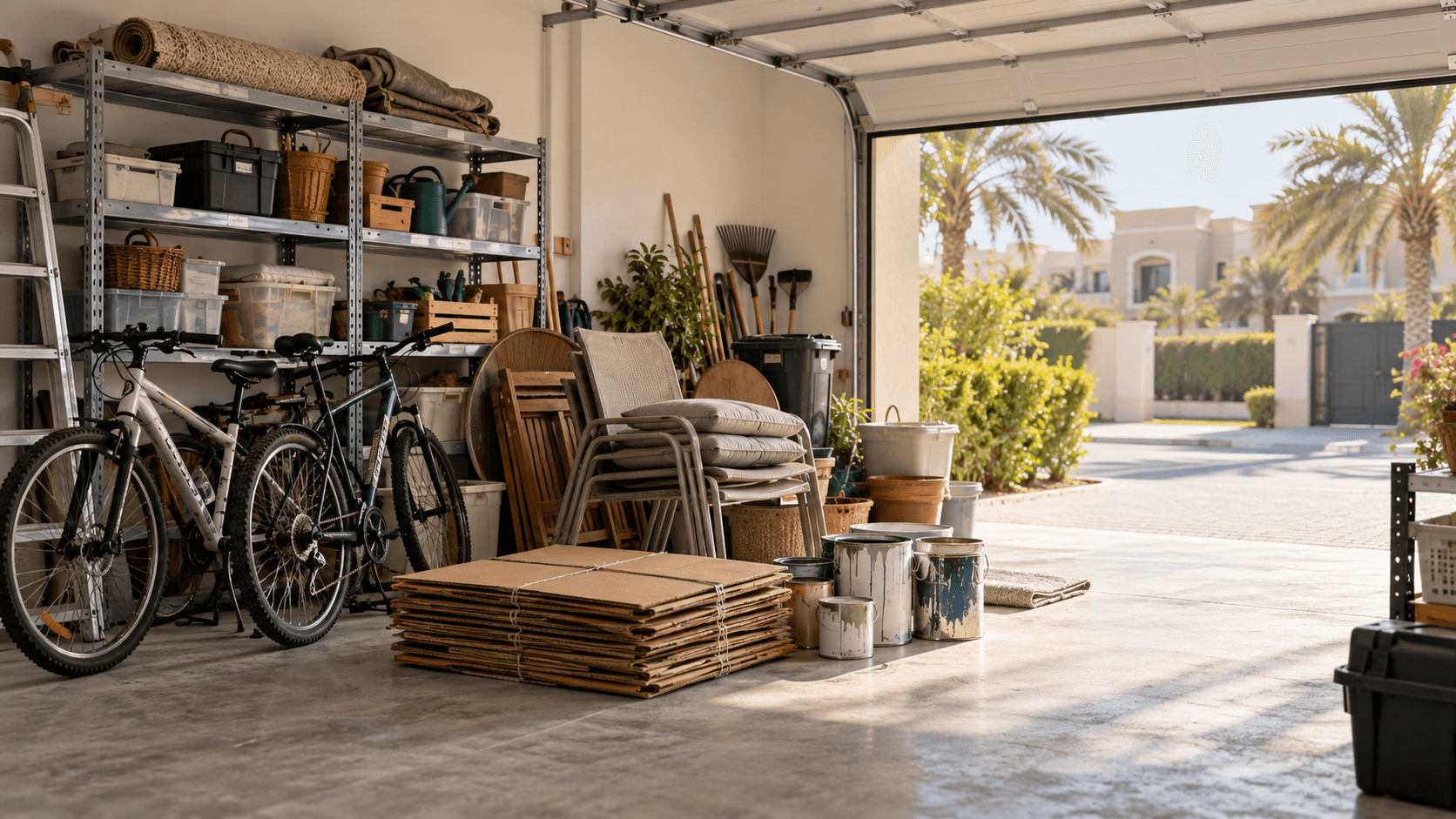
A bicycle in a packed garage is one line inside a larger sort. Paint, fuel, old batteries and chemicals in that garage are not part of the bike. The garage clearance guide is the mixed-garage plan. Use it when the room itself is being emptied. Come back to this page for the bikes: locks, width and where each one sits.
A treadmill, an exercise bike with a flywheel, a rowing machine or a rack of weights is gym equipment, not a bicycle. The treadmill removal guide covers those machines, including what the published notes allow a crew to do with straps, a trolley and agreed dismantling. Do not add a treadmill to a bicycle booking under the word “sports”.
If the bike is one object on a balcony full of other goods, the balcony clearance guide sorts the balcony. The bike’s lock, battery and handlebar width still belong here.
If a trailer, a tag-along or a spare wheel is leaving, photograph it beside the bike it belongs with and give it a line of its own. A trailer tongue is longer than the bike and can decide the turn into a lift. A spare wheel is easy to leave in the cage after the frames have gone. Put it in the same photo group.
Agree which bike moves first if the store is tight. The bike nearest the door is not automatically the first to leave if a larger one behind it cannot pass until the front one is out. Say that in the note so the crew is not asked to unload a corridor to reach the second frame.
Book the bikes as a named part of the load
When each bike is identified, unlocked or declared locked, and the route is photographed, ask for junk removal with that list attached. The service page holds the booking. This article holds the preparation.
Send:
- The number of bikes and a side photo of each.
- Folding or full-size, and a child seat or trailer if one is fitted.
- A motor or battery, and what you have already been told about that battery.
- Locks that are open, and locks that are still on.
- The store: flat, balcony, cage, garage or garden.
- The narrowest door, lift or gate on the route.
- Other items leaving in the same visit, listed separately.
Do not wheel the bikes into a shared corridor or onto the pavement the night before. A corridor is not a handover point, and a bike left there blocks a route other people need. Keep them in the agreed store until the crew is on site.
If a new bike is being delivered, check whether the shop takes the old one. If it does not, keep your collection booking and leave space for both machines so they are not in the same doorway at once.
On the day, point out a seized pedal, a soft tyre and a battery you were told to keep aside. Do not add a second cage of bikes at the door unless the provider has accepted the change.
Once the list, the locks and the route agree, the bikes can leave without being folded into a gym-machine job or a vague garage pile. The photo of the handlebars at the narrowest door is the picture that makes the booking accurate.
Common questions about bicycle removal
Is an exercise bike the same request?
No. A stationary exercise bike is gym equipment and sits with the treadmill guide. A bicycle that is ridden is this page, including a folding bike and a child’s bike.
What if I have lost the lock key?
Photograph the lock and where it is fixed. Open it if you can do that safely and you are allowed to. If the bike may not be yours, leave it until the owner or the building confirms it can go.
Can the battery stay on the frame?
Only if the provider has agreed to take that battery with the bike. Ask before the day. If it is not accepted, remove it by the route you are given and show that the bike no longer has it fitted.
Do several bikes need several bookings?
They need one list. Two bikes in one cage can be one visit if the access and the count were in the request. A bike found later in another store is a change of scope, not a small extra.