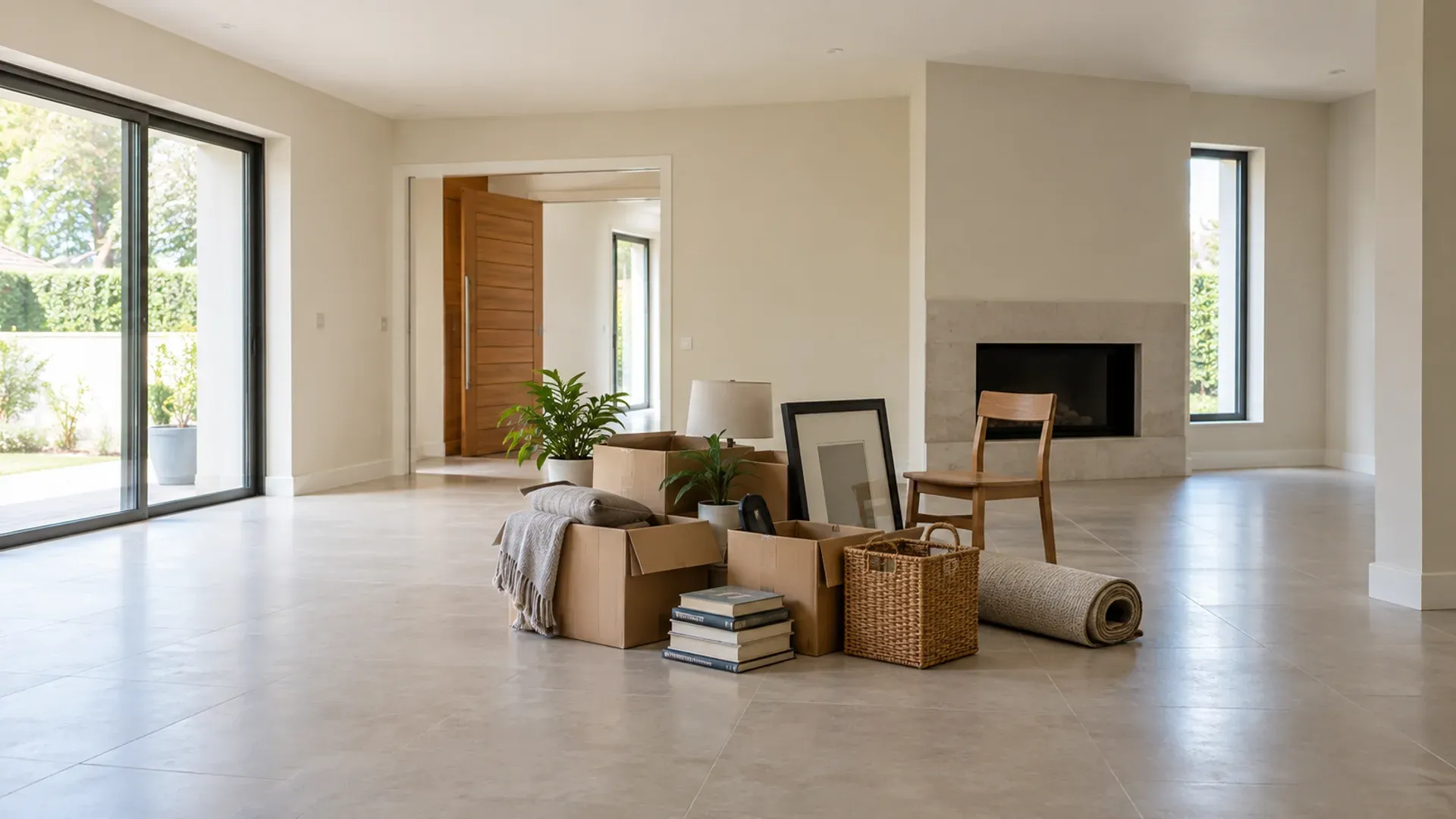
A maid’s room should be cleared as a small, private room—not treated as a cupboard that can be emptied without decisions. Confirm who owns every item, separate personal belongings from landlord furniture and fixtures, and obtain the occupant’s approval before anything is removed. Then inventory the room, bathroom and nearby storage, identify connected or fitted items, and plan the carrying route as part of the wider villa or apartment clearance.
The room’s size is not a reliable guide to the work. A bed, mattress, wardrobe, appliance, boxes and cleaning materials can create several different removal streams in a tight space. The useful starting point is permission and an item list, not a same-day instruction to “take everything.”
Start with consent, privacy and ownership
If someone currently uses the room, give that person time and privacy to sort their possessions. Do not photograph documents, clothing or personal effects for a quote without permission. Ask the occupant to identify what travels with them, what has a confirmed recipient and what they authorise for disposal.
If the occupant has already left, do not assume the remaining contents are abandoned. Contact them through the agreed household or employment channel and set a clear collection or decision deadline. Keep valuables, identity documents, medicines, keys and electronic devices secure while ownership is resolved.
The property owner may own the bed, mattress, wardrobe, air-conditioning equipment, curtains or appliances. Check the tenancy or household inventory and ask the owner or manager about uncertain items. A worn item can still be property that must remain.
Use one person to control the final instruction
Several family members, tenants or staff may give different directions. Nominate one authorised person to maintain the final list and answer the clearance provider. That person should not overrule another individual’s ownership of personal belongings merely to speed up the job.
Mark each item as stays, leaves with the occupant, confirmed recipient, disposal or owner decision required. Do not use an unlabelled “maybe” pile on collection day. If a decision is still open, keep the item outside the removal scope.
Define the boundary of the room
Agree exactly which spaces are included. A maid’s room may have an en-suite bathroom, built-in cupboard, corridor cabinet, utility area or external access. Laundry equipment, cleaning supplies and household storage beside the room may serve the whole property rather than belong to the occupant.
Walk the area with the authorised person and photograph only the agreed removal items. Record what stays, including fixtures that could be mistaken for loose furniture. Built-in shelves, sanitary fittings, lights, air-conditioning units and fixed cabinetry are not ordinary room contents.
If the maid’s room is part of a full villa clearance, include it as its own inventory zone. Do not let it disappear inside a whole-property instruction; small private rooms are where documents, keys and retained items are easiest to overlook.
Separate clearance from cleaning and repairs
Removing contents does not automatically include deep cleaning, pest treatment, wall repair, plumbing, electrical work or appliance disconnection. Put those tasks into a sequence and assign each to the appropriate person. Clearance should happen early enough for the empty space to be checked before final cleaning or handover.
If the room has damage or a maintenance problem, record it without attributing blame. The clearance provider does not determine tenancy, employment or deposit responsibility.
Make a complete item inventory
List the bed or base, mattress, wardrobe, drawers, chair, table, luggage, boxes, electronics, fan, refrigerator or other appliance, curtains, bathroom items and loose household supplies. Open only storage you are authorised to inspect. Check beneath the bed, above wardrobes and behind doors.
Use wide photographs to show volume and separate detail photographs for unusual, damaged or connected items. Do not hide loose bags inside a wardrobe for the photograph; the provider needs the real quantity and material mix.
Include items outside the room only if they are part of the agreed scope. A bicycle in the garage or boxes in an external store still require an owner decision and route assessment. Add them explicitly rather than pointing them out after the crew arrives.
Keep personal and household property apart
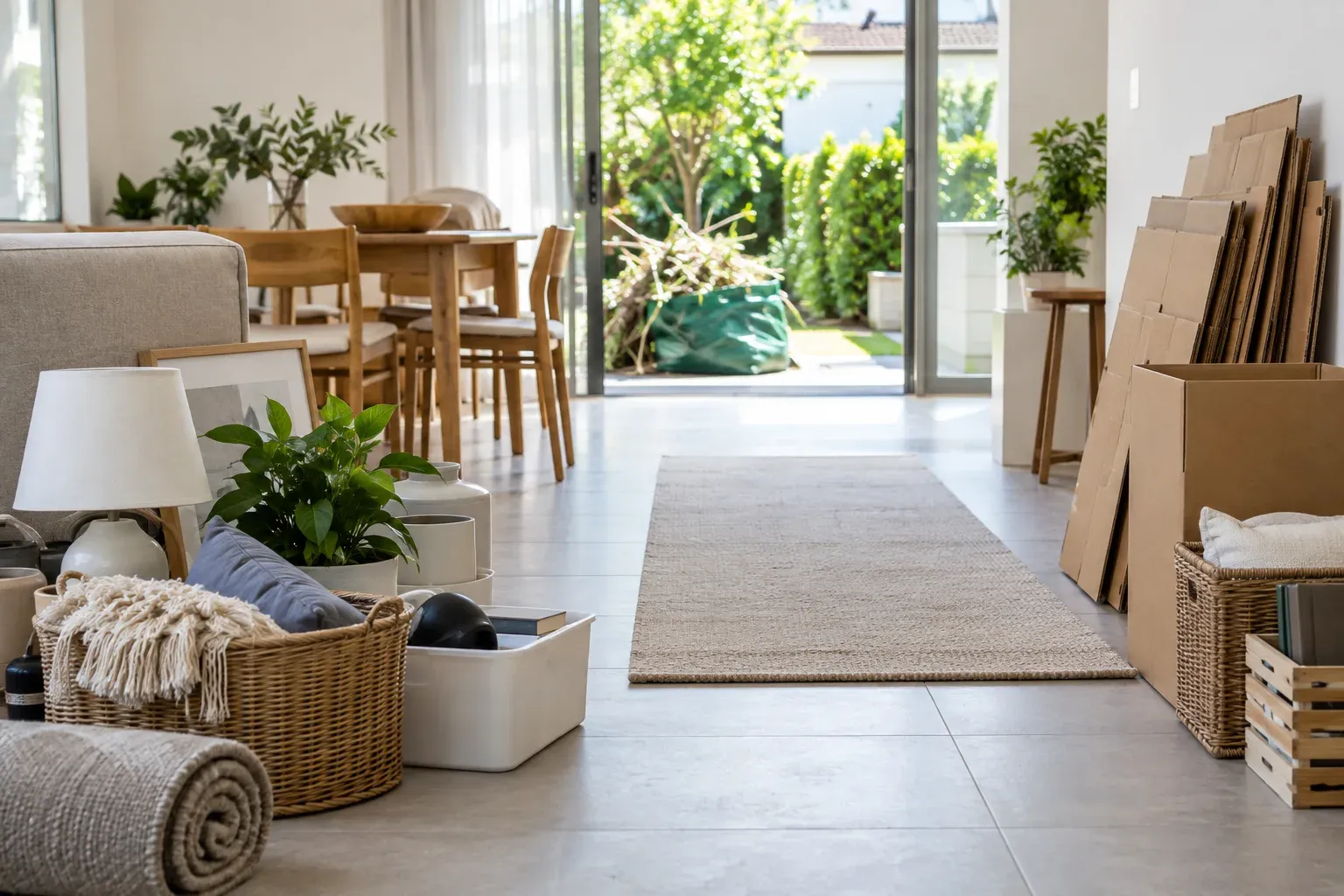
Use clearly labelled containers for the occupant’s retained possessions. Keep passports, employment papers, bank documents, certificates, photographs, jewellery, medicines and devices under the authorised person’s control. Do not put them beside disposal boxes, even temporarily.
Household linen, cleaning equipment and supplies may be shared property. Confirm whether they remain with the home. A provider should not have to infer ownership from where an item was stored.
Decide a route for usable items before the deadline
An item can leave through a confirmed recipient, an eligible official route or a paid collection. Choose the route before dismantling or moving it into a common area.
For reuse, the specific recipient should accept the item’s size, condition and timing. Agree who carries it and whether it must be dismantled. Do not promise that a charity, buyer or new occupant will collect merely because the item appears useful.
Dubai Municipality’s services directory lists furniture and household appliances under its bulky-waste service, describes the service as free, gives a three-working-day service time and excludes investment zones. Check current eligibility and instructions on the official Dubai Municipality services page before relying on it. Confirm how items must be presented and keep them inside the property until instructed.
A paid collection is useful where furniture must be carried from inside, building or community access is fixed, or the maid’s room is one zone in a larger clearance. Send the complete inventory and route rather than describing the job only by the room name.
Do not create an unofficial staging area
Do not place a mattress, bags or furniture in a corridor, stairwell, car park, service yard or pavement while decisions are pending. Shared space is not storage, and unattended items can obstruct other people. Keep everything within the property until the agreed route and collection time are ready.
If the room has its own external door, that does not make the adjacent path or service area available for staging. Confirm property and community rules.
Prepare furniture and the sleeping area
Strip bedding and check every fold, pocket and space beneath the mattress. Keep retained linen separate. Photograph stains, tears, broken frames or sharp edges that affect handling. Do not wrap a damaged item so completely that the hazard disappears from view.
Treat the mattress and bed frame as separate items. The mattress disposal guide covers size, wrapping and route preparation, while the bed-frame guide covers slats, bases, headboards and storage mechanisms. Ask who dismantles the frame; do not release gas-assisted storage parts or structural fasteners without an agreed method.
Empty freestanding wardrobes and drawers. Remove only loose shelves or parts the provider asks you to prepare. A tall wardrobe may be unstable, fixed to a wall or too large for the doorway. Send photographs and use the furniture dismantling guide before taking it apart.
Identify fitted and landlord-owned pieces
A built-in cupboard, wall shelf, curtain track, mirror or air-conditioning unit may be part of the room. Do not include it because the goal is an “empty” appearance. Confirm the handover standard and owner instruction.
If a freestanding item is anchored for safety, identify the restraint and ask who releases it and repairs the wall. Collection does not automatically include building work or reinstatement.
Separate appliances and connected equipment
List refrigerators, washing machines, countertop appliances, televisions, fans and other electrical items individually. State whether each belongs to the property or occupant and whether it is working, faulty or untested. Remove food and personal contents safely before collection.
Do not disconnect hard-wired, plumbed, gas or fixed equipment unless that task is within your competence and the appliance instructions. Ask whether an appropriate technician or plumber is needed. A clearance crew should not discover a live connection after the access window begins.
For a small refrigerator or freezer, empty, defrost and dry it according to its instructions. Report leaks, damaged cables or unknown residue. For electronics, keep memory cards and personal data under the owner’s control; removal does not erase data.
Keep cleaning products and unknown materials separate
Cleaning chemicals, pesticides, paint, aerosols, batteries, medicines, gas cylinders and unidentified liquids should not be hidden inside general bags. Keep labels visible, do not mix substances and describe them before booking. Some materials need a different route and may be excluded from a general household collection.
Ordinary dry household contents should also be separated from wet bathroom waste or food. A mixed bag conceals hazards and prevents an accurate assessment.
Check the route from the room to the vehicle
Measure the room door, immediate corridor and every tight turn. Then check stairs, the main entrance, gate, lift where relevant and the loading point. A bed base or wardrobe may leave the room but fail at a landing or narrow side passage.
Photograph the route in both directions. State the floor, whether the room is internal or externally accessed, and how far the legal loading position is from the door. Clear loose shoes, rugs, buckets and household supplies before the crew arrives.
In a villa, confirm community gate procedures, contractor access, parking and permitted times. In an apartment or staff-accommodation building, ask about service-lift booking, protection and loading access. Do not assume a small room clearance is exempt from building rules.
Protect privacy during route planning
Route photographs should focus on access constraints, not people or private possessions. Move or obscure documents and personal images before taking them. Share only what the provider needs to assess the job.
If the route crosses another occupied room, coordinate a suitable time and keep that person’s belongings away from the work area. Do not turn the wider home into an uncontrolled sorting space.
Plan the room within a move-out or handover
Work backwards from the fixed inspection, key-return or new-occupant date. Set an earlier deadline for the room occupant’s decisions and recipient collections. Schedule main removal before final cleaning and leave time to check exposed walls, floors and cupboards.
For a full property handover, follow the villa handover clearance guide. It covers the room-by-room inventory, garden and storage areas, access, cleaning sequence and final inspection. The maid’s room remains a distinct checklist line within that process.
Do not book several providers for the same narrow route at the same time. Furniture movement, appliance work, cleaners and maintenance staff can block one another. Write down the order and share it with the person supervising the property.
Leave a decision buffer
Personal-property questions can take longer than carrying. Set the sorting deadline far enough ahead that an unanswered message or disputed item does not halt the whole clearance. Anything unresolved should remain securely stored until authority is clear.
If the overall deadline becomes urgent, send the final item list and access information immediately. An urgent enquiry is not a confirmed booking, and urgency does not remove the need for consent.
What to send for a quote
Send one accurate request containing:
- The property type and area in Dubai.
- Whether the room is occupied and whether decisions are complete.
- A list of each furniture item, appliance, box and bag.
- Wide room photographs taken with permission.
- Detail photographs of damage, connections and fitted items.
- Furniture and doorway measurements where access is tight.
- The floor, stairs, lift, gate, parking and carry distance.
- Community or building booking requirements.
- Other rooms or outdoor items in the same clearance.
- The required completion date and any inspection time.
Ask the provider to confirm acceptance, dismantling, preparation, carry-out, exclusions, timing and price. Avoid asking for “one maid’s room” as though every such room contains the same load. The inventory is what makes the request assessable.
Supervise the final collection
Have the authorised list available and point out everything that stays. Keep the occupant’s retained boxes in a separate locked room or clearly controlled zone. If someone else provides access, give them the same list and limit their authority over uncertain items.
Report changes before carrying begins. A new appliance, bags from another room or connected item can change the scope. Do not pressure the crew to take unidentified material because the property deadline is close.
After collection, inspect the room, en-suite, cupboards and route. Recover loose hardware or personal items, check fixtures that remain and direct cleaning or repairs to the responsible provider. Record completion without claiming that removal alone satisfies every handover obligation.
Questions about maid’s-room clearance
Can I clear the room after the occupant has left?
Only after authority and ownership are clear. Contact the occupant through the appropriate channel, secure personal items and obtain decisions rather than assuming remaining belongings are abandoned.
Is a maid’s room included in villa clearance?
It can be, but list it as a separate inventory zone with its own furniture, appliances and personal-property decisions. Do not assume the room is included merely because the wider villa is being cleared.
Does the crew dismantle the bed and wardrobe?
Do not assume so. Send photographs and measurements and ask what dismantling is included. Fitted or wall-secured furniture may require owner approval and separate reinstatement.
What should happen to documents and personal electronics?
Keep them secure and return or transfer them through the authorised personal-property process. Do not put identity documents, data-bearing devices or valuables in a general removal pile.
Can items wait outside the room for collection?
Keep them inside the property unless the confirmed official service or collector and the building or community have instructed otherwise. Corridors and shared service areas are not staging spaces.