A majlis clearance starts with ownership and a room inventory, not with lifting the seating. Confirm whether the room and its contents belong to the owner, tenant or property; protect personal, religious and decorative items; separate loose furniture from fitted work; and measure the route for long sofas, heavy tables, rugs and display cabinets.
If the majlis is one room in a larger villa clearance, give it a separate decision pass. The room may contain items intended for family use, guests, another property or long-term storage. Nothing uncertain should be placed in the removal zone.
Confirm who can authorise the clearance
Name one person who has authority to decide what leaves. Where several family members, a landlord, tenant, estate representative or property manager are involved, record decisions rather than relying on verbal assumptions. A removal crew should not decide whether an item is unwanted.
If the room is used by someone else, obtain their consent and allow time for personal belongings to be removed. Lock away documents, keys, cash, jewellery, photographs, devices and medicines before any general clearance begins.
Check the tenancy, handover or renovation scope where relevant. This guide does not determine legal ownership. If ownership is disputed, stop and resolve it through the appropriate parties before collection.
Mark retained items in plain language
Create KEEP, MOVE ELSEWHERE, RETURN, DONATE OR REUSE, REMOVE and UNDECIDED groups. Use written labels and a room plan; do not rely only on tape colour. Keep the undecided group physically outside the working path.
Photograph the agreed room before work begins. The image is an inventory aid, not proof of ownership, but it helps the authorised contact confirm which groups were approved.
Inventory the room from the edges inward
Walk every wall and then the centre of the room. Record sectional seating, floor cushions, armchairs, occasional tables, centre tables, rugs, cabinets, screens, lamps, televisions, speakers, artwork, curtains, ornaments and stored boxes. Open cupboards and drawers only with permission.
Count matching sets as individual pieces when their sizes differ. “One majlis set” may mean several long sofa sections, many cushions, two stone tables and a cabinet. A quote needs quantities, dimensions, condition and access.
List fixtures separately: wall panelling, built-in seating, curtain tracks, shelving, lighting, electrical points and mounted screens. A room-clearance booking does not automatically include dismantling fitted joinery or making good walls and floors.
Photograph what changes the handling plan
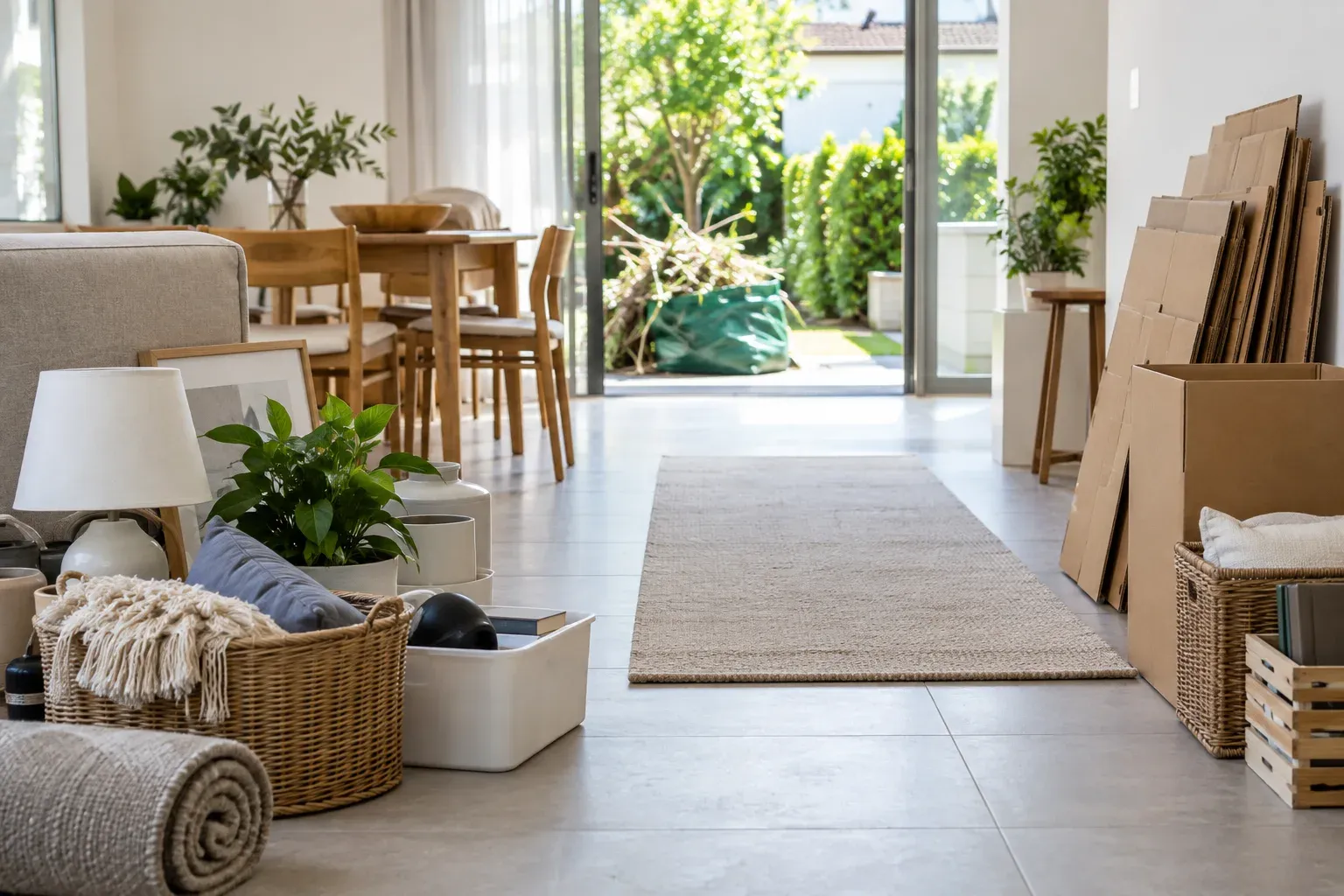
Take wide views from several corners, then show long, heavy, fragile, fitted or damaged items. Include the underside or base of seating when accessible, labels on electrical items, and the full exit route.
Do not include people, private documents, family photographs or security information unnecessarily. Move or obscure sensitive material before sending quote images.
Protect personal and culturally significant belongings
Remove prayer items, books, family records, photographs, gifts, heirlooms and ceremonial objects from the general work area. Ask the authorised owner how each should be packed or transferred. Do not assume condition or apparent value determines significance.
Keep textiles and delicate objects clean and dry. Use suitable containers and record the destination. If a specialist packer, conservator or valuer is needed, arrange that separately; junk removal is not appraisal or conservation.
Where reuse or donation is intended, confirm the recipient before collection and ask what condition and preparation they require. Do not promise that an item will be accepted merely because it appears usable.
Empty furniture before it moves
Check cabinets, side tables, seating storage, boxes and drawers with permission. Put retained contents into labelled containers and have the authorised contact sign off the empty furniture. Small personal items are easily overlooked inside deep seating or low cupboards.
Do not tape keys inside a cabinet that is being discarded. Keep keys and hardware with the person responsible for retained or transferred furniture.
Assess majlis seating section by section
Record whether seating is freestanding, modular, built in or fixed to a timber platform. Measure the length, depth and height of each largest section. Look for removable feet, connectors, recliner mechanisms, electrical leads and loose back panels.
Do not pull sections apart until the connection method is understood. Hidden brackets can tear upholstery or damage frames. If dismantling is needed, agree who does it and whether the furniture is being preserved for reuse or reduced only for disposal.
The furniture dismantling guide explains why destination and construction change the method. For long upholstered sections that may not turn through a doorway, use the sofa access guide to compare the furniture dimensions with the route.
Keep cushions and loose covers controlled
Count loose cushions and removable covers. Bag clean retained textiles separately from unwanted or damaged items. Do not use decorative cushions to fill gaps in a mixed waste load; they can hide hard or sharp objects.
If seating is dusty, damp, stained or pest-affected, disclose that before collection. Do not wrap a condition issue so completely that handlers cannot assess it.
Plan heavy tables and fragile surfaces
Identify glass, stone, marble, timber and composite tops. Measure the top and base separately and state whether they detach. A compact table can still be extremely heavy; do not estimate weight from appearance alone.
Do not lift glass by decorative edges or assume it is safety glass. If a top is chipped or cracked, keep people away, show the damage clearly and agree a handling method. Never hide broken glass inside a rug or carton.
Stone tops and sculptural bases may need additional equipment or a specialist assessment. Provide manufacturer information or documented weight when available, plus steps, turns and carrying distance.
Separate nested and matching pieces
Count side tables, stools and nesting sets. Decide whether each set stays together for reuse. Label components and hardware; a separated base or support can otherwise be mistaken for waste.
Use the dining-table removal guide for more detail on detachable tops, leaves, bases and fragile carrying routes.
Roll rugs only after checking ownership and condition
Move loose objects from the rug, vacuum or clean only if appropriate to its destination, and inspect both sides for moisture, damage or hidden items. Confirm that the rug is loose rather than fixed to the floor.
Roll it through an agreed method, keeping the roll narrow enough for the route. Do not fold a rug that may be damaged by creasing. Large or valuable rugs may need a specialist cleaning, packing or appraisal service rather than a disposal crew.
Fitted carpet, underlay, grippers and adhesive are a different scope. Confirm who lifts them and what floor condition must remain. The carpet disposal guide separates loose-rug preparation from fitted-flooring work.
Isolate electronics and connected items
List televisions, receivers, speakers, routers, lighting and powered seating. Decide whether each transfers, returns to a provider, requires data handling or is approved for disposal. Photograph model labels where useful without exposing account information.
Disconnect equipment according to the manufacturer’s instructions and use appropriate technical help for fixed wiring. Keep remotes, cables, brackets and power supplies with retained equipment. A removal crew does not automatically erase data or remove wall wiring.
Report damaged batteries, hot devices, cracked screens and exposed cables. Keep them out of mixed boxes and obtain an appropriate route.
Treat wall-mounted items as a separate job
Mounted televisions, speakers, artwork, mirrors and curtain systems may need safe release and wall repairs. Confirm whether an appropriate installer or technician removes them. Clearance does not include patching, painting or electrical work unless explicitly agreed.
Mark wall items that stay. A photo annotated by the authorised contact can prevent confusion when the room contains a mix of retained and unwanted fixtures.
Distinguish freestanding furniture from fitted work
Freestanding cabinets and screens can usually be assessed as contents. Built-in seating, wall panelling, fixed shelving, decorative partitions and platforms may be part of the property or fit-out. Check ownership and the renovation or handover instructions.
Do not unscrew a fitted element simply because it resembles furniture. Hidden electrical services, fixings and wall finishes may be involved. If the project includes removal of fitted work or resulting debris, provide a separate scope and obtain any required approvals.
Keep timber, gypsum, glass, metal and other renovation material separate from loose household contents. Ask the appropriate provider about acceptance before work starts.
Measure every part of the exit route
Measure the room doorway, corridor, turns, stair width, handrails, entrance door, gate and route to the vehicle. Note thresholds, steps, slopes, low lights and delicate finishes. Measure door openings at their usable width, accounting for handles and closers.
The longest sofa section or rolled rug may fit through each doorway but fail at a turn. Photograph the approach to tight corners. If furniture must leave through a patio or secondary door, confirm permission, surface protection and outdoor access.
Do not plan to drag furniture across marble, timber or rugs. Agree floor and wall protection and keep children, guests and pets away from the working route.
Include stairs and upper floors
State the room level and whether stairs or a suitable lift are available. Show landings and turns. Long seating, cabinets and stone tables require more than a doorway measurement.
For a majlis in a building rather than a villa, confirm service-lift and contractor requirements. The service-lift booking guide explains the information to obtain before fixing a collection time.
Coordinate the majlis with the wider villa clearance
Give each room a separate inventory, then combine them into one property-level scope. This prevents the majlis from being represented as “one room” while its large seating and tables materially change the load.
Sequence retained-item moves before disposal. Clear a protected path, then remove large approved pieces, smaller furniture and final loose groups. Do not create a villa-wide mixed pile that destroys the room-level decisions.
If the clearance is for a handover, work backwards from the inspection and leave time for cleaning and repairs by the relevant providers. The villa handover guide covers that property-wide sequence.
Keep the room usable if clearance is phased
If the home remains occupied, define which seating and access must stay until the final phase. Label those items clearly and keep removal activity away from family and guests.
Update the inventory whenever a family member retains or transfers an item. The provider’s quote describes the agreed scope, so material changes should be reported before arrival.
Prepare an accurate quote request
Send:
- The property, room level and authorised contact.
- Wide photographs and a written inventory.
- Dimensions of the largest seating sections, rugs, cabinets and tables.
- Materials and detachable parts for glass or stone tables.
- Fixed-versus-freestanding status.
- Electrical items and their disconnection status.
- Damage, moisture, pests, sharp edges or fragile surfaces.
- Door, corridor, stair, gate and vehicle-route measurements.
- The groups being retained, transferred and removed.
- The wider villa-clearance date and handover deadline, if any.
Send the scope to the villa clearance service and ask for clear confirmation of acceptance, dismantling, carry-out, access and pricing. Do not reduce the request to a room name; the item and route evidence decide the work.
Supervise the collection and close the room
Walk the room with the crew lead and point out retained, uncertain and fitted items. The authorised contact should remain reachable for questions. Do not approve last-minute additions owned by someone else.
After the approved items leave, check cupboards, seating cavities, corners and the exit route. Reconcile retained objects and hardware. Photograph the empty or partially cleared room for the property record where appropriate.
A cleared room is not automatically ready for handover or renovation. Cleaning, repairs, fixture work and landlord acceptance remain separate. Keep only the records actually supplied and do not invent reuse or recycling outcomes.
Questions about majlis clearance
Can a majlis be cleared as part of a villa booking?
Yes, but inventory it separately first. Long seating, rugs, tables, cabinets and personal objects need room-level decisions before they join the wider villa scope.
Does clearance include built-in majlis seating?
Not automatically. Built-in seating and wall finishes may be part of the property or fit-out and can require approvals and appropriate trades. Describe them separately.
Should seating be dismantled before collection?
Only after its construction, destination and exit route are understood and the responsible party agrees who will dismantle it. Unplanned dismantling can damage reusable furniture or the property.
What should happen to personal and religious items?
The authorised owner should remove, pack and direct them before general clearance. Do not place significant or private belongings in an undecided mixed group.
What information is most important for a quote?
An itemised inventory, dimensions of the largest pieces, fixed-versus-loose status, clear route photographs, the room level and one authorised decision-maker.