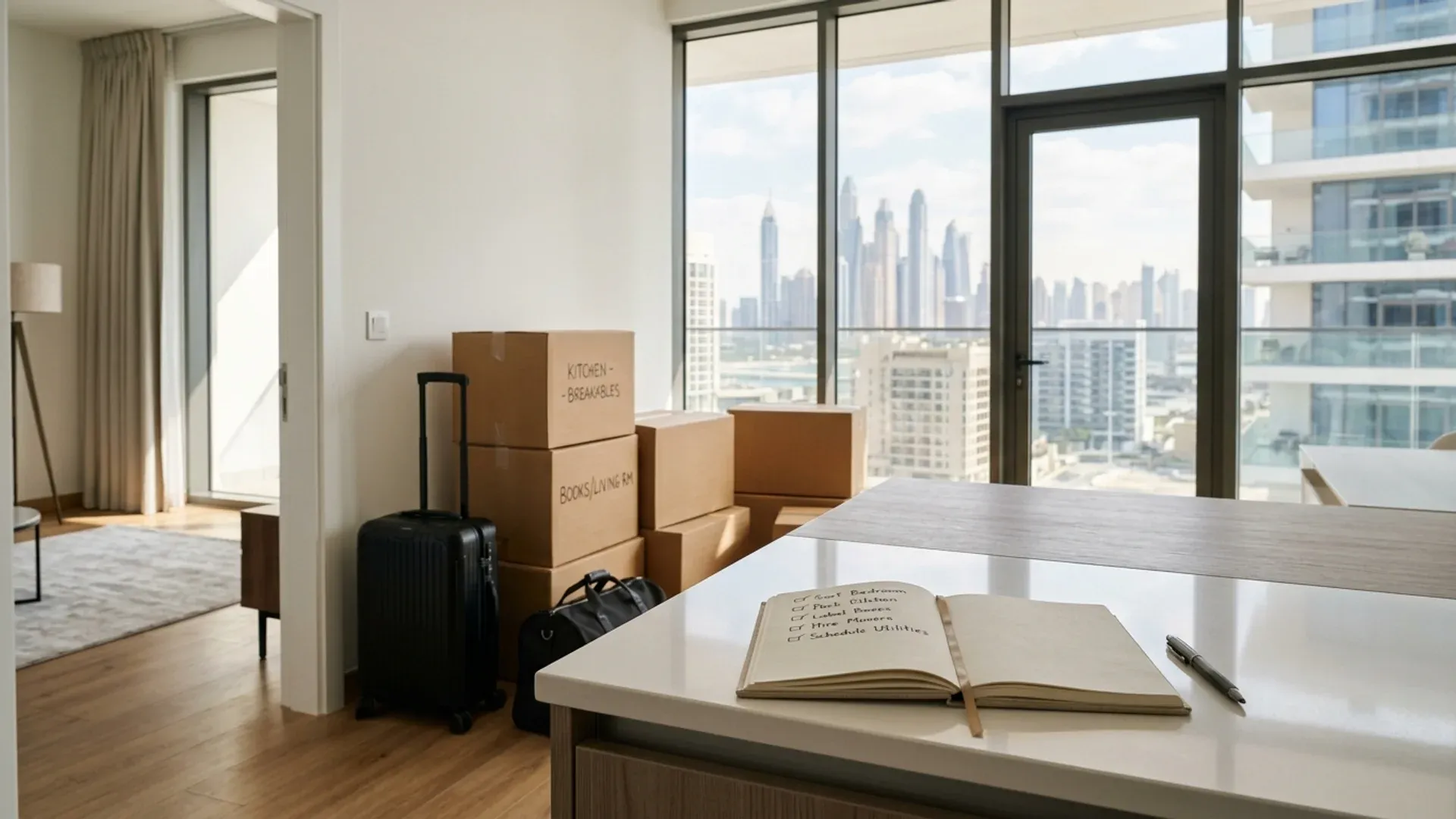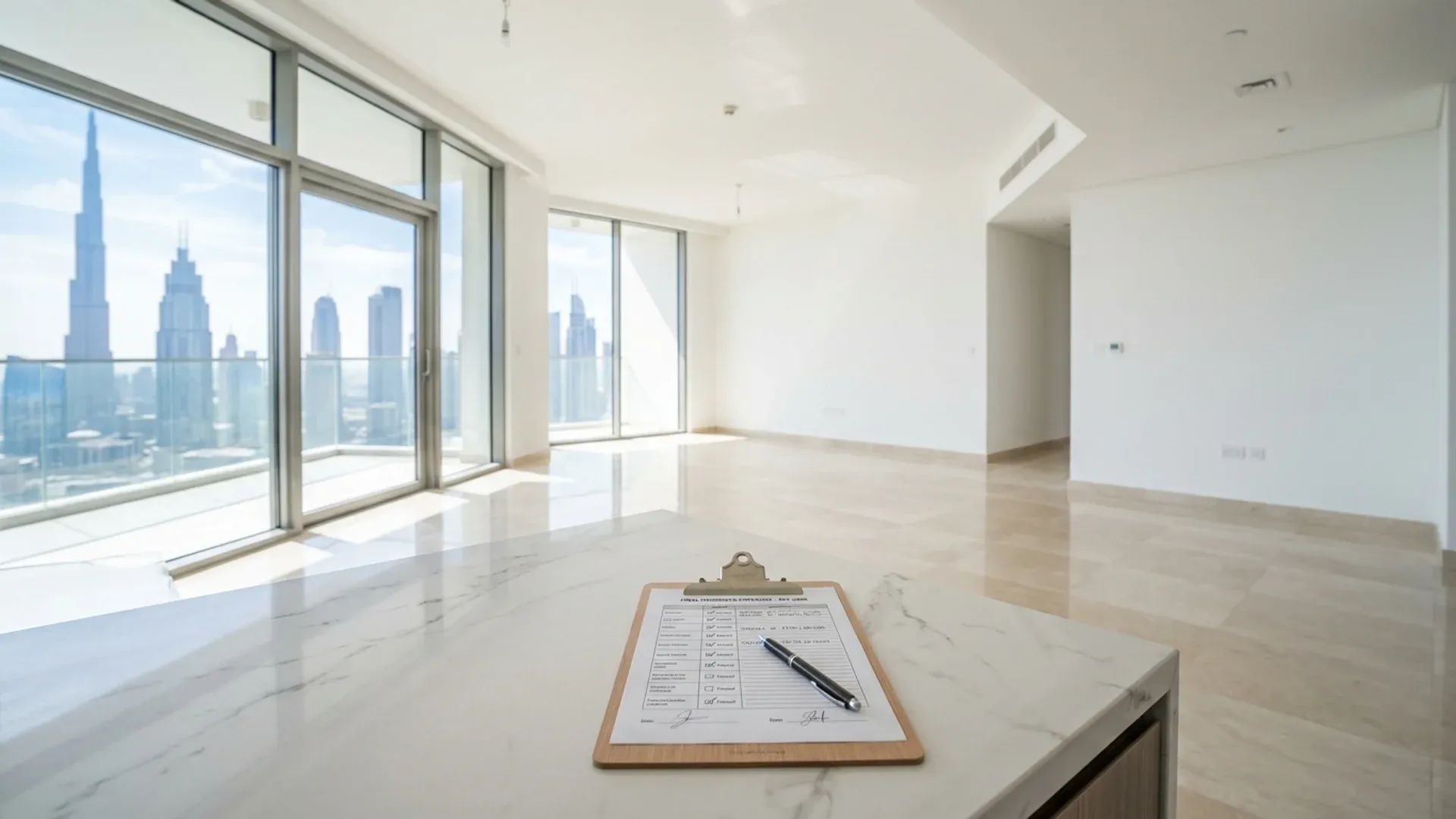
The final move-out walkthrough with your landlord, building owner or property management agent in Dubai is often the most stressful sixty minutes of an entire tenancy. In the UAE property market, security deposits represent substantial sums of money—typically equal to five percent of the annual rent for unfurnished residential units and ten percent for furnished premises. For an executive apartment or villa in Downtown Dubai, Dubai Marina or Arabian Ranches, that deposit amounts to thousands of dirhams that tenants urgently need to fund their next rental contract or international relocation expenses.
Yet across Dubai, hundreds of deposit disputes land before the Rental Dispute Center (RDC) at the Dubai Land Department every month because of unresolved handover issues. The most common trigger for a disputed deposit deduction is not structural building damage; it is leftover tenant possessions, abandoned furniture, unremoved wall fixings and cluttered balconies that require the landlord to hire third-party clearance and cleaning contractors at inflated commercial rates.
Understanding the legal standards governing property handover in Dubai, identifying the specific inspection traps that agents scrutinise, and scheduling a complete professional house clearance prior to the inspection walkthrough ensures you hand over the keys cleanly and recover your full security deposit without acrimony.
The legal framework: Article 21 and the wear-and-tear standard
Handover obligations in Dubai are strictly regulated by statutory tenancy legislation. Under Law No. (26) of 2007 Regulating the Relationship Between Lessors and Lessees in the Emirate of Dubai, as amended by Law No. (33) of 2008, tenant obligations upon expiry of a tenancy contract are clearly codified:
Article 21 of Law No. (26) of 2007 explicitly states that upon lease expiry, the tenant is obliged to surrender the leased property to the landlord in the same condition it was received at the commencement of the lease contract, ordinary wear and tear or damage resulting from reasons beyond the tenant's control excepted.
Article 20 establishes that the security deposit paid by the tenant guarantees property maintenance upon expiry of the tenancy, and obliges the landlord to refund the deposit—or the remaining portion after legitimate deductions—promptly upon property handover.
The crucial legal pivot point is the statutory boundary between normal wear and tear and tenant alteration or debris. Normal wear and tear encompasses subtle paint fading from natural Dubai sunlight, minor carpet pile shading in heavy traffic areas, or tiny hairline settlement plaster cracks.
However, leaving behind a disassembled IKEA wardrobe in the spare bedroom, an old washing machine in the laundry closet, abandoned plastic chairs on the balcony, or custom shelving bolted into concrete walls is definitively not normal wear and tear. Legally, these items constitute unauthorized tenant alterations and accumulated waste. When a tenant surrenders keys with items left inside the premises, the landlord is legally entitled under Dubai Land Department guidelines to deduct the reasonable contractor costs incurred to dismantle, carry away and dispose of the materials from the tenant's held security deposit.
Why landlords charge premium rates for left-behind items
Many tenants casually assume that leaving a usable study desk or a clean mattress behind will be viewed by the landlord as a helpful gift for the next occupier. This assumption is almost universally incorrect and costly.
In Dubai's institutional rental market, property management companies operate under strict turn-around timelines between incoming and outgoing tenancies. When an agent or landlord finds abandoned furniture or loose rubbish during the walkthrough inspection, they will not browse classifieds to sell the items, nor will they spend hours researching budget removal services.
Instead, property management companies take the path of least administrative resistance: they dispatch their on-call commercial facility maintenance contractors to clear the space immediately so painting and deep cleaning can proceed. These commercial facility companies bill for urgent emergency response, specialized disposal transport and commercial disposal fees—often charging triple the open-market rate for basic junk removal. The property manager simply attaches the contractor's commercial invoice to the deposit reconciliation sheet and subtracts the full balance from your deposit refund.
Our dedicated deposit deductions guide details the exact mechanisms through which landlords calculate these contractor costs and why self-clearing before inspection saves hundreds of dirhams.
The inspection walkthrough: High-risk areas agents scrutinise
Property management inspectors across Dubai use standardized handover checklists to evaluate premises. While tenants typically focus on whether kitchen countertops and bathroom tiles are wiped clean, inspectors systematically check specific overlooked zones where tenants routinely abandon items:
Balcony storage cupboards and exterior ledges
Balconies are primary deduction hotspots. Over a twelve-month tenancy, balconies accumulate sun-faded plastic outdoor furniture, broken planters, half-empty bags of potting soil, abandoned clothes drying racks, and dusty storage boxes shoved into utility alcoves. Balcony items must be completely emptied, carried out and disposed of. Leaving dried flower pots or broken rattan chairs guarantees a deduction.
Kitchen appliance recesses and service alcoves
When tenants move out with their own freestanding appliances, they frequently overlook what sits behind and beside them. Disconnecting an old refrigerator often reveals greasy cardboard shims, abandoned plastic water dispenser bottles, forgotten cleaning chemicals under the kitchen sink, and broken microwave brackets. Every kitchen cabinet, drawer and pantry shelf must be completely bare.
Laundry closets and utility rooms
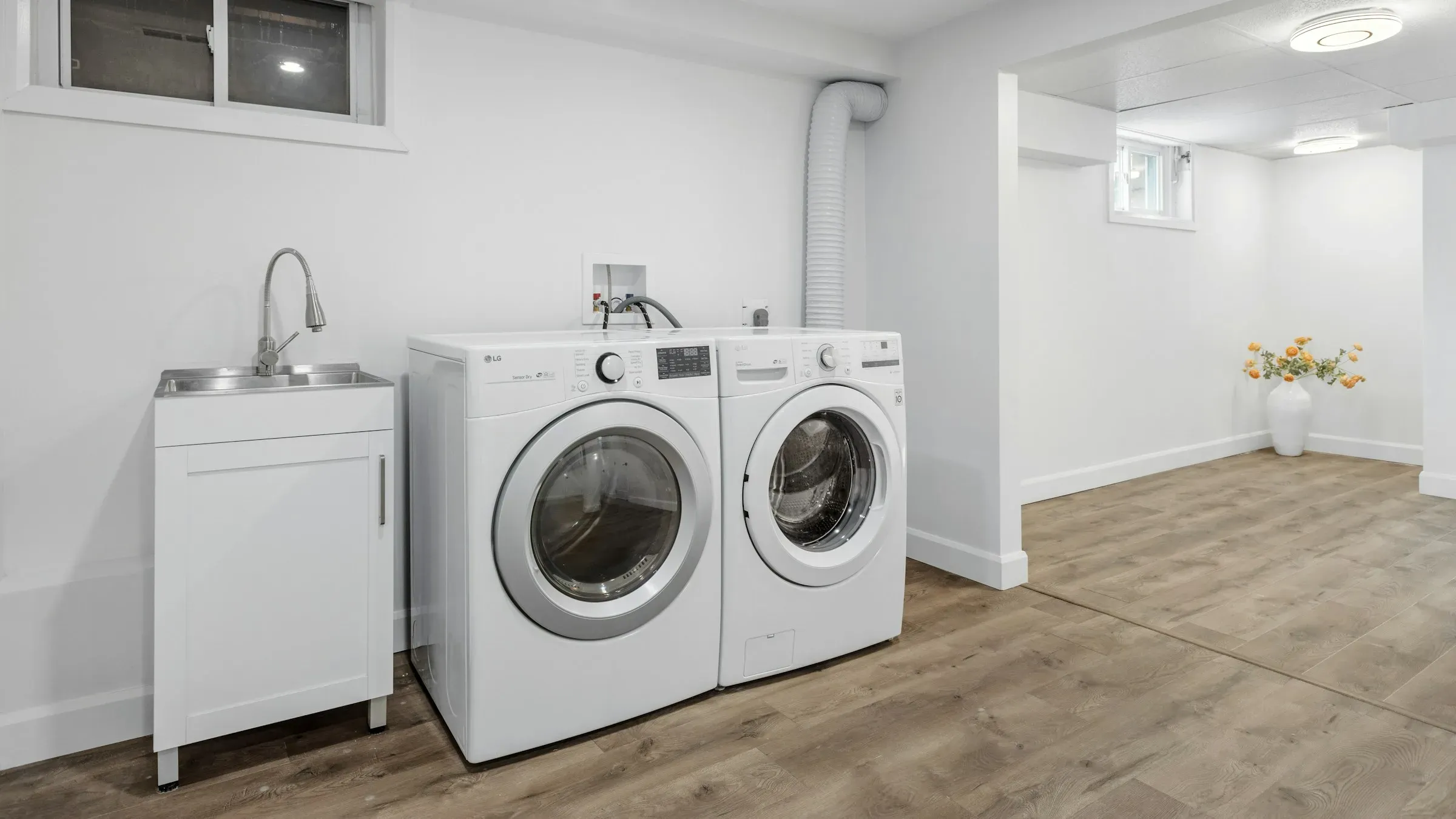
Laundry cupboards frequently contain obsolete plastic detergent crates, leaking softener bottles, discarded ironing boards, and loose drainage hoses. If an old washing machine or dryer is being replaced or discarded rather than moved, arrange professional appliance collection well before the inspection. An abandoned washing machine left in a utility closet is one of the heaviest and most expensive single items for a landlord to clear.
Bedroom wardrobes, cupboards and top shelves
Inspectors open every single wardrobe door and drawer. Forgotten coat hangers, abandoned shoe boxes, extra pillows on out-of-reach top shelves, and loose curtain rings left in drawers are flagged immediately. A single neglected shelf containing old winter duvets turns an otherwise clean handover report into a conditional handover requiring contractor revisit fees.
Wall fixtures, hooks and custom shelving
Under Dubai handover conventions, any alteration made to the walls must be reversed unless the landlord provided written consent agreeing to retain the fixture. This includes television wall mounting brackets, heavy picture hanging rails, floating bookshelves, and adhesive hooks. Removing a television mount leaves four to six deep bolt holes in the plaster. You must remove the metal bracket, detach all hardware, and ensure the wall is ready for the painter.
Storage units, maid rooms and parking bay storage
In large apartments and villas across Downtown, Marina and Emirates Hills, properties often include an assigned basement storage cage or dedicated utility room. Tenants often clear the main living areas perfectly, only to abandon old suitcases, broken gym equipment, bicycle tyres and moving boxes in the remote basement storage bay. Building security checks basement lockers during handover clearance; an uncleared storage cage halts the move-out sign-off.
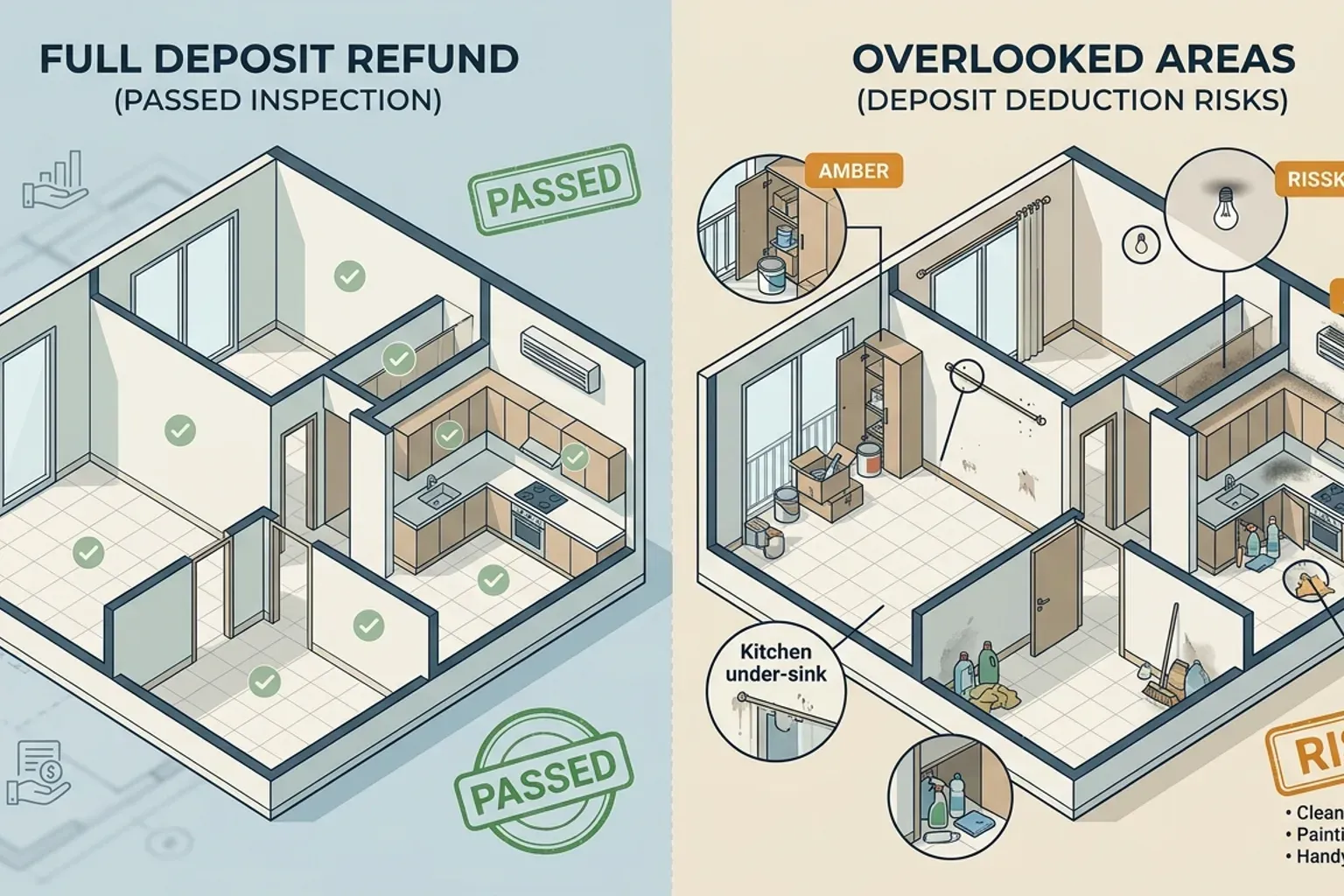
Room-by-room clearance checklist for tenants
Executing an airtight pre-inspection clearance requires a methodical room-by-room approach. Work through your home in this precise sequence 48 hours before the landlord arrives:
- Living and dining areas: Dismantle and remove all non-landlord furniture including sofas, coffee tables, television consoles, dining suites and bookshelves. Remove all rugs, floor mats and decorative wall art. Check power sockets to ensure no personal adapters or extension leads remain plugged in.
- Master and guest bedrooms: Dismantle bed frames, unbolt headboards, and remove mattresses. Check under beds and behind headboards for fallen papers or personal items. Empty wardrobe interiors completely, including top storage compartments and internal drawers. Remove all personal coat hangers.
- Kitchen and pantry: Clear all food items, spices, canned goods and non-perishables from high and low cabinets. Empty refrigerator and freezer interiors completely. Empty cleaning supplies from beneath the kitchen sink. Discard empty five-gallon water carboys through approved water distributors or include them in your collection load.
- Bathrooms: Empty vanity cabinets, medicine cupboards and shower caddies. Remove personal shower curtains and suction-cup caddies. Remove toilet brushes, bathroom waste bins and floor scales.
- Maid's room and laundry: Remove temporary folding beds, mattresses and personal storage bins. Clear utility shelves above the washing machine. Empty the washing machine filter and remove disconnected drainage pipes.
- Outdoor terraces, gardens and balconies: Remove all outdoor lounge chairs, sun loungers, barbecues, gas cylinders, plant pots, dead shrubbery, garden hoses and outdoor storage sheds. Sweep terrace tiles clean of loose sand and organic leaves.
Review our comprehensive moving out of Dubai checklist for a broader timeline covering utility accounts and moving logistics.
Coordinating the handover timeline: Sequencing clearance and utilities
A smooth landlord inspection relies on strict logistical coordination between junk removal, utility disconnection and final deep cleaning. Getting this order wrong creates severe administrative headaches:
Day 4 before handover: Complete junk removal
Schedule your professional junk removal crew at least four days before the final lease expiry date. Clearing all unwanted furniture, bulky appliances and loose debris first creates completely open, empty floor plates. If you attempt to clean or paint while unwanted furniture still clutters the rooms, cleaners cannot access skirting boards, corners or window frames.
Day 3 before handover: Maintenance and minor repairs
With the property completely empty, carry out necessary handyman tasks: patch screw holes from wall art, remove curtain rails if required, replace dead lightbulbs, and fix minor cabinet hinges.
Day 2 before handover: Move-out deep cleaning and painting
Engage professional move-out cleaners to wash windows, scrub tile grout, descale bathroom fittings, degrease the kitchen extractor hood, and vacuum air conditioning vents. If your tenancy contract stipulates repainting to the original off-white or white colour standard, complete the painting on this day.
Day 1 before handover: Final meter readings and DEWA move-out
Under Dubai Electricity and Water Authority (DEWA) procedures, submit your online Move-Out request. DEWA reads the final meter, disconnects the active service, generates the final bill, and issues the official DEWA Final Clearance Certificate. Ensure that you have adequate daylight for your inspection walkthrough if power is disconnected prior to the meeting. Our end-of-tenancy clearance guide details how to coordinate municipal utilities and building permissions smoothly.
Conducting the walkthrough: How to protect your deposit on the day
When the inspection hour arrives, approach the walkthrough as a formal commercial audit:
- Insist on attending in person: Never hand your keys to building security and ask the landlord to inspect the property alone at their convenience. An unattended walkthrough allows an agent to attribute pre-existing defects or left items to you without challenge. Walk every single room beside the inspector.
- Bring your original move-in condition report and photographs: Retrieve the move-in inspection report, inventory sheet and date-stamped photographs you took when you first collected the keys. If the agent claims that a minor scuff on the bedroom door or a faded kitchen countertop requires repair, present your move-in photographs proving the condition pre-dated your tenancy.
- Test all fixtures together: Systematically open and close every internal door, turn on water taps to demonstrate functional drainage, operate window latches, and test built-in kitchen appliances (stove, oven, extractor hood) in the agent's presence.
- Document the final state on video: Record a continuous, high-definition smartphone video walkthrough of the entire property immediately before the agent arrives. Film inside every empty wardrobe, open the kitchen cupboards, pan across clean walls, and capture pristine balconies. If an unresolved dispute subsequently escalates to the Rental Dispute Center, this video provides incontrovertible proof that the premises were surrendered fully cleared and vacant.
- Sign a mutually agreed handover sheet: Do not leave the premises without a signed handover acknowledgement. Ensure the document explicitly records that all keys, access cards, parking transponders and air conditioning remotes were returned, and clearly states whether the property was accepted as fully vacant with zero items left behind.
Resolving common handover clearance dilemmas
The previous tenant left items that were already in the apartment when I moved in
This is a frequent point of friction in older Dubai buildings. If the previous tenant left curtains, a washing machine or balcony shelving that you used during your tenancy, the landlord will still expect the apartment to be returned completely empty unless those items were explicitly listed as landlord fixtures on the original signed tenancy inventory. If they are not on the landlord's official schedule, you are legally responsible for clearing them. Leaving them behind will result in a deduction regardless of who originally bought them.
What should be done with custom built-in wardrobes or study desks?
If you installed custom carpentry, fitted shelving or wooden loft beds during your lease, review your initial tenancy permission. Unless you hold written documentation signed by the landlord stating that the custom carpentry may remain as a permanent improvement without compensation or deduction, the landlord has the legal right to demand complete reinstatement. You must arrange for carpentry dismantling and disposal before inspection day.
Can I leave unopened paint cans for the landlord's painters?
Tenants often leave leftover buckets of wall emulsion, primer and paint rollers in the laundry room, assuming the landlord's maintenance team will appreciate free paint. In reality, hazardous liquid paint containers cannot be thrown into municipal bins under Dubai Municipality regulations. Facilities managers treat left-over paint as chemical waste and will bill you for specialized hazardous waste removal. Dispose of paint containers or take them with you.
How quickly must the landlord return the deposit after a successful inspection?
Under standard Dubai tenancy practice, landlords typically process security deposit refunds within seven to fourteen business days following the successful signing of the handover form and submission of the DEWA Final Clearance Certificate. If a landlord unfaithfully delays the refund without producing itemized contractor repair receipts, you can file a formal deposit dispute case through the Dubai Land Department Rental Dispute Center online portal.
Summary: A clean handover means a full deposit refund
Passing your landlord handover inspection in Dubai without deposit deductions requires methodical preparation, legal clarity and comprehensive physical clearance. By understanding Article 21's wear-and-tear boundary, clearing high-risk deduction areas like balconies and utility alcoves, reversing custom wall fixings and booking professional clearance well before inspection day, you protect your hard-earned security deposit and end your tenancy on flawless terms.
When your move-out date approaches, professional clearance ensures that every unwanted item, broken appliance and piece of redundant furniture is removed, carried out and disposed of responsibly, leaving your property pristine and ready for a stress-free key handover.