Soil, sand and pots are easy to leave until the end of a garden clear-out, and they are the part that can change the plan. They are heavy for their size, awkward to carry when loose, and easy to underestimate from a photo. Bagged soil and empty or broken pots can go with a normal garden load. Large loose volumes of soil or sand need to be shown in photos first so the right crew and vehicle can be confirmed before anyone arrives.
The practical answer is to separate these materials from the lighter green waste, describe them honestly and decide early whether they belong in a standard garden collection or need a larger arrangement. This guide explains how to do that for a villa garden, a townhouse courtyard or an apartment balcony.
Why soil, sand and pots need their own plan
Much of a garden load is bulky but light. Cut branches, hedge trimmings and palm fronds take up space in a vehicle, but a crew can carry large armfuls at a time. Soil and sand behave differently. A small-looking pile can be very heavy, and the weight, rather than the space, becomes the limit on what can be carried and loaded.
Pots and planters add another problem. An empty plastic pot is light and stackable. A large ceramic or concrete planter still full of soil and a root ball may need two people and a careful route. A cracked terracotta pot can break apart when lifted. Each one has to be assessed on its own terms.
These materials can also appear at the end of other jobs. A landscaper replaces a lawn and leaves the old turf and soil behind. A family stops looking after a balcony garden and decides to clear every pot at once. A villa is being handed back and the planters lining the terrace suddenly have to go. When they arrive as an afterthought, they can go undescribed in the original request.
What counts as soil, sand and pot waste
Before asking for a collection, list what you actually have. The categories below matter because they are handled differently.
Bagged soil and compost
Soil, compost or potting mix that is already in tied bags. This is the easiest form to collect because it can be carried and stacked. Bagged soil is part of a normal garden load.
Loose soil, sand and turf
Material in an open pile on the ground, such as excavated soil from a planting bed, sand from a play area or old turf lifted during landscaping. Loose material has to be bagged or shovelled before it can be loaded, which adds handling time, and its volume is harder to judge from a photo.
Filled pots and planters
Containers that still hold soil and plants. Decide whether the plant and soil are going with the pot or whether the pot is being emptied first. A filled planter is a very different item to lift than the same planter empty.
Empty, cracked and broken pots
Plastic, ceramic, terracotta and fibreglass containers that are empty or damaged. Broken pieces should be gathered rather than left scattered, because sharp fragments are slower and riskier to pick up.
Stone, gravel and decorative material
Pebbles, decorative stones, gravel and paving offcuts. These are dense and may need a separate conversation about whether they suit the same load.
How to describe the load so the quote is accurate
The quote for garden waste comes from photos. With soil and sand, the photos need to show quantity and form, not just that the material exists.
- Take a wide photo of each pile or group of pots from a few metres back so the size is clear.
- Take a close-up of loose material so it is obvious whether it is soil, sand, gravel or mixed.
- Photograph large planters with something familiar for scale, such as a door or a chair.
- Say how many bags there are and whether they are tied.
- Say which pots are empty and which are still full.
- Mention any stone, rubble or construction material mixed into the soil.
- Show the route from the material to where a vehicle can stop, including gates and steps.
If a photo cannot show the whole picture, add a sentence. "About thirty tied soil bags, six large filled planters and a loose pile of sand from a play area" tells the crew far more than "garden rubbish".
For large loose volumes, this step is essential. Send the photos and the crew and truck needed will be confirmed before the job is booked.
Bagged, loose or skip: choosing the right route
The form of the material decides the most practical way to move it.
Bagged material and pots with the rest of the garden
When soil is bagged and pots are empty or manageable, they can travel with the branches, trimmings and outdoor furniture in a single visit. A garden waste collection runs with two crew and an open truck, which suits loose branches and soil, and a villa garden's worth is normally cleared in one to three hours. The quote is fixed from your photos before the crew comes.
Large loose volumes
A large pile of loose soil or sand from landscaping is a different scale of job. Send photos and quantities, and the crew and vehicle needed will be confirmed. It may still suit a crew collection if the material can be bagged and carried, or it may be better handled as part of the landscaping contractor's own waste arrangement.
When a container makes more sense
If soil is being produced over several days by ongoing landscaping work, a container on site may be more practical than repeated collections, provided there is authorised space and the supplier accepts the material. Containers carry their own weight and fill conditions, and someone still has to load them.
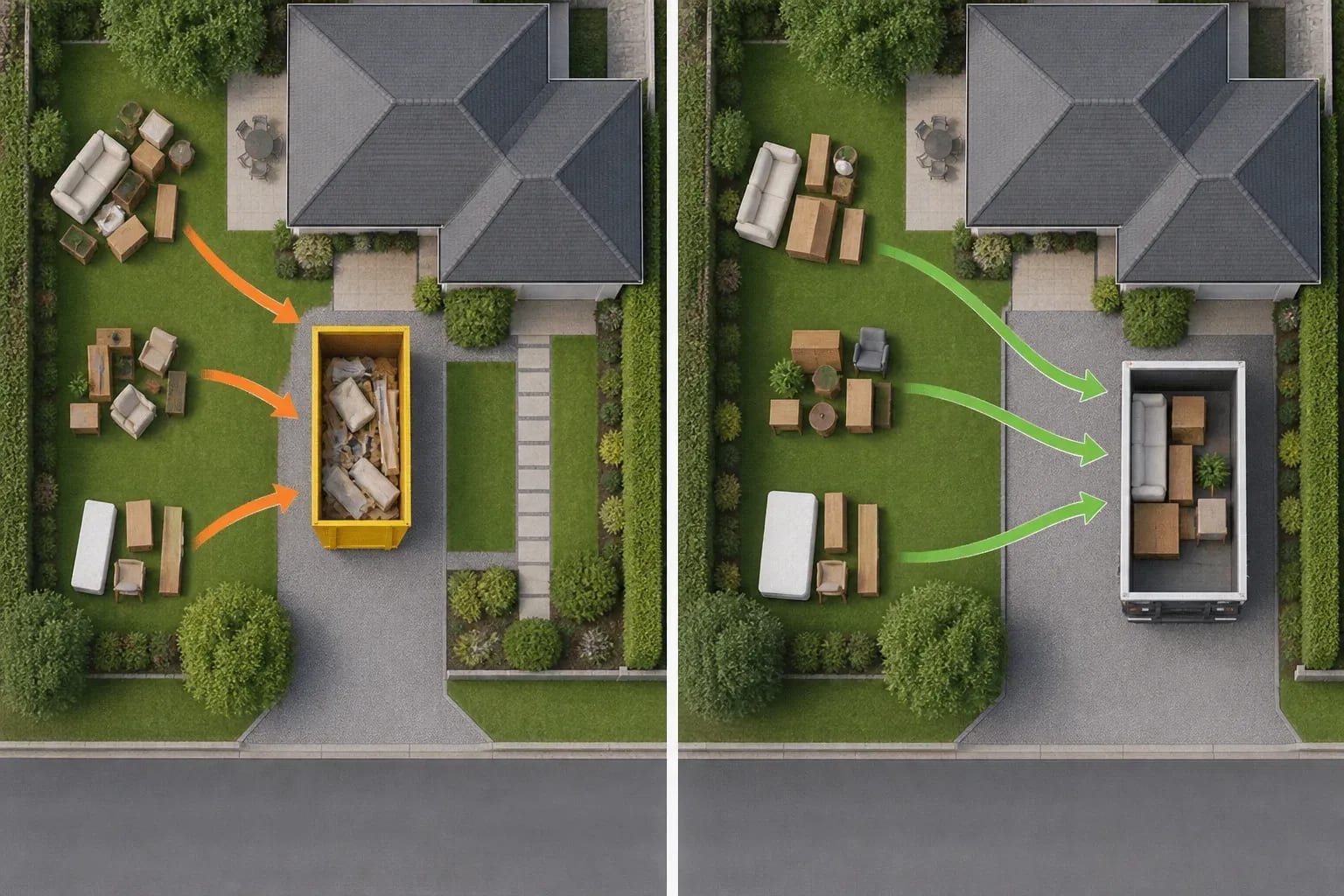
The difference is who does the lifting and when. A container is filled gradually by whoever is working on site. A crew collection loads a finished pile in one visit. For dense material, the comparison of skip hire and direct removal explains how volume, weight and loading labour change the choice.
Preparing soil, sand and pots for collection
A little preparation keeps a heavy load from taking longer than planned.
Bag what you can
Loose soil and sand are far easier to move once they are in tied bags. Use sturdy bags and do not overfill them; a bag that splits on the carry route creates a second job. If you cannot bag the material, say so in the request.
Empty pots you are not sending full
If a planter is going but its plant and soil are staying, or the soil is going separately, empty it beforehand. If it is going full, say so. Do not leave the decision to the day.
Group by type
Put bags in one place, pots in another and branches somewhere else. Sorted groups load faster and make it easier for the crew lead to check the inventory against the photos.
Gather broken pieces
Collect shards and fragments into a sturdy container or bag. Scattered pieces are slow to pick up and can injure hands.
Keep the route clear
Remove hoses, tools, furniture and loose stones from the path between the material and the gate. Heavy items need a stable, unobstructed route.
Separate anything that needs another route
Containers of pesticides, fertiliser chemicals or paint should not be mixed into garden waste. Dubai Municipality's Waste Segregation Guide directs paint and pesticide containers to an approved hazardous waste company. Hazardous chemicals are not accepted in a junk removal load, so set them aside and arrange that route separately.
Balconies, courtyards and villa gardens
The same materials present differently depending on where they are.
Apartment balconies
A balcony garden can hold a surprising number of pots, bags of potting mix and planters filled with soil. Everything has to travel through the apartment and down in the lift, so bagging and emptying matter more here. Where the building requires a service-lift booking, it is arranged as part of the collection, so mention your building when you send the photos. Protect floors along the route from the balcony to the door.
Townhouse courtyards
A courtyard may only be reachable through the house. Check the route through the living space and whether a side gate offers a shorter path. Planters lining a small courtyard can add up to a significant load once counted.
Villa gardens
Villas may have direct gate or side access, which makes heavy loading easier, but they may also have the largest volumes: whole planting beds, multiple large planters and landscaping offcuts. Tell the crew which gate or side entrance to use. The crew loads from the garden, side access or gate, whichever the villa allows.
When soil and pots are part of a full villa clearance
If the garden is one part of a move-out or handover, the soil, sand and pots should be planned with the rest of the property rather than as an afterthought. A whole-property clearance covers the garden, storage, maid's room and majlis together with a larger crew and can run over more than one day.
Heavy outdoor material is one of the things that can move a full clearance from one day to two. The guide to how long a villa clearance takes explains how garden volume, access and preparation affect the schedule. In some cases it helps to clear the garden in a separate visit first, so the main clearance day focuses on the house.
For handovers, check what has to be removed and what must stay. Built-in planters, landscaped beds and soil that form part of the property may need to remain. Only remove what is yours to remove, and confirm with the landlord or property manager if you are unsure.
What happens after collection
Garden loads are sorted at the yard with the rest of the collection. Usable items, such as outdoor furniture in reasonable condition, are passed on rather than dumped, and the remainder goes to approved municipal facilities. Dubai Municipality's waste classification guideline treats horticultural waste as its own category, separate from general household waste, which is one reason garden material benefits from being identified clearly.
Common mistakes with heavy garden waste
- Photographing the branches but not the soil pile behind them.
- Describing a load as "a few pots" when several are large and still full.
- Leaving soil loose when it could easily have been bagged.
- Mixing stones, rubble or construction offcuts into soil without mentioning them.
- Overfilling bags so they split when lifted.
- Leaving chemical containers in the garden pile.
- Forgetting that a balcony load must go through the apartment and lift.
- Booking a standard garden collection for a landscaping-scale volume without sending photos first.
Each of these turns into a delay or a change on the day. The fix in every case is an honest description and clear photos before booking.
Removal, not gardening
A garden collection removes what has already been cut, dug or emptied. It does not include cutting, trimming, digging out beds or removing plants from the ground. If landscaping work is still under way, let the gardener or landscaper finish first, then arrange collection of the material they leave. For palm trees specifically, the guide to what to do with palm fronds covers the cutting-then-collection sequence.
Photograph the pile from the gate, including the soil bags, the sand and every pot, and send it through the garden waste removal page so the right crew and truck are confirmed before the visit.
Frequently asked questions
Do you take soil and sand?
Bagged soil is part of a normal garden load. For large loose volumes of soil or sand, send photos and the crew and truck needed will be confirmed before booking.
Can I put soil in my household bin instead?
Dubai Municipality classifies horticultural waste separately from general household waste, and large amounts of soil are better arranged as a collection than squeezed into household bins. Check the guide to what Dubai bins won't take for the wider rules on what belongs in household bins.
Will you take large planters that are still full?
Say which planters are full and include photos with something for scale. Filled planters are heavy, so they are assessed from the photos, and you may be asked to empty them or confirm the route.
Do you dig out plants or remove planting beds?
No. The collection removes material that has already been cut, dug or bagged. A gardener or landscaper does the digging and cutting.
Can the old garden furniture go in the same visit?
Yes. Outdoor furniture is loaded with the green waste in the same visit and sorted with the rest of the load.