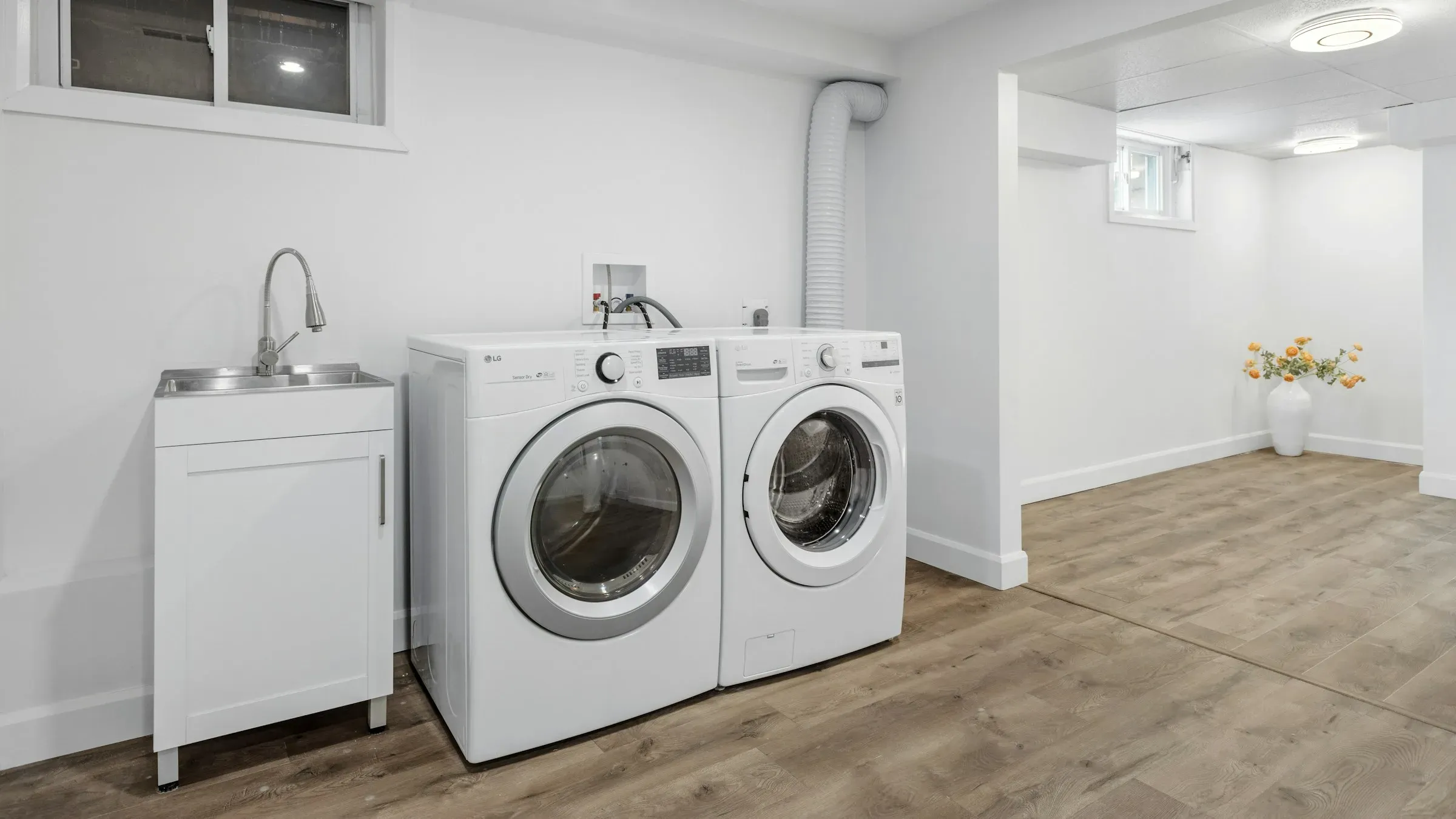
An old tumble dryer can leave once three things are settled: it belongs to you, it is unplugged and emptied of water, and anything it was attached to has been dealt with. A vented dryer has an exhaust hose, a condenser dryer may hold water in a tank or drain line, and a dryer stacked on a washing machine has to come down before either can move. Identify which you have, photograph it where it stands, and check the route out of the laundry space before you ask anyone to collect it.
The type of dryer decides most of the preparation. The disposal route comes after that, and there is more than one.
Identify the dryer before anything is unplugged
Look at the back and the front panel before you start. The model label is usually on the door frame or the rear panel, and the manual, if you still have it, names the type. Household dryers fall into three main designs.
Vented dryers
A vented dryer pushes warm, damp air out through a flexible hose. In some homes that hose runs to a fixed vent in the wall; in others it is hung through a window or simply left behind the machine. The hose can be detached from the dryer, but the wall vent and any sleeve or cover belong to the property. Note where the hose goes so the opening can be dealt with properly once the machine has gone.
Condenser dryers
A condenser dryer collects the moisture as water. It either stores it in a removable tank, usually in a drawer at the top or bottom of the front, or sends it to a drain through a thin hose. A tank model needs emptying before it moves. A drain-hose model is connected to the household plumbing, which makes it closer to a washing machine than to a standalone appliance.
Heat-pump dryers
A heat-pump dryer also condenses moisture and handles water in the same way as a condenser model. It contains a sealed heat-pump system, so it should be moved upright where possible and never opened or cut. Describe it as a heat-pump model in any quote request; that tells the collector more than a brand name does.
A combined washer-dryer is a different appliance: it has a water inlet, a drain and a drum that holds water. Treat it as a washing machine and follow the washing machine removal guide, which covers disconnection and retained water in more detail.
Check who owns it
In a rented apartment or villa, a dryer may have come with the property. Check the tenancy inventory before you treat it as yours. If the landlord supplied it, ask in writing whether it may be removed and whether a replacement is expected. Removing an appliance that belongs to the property can turn into a handover dispute, even when the machine was faulty.
If the dryer is yours, decide early whether it is genuinely leaving. A machine that dries poorly may need a lint clean or a blocked hose cleared rather than replacement. A machine with a burnt smell, repeated tripping of the electrics, a damaged drum or a door that will not latch is a different matter and should stay unplugged until it goes.
Prepare the dryer for collection
Preparation is mostly about making the machine safe to tilt and carry. It is not about taking anything apart.
Unplug it and let it cool
Switch the dryer off at the socket and unplug it. If it has run recently, leave it to cool before anyone handles the back panel or the hose. A dryer that is wired into a fused connection unit rather than a plug should be isolated by someone competent; do not open electrical fittings to speed up a collection.
Empty the water
On a tank model, pull the tank out, empty it and refit it so it does not slide out during carrying. On a drain-hose model, the hose needs disconnecting from the drain point. If you are not sure how, or the connection is hard to reach, arrange a qualified person rather than forcing a fitting. A little water may sit in the base of a condenser or heat-pump unit, so keep a towel nearby when it is first tilted.
Clear the lint and the drum
Remove and empty the lint filter, and the condenser unit filter if the model has one. Check the drum for socks, coins, hair ties and small items that have collected around the seal. A dryer drum is an easy place to lose something small for months. Close the door and tape it shut so it cannot swing open on the way out, and tape the power cable and any loose hose to the body of the machine.
Leave the vent opening in a sensible state
When a vented dryer leaves, the hose comes away from the wall vent and the opening is left exposed. In a rental, ask the landlord or building management how they want it left, whether that means fitting the existing cover, leaving it for their maintenance team or something else. Do not start building work or seal an opening that belongs to the building without agreement. The landlord inspection guide explains how small fixtures like this can matter at handover.
Stacked dryers need a plan
A dryer may be stacked on top of a washing machine using a stacking kit: a frame or shelf that holds the dryer in place. Before collection, decide whether only the dryer is leaving or both machines are. If the washer stays, the dryer has to be lifted down without damaging the machine below or the walls of a tight utility cupboard. That is a careful, two-person lift, not a job for one person on a step stool.
Ask the collector directly whether taking a stacked dryer down is part of the booking, and send a photo that shows the full stack, the kit and the space around it. If the kit is fixed to the wall or to the washer, say so. If you are keeping the washer, keep the stacking kit too until you know whether a future dryer will use it. Unstacking is also the moment to check that the washer's own hoses and power cable have not been disturbed.
Decide what goes with it and what stays out
A dryer collection is a good time to clear the laundry area, but the load should be honest. The old exhaust hose, lint filters, a broken drying rack and empty detergent boxes can be listed with the dryer. Full bottles of bleach, stain removers, fabric conditioner and other household chemicals should not be packed inside the drum or the box it travels in.
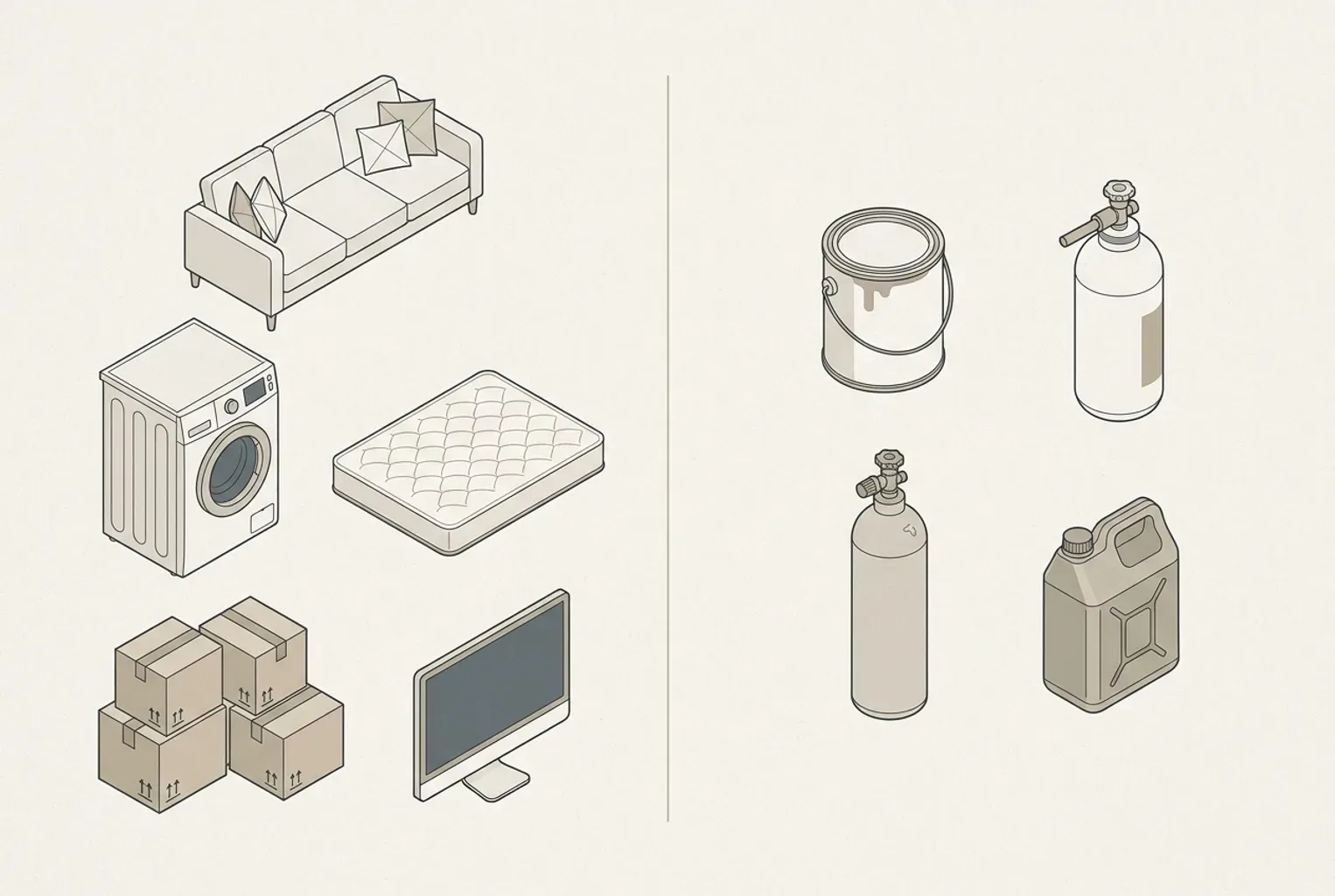
Keep chemicals, aerosols and anything that might leak in a separate group and ask what route applies to them. A paid collection that accepts appliances does not automatically accept household chemicals. Listing them separately avoids a surprise on the day and keeps liquids away from electrical parts.
The dryer itself is electrical equipment. The e-waste guide explains why an electrical appliance should not be treated in the same way as general household rubbish.
Plan the route out of the laundry space
A laundry area can be the narrowest space in the home: a cupboard off the kitchen, a corner of a utility room, or a balcony enclosure. Measure the dryer's width and depth, then measure the door of the laundry space and the narrowest point between there and the front door. Note any tight turn, a step down, a sliding door that only opens partway, or worktops and shelves the machine has to pass.
Clear the route of shoes, rugs, laundry baskets and anything fragile. Protect finished floors where the machine will be set down. A dryer is easier to handle than a full washing machine, but it is still a bulky box with no good handholds, and its edges can mark walls in a narrow corridor.
In a tower, the route continues through the corridor and down to the loading area. Where your building requires a service-lift booking or a move-out notice for appliances, arrange it before fixing the collection time. The service-lift booking guide lists the questions to ask building management. In a villa or townhouse, check whether the laundry is upstairs and whether the stairs have a tight turn.
Choose a disposal route
There are three realistic routes for an old dryer. The right one depends on its condition, your deadline and where you live.
Collection with a replacement
If a new dryer is being delivered, ask the retailer or installer whether they collect the old one. Read the written terms rather than relying on a verbal promise. Collection of an old appliance may depend on it being disconnected, emptied and ready at the point of delivery, and it may not include a stacked unit or a machine in another room. If the answer is unclear, plan a separate route rather than assuming.
The Dubai Municipality bulky-waste service
Dubai Municipality provides a bulky-waste service for household furniture, electrical appliances and electronics. The Municipality services directory describes the household appliances and furniture service as free and gives a three-working-day completion time. It also says the service does not include investment zones, so check your address through the official channel before relying on it. The Municipality bulky-waste guide explains how the service is requested and what it does and does not cover.
A paid appliance collection
A paid collection suits a dryer that has to go on a particular day, sits in an awkward position, is stacked, or is leaving with other items. Our appliance disposal service collects dryers from the laundry, kitchen or balcony with straps and a trolley, and routes metal and e-waste to licensed handlers. Confirm what is included before the day, especially if the dryer is stacked or the drain hose is still attached.
Reuse, if it is genuinely working
A working dryer in good condition may suit someone else, but only if a specific person has agreed to take it and can collect it before your deadline. Be honest about faults, smells and missing parts. A machine that trips the electrics or overheats should not be passed on.
Keep it inside until it is collected
Do not leave an old dryer in a corridor, beside the building's bins or in a bin room while you wait. Shared spaces are not a holding area, and an appliance left there causes problems for other residents and building staff. The guide to dumping rules explains why leaving bulky items in shared areas is a problem. Keep the dryer in the laundry area or another space you control until the collection is confirmed.
What to send when you ask for a quote
A clear request lets the collector confirm the job before arriving. Send:
- a photo of the dryer where it stands, showing the space around it
- a photo of the back, or a note saying whether it is vented, condenser or heat-pump
- whether it is stacked on a washer, and whether the washer stays
- whether it is unplugged, and for condenser models whether the tank is empty or the drain hose is still connected
- the floor, lift access and any building booking required
- anything else leaving from the laundry area, listed separately from household chemicals
- your deadline, such as a replacement delivery or a handover date
If a replacement is arriving, mention the delivery time too. The old machine needs to be out of the laundry space before the new one can be positioned. The water heater removal guide uses the same approach for another appliance that sits in a utility area and may be replaced on a fixed date.
Mistakes that slow down dryer removal
The avoidable delays are mostly about information. A stacked dryer described as a single machine, a drain hose still connected on the day, a condenser tank full of water, or an appliance that belongs to the landlord all change what can happen when the crew arrives. A dryer left by the bins to make the job look ready creates a different problem altogether.
Another gap to close is the vent. Once the dryer is gone, the hose opening is visible, and a landlord may notice it at inspection. Agree how it should be left before collection day, not after.
Finally, check the drum and the filters before the door is taped. Small items left inside are hard to recover once the machine has gone.
Once the dryer is out, look behind where it stood for lint, dropped clothing and any fixings from the stacking kit, then clean the floor before the space is used again.
Questions about dryer disposal
Can a dryer go out with the household rubbish?
No. A dryer is electrical equipment and a bulky item, so it needs its own route: a replacement collection, the Municipality bulky-waste service where your address is covered, or a booked appliance collection. Keep it inside your home until one of those is arranged.
Do I need to remove the exhaust hose myself?
You can detach the hose from the dryer and list it with the collection. Leave the wall vent and any fixed cover in place unless the landlord or building has told you what to do with them.
Is a condenser dryer harder to remove than a vented one?
It needs one extra step. The water tank must be emptied, or the drain hose disconnected, before the machine is tilted. After that, the carrying is similar.
My dryer is stacked on the washer. Can just the dryer be taken?
Yes, if the dryer can be lifted down safely. Send a photo of the whole stack and the stacking kit, say that the washer is staying, and confirm with the collector that unstacking is part of the booking.