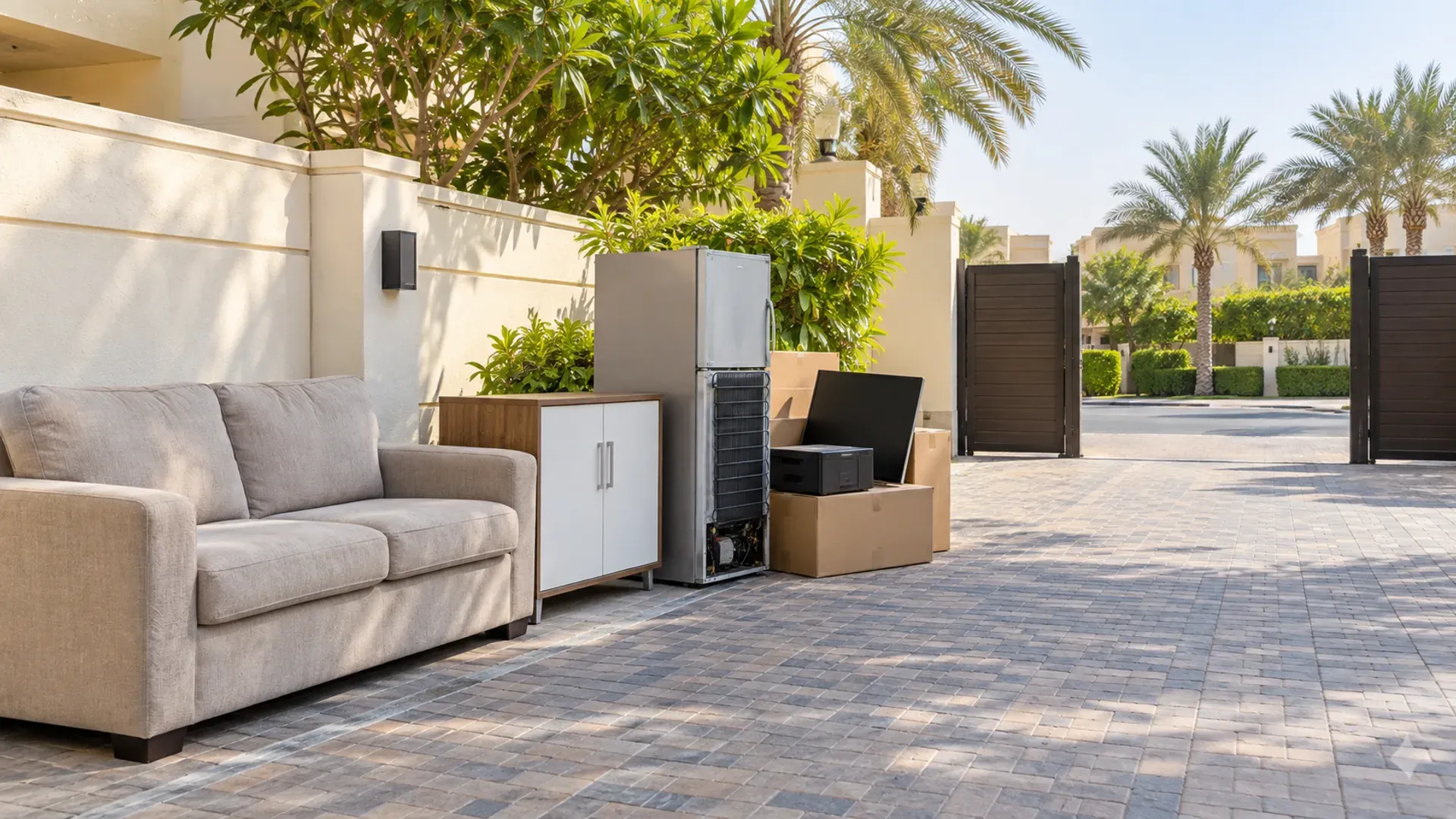
An old air conditioner is not just a heavy box of metal. It holds refrigerant gas, and UAE rules treat those gases as something to be recovered and controlled rather than released. Have a qualified AC technician disconnect the unit and deal with the refrigerant first, then send the unit itself through an appliance route such as Dubai Municipality’s bulky-waste programme or a paid collection.
Why an AC unit needs more care than other appliances
Refrigerant is the issue
Air conditioners move heat using a refrigerant circulating in sealed pipes. In a split system, those pipes run between the indoor unit and the outdoor condenser. Cutting or loosening them releases the gas.
The UAE Ministry of Climate Change and Environment describes hydrofluorocarbons, or HFCs, as gases “often referred to as refrigerant gases”, and classifies them among greenhouse gases that intensify global warming. Its announcement of Ministerial Decree No. (138) of 2023 explains that the decree regulates the use and distribution of HFCs to control their circulation and prevent their emission into the atmosphere.
What the decree says about disposal
According to the Ministry, the decree applies across the UAE, including free zones, to entities engaged in HFC-related activities. Among other obligations, those establishments must secure prior consent from the relevant authority when disposing of waste HFCs and equipment containing them. The Ministry also states that the decree lays the groundwork for controlling gas retrieval and recycling.
The decree is aimed at establishments rather than individual households. The practical message for a resident is still clear: refrigerant is a controlled substance, and handling it is work for a qualified, properly authorised technician, not something to improvise with a pipe cutter.
Metal and electronics too
Once the refrigerant is dealt with, an AC unit is still a mix of metal, wiring, a compressor and, in some units, a circuit board. Dubai Municipality’s Waste Segregation Guide lists Freon cylinders among non-recyclable metal items and gives white goods and electronic waste their own routes. An AC unit does not belong in a household bin.
Types of unit and what each involves
Window units
A window unit is self-contained: the refrigerant circuit, compressor and fans sit in one casing. It does not need its pipes opened to be removed, but it is heavy, awkward and may be fixed into a frame or wall opening.
Unplug it, then have someone competent release it from its mounting and support it as it comes out. Keep it upright where possible. Make good the opening afterwards; that may need a separate tradesperson.
Split units
A split unit has an indoor head on the wall and an outdoor condenser, connected by refrigerant pipes, a drain line and electrical cabling. This is the type where disconnection matters most.
A qualified AC technician can recover the refrigerant or pump it down into the condenser, then disconnect and cap the pipes, isolate the electrical supply and remove both parts. Ask the technician to confirm what they have done with the refrigerant.
Ducted and central systems
Ducted units and central plant are part of the building’s services. Removing them can involve the landlord, building management or a maintenance contractor and is outside the scope of a household clear-out. Do not treat them as loose appliances.
Portable units
A portable air conditioner is a self-contained appliance. It can be unplugged, drained and handled like other electrical equipment, although it still contains refrigerant and should not be opened.
Who should disconnect the unit
A qualified AC technician
Arrange disconnection with a qualified air-conditioning technician or maintenance company. Ask them to:
- recover or contain the refrigerant correctly
- cap the pipes and seal the openings
- isolate and make safe the electrical supply
- deal with the condensate drain
- confirm in writing what was done, if you need a record
Your landlord or building management
In a rented home, the air conditioning may belong to the landlord. Check your tenancy contract and ask before removing anything. Where the outdoor condenser sits on a roof or in a plant area controlled by management, access needs approval.
Not the collection crew, unless confirmed
A collection crew carries and transports appliances. Unless a provider confirms in writing that its team is qualified and authorised to handle refrigerant, assume disconnection is a separate job and book it first.
Disposal routes for the unit itself
Dubai Municipality bulky-waste collection
The Dubai Municipality services directory describes a free service for disposing of household appliances and furniture, with a published service time of three working days. The Waste Segregation Guide states that furniture and white goods can be managed through this bulky-waste programme, and gives the hotline 800-900.
Describe the unit accurately in the request, including that it is an air conditioner and that it has been disconnected. Check eligibility: the directory excludes investment zones, and an official Municipality announcement describes exclusions for real-estate development zones and free zones.
The official bulky-waste service guide explains how to prepare for collection.
An approved e-waste processing company
The Waste Segregation Guide directs electronic waste to a Smart Sustainability Oasis or an approved e-waste processing company. A full AC unit is too large for a drop-off container, but an approved company may collect it. Ask what it accepts and whether it handles refrigerant-containing equipment. The e-waste disposal guide explains how to check a company.
Paid appliance collection
A paid collection can be the simpler option when the unit is on an upper floor, the address is outside the bulky-waste service area, there are several units, or the AC is part of a larger clear-out. The appliance disposal service collects split and window units with other appliances, quoted from photos once the units are disconnected.
Through your installer
If you are replacing the unit, ask the installer whether removal and disposal of the old unit is part of the job. Confirm what happens to the refrigerant and the old equipment rather than assuming.
Getting the unit out of the building
An AC unit can be heavy, and the outdoor condenser can be in an awkward place. Plan the route before anyone lifts it.
Indoor units
Indoor heads are lighter but long. Check the path through doorways and corridors and protect walls on the way out.
Outdoor condensers
Condensers sit on balconies, roofs, brackets or ground-level plinths. Removing one from a bracket or a high balcony needs care and the right equipment. Do not lower a unit over a balcony edge.
Lifts and building rules
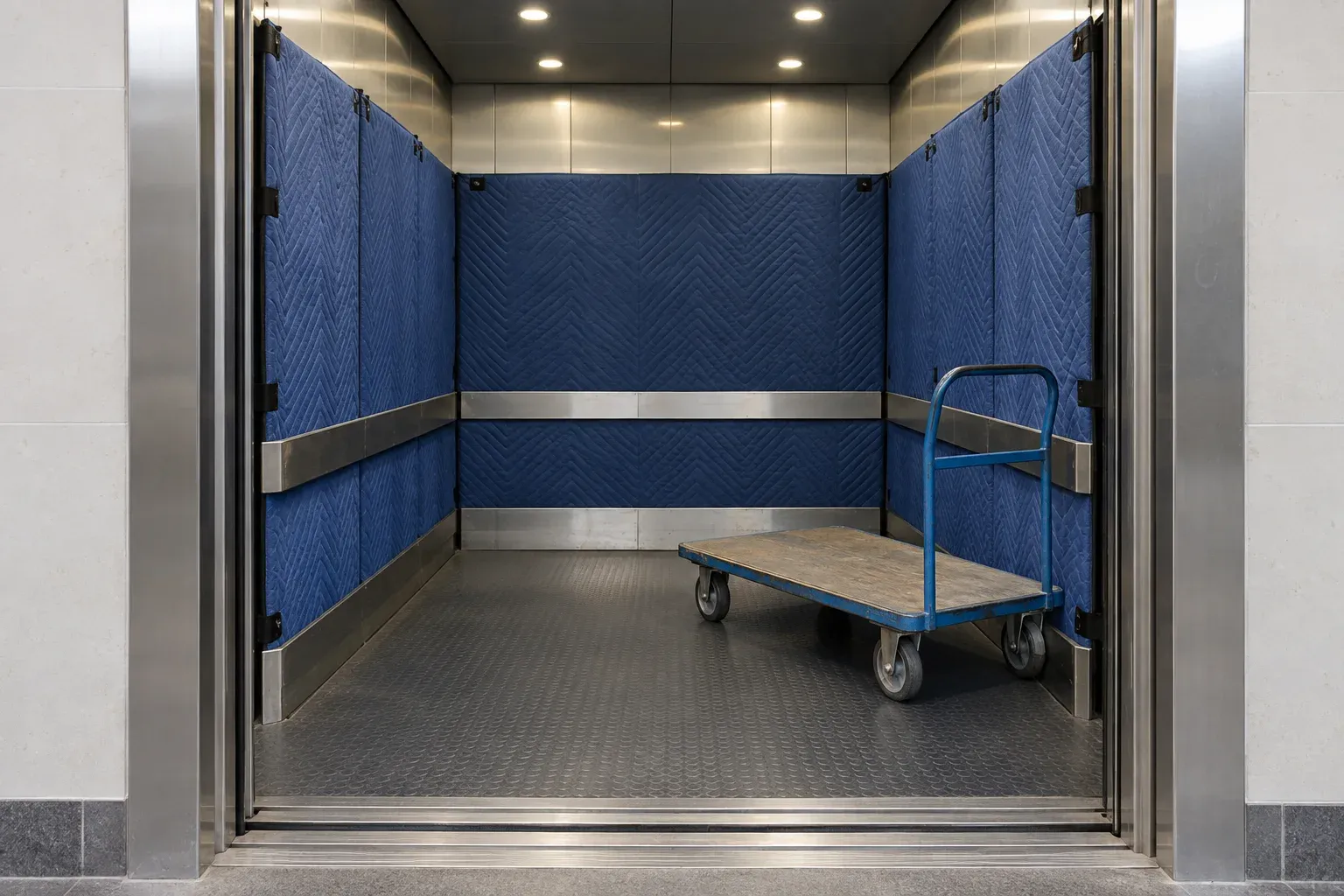
Where a building requires a service-lift booking or contractor approval, arrange it before disconnection day. The service lift guide explains how lift bookings work, and the bulky-item tower checklist covers moving heavy items out of high-rise buildings.
Preparing for collection
- Confirm disconnection has been completed by a qualified technician.
- Make sure pipe ends are capped and the unit is not leaking.
- Drain any remaining condensate water.
- Coil and secure loose cables and pipe tails.
- Keep the unit upright and stable.
- Store it inside the property until the collection arrives.
- Photograph it for the request or quote.
- Note the floor level and lift situation.
Do not leave the unit on a pavement, beside the bins or in a corridor while waiting. The dumping fines guide explains why.
What to ask before booking
For the technician
- Will you recover or contain the refrigerant, and how?
- Will you cap the pipes and make the electrical supply safe?
- Will you remove both the indoor and outdoor units?
- Do you need building access approval or a lift booking?
- Can you confirm in writing what was done?
For the collection or disposal route
- Do you accept air conditioners, and both parts of a split unit?
- Must the unit be disconnected beforehand?
- Is carrying from an upper floor or balcony included?
- Where does the unit go after collection?
- Is there a charge, and what does it cover?
Rented homes and handovers
If you rent, the air conditioning may be part of the property. Removing a landlord’s unit without permission can create a dispute at handover. Check the tenancy contract and ask in writing before anything is disconnected.
If you installed a unit yourself and the landlord wants it removed before you leave, agree what condition the wall, balcony and pipe openings should be left in. Holes for pipes and drains may need sealing or making good, which may be a separate trade.
The end-of-tenancy planning guide covers the wider move-out timeline.
Removing several units at once
A villa refurbishment or full replacement can involve several indoor heads and condensers. Treat it as one planned job rather than a series of separate visits.
Count every indoor and outdoor unit and note where each one is. Ask the technician to disconnect all of them in one visit if practical. Group the units safely inside the property, keep matching parts together and book a single collection that can handle the full number and weight.
Safety during removal
Electrical isolation
Make sure the unit’s power supply is isolated before anyone touches the wiring. A technician should confirm this, not assume it.
Weight and lifting
Condensers and window units are heavy and awkward. Use enough people, keep the unit upright where possible and clear the route of trip hazards first.
Heat and timing
Working on a roof or balcony in the middle of the day can be dangerous in Dubai’s heat. Plan outdoor removal for cooler hours where the building allows it, and keep water nearby.
Sharp edges and fins
Condenser fins and sheet-metal casings can cut. Wear gloves and handle the unit by its frame.
Common mistakes
- Cutting refrigerant pipes to free a split unit.
- Removing a landlord’s air conditioner without permission.
- Assuming a collection crew will handle refrigerant.
- Lowering a condenser over a balcony edge.
- Leaving the unit outside before collection is confirmed.
- Putting small AC parts or remotes in the general bin.
- Forgetting the outdoor condenser when booking collection.
- Not asking where the unit and its refrigerant go.
Replacing rather than removing
If a new unit is going in, coordinate the two jobs: the installer disconnects the old unit and installs the new one, and collection takes the old unit away afterwards.
Agree who is responsible for each step, so the old condenser is not left on the balcony for weeks after the new system is running. If the installer takes the old unit, ask for confirmation of what happens to it.
Keep the source date visible
The official sources in this guide were checked on 2 October 2026: the Ministry of Climate Change and Environment’s announcement of Decree No. (138) of 2023, Dubai Municipality’s Waste Segregation Guide and services directory. Regulations, approved operators and service terms can change, and the current official sources control.
An old AC unit is two jobs: dealing with the refrigerant and removing the appliance. Have a qualified technician disconnect it and handle the gas first. Then send the unit through the Municipality bulky-waste programme, an approved e-waste company or a paid collection, and keep it safely inside until it goes.
Questions about old AC units
Can I remove a split AC unit myself?
Not the refrigerant side. Disconnecting a split unit means opening a sealed refrigerant circuit, and the UAE regulates refrigerant gases to prevent their release. Have a qualified AC technician disconnect it, then arrange removal of the unit.
Is an old AC unit e-waste?
It contains electrical and electronic components as well as metal and refrigerant. Dubai Municipality’s guidance gives white goods and electronic waste their own routes, so it does not belong in a household bin.
Will Dubai Municipality collect an old air conditioner?
Its bulky-waste programme covers household appliances and white goods for eligible addresses. Describe the unit accurately in the request and confirm it has been disconnected by a technician.
Can a junk removal company disconnect my AC?
Ask directly. Unless the company confirms in writing that its team is qualified and authorised to handle refrigerant, book a qualified AC technician for disconnection and use the collection only to remove the unit.
What about a window or portable AC?
These are self-contained, so the refrigerant circuit stays sealed. Unplug and drain them, support them carefully during removal and send them through an appliance route. Do not open the casing.