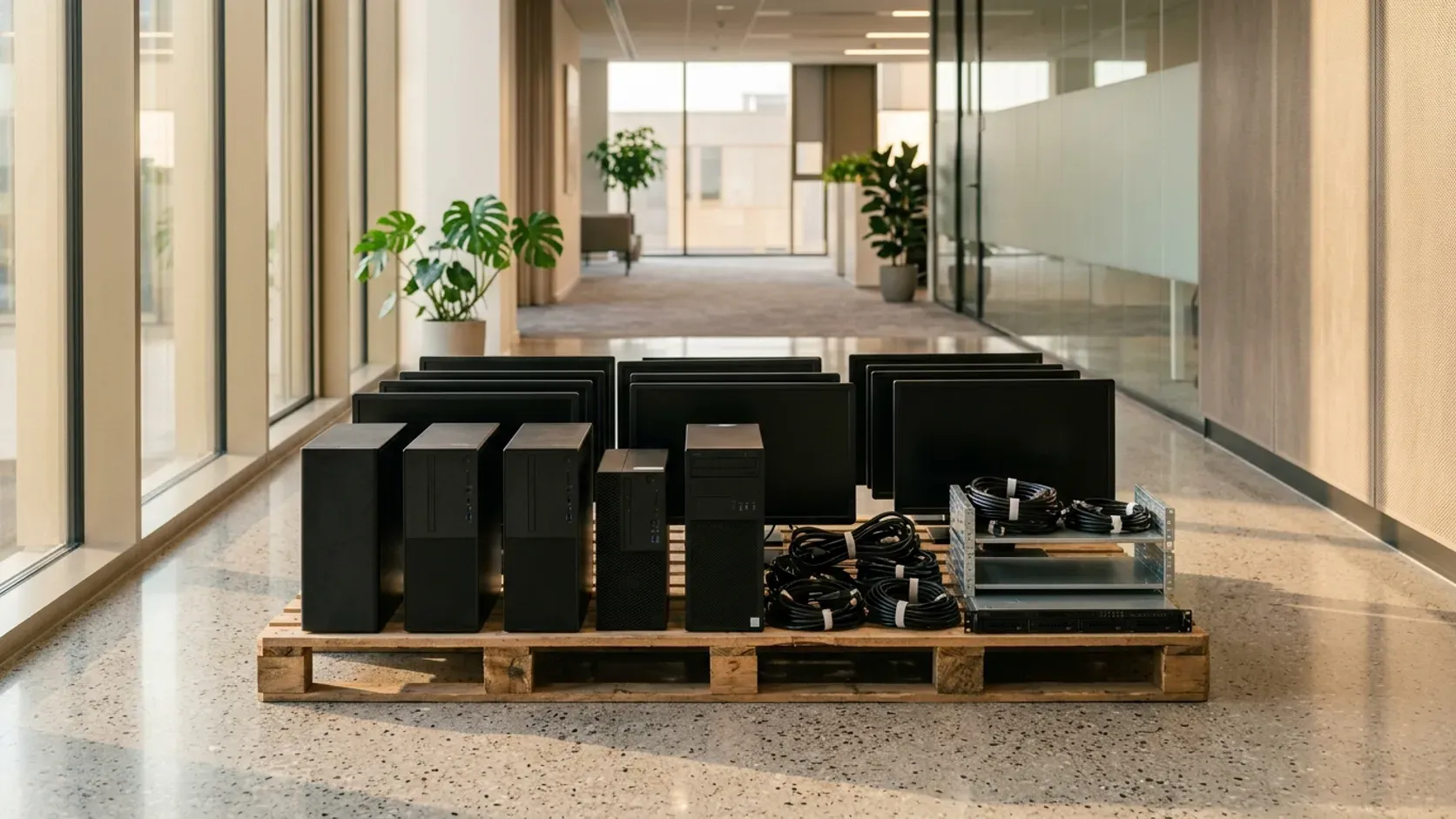
Restaurant equipment removal should begin only after ownership, food safety, utility disconnection and the handback scope are clear. Inventory every appliance and worktable, empty food and liquids, separate leased or reusable assets, arrange qualified disconnection, and confirm the loading route before the collection window.
A clearance provider can assess approved, disconnected equipment and loose contents. That does not automatically include gas, electrical, refrigeration, plumbing or fire-system work; extraction dismantling; grease-trap service; deep cleaning; or removal of fitted kitchen fabric. Define those jobs separately and sequence them before physical collection.
Start with the lease, asset register and handback scope
Confirm whether the project is a closure, refit, equipment replacement, branch transfer or landlord handback. Record the last operating time, food removal deadline, utility isolation, contractor window, inspection and key return. Work backwards from the earliest fixed access or handover deadline.
Check the lease, equipment finance records, supplier agreements and landlord instructions. Refrigerators, coffee machines, dishwashers, point-of-sale equipment, gas cylinders and branded displays may belong to a lessor or supplier. Do not approve them for disposal because they are physically inside the restaurant.
Name one authorised project contact. Chefs, managers, finance staff, contractors and landlords may give different directions. The removal provider needs one current inventory and one escalation route for uncertain items.
Separate loose contents from fitted systems
Freestanding tables, chairs, shelving and disconnected appliances are different from extraction canopies, ducts, fixed counters, cold rooms, gas manifolds, floor drains, grease traps, fire-suppression systems, wall cladding and built-in services. Mark each item as loose, fixed or uncertain.
Fixed systems can affect building safety and approvals. Use appropriate contractors and written property instructions. A restaurant-equipment collection should not be treated as permission to cut pipes, cables, ductwork or anchors.
Build an item-by-item equipment register
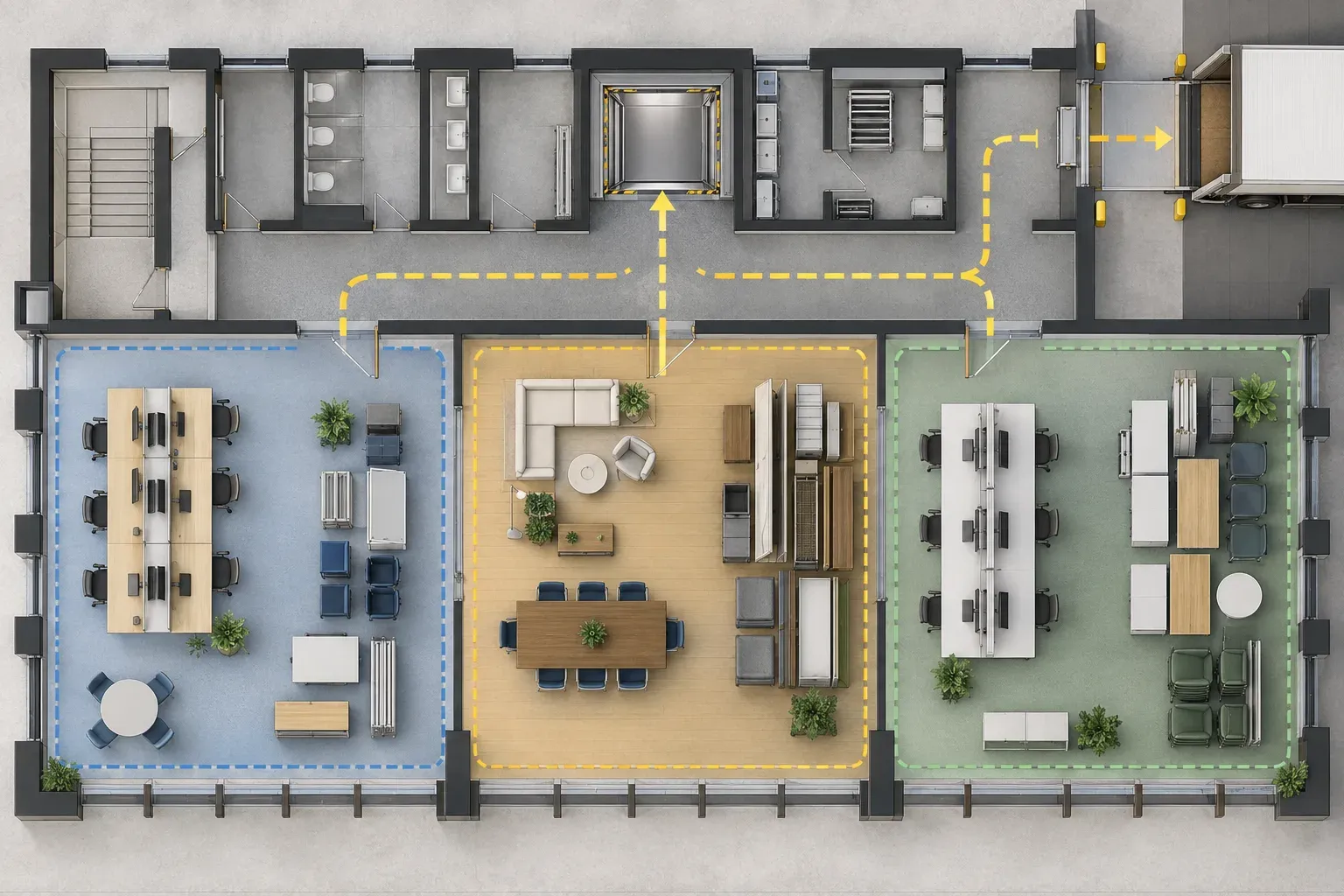
Walk front of house, bar, kitchen, wash area, cold storage, dry store, office, staff area, delivery zone and external service space. Record manufacturer, model, dimensions, condition, asset number, owner, connection type and decision for each significant item.
Include ovens, ranges, fryers, grills, salamanders, microwaves, refrigerators, freezers, ice machines, display cases, preparation tables, sinks, dishwashers, coffee machines, mixers, slicers, shelving, trolleys, bins and small appliances. Count loose trays, racks, baskets and accessories separately.
Use decision categories:
- Transfer to another site.
- Return to owner, supplier or lessor.
- Retain for the incoming operator or landlord.
- Confirmed recipient for reuse.
- Approved for disposal.
- Decision unresolved.
Keep unresolved equipment out of the collection zone. Photographs and labels help reconciliation but do not replace authorisation.
Record condition without testing unsafe equipment
Photograph labels, existing damage, missing guards, cracked glass, corrosion and visible leaks. Do not energise a disconnected or faulty appliance merely to prove whether it works. State when condition is unknown.
Keep accessories with equipment intended for transfer or reuse. Label shelves, doors, baskets, controls, keys and manuals. Loose components left in a mixed carton can make an otherwise reusable asset incomplete.
Finish food and stock decisions first
Remove saleable, returnable and perishable stock through the business’s approved process before clearance. Complete counts and write-offs. Junk removal is not inventory control, and the clearance crew should not decide whether food can be sold, donated or discarded.
Empty dry stores, refrigerators, freezers, preparation containers and dispensers. Check drawers, under-counter storage and high shelves. Keep food, oils, syrups, sauces, cleaning products and packaging in separate, clearly identified groups.
Do not place food waste inside equipment to save space. It adds weight, creates leaks and hides the appliance’s internal condition.
Handle temperature-controlled stock before shutdown
Plan what happens to chilled and frozen stock before power is isolated. The business remains responsible for food-safety decisions and records. A removal provider should receive empty equipment, not make judgements about product safety.
Once stock is removed, follow manufacturer or technician instructions for shutdown, defrosting and drying. Control meltwater and do not allow it to spread across a kitchen or loading route.
Arrange technical disconnection before collection
Identify every electrical, gas, water, drainage, refrigeration, steam and data connection. Arrange competent technical work appropriate to the system and property. Obtain landlord or building approval where required.
The collection crew should be told whether an appliance is genuinely freestanding and safely disconnected. A plug visible near the wall does not prove there are no water, waste or remote refrigeration connections.
Do not cut cables, flexible gas lines, copper pipes, drain hoses or refrigerant lines. Make property-side services safe and capped through the appropriate contractor. Keep isolation and completion records where the project requires them.
Treat gas equipment and cylinders separately
Record ranges, ovens, grills, fryers and water heaters connected to gas. State the connection and isolation status. Gas-system alteration is not part of ordinary junk collection.
Return cylinders through their approved supplier or route. Do not place cylinders, cartridges or pressurised containers in a mixed load, even when they appear empty. Keep them secured and away from heat while appropriate arrangements are made.
Empty oil, grease, water and product residues
Fryers, filters, grease containers, coffee machines, ice machines, dishwashers and beverage systems can retain liquids after normal shutdown. Ask the relevant technician or service provider how to drain and prepare each unit.
Used cooking oil, grease, detergents, descalers and unknown liquids should not be hidden inside equipment or poured into an unsuitable drain. Keep them in appropriate labelled containers and use the business’s approved route.
Clean only to the extent needed for safe handling and the equipment’s destination. Deep cleaning and grease-trap servicing are separate services. State if an item remains greasy, wet, odorous or contaminated so the collector can decide whether it is acceptable.
Protect the route from leaks
Check drain pans, hoses, filters and reservoirs. Cap or secure loose prepared hoses only through an agreed method. Use suitable containment and surface protection; do not rely on cardboard alone beneath a heavy wet appliance.
If a leak is unexplained or involves refrigerant, fuel or a chemical product, stop and obtain specialist advice. Do not continue moving the unit through a public area.
Plan refrigeration equipment carefully
List upright and under-counter refrigerators, freezers, cold tables, display cases, ice machines, remote condensers and cold-room components separately. Record whether each unit is self-contained or connected to a remote system.
Refrigeration circuits should remain intact unless handled by an appropriate technician. Do not pierce, cut or flatten cooling equipment. State if a unit is damaged, has exposed pipework or has an unknown service history.
Empty, defrost and dry approved self-contained units according to manufacturer and technician guidance. Secure loose shelves and doors only as agreed for transport, while avoiding a condition that could trap a person before collection.
Cold rooms are not ordinary appliances
Panels, doors, evaporators, condensers, controls and pipework form a system that may be fixed to the property. A cold-room dismantling requires a defined technical and fit-out scope. Do not represent it as one refrigerator in a quote request.
If only loose racking or disconnected internal equipment is being removed, label that boundary clearly and leave system components to the appointed specialist.
Separate extraction, fire and ventilation systems
Canopies, ductwork, fans, make-up air, fire suppression and controls may serve more than one piece of equipment and may be subject to property requirements. Confirm ownership and the required handback condition before any work.
Do not remove filters, nozzles, detectors, panels or ducts as ordinary loose metal without approval. Grease contamination, height work, sharp sheet metal and hidden services change the risk and disposal route.
Where a fit-out contractor is dismantling an approved system, agree who contains the resulting metal, insulation and other debris. Keep that material separate from loose restaurant furniture and appliances. The office strip-out guide provides a useful framework for phasing fixed work, access and loose-content removal.
Assess weight, shape and lifting constraints
Commercial cooking and refrigeration equipment can be dense, top-heavy or awkward. Provide documented weight where available; otherwise give the exact model and dimensions rather than guessing. Identify wheels, adjustable feet, detachable sections and lifting points.
Do not assume equipment on castors will roll. Wheels may be locked, damaged, grease-bound or unsuitable for thresholds. A unit may also be fixed to a wall, counter or service connection.
Safes, stone counters, deck ovens, large mixers and multi-deck equipment need specific assessment. Show anchors, steps, ramps and floor conditions. The provider may need equipment, extra labour or a specialist contractor.
Keep guards and sharp parts visible
Slicers, processors, broken stainless steel, cracked glass and exposed blades require controlled preparation. Isolate power, use manufacturer safety features, retain guards where possible and disclose every sharp or damaged part.
Never bury blades, skewers or broken glass inside a carton of utensils. Use an appropriate rigid container and agreed labelling.
Separate dining-room furniture and serviceware
Inventory tables, chairs, booths, high stools, host stands, shelving, menu displays and outdoor furniture. Mark fitted banquettes and counters separately. State table-top materials and whether bases detach.
Glass and stone tops need specific protection. Chairs stacked for storage may not be safe to transport in the same stack. Ask what preparation the collector wants rather than improvising with stretch wrap.
Crockery, glassware, cutlery, trays and kitchen utensils should follow the business’s reuse or disposal decision. Pack retained or transferable items appropriately. Broken pieces should remain visible and controlled, not mixed into general bags.
Keep branded and data-bearing items controlled
Menus, uniforms, signs, packaging, loyalty material and printed records can carry brand or customer information. Decide whether they transfer, are de-branded or follow a controlled process.
POS terminals, tablets, computers, routers, cameras and storage devices require an asset and data decision before collection. Physical removal does not erase data or certify destruction. Use the IT equipment disposal guide to plan custody and data responsibility.
Confirm building access and loading rules
Ask the landlord, mall, hotel, free-zone manager or building management about contractor registration, insurance documents, permits, security passes, approved work hours, lift protection, service corridors, loading bays and vehicle limits. Requirements differ; use current instructions for the exact property.
Book the appropriate goods or service lift where one is required. Give accurate equipment dimensions and weight information. Do not take greasy or bulky equipment through a public lobby or passenger lift without approval.
For a street-facing restaurant, confirm legal loading and the distance from the kitchen to the vehicle. Do not block a pavement, fire route, neighbouring unit or delivery area.
Measure the complete route
Measure kitchen doors, pass openings, corridors, turns, lift doors and car, ramps, loading doors and dock height. Account for door closers, crash bars, fixed counters and narrow points created by other equipment.
The widest appliance may fit through a door but fail at a ninety-degree turn. A tall refrigerator may clear the corridor but not the loading entrance. Send route photographs with dimensions.
Sequence contractors around the last service
Write a project order: settle stock, finish service, remove food, isolate data, disconnect utilities, return leased assets, transfer retained equipment, collect approved loose items, complete fit-out work, clean and inspect. Adjust it to the property’s approved hours.
Avoid simultaneous work in a narrow kitchen or service corridor. Technicians, movers, removal crews, cleaners and fit-out contractors need defined zones and times. Keep emergency exits and fire equipment available throughout.
If work occurs outside trading hours, confirm that both the provider and building have approved the exact window. Do not assume overnight or weekend availability. The out-of-hours clearance guide explains how to align supervision, security and loading access.
Leave contingency before handover
Hidden connections, leased assets, residual liquids and landlord questions can delay equipment release. The final hours should be reserved for checking and repairs, not for discovering that the ice machine is still plumbed in.
Update all providers when the inventory or schedule changes. A quote based on ten disconnected appliances does not automatically cover additional fixed equipment found on the day.
Send a complete removal request
Include:
- The venue, level, unit and authorised contact.
- Closure, contractor, loading and handover windows.
- The itemised asset register and ownership decisions.
- Manufacturer, model, dimensions and documented weight where available.
- Every utility connection and confirmed disconnection status.
- Residual oil, grease, water, food or cleaning condition.
- Damage, blades, broken glass, batteries and other hazards.
- Wide photographs of front and back of house.
- Door, lift, corridor, ramp and loading measurements.
- Building approvals and other contractors using the route.
Send this to the commercial junk removal service and ask for explicit acceptance, exclusions, lifting assumptions, access requirements and pricing. “Restaurant equipment” is not a sufficient load description.
Supervise collection and reconcile the assets
Walk the zones with the crew lead. Identify retained, returned, transferred, approved and unresolved items. Keep the authorised contact available and prevent unapproved additions from entering the load.
After removal, inspect connections, floors, walls, cupboards and the route with the relevant contractors. Record remaining equipment, damage and landlord actions. Clearance completion does not certify utility safety, hygiene compliance or handback acceptance.
Retain asset records, disconnection documents, access approvals and any disposal records actually supplied. Do not claim recycling, destruction or recovery outcomes without evidence from the responsible provider.
Questions about restaurant equipment removal
Will the removal crew disconnect gas or hard-wired equipment?
Do not assume so. Arrange appropriate technical isolation and make the property-side services safe before collection. Give the removal provider the confirmed disconnection status.
Can food, oil or cleaning products stay inside appliances?
No assumption should be made that they are accepted. Empty equipment and route food, oil, grease and chemicals through the appropriate business process before collection.
Are extraction canopies and cold rooms included?
Not automatically. They are often fitted systems involving services, approvals and specialist dismantling. Scope them separately from loose equipment.
Can reusable equipment be collected with disposal items?
It can only be planned safely when the destinations are clearly separated and approved. Label transfer and return assets, keep accessories with them, and do not mix them into the disposal zone.
What is needed for an accurate quote?
Provide the item register, ownership decisions, models and dimensions, utility status, residue and damage information, route measurements, property requirements and the fixed deadline.