Before an old oven can be collected, establish whether it is freestanding or built in, electric or gas, and yours or the landlord’s. Empty and clean it, remove loose racks, and arrange appropriate disconnection before the collection window. Do not pull a built-in oven from its cabinet, cut a cable or touch a gas connection just to make it look ready. Send photographs of the installation and route so the provider can separate technician work from carry-out and disposal.
Identify the appliance and its installation
“Oven” may mean a small freestanding cooker, a full range with a hob, or a built-in appliance fixed within kitchen cabinetry. Those are not interchangeable collection jobs.
Built-in single or double oven
A built-in oven sits inside a tall cabinet or below a worktop. Fixings may be visible around the front frame when the door is open, but that does not mean the appliance should be unscrewed by the householder. Its electrical connection and weight remain hidden until it is released.
Photograph the oven front, the surrounding cabinet, the space immediately in front and any visible controls or isolation switch. Say whether it is a single or double oven. Do not remove cabinet panels or use the open door as a shelf while preparing it.
Freestanding electric cooker
A freestanding cooker combines an oven with a hob and stands on the floor between or beside cabinets. It may have a plug, a dedicated electrical connection or a separate isolator. “Freestanding” describes the cabinet arrangement; it does not confirm that the cooker is disconnected or safe to pull forward.
Show the full height and width, adjacent units and the route out of the kitchen. Mention a glass or ceramic hob, damaged door, loose control or cracked panel so handlers know about fragile and sharp parts.
Gas or dual-fuel cooker
Any gas connection changes the preparation plan. Do not disconnect, cap or test it yourself. Arrange an appropriately qualified professional and tell the collection provider that the appliance is gas or dual fuel. The collection should be timed after safe disconnection has been confirmed.
Countertop oven or microwave combination
A countertop appliance is smaller and is normally unplugged rather than fixed into the kitchen. It still needs to be empty, cool and clean, with its glass turntable or loose tray secured separately. If several small electrical appliances are leaving, list them all; do not describe a mixed load simply as “one oven.”
This article focuses on domestic ovens and cookers. Commercial kitchen equipment, extraction systems and fixed counters require a specific commercial assessment.
Confirm that you have authority to remove it
Check the inventory and tenancy documents in a furnished rental. A fitted oven is commonly part of the property, but the actual agreement and owner’s instruction decide. A fault, renovation or replacement delivery does not by itself transfer ownership to the tenant.
Ask the landlord or property manager in writing if there is any doubt. Confirm whether the appliance is to be repaired, replaced, stored or disposed of, and who is arranging disconnection. Keep the instruction with the handover records.
If a retailer is delivering a replacement, read the removal terms before making another booking. Confirm whether the retailer removes the old unit, whether it must already be disconnected, and whether it will take a built-in or gas appliance. Delivery of a new oven does not automatically include cabinet work, electrical work or disposal of the old one.
If the oven is going to another address for reuse, state that clearly. Disposal and careful relocation of an appliance intended to work again have different handling and service requirements.
Separate disconnection from collection
An appliance-removal booking should state who makes the oven safe and ready. Never rely on the word “removal” to mean both technical disconnection and physical carry-out.
Electrical connections
An oven may plug into a socket or be connected to a dedicated circuit. Use the manufacturer’s instructions and an appropriate professional where disconnection is not a simple, accessible plug operation. Do not remove covers, cut a cable or pull the appliance forward while it remains connected.
If the plug, cable, switch or socket is damaged, stop using the appliance and disclose the damage. Electrical assessment is outside the collection crew’s role unless a provider has explicitly confirmed an appropriately qualified service.
Gas connections
Gas appliances must be handled by an appropriately qualified professional. Arrange the visit before collection and keep evidence that the disconnection and any necessary capping were completed. Do not loosen a hose, close a valve and assume the installation is safe.
If you smell gas or suspect a leak, leave the appliance alone and follow the relevant emergency and building procedure. Do not continue preparing the oven or wait for a junk-removal appointment to address it.
Cabinet release
A built-in oven may need screws, trim and support arrangements dealt with before it leaves the cabinet. Ask the technician and collector who is responsible for each step. The person releasing it must account for the appliance’s weight as it moves forward; an open oven door is not a lifting handle or support platform.
Photographs make this boundary visible. Show the installation before any work, then tell the collector when it has been professionally disconnected and released. If it will remain in the cabinet until collection, that condition must be part of the agreed scope.
Let the oven cool, then empty it completely
Stop using the oven with enough time for every surface to become cool before cleaning or collection. Remove trays, shelves, pans, thermometers, liners and anything stored in the drawer beneath a cooker. Check the grill compartment and warming drawer separately.
Loose metal racks can slide out when the appliance is tilted. Once clean and dry, wrap them together or place them in a labelled box. A glass shelf, turntable or removable door panel needs protection and should be declared as fragile.
Remove food residue using the manufacturer’s care instructions. Do not start a high-temperature self-cleaning cycle immediately before removal; it creates heat and may leave ash that still needs wiping away. Avoid mixing cleaning products, and do not leave bottles or aerosol cans inside the oven for transport.
The collector should receive an empty appliance, not one used as a container for kitchen waste. Separate packaging, cookware and ordinary rubbish from the electrical-appliance load.
Inspect and describe the condition honestly
Photograph damage rather than hiding it. A cracked glass door, loose hinge, sharp metal edge, missing foot or detached control affects handling even when the appliance is already unwanted.
Keep the door closed for carrying. If it will not latch, tell the provider and ask how it should be secured; do not place tape across a hot, dirty or fragile surface and assume that makes it safe. Do not stand or sit on the door to force it shut.
For a freestanding cooker, mention whether the feet are unstable or the unit rocks. For a built-in oven, say whether it is still supported in the cabinet. A partly released oven is more hazardous than one left installed or one fully placed on a stable surface by the appropriate person.
Unknown residue, signs of overheating or a damaged gas component need professional assessment. A removal guide cannot diagnose whether an appliance is safe to disconnect or reuse.
Choose a realistic disposal route
Make the route decision before arranging the technician so the disconnected appliance does not sit in the kitchen indefinitely.
Reuse by a confirmed recipient
Reuse is sensible only if the oven belongs to you, is complete and a recipient has agreed to take its exact type and condition. State any known fault and do not call an appliance tested or safe unless the relevant assessment supports that description. Confirm who disconnects, who transports and who installs it at the destination.
Dubai Municipality bulky-waste collection
Dubai Municipality’s services directory lists household appliances and furniture under its bulky-waste service. It describes the service as free, gives a three-working-day service time and excludes investment zones. Check current eligibility and instructions through the official Dubai Municipality services directory.
Ask how the appliance must be presented and whether your address is covered. The official collection route does not remove the need for safe disconnection. Keep the oven inside the property until the booking instructions tell you when and where to present it.
Paid appliance collection
A paid collection may suit a built-in or heavy cooker, a fixed building access window, an excluded address or a mixed load of kitchen appliances. Send the real installation and route to the appliance disposal service and ask the provider to confirm what begins only after technician work is complete.
If kitchen cabinets, worktops, renovation rubble or an extractor are also leaving, list them separately. An oven collection does not silently include a kitchen strip-out. The renovation waste guide explains why fitted materials and debris need their own scope. If a dishwasher is leaving from the same kitchen, its water, drain and cabinet release need a separate dishwasher preparation plan.
Measure the appliance and exit route
Record the oven or cooker’s width, depth and height from its documentation or accessible surfaces. Include knobs, handles and a raised back where applicable. Do not pull a connected appliance forward solely to measure its rear.
Photograph and, where practical, measure:
- The opening around a built-in appliance.
- The gap between opposing cabinets or an island.
- The kitchen doorway and its clear opening.
- Tight corridor turns and the apartment entrance.
- The service-lift door, stairs and landings.
- Steps, gates and the vehicle loading distance.
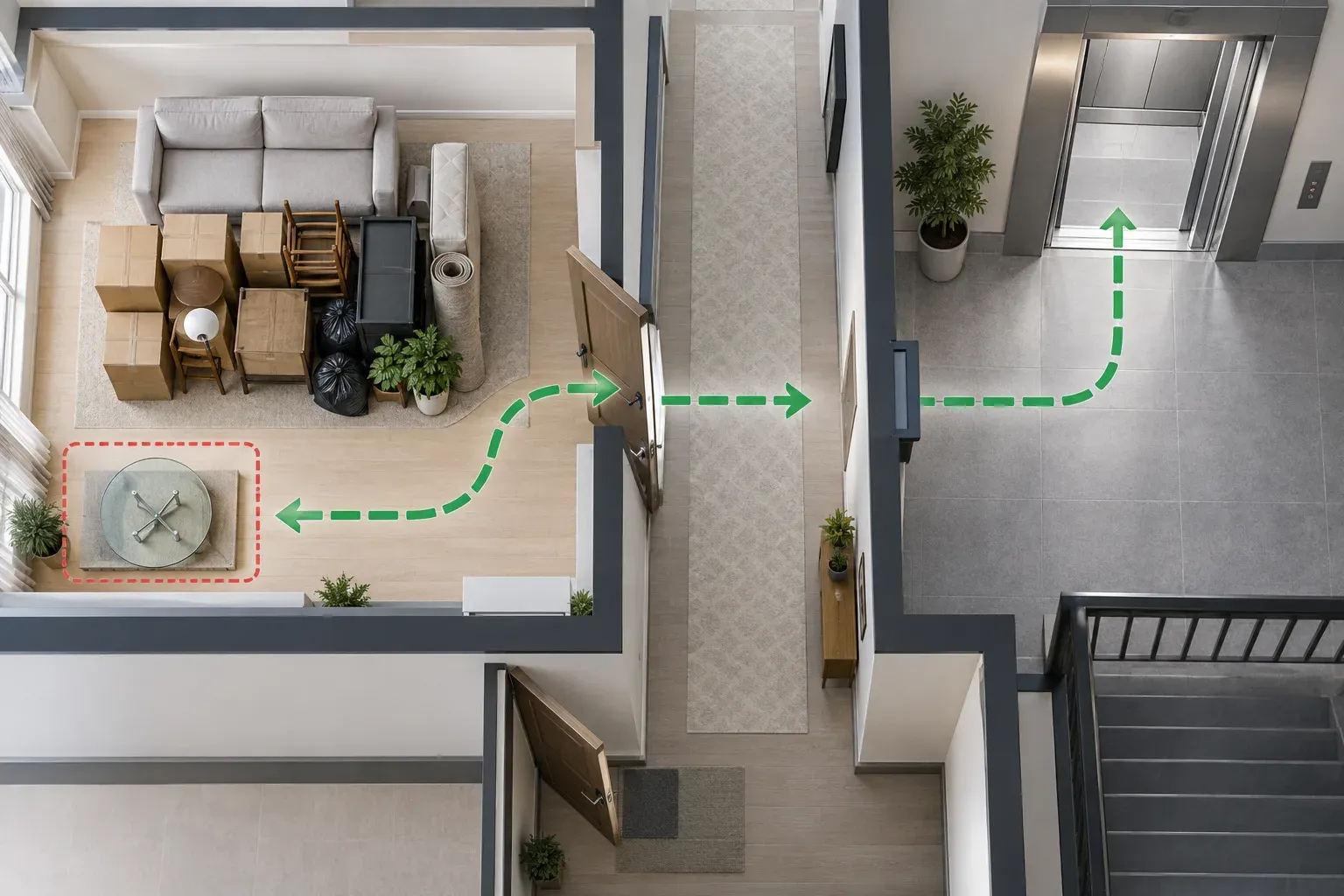
Protect surfaces through an agreed handling plan. Do not drag a cooker across tile or timber, and do not test whether it fits by pushing it into a doorway. The provider decides equipment, crew and orientation after assessing the appliance and route.
Arrange access before the collection time
For a tower, ask management whether a service lift, move-out permit, protective padding or loading bay must be booked for one appliance. Building rules differ, and a technician visit may have separate access requirements from the collection crew. The service-lift guide helps align those appointments.
For a villa or townhouse, show steps, narrow gates and internal stairs. Keep the work area clear, especially in a small kitchen where a released oven needs stable space before it is carried.
Do not move the appliance into a corridor, lobby, bin room, car park or roadside while waiting. Shared space is not a staging area. Keep it in the property until the collector and building are ready.
Coordinate a replacement without blocking the kitchen
If a new oven is arriving, write down the sequence: old appliance disconnected, old appliance collected, cabinet or connection checked, new appliance delivered and installed. Some of those steps may happen in one appointment, but only written service scopes make that reliable.
Avoid placing the old oven where it blocks installation of the new one or the route through the home. Equally, do not cancel a confirmed old-appliance arrangement until the replacement provider has confirmed that its service includes the required collection.
For a move-out, leave enough time after removal to inspect the cabinet and surrounding floor. Collection is not cleaning, cabinet repair, electrical work or gas work. Those remaining tasks need their own providers before the handover deadline.
What to send for an oven-removal quote
A complete request includes:
- A front photo and a wider photo showing the installation.
- Whether it is built-in, freestanding or countertop.
- Whether it is electric, gas or dual fuel.
- Its approximate dimensions or model details.
- Whether it is still connected, disconnected or already released.
- Any cracked glass, loose door, sharp edge or unstable foot.
- The floor, lift, stairs, parking and building requirements.
- Other appliances or materials leaving at the same time.
- The technician and collection dates, if already arranged.
Ask for a clear answer about acceptance, disconnection boundaries, cabinet release, carry-out, timing and price. Do not describe a connected built-in gas cooker as “ready to collect.” Accurate preparation status is what allows the job to be planned safely.
Keep the appliance inside until collection
An oven or cooker should not be left beside communal bins or in a public place. Apart from obstructing other people, outdoor staging exposes electrical parts and broken glass and separates the appliance from the person responsible for it. The guide to items Dubai bins will not take explains why bulky appliances need a planned route.
On collection day, keep loose racks boxed, the route clear and the disconnection information available. Point out every item that stays. After the oven leaves, inspect the area without touching an unresolved connection and arrange the appropriate professional for anything outside the removal scope.
Questions about oven removal
Does an appliance collector disconnect an oven?
Do not assume so. Ask explicitly. Built-in electrical, gas and dual-fuel appliances may need an appropriately qualified professional before physical collection.
Can I pull a built-in oven out myself?
Not simply to prepare a pickup. Its fixings, connection, support and weight must all be addressed. Send photographs and agree who releases it.
Should I leave the shelves inside?
Loose shelves and trays can move during carrying. Empty the oven and secure or box the clean, dry parts as the collector instructs.
Is an old oven ordinary bin waste?
No. It is a bulky electrical appliance and needs an eligible official or properly scoped appliance-collection route, not a communal bin.