A dishwasher needs to be empty, isolated, drained and released from its connections before it can be carried away. First confirm that it belongs to you. Then identify whether it is freestanding, integrated or a compact countertop model, and agree who handles the water, drain, electrical and cabinet connections. Do not drag it from under the counter while hoses are attached. Send photographs of the installation and the whole route out before booking collection.
Confirm the dishwasher is yours to remove
Check the tenancy inventory and appliance list before doing anything else. In a furnished or partly furnished home, a dishwasher fitted beneath the worktop may belong to the landlord even if you have been the only person using it. A fault does not give a tenant permission to dispose of it.
Ask the owner or property manager whether it should be repaired, replaced, stored or removed. Confirm who arranges the technician and whether the replacement provider is collecting the old machine. Keep the written instruction for the handover record.
If an insurer, warranty company or manufacturer is assessing a fault, wait for its instruction before disconnecting or moving the dishwasher. The inspection may depend on the installation remaining unchanged.
If you are taking the machine to another home, say that it is being relocated rather than discarded. A working appliance intended for reinstallation needs a suitable moving and installation plan, not just disposal.
Identify the installation type
The front photograph should show the dishwasher and the cabinets on both sides. Add a photo of the area beneath the sink if the connections are visible without moving stored items or touching plumbing.
Freestanding dishwasher
A freestanding dishwasher has its own finished door and side panels. It may slide under a counter, but it can still be attached by water, waste and power connections behind the machine or in a nearby cabinet. Adjustable feet can hold it tightly beneath the worktop.
Do not call it ready just because it is not screwed to a cabinet. Show the clearance above it, the floor in front and the nearest route turn.
Integrated dishwasher
An integrated model has a cabinet panel fixed to its door and is usually secured beneath the worktop or to adjacent cabinetry. A semi-integrated model has a visible control strip above the panel. Releasing the appliance may involve fixings, feet and the furniture door as well as utilities.
Collection, plumbing, electrical work and cabinet release are distinct tasks. Ask who handles each one. Do not remove the decorative panel or fixing screws without a plan to support the appliance and protect the cabinet.
Drawer and compact models
A drawer dishwasher may be a single or double unit built into a cabinet. A compact countertop dishwasher may connect to a tap and drain into a sink. Describe these accurately and send the model details where available; their connection and release methods differ from a standard floor-standing machine.
Commercial glasswashers and restaurant dishwashers are not ordinary household units. Give their full specifications and installation context to a commercial provider.
Decide the disposal route before disconnecting it
Choose where the dishwasher is going before arranging preparation. That keeps a disconnected machine from blocking a kitchen while different providers assume someone else is collecting it.
A confirmed reuse route
A working dishwasher may be transferred to a specific recipient, but the arrangement needs more than an online listing. Confirm that the person accepts its dimensions, installation type, age and known condition. Agree who disconnects, transports and installs it at the destination.
Do not hide leaks, electrical faults, rust, a damaged latch or missing racks. If nobody has assessed the appliance, describe it as untested rather than promising that it works.
Dubai Municipality bulky-waste collection
Dubai Municipality’s services directory lists household appliances and furniture under its bulky-waste service. It describes the service as free, gives a three-working-day service time and excludes investment zones. Check whether your address qualifies and read the current instructions on the official Dubai Municipality services page.
Confirm how the machine must be presented and whether carrying from inside is included. Official collection does not replace the need to make water, waste and power connections safe. Keep the dishwasher in the property until the instructed collection time.
A paid appliance collection
A paid collection can cover carrying from the kitchen, a fixed building slot or a dishwasher leaving with several appliances. Send the installation and route photographs to the appliance disposal service, and ask exactly what condition the machine must be in when the crew arrives.
If a washing machine or dryer is leaving from the same utility space, list it separately. The washing-machine removal guide explains its preparation questions, while the dryer guide covers water tanks, vents and stacked units. An old cooker in the load also needs its own connection check; use the oven removal guide before treating it as ready.
Empty the dishwasher and let it cool
Remove every plate, utensil and loose item. Check the cutlery basket, filter area and the space beneath the lower rack. Take out detergent tablets, rinse-aid bottles and cleaning products stored nearby; they are not part of the appliance collection.
If the machine has just completed a hot cycle, allow it and its contents to cool. Do not begin handling a hot, steamy appliance to meet an urgent collection time.
Clean loose food residue according to the manufacturer’s care instructions. The collector should not receive a machine full of scraps or standing dirty water. Do not run a special cleaning or drain programme unless the model instructions and the appliance’s condition make that appropriate. A faulty machine may not be safe to operate.
Loose racks and baskets can slide when the dishwasher is tilted. Ask whether they should remain secured inside or travel separately. Keep small caps, clips and fittings together in a labelled bag if they are removed during professional disconnection.
Arrange safe isolation and disconnection
A dishwasher usually involves four things: power, incoming water, a waste hose and cabinet restraint. Establish responsibility for all four before collection day.
Power
The machine may have an accessible plug or a less obvious electrical arrangement. Follow the manufacturer’s instructions and use an appropriate professional where the connection is not a simple accessible plug. Do not cut a cable, remove electrical covers or pull the appliance forward while it remains connected.
If the cable, socket or controls are damaged, disclose that condition. Stop using the machine if safety is in doubt and arrange competent assessment rather than relying on the removal crew to diagnose it.
Water supply
The inlet hose normally connects to a valve, often beneath the sink. An accessible valve that operates correctly is different from a seized, leaking or hidden fitting. Do not force it. If you cannot confirm isolation or are unsure how the installation works, arrange a plumber or appropriate technician.
After disconnection, the property-side connection must be left secure. The collection provider may take the appliance and its hose, but that does not automatically include repairing a valve or changing the plumbing for the replacement machine.
Waste hose
The dishwasher’s waste hose may connect beneath the sink or to fixed drainage. It can retain dirty water even after the last cycle. The person disconnecting it should control that water, protect the cabinet and cap or secure the property-side arrangement where required.
Do not pull the hose free and leave it draining into the cupboard. Tell the collector if water remains in the machine or hose. A truthful warning is more useful than describing a wet appliance as empty.
Cabinet fixings and furniture door
An integrated dishwasher can be fixed to the worktop or side cabinets. Its decorative panel adds weight to the door and may need protection. Ask whether the technician releases it fully or whether release is part of the collection scope.
Do not use the open door as a step or lever. Do not start removing screws until the machine is isolated and supported. Cabinet damage created during rushed preparation can become a separate handover problem.
Deal with retained water and leaks
Some water may remain in filters, the sump and hoses after normal use. Follow the specific model’s instructions for preparation and draining. There is no single procedure that is right for every dishwasher or every fault.
Place absorbent material where the technician or handler expects residual water, and keep the floor dry enough for safe lifting. Protect the cabinet base and nearby skirting. Never tip a connected appliance to pour water out.
If the dishwasher has leaked during use, describe when and where the water appeared. Photograph visible staining or a wet area only if it is safe to do so. A leak can come from several places; this guide does not diagnose it. Arrange the appropriate repair or plumbing help and tell the collector that the appliance and floor may still be wet.
Unknown residue, a burning smell or signs of electrical damage require caution. Do not run another cycle merely to empty the machine. Isolation and professional assessment take priority over the pickup timetable.
Release it without damaging the kitchen
A dishwasher can be wedged under a counter by adjustable feet, flooring installed after the appliance, cabinet trim or a furniture panel. Photograph the gap at the top and sides and the floor immediately in front.
The person releasing it should check every connection and fixing before it moves. Pulling hard on the door can bend hinges, detach an integrated panel, tear a hose or damage the counter. The door is not a carrying handle.
Protect the floor using a method agreed with the handler. Do not slide a heavy machine over an unprotected finished surface. If the floor level outside the recess is higher than beneath it, say so in advance; the appliance may not simply roll forward.
Once released, keep it upright and stable in a safe indoor position. Coil and secure the cable and hoses so they do not trail. Do not leave the dishwasher blocking a fire route or kitchen exit while waiting for collection.
Measure the machine and route out
Standard-looking dishwashers are not all identical. Use the label or documentation for dimensions where available, and state whether your figures are exact or approximate. Include the handle and attached cabinet panel.
Check the whole route:
- Clear space between the appliance recess and opposite cabinets.
- Kitchen doorway width and any immediate turn.
- Corridor corners and the apartment entrance.
- Service-lift door and usable lift size.
- Stairs, landings and entrance steps.
- Gate width, parking position and carry distance.
Photographs of constraints are as useful as numbers. A measurement proves only the point measured; it does not establish the carrying angle or space needed for people to turn the machine.
Book building access and align the appointments
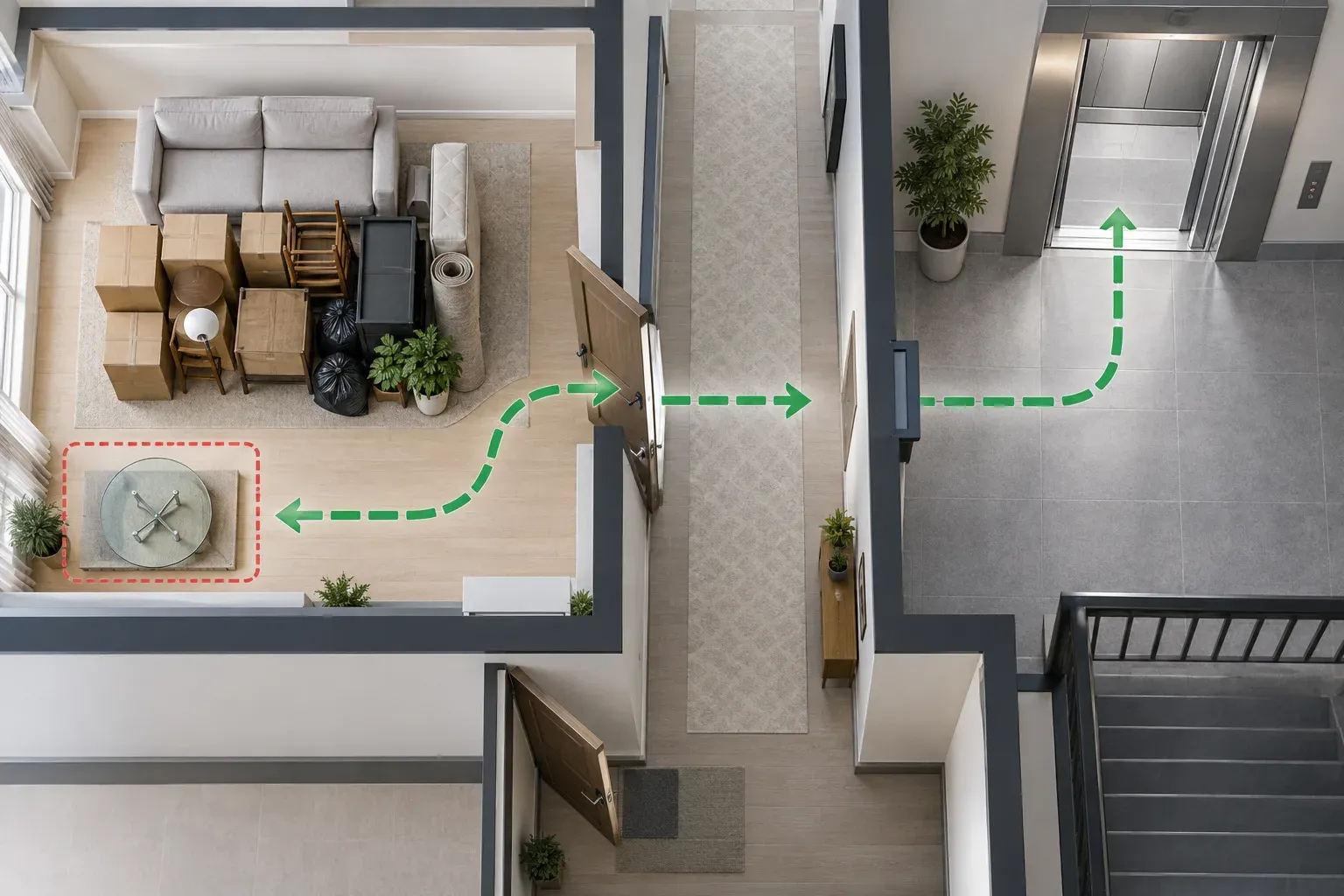
Ask tower management whether a service lift, loading bay, move-out notice or protective covering is required for one appliance. Do this before setting the technician and collector times. A disconnected dishwasher sitting in a corridor because the lift was not booked is not a workable plan.
In a villa or townhouse, show stairs, steps, gates and the distance from kitchen to vehicle. Clear loose objects from the path and keep children and pets outside the work area.
Where disconnection and collection are separate appointments, leave a sensible gap. The technician may discover a seized valve, hidden hard-wiring or cabinet problem that changes the schedule. Do not book both providers for the same minute unless they have explicitly coordinated the job.
The service-lift booking guide provides a question list for management and explains why the loading point matters as much as the apartment door.
Coordinate replacement and move-out timing
For a replacement, confirm whether the new appliance uses the existing connections and who checks them. Old-appliance removal does not prove the plumbing, electrical point or cabinet is suitable for the new model.
Write the sequence down: contents removed, old machine isolated and disconnected, old machine collected, recess inspected, then new machine installed. If one provider claims to cover several steps, obtain the scope in writing.
For a move-out, do not leave dishwasher removal until after final cleaning. Water can escape during disconnection and the hidden recess may need attention. Plan the appliance work before cleaning and inspection, as part of the wider end-of-tenancy clearance sequence.
If the dishwasher belongs to the landlord and stays, do not include it in the junk inventory. Mark retained appliances clearly when a larger clearance is happening around them.
What to send for a dishwasher quote
Send one clear request containing:
- A full front photo and a wider kitchen photo.
- The make and model where accessible.
- Whether it is freestanding, integrated, drawer or countertop.
- Whether it belongs to you and is being disposed of.
- Its power, water and waste preparation status.
- Whether cabinet fixings and any furniture panel are still attached.
- Any retained water, leak, damaged cable, broken door or sharp edge.
- The floor, lift, stairs, parking and building-access details.
- Other appliances or furniture leaving in the same collection.
- The required date and any technician appointment already booked.
Ask the provider to confirm acceptance, preparation boundary, carry-out scope, timing and price. “Disconnected” should mean that the relevant person has actually dealt with every connection, not that the machine has merely been switched off.
Keep it inside until the route is ready
Do not place the dishwasher beside communal bins, in a service corridor, lift lobby, car park or on the pavement. Keep it within the property until the official or paid collection is confirmed and the building is ready.
On collection day, keep the surrounding cabinet empty and the route clear. Point out any loose racks, hoses and parts, and identify every appliance that stays. After removal, inspect the recess without touching unresolved plumbing or wiring and arrange the appropriate professional for anything outside the collection scope.
Questions about dishwasher removal
Does the collection crew disconnect a dishwasher?
Do not assume it does. Ask who handles power, water, waste, cabinet fixings and any integrated door before booking the collection time.
Why can there still be water after the dishwasher is drained?
Filters, the sump and hoses can retain water. Follow the model-specific instructions and warn the handler if water remains.
Can an integrated dishwasher be taken with the cabinet door attached?
That depends on the appliance, panel and agreed handling plan. Photograph it and ask who releases and protects the panel; do not remove it without supporting the machine.
Can I leave the old dishwasher by the bins?
No. It is a bulky electrical appliance. Keep it inside until an eligible official service or agreed collector tells you how and when to present it.