Tree branch removal should be booked for a finished, visible load: branches already cut from the tree, grouped by size and separated from soil, pots, chemicals and general rubbish. Confirm who completes the cutting, how long and thick the largest pieces are, and whether the route from the garden to the vehicle can take them safely.
A collection booking is not permission to prune a tree or carry out tree surgery. If branches are still attached, overhanging a road, close to a building or entangled with services, arrange the appropriate tree-work provider first. The removal plan begins only after the cutting work is complete and the resulting load can be assessed.
Separate tree work from branch collection
Write two scopes before anyone starts. The first covers pruning, cutting, lowering and any work on the tree. The second covers the already-cut material: preparation, carrying, loading and the agreed removal route. One contractor may offer both, but the quotation should still show where each responsibility begins and ends.
Do not assume a collection crew will arrive with saws, ladders, climbing equipment or permission to alter a tree. A branch that is still attached is not collection-ready. A trunk section that needs further cutting is not the same as a loose branch bundle. Describe the actual condition rather than calling everything garden waste.
Name the person who can authorise the work and disposal. In a rented villa, managed community or shared property, the tenant, owner, facilities team and landscaper may have different responsibilities. Resolve that before material is cut and placed in a communal or visible area.
Define what the landscaper leaves behind
Ask whether the landscaping quotation includes taking away the cuttings. If removal is included, confirm when it happens and what materials it covers. If the landscaper will leave branches for a separate crew, agree the size, location and presentation of the finished load.
The handoff should state whether leaves and hedge clippings will be bagged, whether branches will be shortened, and whether palm material, roots or soil will be separate. A clear handoff prevents an unmanageable heap from becoming somebody else's undefined problem.
Describe the branches before requesting a quote
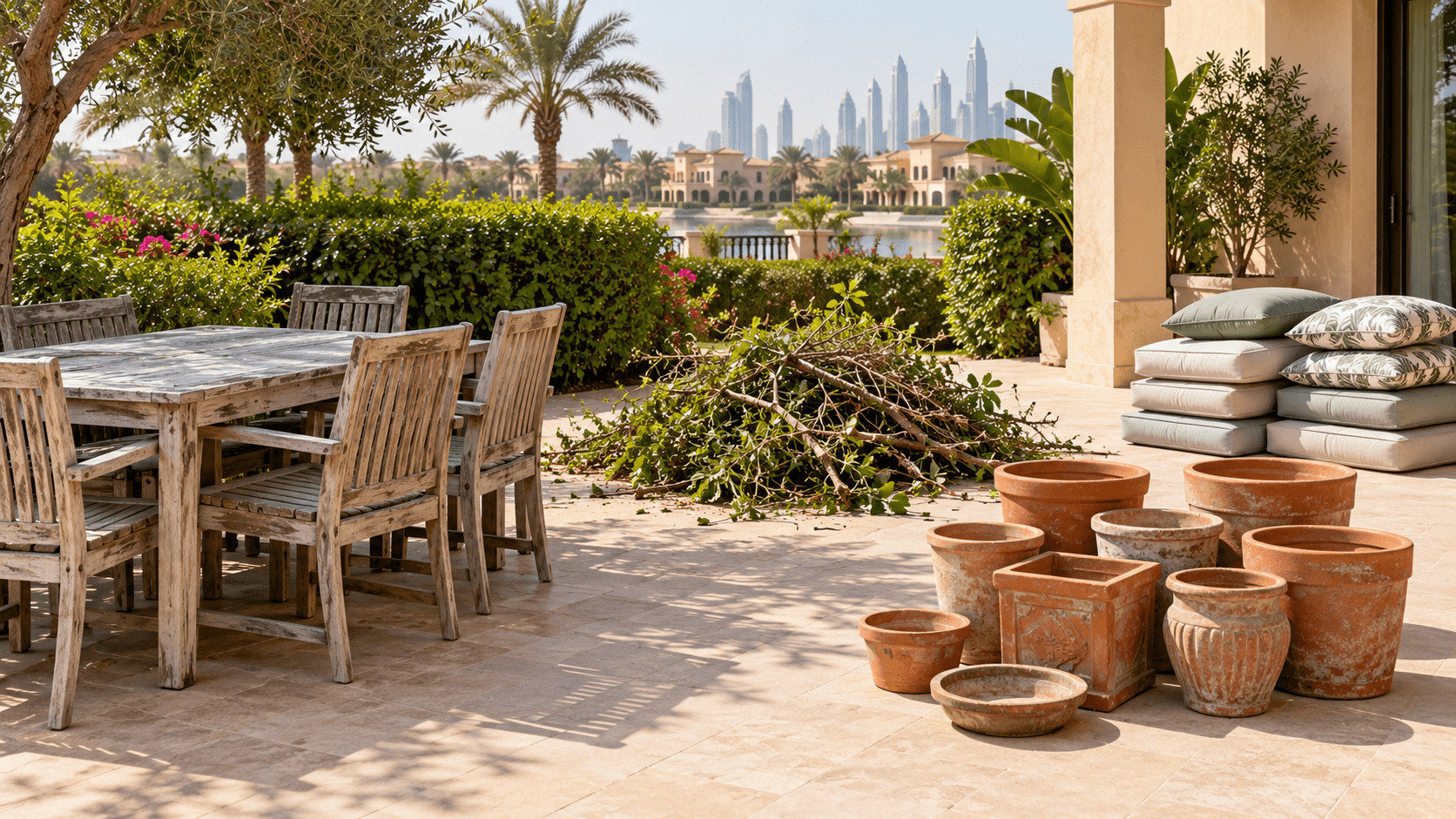
Photograph the complete pile from more than one side, then show the longest and thickest pieces. Give approximate dimensions for anything that may not turn through the gate or fit within the loading plan. Count bundles or distinct piles instead of estimating only by how much ground they cover.
State the tree type when known and point out thorns, stiff leaf bases, sharp cut ends, heavy forks or dense trunk-like sections. Do not bury sharp pieces inside soft foliage. The people assessing and handling the load need to see what creates the risk.
Include the date the branches were cut and whether they are wet. Fresh or rain-soaked material may be heavier than a dry-looking pile suggests. Update the provider if more cutting happens after the photographs are sent.
Use useful counts
Descriptions such as “a few branches” or “one tree” do not define a load. One lightly pruned tree may produce several long pieces, while several small shrubs may fit into a few controlled bags. Count what will actually be carried.
A useful description might list twelve branch sections under a stated length, four larger forked pieces, six bags of leaves and one separate palm-frond group. It does not need false precision, but it should let the collector understand the shape of the job.
Sort branches from the rest of the garden waste
Keep woody branches apart from leaves, grass, hedge clippings, palm fronds, soil, root balls and general household contents. These materials behave differently when carried and loaded. Visible groups also make it easier to identify something that is outside the agreed scope.
Remove wire, string lights, decorations, plastic ties and irrigation tube where this can be done safely. Place them in their own clearly identified group. Never hide metal stakes, broken tools or glass inside a branch pile.
Keep paint, fuel, pesticides, fertiliser, oils and unknown liquids out of the load. Leave them sealed in their original labelled containers and ask an appropriate specialist about their route. Mixing an excluded container into foliage does not make it garden waste.
Keep palm material distinct
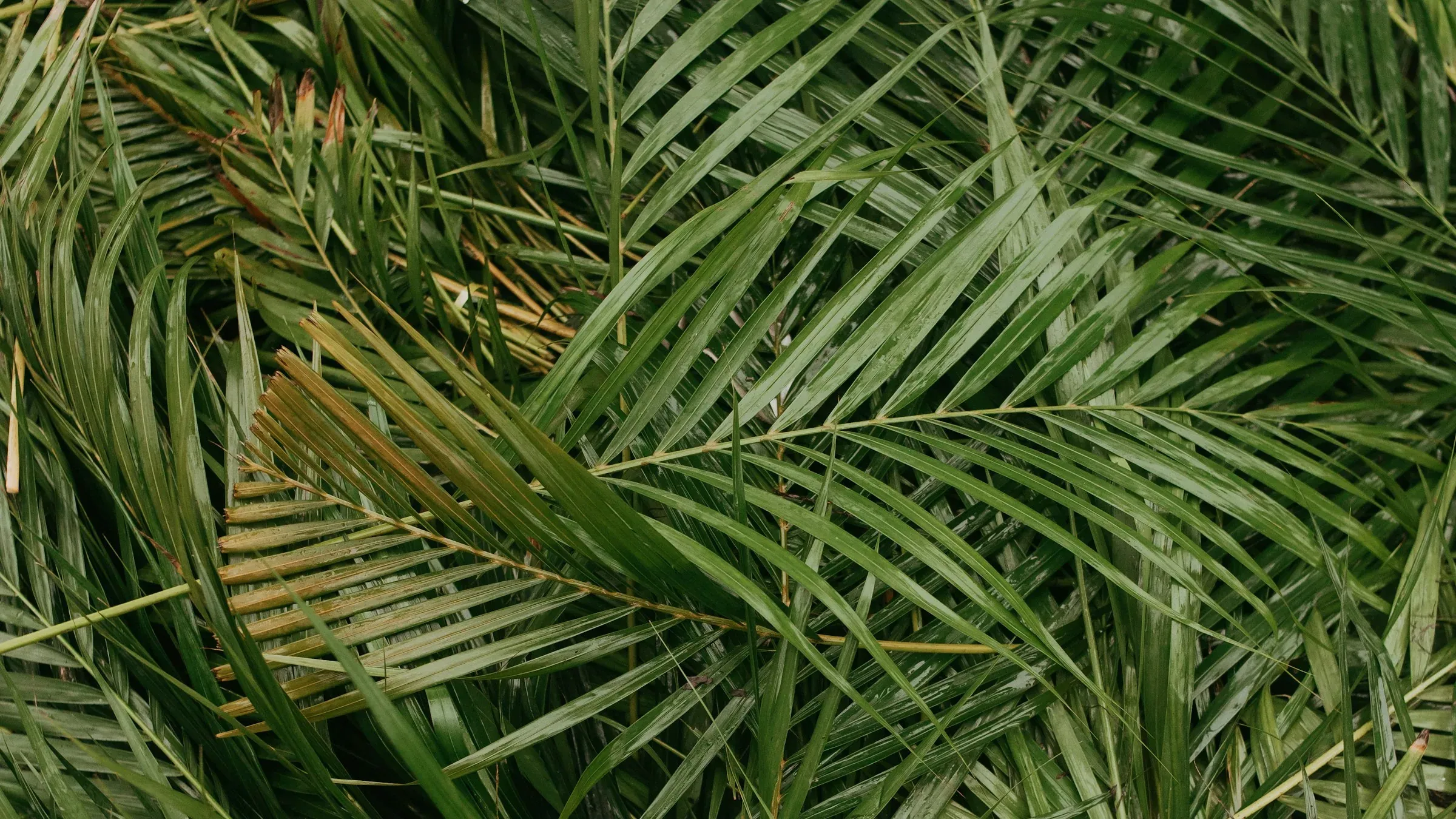
Palm fronds can be broad, fibrous and sharp, particularly around the cut base. Trunk sections and heavy palm bases are different again. List them separately and use the palm-frond disposal guide for the preparation issues specific to that material.
Do not tie palm fronds into a bundle that is too heavy to control. Point sharp bases away from paths and make them visible in the photographs.
Treat roots, stumps and soil as dense material
A root ball carries soil and moisture as well as wood. A stump may require specialist cutting or machinery before it can move. Do not describe either as an ordinary branch.
Measure large pieces, show whether they are loose or still fixed in the ground, and disclose the soil around them. The soil, sand and pots guide explains why dense garden materials need their own quantities and containers.
Reduce long pieces before the collection window
The tree-work provider should cut branches to the size agreed with the collector. The longest rigid piece may determine the whole route, even when the total volume is modest. It must pass the garden gate, turn through side access and reach the loading point without striking property or people.
Do not wait for the collection crew to discover that a branch cannot leave the garden. If further cutting is required, complete it before the booked window with the suitable provider. Collection teams may not have the equipment, authority or time to change the tree-work scope.
Avoid making bundles only for appearance. A tightly tied bundle may be too heavy, hide thorns or become unstable when lifted. Ask how branches should be presented and make each group controllable.
Preserve pieces that have another destination
If logs, straight sections or decorative wood are being retained, move them away from the removal zone and label them. Do the same for stakes, trellis pieces and reusable timber. A mixed “keep some of it” instruction is easy to misunderstand during loading.
Where reuse is intended, confirm the recipient and its requirements yourself. Do not assume the removal booking guarantees reuse, mulching or recycling. Record only an outcome that the responsible destination actually confirms.
Plan the route from pile to vehicle
Walk the complete carry route. Measure the narrowest gate, identify turns and steps, and note slopes, gravel, fragile paving, irrigation covers, parked vehicles and low structures. Show this route in the quote photographs.
Long branches can swing beyond the person carrying them. A path that is wide enough for a bag may not be wide enough for a forked branch. Consider the turning space at both ends, not just the clear width of the gate.
Keep doors, utility equipment and emergency routes accessible. Do not stack branches against a gate that must open for the crew. Do not lean a heavy pile against a wall, fence, vehicle or service cabinet.
Avoid an indoor route where possible
Branches can scratch walls, shed leaves and soil, or catch on fittings. If the only path crosses the villa, disclose that early and protect the route as agreed. Remove people, pets and fragile objects from the working area.
An external route may still need approval if it crosses shared land. Confirm the exact property rules instead of assuming that an open side gate or service road is available for contractor use.
Choose a controlled staging point
Place cut material on private property in the agreed area, clear of roads, pavements, drains and neighbouring access. A convenient vacant plot or communal bin area is not automatically an authorised staging point.
Use a low, stable layout. Keep sharp ends facing away from normal movement and prevent light material from blowing away. If temporary ground protection is needed, make sure it does not become a trip hazard or trap water.
Do not leave branches where children, pets or residents must pass them. If the pile has to remain overnight, check that it stays stable and that community or property rules allow it.
Keep drainage clear
Leaves and fine cuttings should not be washed into a drain or road. Bag or contain them through an agreed method and clean the work area without pushing loose material into another part of the property.
If the load is wet, allow for leakage and extra weight. Tell the provider about irrigation or rain rather than sending older dry photographs as if nothing changed.
Coordinate access and timing
Confirm the service entrance, vehicle position, security process and permitted work window with the current property contact. Requirements differ between communities and can change. Provide any authorised vehicle or crew information in time for the booking.
If a landscaper and collection crew are attending on the same day, allow enough time for the cutting to finish and for the final load to be checked. Do not book collection for the moment pruning is supposed to end. Hidden volume, equipment delays or extra branches can change the handoff.
Keep the responsible site contact available. That person should know what stays, what leaves and what to do if the finished load differs from the quote.
Reconfirm after major cutting
For a small maintenance job, advance photographs may describe the likely load. For significant pruning, confirm again when the branches are on the ground. The final quantity and largest pieces matter more than the number or size of the trees.
Send updated images before the crew travels if the volume grows materially. A quote for one visible pile should not be treated as automatic approval for further piles created later.
Send a complete branch-removal request
Include:
- The property type, community and authorised contact.
- Confirmation that every item for collection is already cut and loose.
- Wide photographs of the complete load and the carry route.
- Counts of piles, bundles and bags.
- Approximate length and thickness of the largest pieces.
- Separate details for palm material, roots, stumps and soil.
- Any thorns, sharp ends, wire or damaged containers.
- Gate widths, turns, steps, slopes and carry distance.
- The legal loading point and any access restrictions.
- The cutting date and whether the material is wet.
Send the final scope to the garden waste removal service and ask what material is accepted, how it should be presented and whether carry-out from the garden is included. Keep the answer with the booking so the landscaper, property contact and collection team work from the same plan.
Check the site after collection
Walk the garden, side access and loading route before the crew leaves. Look for small thorny pieces, wire, ties, leaves and soil. Confirm that labelled retained wood and tools are still present.
Compare the result with the agreed scope. Waste collection does not certify pruning quality, tree health or landscape work. Raise any tree-work issue with the responsible provider rather than treating it as part of the carrying job.
Keep any documentation actually supplied for the collection. Do not invent a recycling or recovery claim. If the destination matters to you, ask for evidence and describe the outcome only when it is known.
Questions about tree branch removal
Will the collection crew cut branches from the tree?
Do not assume so. Tree cutting and branch collection are separate jobs. Arrange an appropriate provider to complete the tree work, then quote the visible, already-cut load.
How small should branches be cut?
There is no useful universal size. Ask the collector, then consider the longest piece, the gate, tight turns and the loading method. Complete any required cutting before collection.
Can leaves and soil go with the branches?
List and group them separately. Soft cuttings, woody material and dense soil may need different preparation and assessment even when one booking can collect more than one group.
Can branches be left beside the community bins?
Do not use a communal or public area without explicit approval. Keep the load on the property in a controlled staging point until the authorised collection is ready.
What if the landscaper produces more than expected?
Photograph and recount the final load, then update the collection provider before arrival. The finished material, not the original estimate, defines the job.